Custom home value in Jacksonville is not determined by square footage alone. A 3,400-square-foot home with builder-grade finishes will appraise and sell differently than the same footprint with well-selected materials and finish quality. The gap is real: in established Jacksonville neighborhoods like San Marco, Riverside, and Ponte Vedra Beach, finish quality directly affects both appraised value and days on market.
The 10 items below are not a luxury wish list. They are finish selections with the best return on investment in the Northeast Florida market — backed by what appraisers flag, what listing agents report, and what buyers are actually willing to pay for. JK's self-perform finish carpentry delivers on four of these directly, which eliminates subcontractor markup on the labor-intensive portions.
1. Solid Wood Cabinetry — Not MDF Box Construction
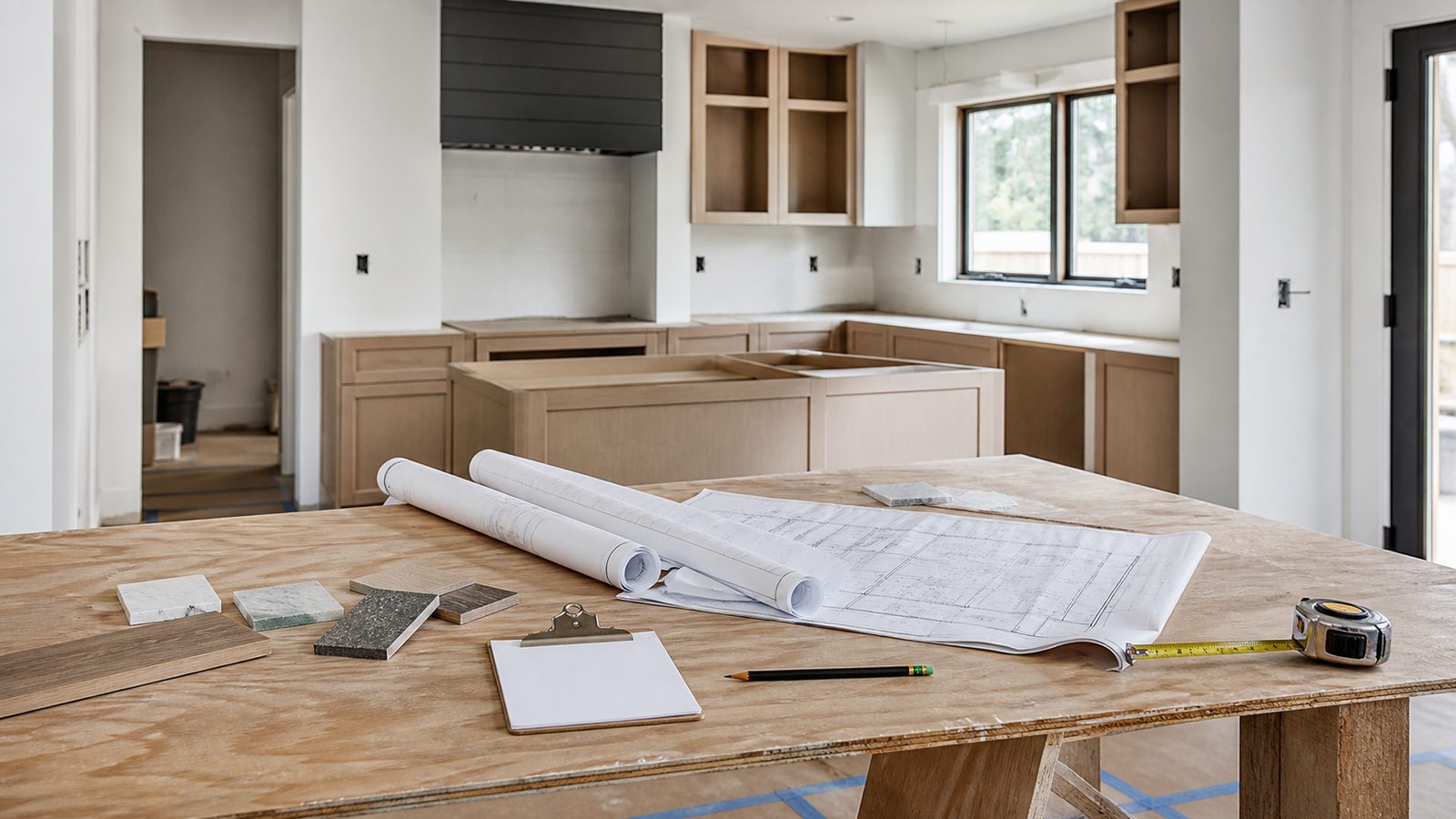
Cabinet boxes built from MDF (medium-density fiberboard) are a production builder default because MDF is cheap, paintable, and dimensionally consistent. In Jacksonville's humidity environment — where indoor relative humidity can exceed 70% in summer without adequate dehumidification — MDF box cabinets absorb moisture, swell at joints, and delaminate at face frame connections within a decade. Solid wood or plywood-box cabinetry costs 20 to 40% more at point of installation and holds its structure indefinitely. Appraisers distinguish between cabinetry grades in kitchen valuations. Ask your cabinetmaker for the box material spec before signing. In custom homes above $600,000 in Duval and St. Johns County, all-plywood box construction is the minimum expectation.
2. Large-Format Tile in Bathrooms — 2'x4' or Larger
Standard 12-by-12-inch tile in a bathroom reads as builder-grade to any buyer who has been in a custom home. Large-format tile — 24 by 48 inches being the current market standard — does two things: it reduces the number of grout lines in a given area, which makes the space visually cleaner and easier to maintain, and it signals the level of the installation throughout the home. Rectified large-format tile requires a flatter substrate, which forces the installation crew to do the substrate work correctly. Proper large-format tile installation in Jacksonville master baths can add $8,000 to $15,000 in perceived value relative to cost. Use a movement joint (Schluter strip or similar) at all transitions and at 20-foot intervals to account for Florida's thermal movement.
3. Engineered Hardwood on the Main Level
Solid hardwood floors are a legitimate premium finish in northern climates. In Northeast Florida, solid hardwood installed on a slab or crawlspace floor in a home without precise humidity control will cup, gap, and creak within five years. Engineered hardwood — a solid hardwood wear layer bonded to a cross-ply plywood core — is dimensionally more stable in Florida's humidity swings and can be glued directly to a concrete slab. The wear layer is real wood; the floor looks identical to solid and can be refinished once or twice during its service life. Select a product with a minimum 3mm wear layer. In Jacksonville's custom home market, 5-inch to 7-inch plank engineered hardwood in a wire-brushed or hand-scraped finish is the current dominant specification.
4. Natural Stone or Quartz Countertops
Laminate and solid-surface countertops are functionally acceptable and common in production homes throughout Northeast Florida. In a custom home, they are immediately identifiable as a budget compromise and will affect appraisal comparisons against recent custom sales. The relevant choice at the custom level is between natural stone (marble, quartzite, granite) and engineered quartz. In kitchen applications, quartz outperforms marble and most granite on durability — it is non-porous, does not require sealing, and resists heat and stain better than calcite-based stones. For primary bathrooms, marble or quartzite reads as a premium finish without the kitchen-level daily abuse. Budget $70 to $120 per square foot installed for quality quartz; $90 to $150 for natural stone depending on slab origin and thickness.
5. Smooth Finish Walls — Skip the Skip-Trowel
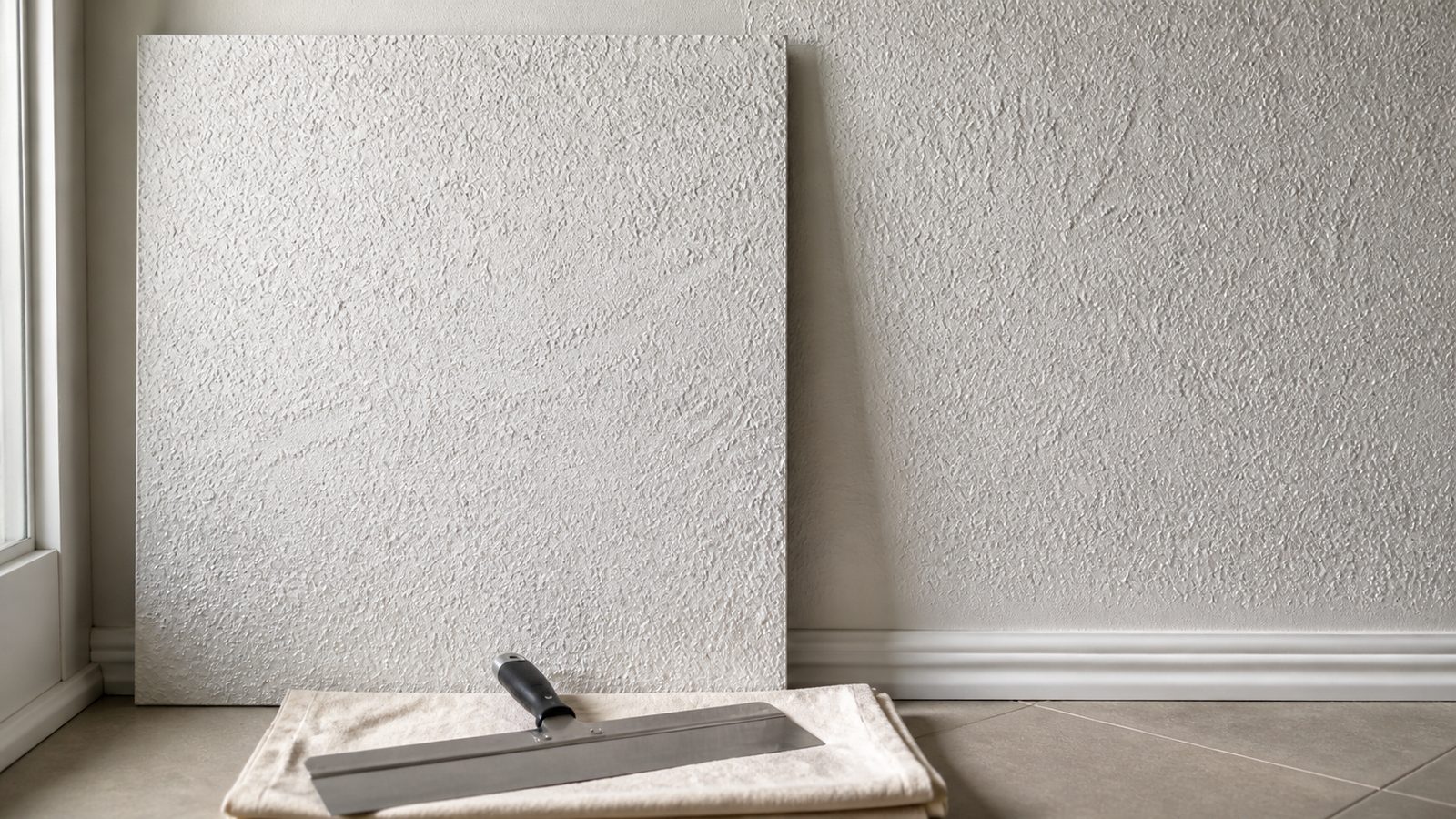
Skip-trowel texture — the irregular, spattered finish common in Florida production homes built from 1990 through 2010 — was driven by speed and material savings, not aesthetics. A smooth or level-5 wall finish requires more compound coats, more sanding, and more time. The cost premium is $1 to $2 per square foot over skip-trowel. In a 3,000-square-foot custom home, that is $3,000 to $6,000 total — against a resale differential that regularly exceeds $20,000 in Ponte Vedra Beach and San Marco comparable sales. Smooth walls also allow higher-sheen paint to be used without telegraphing texture imperfections. Modern lighting design with LED recessed fixtures on dimmer circuits shows significantly better on smooth walls.
6. Whole-House LED Recessed Lighting on Dimmer Circuit
LED recessed lighting has replaced incandescent and CFL as the standard in custom residential construction. The quality variable is the fixture and driver, not the technology: a $12 builder-grade LED wafer and a $45 commercial-grade recessed fixture both use LEDs, but they differ in beam angle control, color rendering index (CRI), and dimmer compatibility. Specify CRI 90+ fixtures and confirm compatibility with the dimmer switches before ordering. The full dimmer circuit — fixtures, dimmers, and wiring — in a 3,000-square-foot home runs $8,000 to $14,000 installed. Buyers who have lived in production homes without dimmable lighting notice the difference immediately during a showing. JK's self-perform crews coordinate LED layout with the framing plan, ensuring fixtures are centered in coffers and aligned with architectural features.
7. 8-Foot Interior Doors — The 16-Inch Difference Is Immediately Visible
Standard production home interior doors are 6 feet 8 inches tall — the minimum height required by the Florida Building Code for habitable spaces. An 8-foot door is 16 inches taller. The difference is visible from across a room: 8-foot doors make ceiling heights feel taller, hallways feel more proportional, and the overall interior feel more custom. The cost differential is approximately $150 to $300 per door (door only, not frame or hardware), and a 3,000-square-foot home may have 20 to 24 interior doors. Total cost premium: $3,000 to $7,000. In Jacksonville's custom home market above $500,000 in build cost, 8-foot doors are effectively the baseline expectation. JK's self-perform finish carpentry installs and fits all interior doors, ensuring plumb hang and proper reveal without the callbacks common with subcontracted door installation.
8. Crown Molding in Main Living Areas
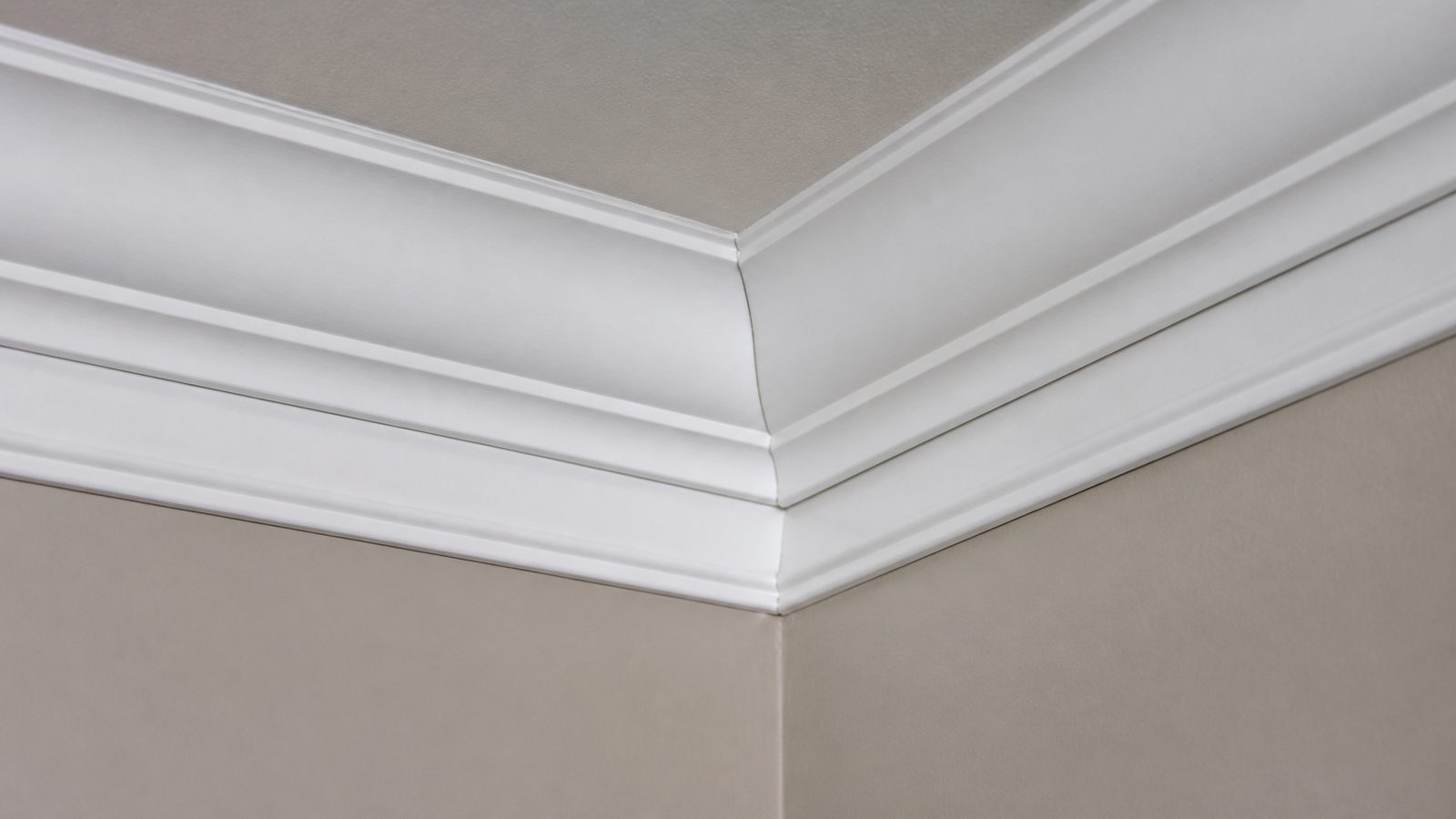
Crown molding is a finish detail that buyers notice in person but rarely articulate — its absence registers as "something feels unfinished." In main living areas — great room, dining room, primary bedroom, foyer — crown molding at ceiling transitions signals the level of finish care throughout the home. The relevant spec is the profile size relative to ceiling height: 4.25-inch crown is appropriate for 9-foot ceilings; 5.25-inch for 10-foot; 7-inch or stepped crown for 12-foot. MDF crown in a Florida environment will accept paint well but should not be used in areas with humidity fluctuation. Solid wood crown or primed finger-joint pine is the appropriate spec for custom work. JK's self-perform finish carpentry cuts, copes, and installs crown — the most labor-sensitive interior finish after cabinetry.
9. Built-In Closet Systems — Wire Shelving Is a Listing Liability
Wire shelving in primary bedroom closets is standard in production homes built before 2015 throughout Duval County. It functions adequately but reads as a concession in any home marketed as custom. Built-in closet systems — wood shelving, hanging sections, drawers, and shoe racks built to the specific closet dimensions — add $3,000 to $8,000 per primary closet depending on size and material. They also read differently to buyers: wire shelving suggests the GC cut the budget at the finish line; built-ins suggest attention throughout. In Jacksonville's higher-end resale markets — Ortega, Ponte Vedra Beach, San Marco — listing agents consistently report that primary closet finish quality affects time on market.
10. Impact Windows — Hurricane Protection and Noise Reduction
Florida's wind zone requirements in many Jacksonville-area jurisdictions now require or incentivize impact-rated windows and doors. In Duval County within certain wind speed zones, impact glazing satisfies the opening protection requirement without the need for storm shutters. Beyond code compliance, impact windows deliver two benefits directly relevant to Jacksonville: hurricane protection during storm season and noise reduction in neighborhoods under the flight path of Jacksonville International Airport (JIA) or near I-295 and I-95. Impact laminated glass reduces exterior noise by 30 to 50% compared to standard insulated glass units. The cost premium over non-impact insulated windows is $15 to $25 per square foot of glass area installed. The insurance premium reduction — available through most Florida homeowners' insurers for fully impact-protected openings — partially offsets the cost over a 10-year ownership period.
Get a written estimate in 48 hours. Call (904) 944-0278 or request a free consultation.
JK Prestige Construction self-performs finish carpentry, meaning items 6, 7, 8, and 9 are installed by the same crew that framed the building — with no subcontractor markup and full superintendent accountability. Learn more about our custom home process and our renovation work.
No call center. No coordinator. A JK principal reviews every inquiry and replies with a real number, not a range, not a follow-up form.
Request Free Estimate →