An estimate lands in your inbox. The number looks reasonable. The scope looks like what you discussed. Before you sign the contract, ask these ten questions. The answers will tell you whether the price in front of you is a real fixed-price commitment or a floor that will rise once construction starts.
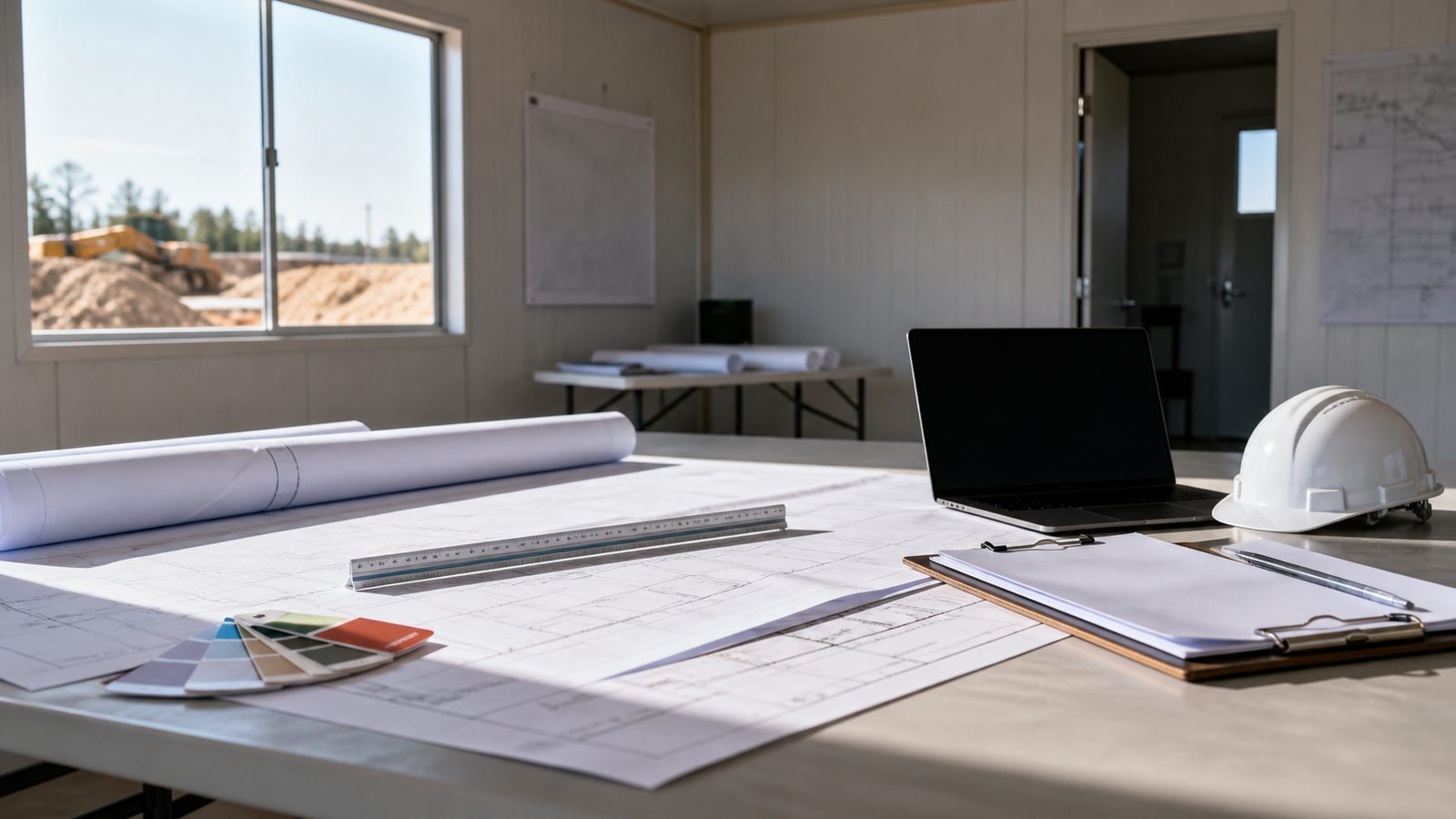
1. What Is Included in the Allowances, and What Are They Based On?
Allowances are placeholder dollar amounts for items not yet specified — typically tile, fixtures, cabinets, countertops, and lighting. An estimate with $8,000 in tile allowances sounds reasonable until you discover that allowance assumes builder-grade 12x12 ceramic at $2 per square foot, and your actual selection costs $12 per square foot.
Ask two things for every allowance line item: what does this allowance assume, and what is the current price of a representative product at that assumption? If the GC cannot answer the second question, the allowance was built from a cost database, not from a current Jacksonville supplier quote. Allowance overruns are one of the most common drivers of budget growth after contract signing.
2. What Is Explicitly Excluded from This Estimate?
Exclusions are as important as inclusions. A well-written estimate has an exclusions section that lists what is out of scope: permits, demolition and disposal, temporary utilities, landscaping restoration, furniture protection, testing and inspections, and any work noted as "by owner." Read this section before you read anything else.
If there is no exclusions section, ask for one in writing. The absence of an explicit exclusion does not mean the item is included — it means the GC has left the question open, which will be resolved in their favor when you ask for it later.
3. Are Permit Fees Included or Additional?
Permit fees in Duval County are calculated as a percentage of project value. On a $300,000 renovation, permit fees can run $2,500 to $5,000 depending on scope. Impact fees, if triggered by the project, can add significantly more. Some GCs include permit fees in their base estimate. Others list them as a separate pass-through line item. Others exclude them entirely.
Know before you sign which category your estimate falls into. If permits are excluded, add the current Duval County fee schedule to your comparison. Do not assume the $300,000 estimate beats a $305,000 estimate without confirming that the cheaper estimate includes permits.
4. What Triggers a Change Order vs. What Is Covered Within Fixed Price?
Every fixed-price contract has conditions that can generate change orders. Understanding those conditions before signing is essential.
Legitimate change order triggers include: hidden conditions discovered after demolition (rot behind walls, out-of-plumb framing that requires correction, asbestos or lead-based paint in pre-1978 structures), owner-requested scope changes, and unforeseen utility conflicts. Illegitimate ones include re-pricing items that should have been included in the base estimate.
Ask the GC: what specific conditions, if discovered during construction, would generate a change order against the fixed price? Ask for examples. A contractor who has done significant work in Jacksonville will have real examples from prior projects. Their answer tells you how well they inspected the project before estimating and how conservatively they priced contingency.
JK Prestige's fixed-price model includes a no-work-without-signed-CO clause as standard — no scope addition proceeds without a signed change order from the owner.
5. Is Demolition and Disposal Included?
Demolition and disposal is a meaningful cost on most renovation projects — and one that is frequently excluded from initial estimates. Demo on a full kitchen gut runs $2,000 to $5,000 for labor alone. Disposal fees for a full renovation in Jacksonville, including dumpster rental and tipping fees, can run $1,500 to $4,000 depending on volume and material type.
If demolition is excluded, ask for an add-alternate price to include it. Compare estimates with demolition in all bids before deciding on the lower base number.
6. What Is the Expected Permit Timeline, and Does It Affect My Start Date?
Duval County residential renovation permits currently run 4 to 6 weeks in plan review. If the GC submits for permit the day the contract is signed, your project will not have a permit — and therefore cannot legally start construction — for 4 to 6 weeks. If the GC submits for permit after design and engineering are finalized, that timeline extends further.
Ask: when will you submit for permit, what do you need to submit, and when realistically will we have a permit in hand? Map that answer against the project start date on the estimate. If the start date assumes an immediate permit, ask how that is possible in Duval County's current review environment.
7. What Is Your Payment Schedule Tied To?
Payment schedules can be tied to calendar dates, to construction milestones, or to some combination. Milestone-based schedules are better for owners — they tie payments to completed, inspectable work rather than to dates that may slip.
A milestone-based schedule might read: 10% at contract signing, 20% at framing rough-in complete and inspected, 20% at MEP rough-in complete and inspected, 20% at drywall complete, 20% at fixture installation complete, 10% at final punch-list and CO. Each payment is triggered by verified progress, not by the calendar.
Ask: is your payment schedule milestone-based or calendar-based? If calendar-based, ask why milestones were not used. A GC who cannot defend their payment structure has likely copied it from a template without thinking about what it means in practice.
8. Who Is the Project Superintendent for This Job Specifically?
The superintendent is the person you will deal with daily. They are the one who answers your 7 a.m. question about a tile layout, who is on-site when the inspector arrives, and who makes the real-time field decisions that keep a project on schedule.
Ask the GC to name the superintendent for your project specifically — not "our team" or "one of our experienced supers." If they cannot name a person, the project is not staffed. Ask when it will be staffed and request an introduction to the assigned superintendent before you sign.
At JK Prestige Construction, the principal walks every site. See home construction services for more detail on how projects are run.
9. What Happens If Material Costs Increase After Signing?
On a fixed-price contract, the GC carries material cost risk. If lumber prices increase 20% after contract signing, that is the GC's problem — the owner's price is fixed. Confirm this is the case with the GC you are evaluating.
Some GCs insert material escalation clauses that allow price adjustments if commodity costs move beyond a threshold. These clauses are not unreasonable for very long projects — a 14-month new build faces real escalation risk. They are unreasonable for a 6-month renovation. If your estimate includes a material escalation clause, ask for the specific threshold, the index it ties to, and the cap on owner exposure.
10. Can I See a Sample Contract Before Deciding?
The estimate is a pricing document. The contract is the legal document. They are not the same thing, and a low estimate with a one-sided contract is worse than a slightly higher estimate with a well-balanced contract.
Ask to see the GC's standard contract before you decide. Review the dispute resolution clause (arbitration vs. litigation), the lien waiver process, the warranty language, the substantial completion definition, and the liquidated damages or delay provision — or the absence of one.
If the GC resists sharing the contract until after you have agreed to work with them, that is a significant warning sign. The contract should be part of your evaluation, not a surprise after the decision is made. Contact JK Prestige to request a sample contract as part of your estimate review.
No call center. No coordinator. A JK principal reviews every inquiry and replies with a real number, not a range, not a follow-up form.
Request Free Estimate →