Hurricane season in Florida runs June 1 through November 30, with peak activity historically concentrated from mid-August through mid-October. The homeowners who handle that period best are the ones who did their preparation in March and April — not the ones scrambling in late May when roofers are booked out six weeks and hardware stores are managing tarp inventory.
JK Prestige Construction offers free pre-hurricane roof inspections from March through May and provides a written roof condition report at no charge. The 10 items below are the full preparation checklist for Jacksonville homeowners — covering the physical, administrative, and logistical steps that matter before a storm arrives.
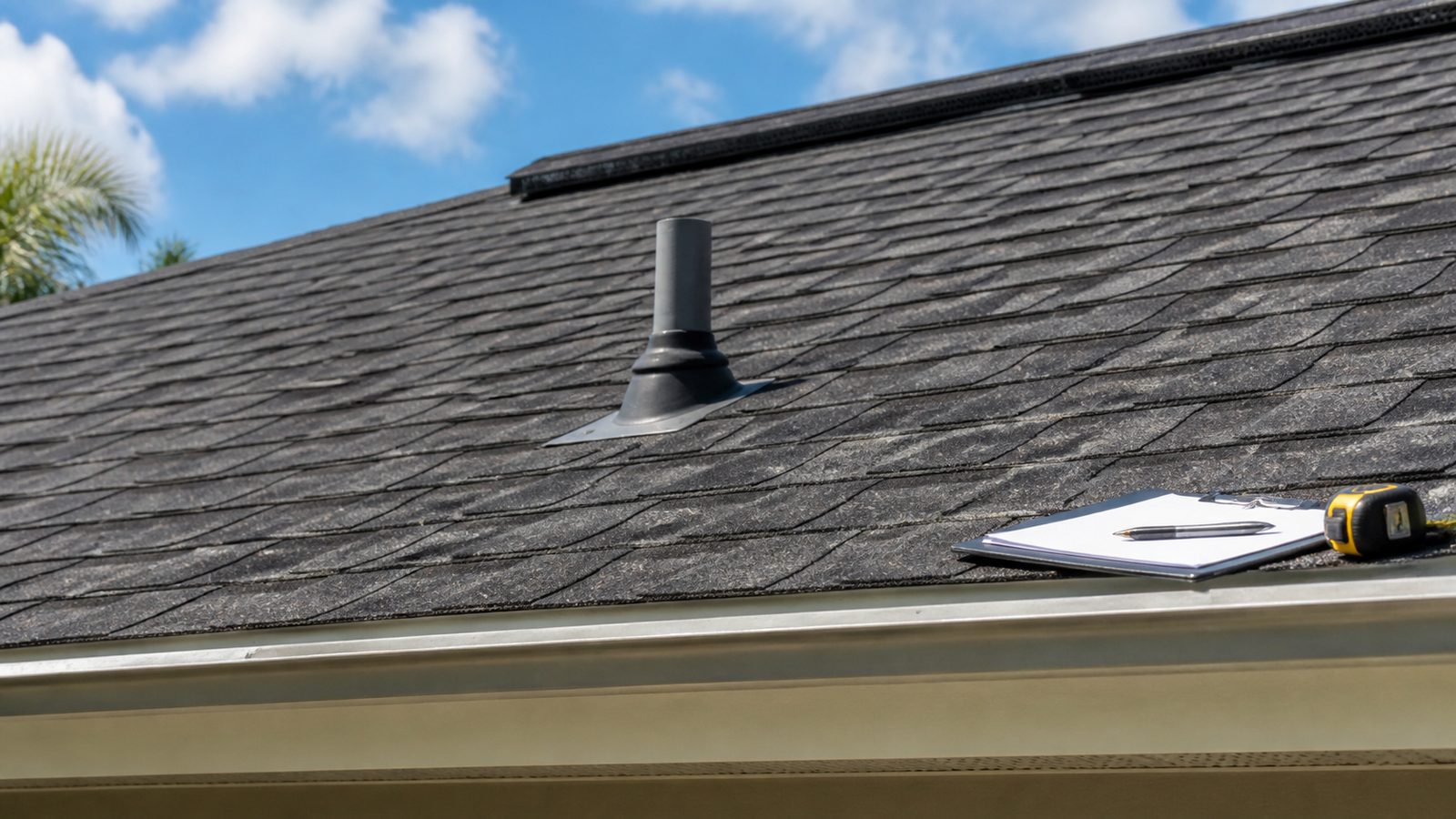
1. Schedule a Roof Inspection in March or April
By late May, roofing contractors in Jacksonville and throughout Northeast Florida are managing backlogs driven by other homeowners who had the same idea. A March or April inspection gets you in before the rush — and gives you time to act on whatever the inspection finds. A deteriorating roof identified in April can have repairs or replacement completed before June 1. The same roof identified in mid-May may not be addressed before the season opens.
JK Prestige provides written roof condition reports that document current shingle condition, flashing integrity, granule loss, soft spots, and any penetration or edge conditions that need attention. That written report is also useful documentation for your homeowner's insurance carrier — some Florida insurers require proof of recent inspection for coverage continuation or premium review.
2. Check and Repair Any Loose Flashing
Flashing is the metal or synthetic material that seals roof penetrations, valleys, chimney bases, skylights, and wall-to-roof transitions. Loose or compromised flashing is one of the most common entry points for water during a storm — not because the shingles fail, but because the flashing lifts or separates under wind pressure and allows water to run under the roofing material.
This is a straightforward inspection item: walk the perimeter and look at any point where the roof meets a vertical surface, where a pipe or vent penetrates the field of the roof, or where two roof planes meet in a valley. Any flashing that shows separation, rust, cracks, or loose fasteners should be re-secured and resealed before the season begins. On a well-maintained roof, this is a minor repair. On a roof that hasn't been looked at in three or four years, it's often the only issue that matters.
3. Clean Gutters and Downspouts in March or April
Gutters clogged with leaves, pine needles, and debris from Jacksonville's mature tree canopy — particularly the live oaks and magnolias common in Riverside, Avondale, and San Marco neighborhoods — can't drain rainfall fast enough during a tropical event. The resulting overflow backs up under the drip edge and onto the fascia board, accelerating wood rot and creating a water intrusion path at the roofline.
A March or April cleaning, before the spring pollen drop adds another layer, sets you up for the season. Also check downspout extensions: water should discharge at least six feet from the foundation. During a tropical event delivering eight to twelve inches of rainfall in 24 hours, gutters that drain correctly and discharge away from the foundation matter to both the roof and the slab.
4. Inspect All Exterior Wall Penetrations for Gaps
Every penetration in the building envelope — HVAC refrigerant lines, electrical conduit, gas lines, hose bibs, dryer vents, cable penetrations — is a potential water entry point under the wind-driven rain conditions of a tropical storm or hurricane. Gaps around these penetrations, even small ones, allow pressurized water to enter the wall cavity and cause damage that doesn't appear until mold has already established.
Walk the exterior perimeter of your home and inspect every point where something passes through the wall. Any gap larger than a quarter inch should be sealed with a backer rod and exterior-grade sealant, or with a purpose-built weathertight fitting. This is a few hours of work with materials available at any Jacksonville building supply store, and it addresses one of the most common causes of interior water damage in non-catastrophic wind events.
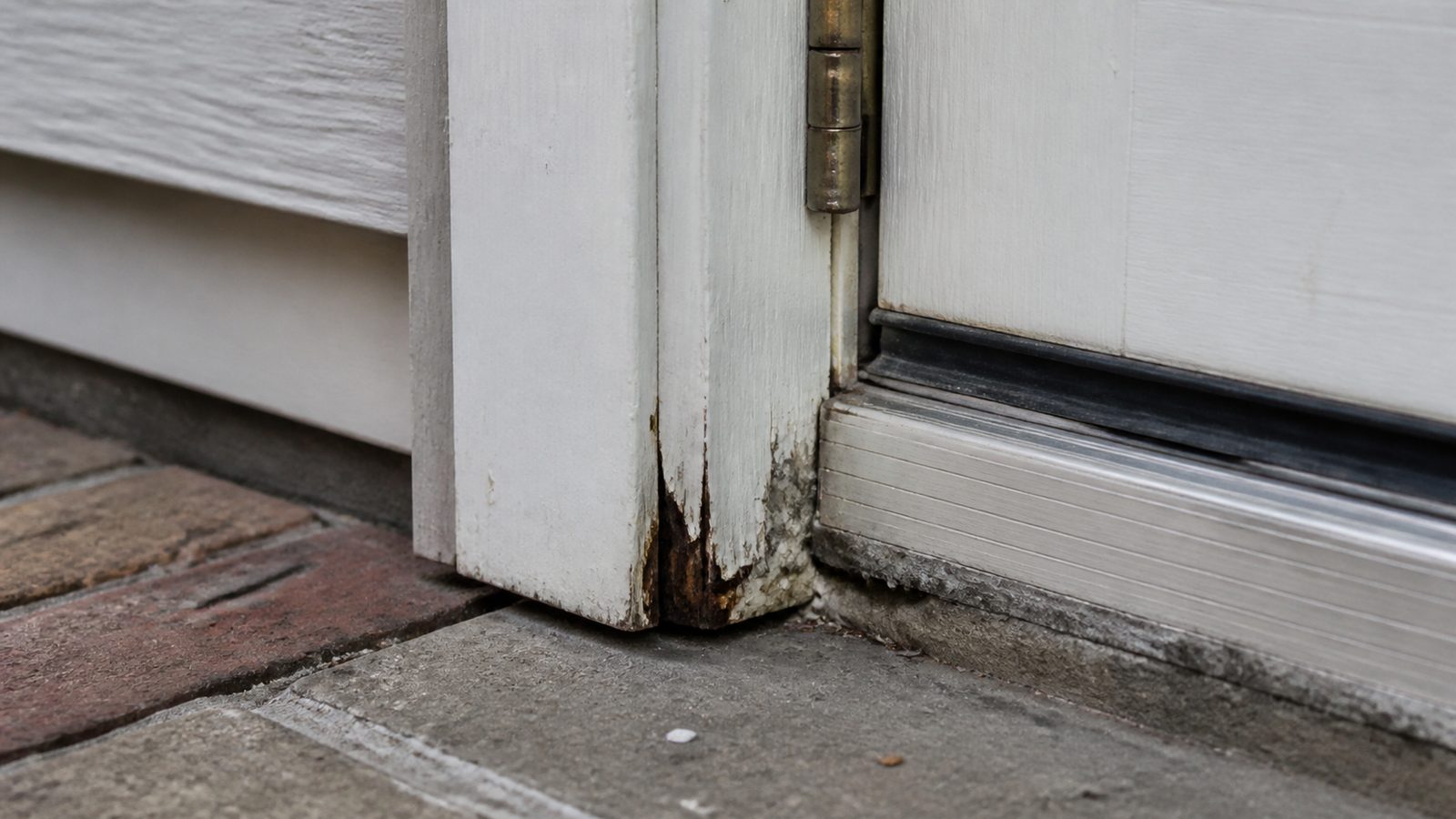
5. Check Window and Door Seals
Weatherstripping, door sweeps, and window glazing compound degrade over time in Florida's UV-intense climate. A door that closes fine in dry weather may pass wind-driven water during a tropical event if the weatherstripping is compressed flat or the sweep doesn't contact the threshold. Window frame sealant that has cracked and separated allows water infiltration at the frame edge.
Test each exterior door with a dollar bill: close the door on the bill and try to pull it out. If it slides out without resistance, the weatherstripping isn't sealing. For windows, look for any separation between the frame and the wall caulk line, and check the glazing compound on older wood windows for cracking or gaps at the glass-to-frame joint. These are inexpensive repairs that prevent interior damage disproportionate to their cost.
6. Stage a Tarp Kit Before You Need One
After a significant storm event in Jacksonville, tarp material is not available at local hardware stores — it's gone within 24 to 48 hours of a storm track announcement, and post-storm delivery is unpredictable. A basic tarp kit staged in the garage before the season means you have what you need to protect a damaged roof or window before a contractor can get there.
A functional tarp kit for a typical Jacksonville home includes: two or three 6-mil polyethylene tarps in 20x30 and 20x40 sizes, 2x4 lumber pieces for ballast, 3-inch screws, a cordless drill, and a hand stapler. Store it in a labeled bin. After a storm event where your roof is compromised, the ability to tarp yourself or have a neighbor help within hours of the event — rather than waiting three days for an overwhelmed roofing crew — is significant for limiting interior damage.
7. Know Your Insurance Policy Before Storm Season
Two specific policy terms matter most for Florida homeowners going into hurricane season. First, actual cash value (ACV) versus replacement cost value (RCV): an ACV policy pays you what your 20-year-old roof is worth today, which may be a fraction of what it costs to replace it. An RCV policy pays the current replacement cost. The difference on a full roof replacement in Jacksonville can be $15,000 or more.
Second, your hurricane deductible: most Florida homeowner policies have a separate hurricane deductible that is expressed as a percentage of the insured value, not a flat dollar amount. On a home insured for $400,000 with a 2% hurricane deductible, your out-of-pocket cost before insurance pays is $8,000 — not a $1,000 or $2,500 flat deductible. Know your number before the storm, not after. Call your agent in March and ask specifically about ACV versus RCV for the roof and what your hurricane deductible percentage is.
8. Document Your Property Before Storm Season
A visual record of your property's pre-storm condition is one of the most useful things you can have when filing a claim after a storm. Walk every room, photograph all personal property, and video the exterior — all four sides, the roof from grade (and from the attic if you can access it safely), and any outbuildings or detached structures.
Store the documentation somewhere off-site or in cloud storage — not only on a device that could be damaged in the same event. A dated photo of your roof's condition from April, showing intact shingles and undamaged flashing, is a direct rebuttal to an insurance adjuster's attempt to classify storm damage as pre-existing wear. This takes 30 minutes and costs nothing.
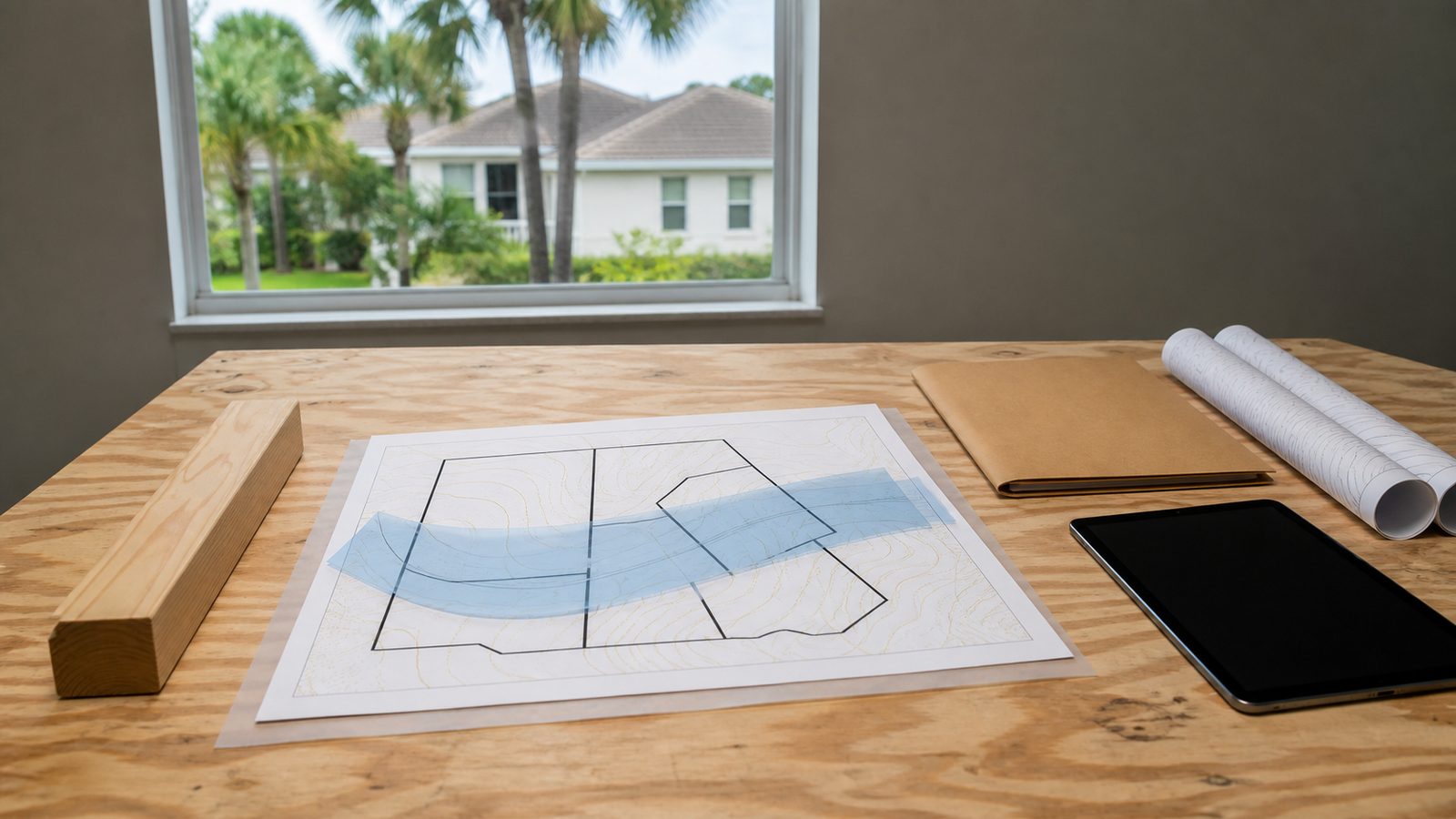
9. Know Your FEMA Flood Zone and Elevation
Flood damage is not covered by standard homeowner's insurance — it requires a separate National Flood Insurance Program (NFIP) policy or private flood coverage. Whether you need it depends on your property's FEMA flood zone designation and, in many cases, your Base Flood Elevation (BFE) relative to your finished floor elevation.
In Jacksonville, flood zone designations vary significantly by neighborhood. Properties near the St. Johns River, Ortega River, Ribault River, and Pottsburg Creek corridors carry different flood risk profiles than properties on higher ground in Mandarin, Southside, or Ponte Vedra. Check your flood zone on FEMA's Flood Map Service Center using your address. If you're in a Zone A or AE, verify that you have flood coverage. If you've made improvements that changed your ground floor elevation, a LOMA (Letter of Map Amendment) may reduce your flood insurance cost.
10. Have a List of Licensed Local Contractors Ready
After a storm event in Jacksonville, unlicensed contractors and out-of-state storm chasers move into the market quickly. They offer to start immediately, accept your insurance check as payment without confirming scope, and often disappear before the work is inspected or the warranty period begins. Florida's contractor licensing requirements exist precisely because post-storm repair work is high-stakes and often done under pressure.
Before the season starts, identify two or three licensed local contractors you would call for post-storm roof repair or structural assessment. Verify their Florida contractor license number in the DBPR database. Know their phone number before you need them. A contractor you've vetted in March is one you can trust in September. JK Prestige is a licensed GC and licensed roofing contractor in Florida, with a physical presence in Jacksonville and 500-plus projects in the Northeast Florida market.
Get a written estimate in 48 hours. Call (904) 944-0278 or request a consultation.
JK Prestige offers free pre-hurricane roof inspections March through May. Learn more about our roofing services, residential project approach, and what makes JK different.
No call center. No coordinator. A JK principal reviews every inquiry and replies with a real number, not a range, not a follow-up form.
Request Free Estimate →