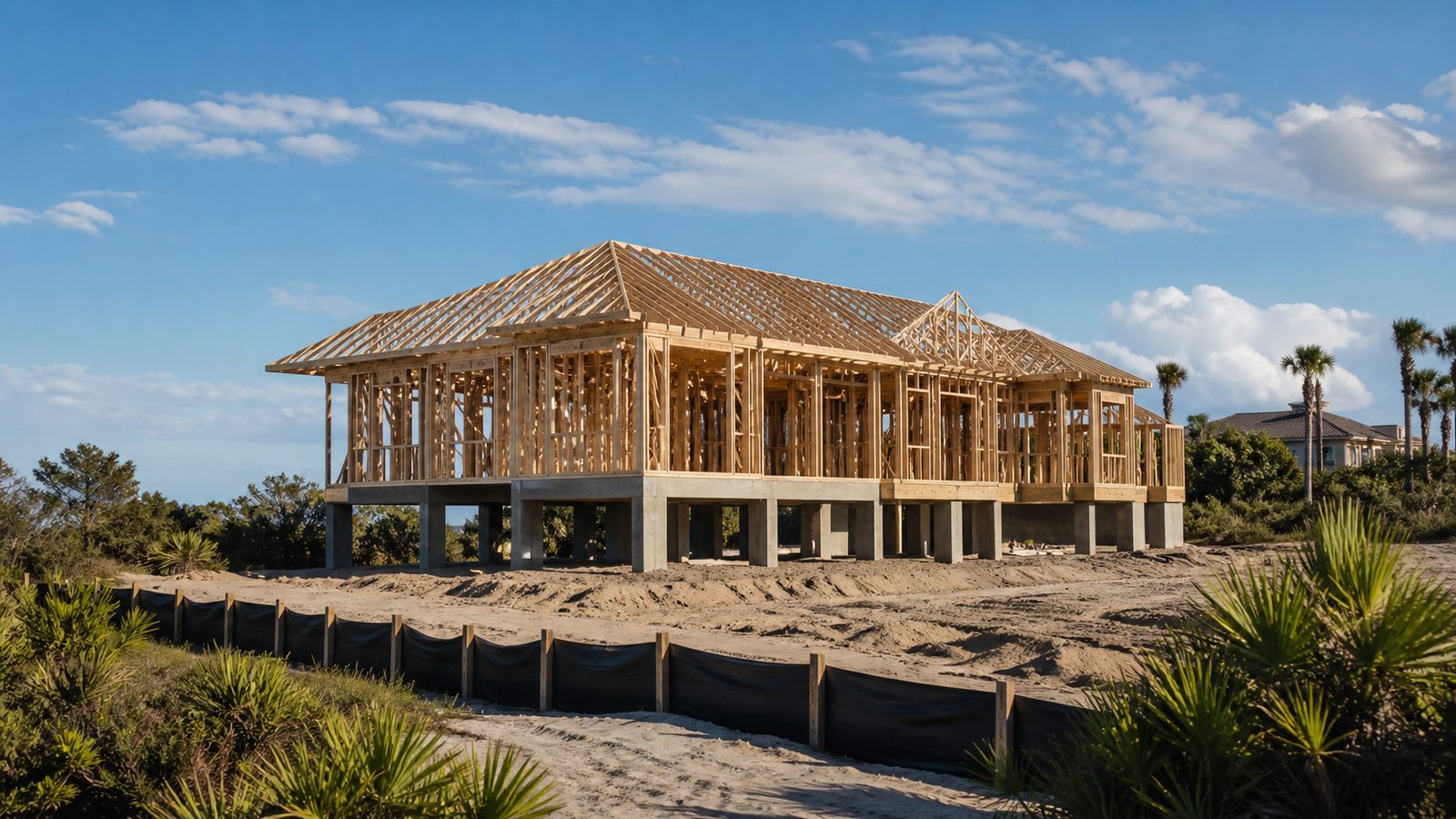
Building a large custom home is complicated enough when the builder is local. Building one 1,200 miles from their headquarters requires a different level of operational infrastructure. In 2024, JK Prestige completed the Hollowbrook Estate in New York — 11,200 square feet, ground-up custom residential construction, delivered on schedule with the same fixed-price contract and principal-led communication that applies to every JK project. The mechanics behind that delivery — multi-state licensing, crew mobilization, Virtual Design & Construction (VDC), and an owner portal that gives remote clients real-time project access — are the same mechanics that make JK an option for any high-net-worth client building in any of the 14+ states where JK operates.
Custom Home Builder Jacksonville FL: What Operating in 14+ States Actually Means
A Jacksonville-based custom home builder who "serves" other states can mean several things. In most cases, it means they have a roster of local subcontractors they'll coordinate remotely — the builder stays in Florida while a patchwork of unfamiliar crews does the work. Quality control is delegated. The builder's accountability ends at the state line.
JK's model is different. Multi-state licensing means JK holds the required general contractor licenses in each state where they build — not a reciprocity workaround, and not a local builder fronting the license. The principals who sign the contract are licensed to build in the state where the project is located.
Crew mobilization means JK's own crews — the same framing, concrete, drywall, and finish carpentry crews that self-perform work in Florida — travel with the project. Critical-path trades are not brokered out to whoever is available locally. For the Hollowbrook Estate, JK crews handled framing and finish carpentry on-site in New York. Local licensed trades (plumbing, electrical, mechanical) were vetted and contracted through JK's standard trade-partner process, with JK maintaining direct daily coordination.
This matters at the 11,200-sqft scale because finish tolerances on a custom estate are tighter than production work. A framing crew that doesn't know JK's standards will create problems the finish carpentry crew has to absorb. When it's the same crews through both phases, those problems don't exist.
What VDC and BIM Enabled on the Hollowbrook Estate
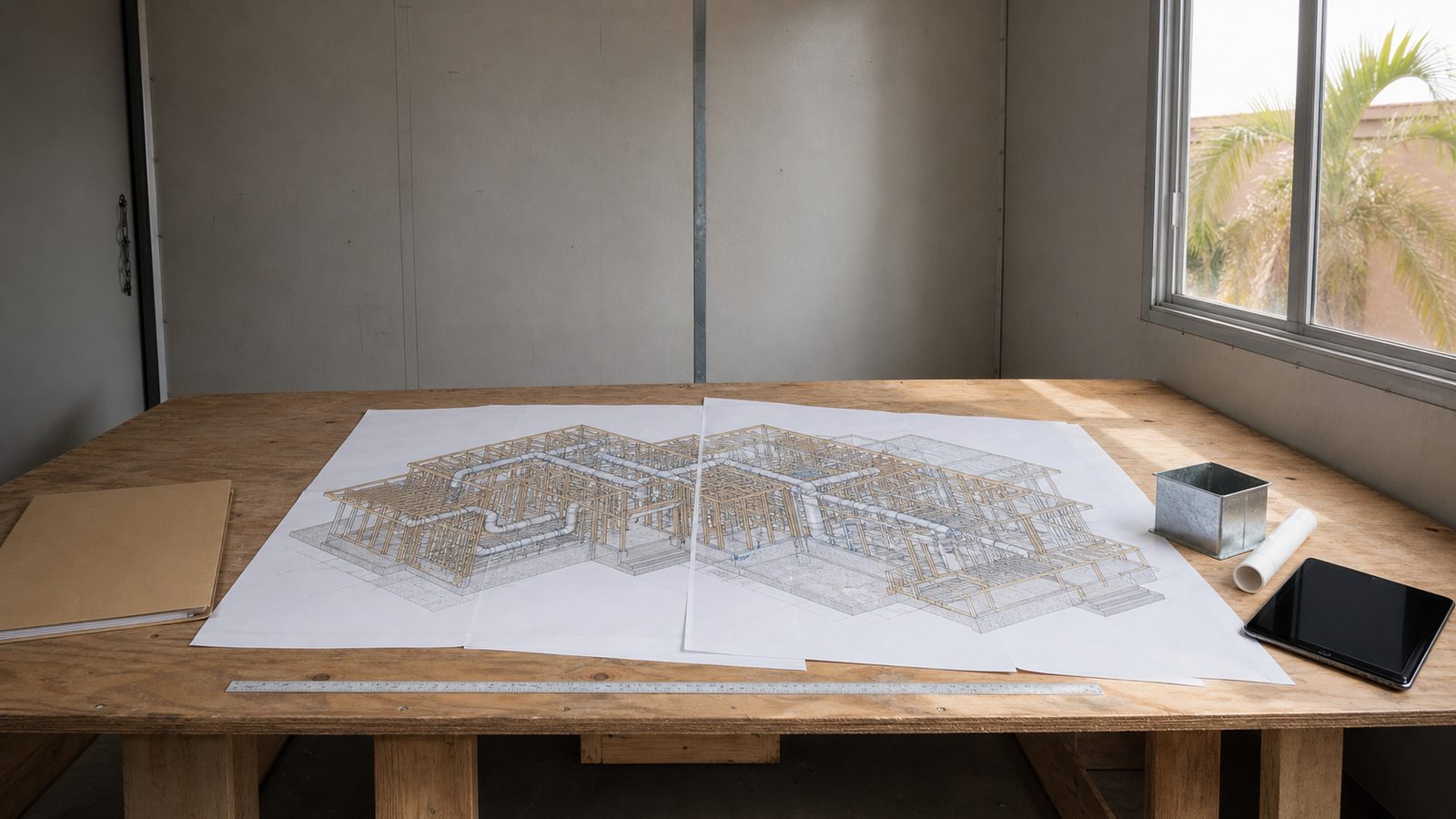
On all JK ground-up projects above $2 million, Virtual Design & Construction (VDC) and Building Information Modeling (BIM) are standard — not an add-on. For an out-of-state project, these tools are not optional. They're what makes field-level quality control possible from a distance.
Before the Hollowbrook Estate broke ground, the entire structure existed as a coordinated 3D model: structural framing, mechanical systems, electrical, plumbing, and finish specifications — all in a single model. MEP clash detection ran before steel was ordered, identifying every place a duct would intersect a beam or a pipe would conflict with a structural member. Those conflicts were resolved in the model. They didn't become field problems, RFI delays, or change orders.
4D scheduling connected the BIM model to the project calendar. The owner could see not just the floor plan but the construction sequence — which sections of the structure would be complete by which date, when long-lead materials needed to arrive on-site, and where the critical path ran through each phase. For a client who isn't driving past the jobsite every week, that clarity is what allows informed decisions rather than anxious phone calls.
Crews arrived on-site with model-to-field tablets. Each trade knew exactly what went where before the first nail was driven. That coordination reduces rework — and rework is the primary driver of schedule slippage on complex residential builds.
The Owner Portal: How Out-of-State Clients Stay Current
A remote build without a communication infrastructure is a problem waiting to happen. Clients who can't see the jobsite are working from limited information. They hear about problems after they've been resolved — sometimes poorly — or not at all.
JK's owner portal provides 24/7 access to:
- Live schedule with percentage-complete by phase and a look-ahead of upcoming activities
- Photo documentation uploaded by field crews, searchable by date and location in the building
- RFI (Request for Information) log — every question raised, every answer given, every decision documented
- Submittal tracker showing the status of every material selection, shop drawing approval, and long-lead item
- Budget variance report updated weekly
For the Hollowbrook Estate client, the portal meant the same level of project visibility that a local client gets from weekly site visits. When a question arose about a detail — millwork profile, stone selection, mechanical equipment access — the principal could share portal documentation and schedule a call, rather than leaving the client to wonder what was happening.
Weekly written owner reports supplement the portal: budget variance, schedule status, open items, and the three-week look-ahead schedule. A JK principal's direct number is in every contract. For out-of-state builds, that direct access isn't a courtesy — it's the difference between a client who is informed and one who is anxious.
See the full portfolio of delivered projects, including large-scale custom residences, at JK Prestige's project gallery.
Why Large Custom Homes Require a Different Builder
An 11,200-sqft custom estate is not a scaled-up version of a production home. The variables compound: more structural complexity, more MEP coordination, more finish trades, longer material lead times, more opportunities for scope creep. The management infrastructure required scales with the project.
At that size, the builder's self-perform capacity becomes critical. On the Hollowbrook Estate, JK's finish carpentry crews handled custom millwork, built-in cabinetry installation, and detailed trim work throughout the structure. Finish carpentry at that scale takes months — long enough that continuity of crew, scope knowledge, and finish standard matters more than on a 3,000-sqft home where trim work takes two weeks.
The smart home integration scope on a project of this size typically includes:
- Lutron or Control4 lighting control with zone programming throughout
- Whole-home audio-visual distribution
- Integrated security and access control
- Geothermal HVAC integration with smart controls
- Solar-ready electrical panel sizing and conduit placement
Each of these systems requires coordination with framing and MEP rough-ins at specific construction stages. When the GC's own crews control the framing schedule, that coordination happens through internal communication rather than contractor-to-contractor negotiation. Changes don't cascade into disputes — they're absorbed at the principal level.
What to Ask a Builder Before Committing to an Out-of-State Custom Home
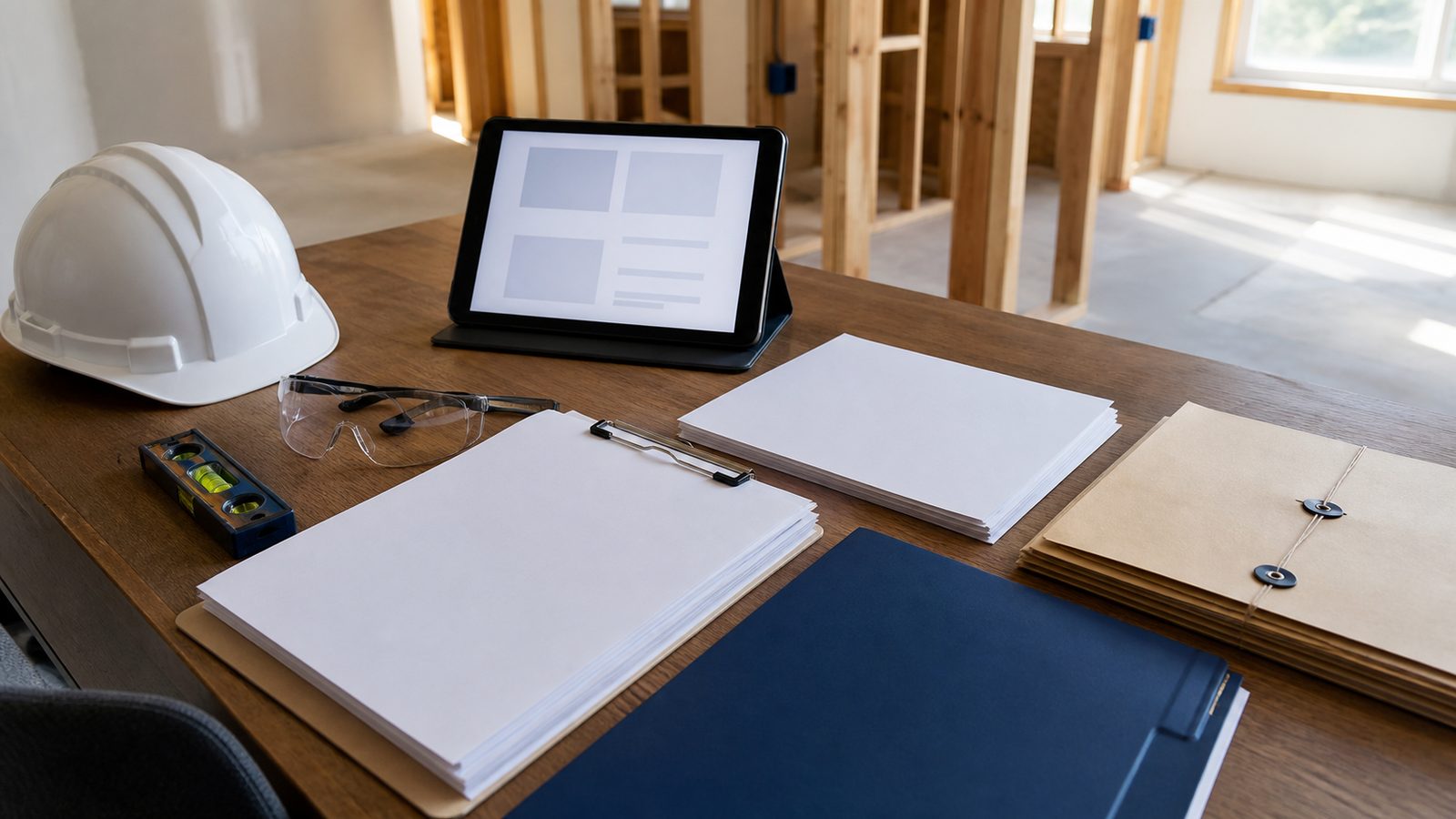
If you're evaluating builders for a large custom home in any state, these questions will separate operators from coordinators:
- Do you hold the required GC license in the state where I'm building, or are you using a local builder to front the license?
- Which trades will your crews perform directly, and which will be locally subcontracted?
- How do you document daily progress for clients who aren't on-site?
- Who is the named principal for the project, and what is their direct contact number in the contract?
- Can you show examples of projects you've delivered in states other than your headquarters state?
A builder who can't give specific answers — license numbers, crew composition, portal access, specific out-of-state project references — is a coordinator, not a builder.
JK Prestige operates in 14+ states with the same self-perform crew model, the same fixed-price contract structure, and the same principal-led communication that delivered the Hollowbrook Estate. The geography changes. The operating standard doesn't.
Explore JK's custom home capabilities in detail at our custom homes expertise page, and learn how the fixed-price contract and owner portal work together at The JK Way.
Get a written estimate in 48 hours for your custom home, regardless of state — contact a JK Prestige principal directly.
No call center. No coordinator. A JK principal reviews every inquiry and replies with a real number, not a range, not a follow-up form.
Request Free Estimate →