A repair is the right call when damage is isolated: one blown-off shingle after a summer storm, a single pipe boot that's cracked and leaking. A replacement is the right call when the roof system as a whole has failed. Confusing the two is expensive — you pay for a repair, the roof fails six months later, and you pay for a replacement anyway.
Florida accelerates that decision. Asphalt shingles are rated for 25 years by manufacturers, but Jacksonville's UV index, humidity cycles, and heat — rooftop temperatures regularly exceed 160°F in August — cut effective service life to 15–17 years in practice. What holds up in Ohio does not hold up here on the same timeline. Here are five signs that replacement is the right call, not another patch.
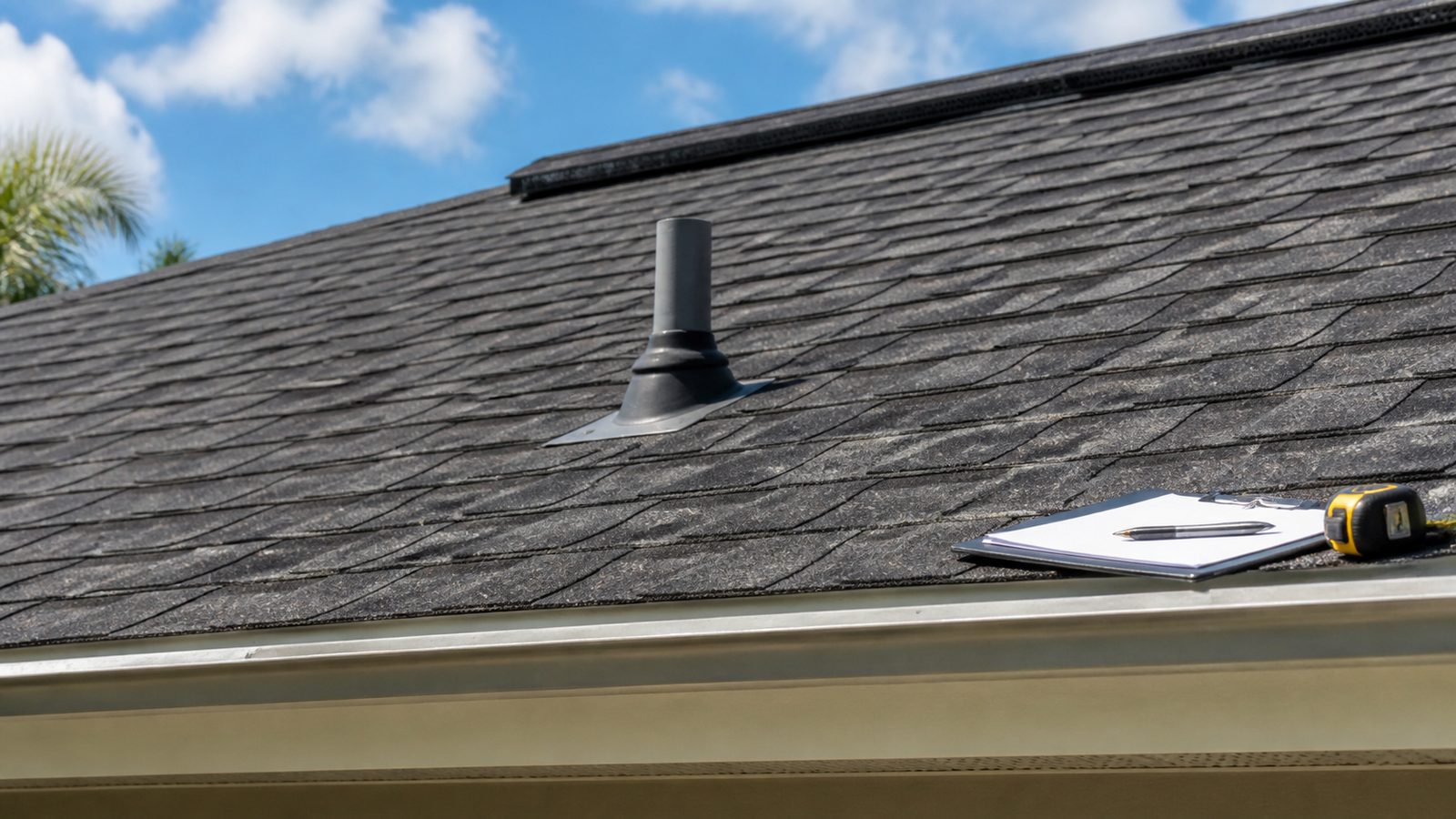
1. The Roof Is Over 20 Years Old and Has Florida Exposure
A 20-year-old asphalt roof in Jacksonville has already outlived its practical service life by three to five years. Even if it looks acceptable from the street, the shingle mat is brittle, the adhesive strips have long since lost their wind-seal function, and the granule layer — which reflects UV and protects the mat from heat — has thinned to the point where it cannot be restored. At this age, repairs address symptoms. A repaired section will hold; the sections around it won't. JK crews regularly find that homeowners who patched a 20-year-old roof spent $800–$1,500 on repairs in the 24 months before calling us, then spent $12,000–$18,000 on the replacement they needed from the start. The math on early replacement almost always wins.
2. Granule Loss Is Exposing the Asphalt Mat — Not Just Showing in Gutters
Granule loss is normal at the end of shingle life. Finding granules in gutters after installation or after a hail event is expected. The line that separates normal wear from replacement-level failure is when the loss exposes the dark asphalt mat underneath — visible as bare, dark patches on the shingle face. Once the mat is exposed, UV degradation accelerates rapidly. The mat cracks, curls, and eventually fails to shed water. Check your gutters after rain: a handful of granules is routine; a cup or more of fine grit from a single storm, combined with visible mat exposure on the shingle face, is a replacement signal. A repair cannot restore granule coverage to adjacent shingles already past their useful life.
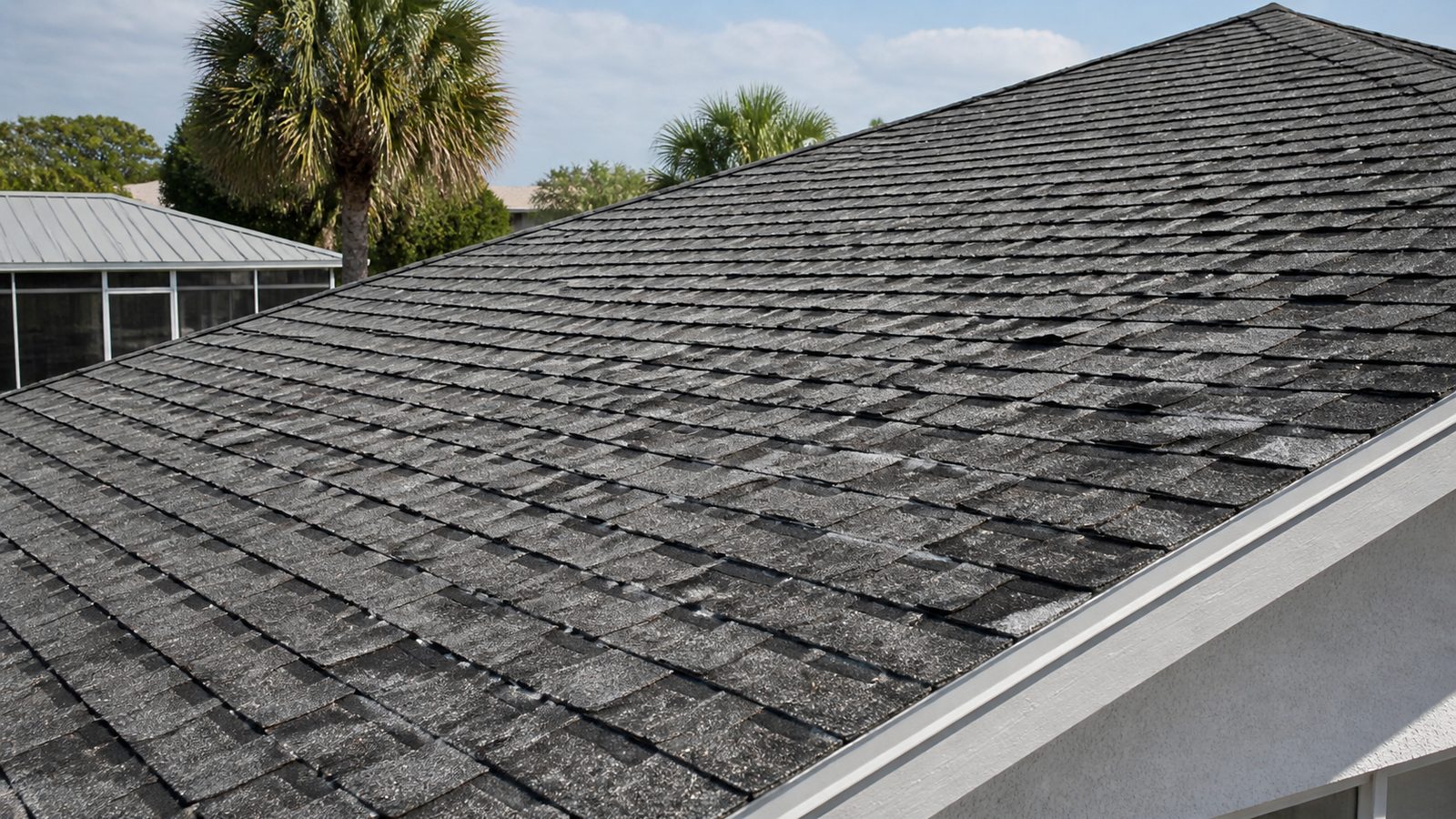
3. Widespread Shingle Cupping or Curling Across the Roof Plane
Cupping (edges turn upward) and curling (the shingle center lifts while edges stay flat) happen when the top surface of the shingle weathers faster than the bottom, or when the deck below traps moisture. Isolated cupping after a severe wind event in one section can sometimes be repaired. Widespread cupping or curling across an entire roof plane — or across multiple sections — means the shingle population as a whole has reached end of life. In Jacksonville, this pattern often shows up first on south-facing and west-facing slopes, which take the most direct sun. Replacing the worst section while leaving the others is a temporary fix at best. In high-wind events, a curled shingle provides no uplift resistance; each one is a potential entry point for water.
4. Multiple Previous Repairs in the Same Area
If a specific section of your roof has been repaired two or more times in the last five years, the underlying problem has not been solved. Repeated repairs in one area typically indicate one of three things: the deck beneath the shingles has moisture damage and is no longer providing a flat, solid nailing surface; flashing was never installed correctly and keeps failing at the same penetration; or the shingle population in that area is exhausted and cannot bond or seal properly. Each repair on a failing substrate adds cost without addressing the cause. JK inspectors document repair history during free inspections — two or more repair visits to the same 100-square-foot area is a direct indicator that a section replacement or full replacement is overdue.
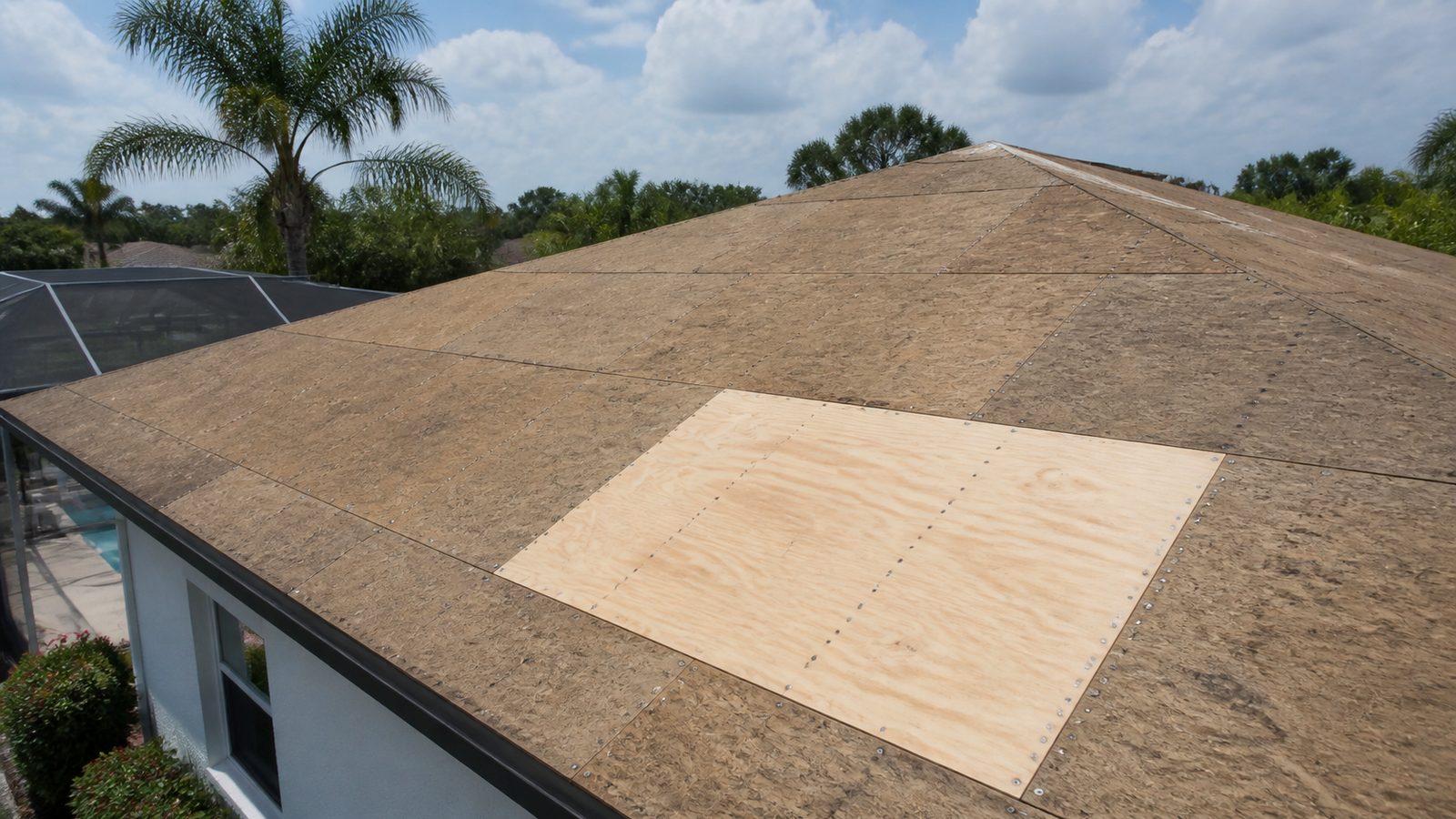
5. Sagging Deck Between Rafters — Structural Rot, Not Just Surface Damage
A sagging roof deck is not a roofing problem — it is a structural problem that happens to require a roofer to fix it. When decking (the OSB or plywood substrate under the shingles) retains moisture long enough, it rots. The rot weakens the panel, and the weight of the shingle layer above causes the section to sag between rafters. In Jacksonville, this condition often develops when attic ventilation is blocked, when a previous repair trapped moisture under a patch, or when a small leak went undetected for one to two seasons. No repair to the surface shingles fixes a rotted deck — the deck must be removed, the damaged panels replaced, and new shingles installed over solid substrate. This is full-replacement territory for the affected sections, and the damage often extends further than visible from the attic or from below.
If more than one of these five conditions is present, the conversation has moved from repair to replacement. The sooner that call is made, the more interior damage you avoid.
JK Prestige Construction self-performs every roofing job — no subcontractors on your project without disclosure. Our crews hold GAF Master Elite certification, and every inspection is free. Learn more about how we approach every project on The JK Way or explore our roofing services before you call.
Get a written estimate in 48 hours. Call (904) 944-0278 or request a free inspection.
No call center. No coordinator. A JK principal reviews every inquiry and replies with a real number, not a range, not a follow-up form.
Request Free Estimate →