Jacksonville's commercial construction market entered 2025 with more active projects per square mile than at any point since the city's post-2017 growth cycle began. Population inflows, port investment, and a healthcare expansion spanning four major health systems have made Northeast Florida one of the most active construction corridors in the Southeast. For owners and developers, that activity creates opportunity — and it creates risk if you hire the wrong team.
Understanding what is driving volume also tells you where subs are overcommitted, which delivery models are getting projects built on schedule, and why fixed-price contracts have become harder to find. JK Prestige Construction has self-performed work across Jacksonville through every quarter of this cycle. What follows is what we are seeing on the ground in 2025.
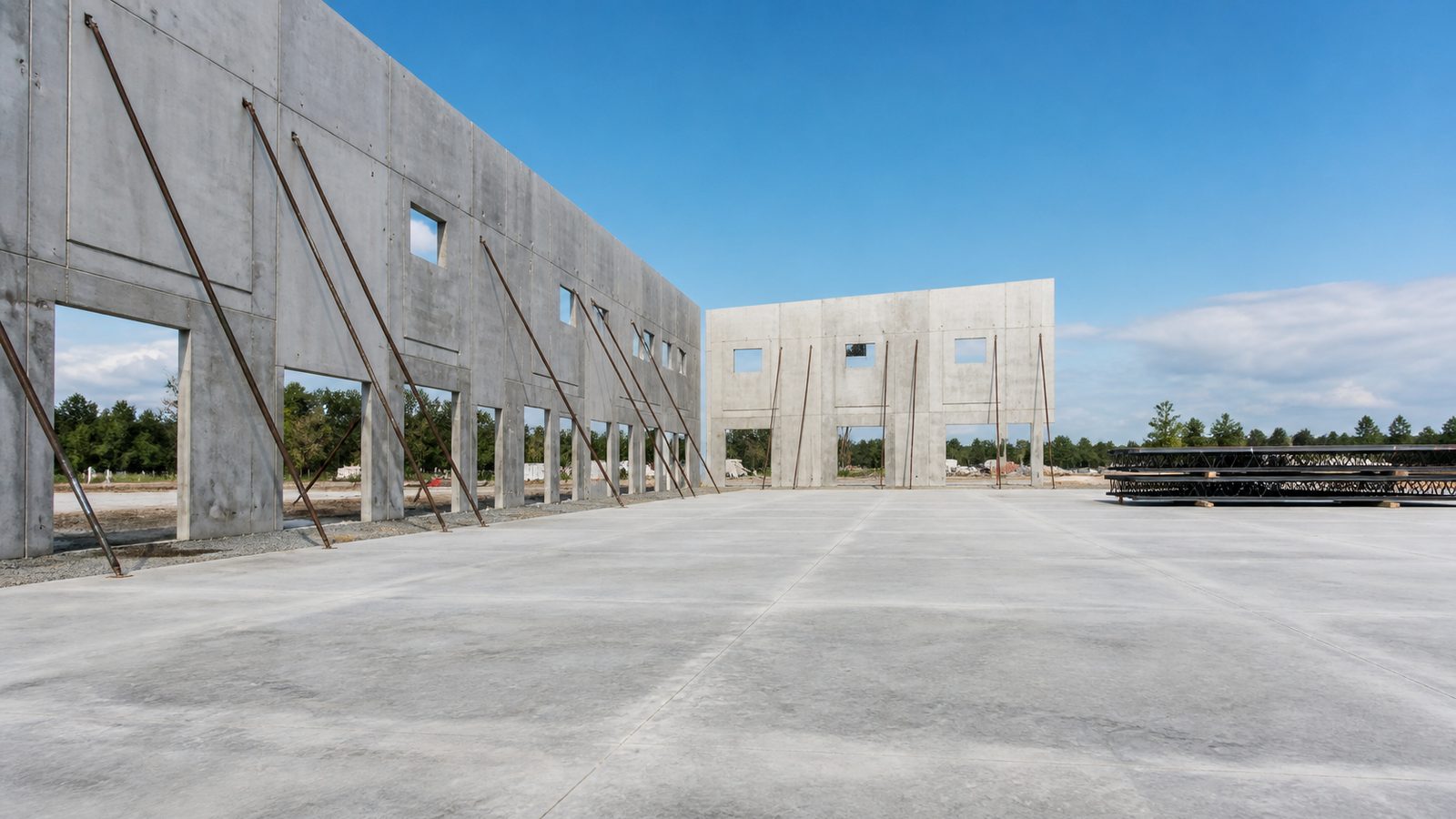
1. Logistics and Warehousing Boom Driven by JAXPORT Expansion
JAXPORT's ongoing capital program — now exceeding $300 million across the Blount Island and Dames Point marine terminals — has triggered a secondary wave of industrial development in Nassau and St. Johns counties. Distribution operators need last-mile and regional fulfillment facilities within 30 minutes of the port. That demand is filling industrial parks in Yulee, Callahan, and the I-95 corridor south toward St. Augustine. Tilt-up concrete and pre-engineered steel structures are the dominant building types. Developers who locked in land in 2022 and 2023 are now breaking ground; those who waited are competing for the same crane operators, concrete finishers, and erection crews. JK's self-perform concrete and framing capabilities have let us move to shell delivery faster than teams dependent on multiple subcontractors. See our warehouse expertise for completed examples.
2. Medical Office Building Development Accelerating Across Northeast Florida
Baptist Health, UF Health, and Mayo Clinic have each announced or broken ground on outpatient facility expansions within the last 18 months. That pipeline is producing demand for medical office buildings (MOBs) ranging from 12,000-square-foot single-tenant urgent care pads to multi-story ambulatory surgery centers. The MOB category requires HVAC systems engineered to clinical standards, ADA (Americans with Disabilities Act) path-of-travel compliance from the parking field through every suite, and infection control protocols during construction for any occupied adjacent space. JK's ICRA (Infection Control Risk Assessment)-trained crews handle occupied-building medical construction. If you are scoping a Jacksonville MOB, the JK Way explains how principal involvement works on these projects.
3. Tenant Improvement Allowances Rising as Landlords Compete for Credit Tenants
Vacancy in Class A Jacksonville office and retail product has pushed landlords to offer tenant improvement (TI) allowances that averaged $45–65 per square foot in 2023 and are now routinely clearing $80–100 per square foot on transactions with national credit tenants. That is landlord capital going directly into construction budgets — which means more TI projects are running simultaneously, competing for the same drywall crews and electricians. Owners who select a GC with in-house framing and drywall — trades that represent 25–35% of a typical TI cost — move from permit issuance to substantial completion faster than those waiting for sub availability. JK self-performs both trades and carries its own material supply chain for Jacksonville and surrounding counties.

4. Design-Build Delivery Replacing Traditional Bid-Award on Most Projects Under $20M
In 2019, roughly 40% of Northeast Florida commercial projects under $20 million used design-build delivery. In 2025, that figure is closer to 65% based on permit filings across Duval, Nassau, and St. Johns counties. Owners are choosing design-build because it compresses schedule — eliminating the gap between design completion and GC procurement — and because it puts schedule and cost risk on a single party. The model works when the GC has real preconstruction capability: meaning they can price a schematic or design development set within a credible range, not just after construction documents are complete. JK provides fixed-price proposals at the design development stage for qualifying projects, with a 48-hour turnaround on estimates. Request a consultation to discuss design-build delivery for your project.
5. Self-Perform GC Premium as Labor Shortage Bites Sub Markets
Florida's construction labor shortage is not new, but it reached a different level in 2024 and 2025. Specialty subcontractors in framing, drywall, and concrete flatwork are booking 8–12 weeks out in Duval County. For an owner trying to hit a lease commencement date or a certificate of occupancy deadline, a GC that subcontracts every trade is a GC that cannot control the schedule. Self-perform general contractors — those who carry their own labor for at least framing and drywall — are being selected faster, finishing faster, and commanding a modest premium that still saves owners money compared to schedule-delay costs. JK self-performs framing, concrete, drywall, finish carpentry, and roofing. On a typical 10,000-square-foot TI, that eliminates three sub procurement cycles from the critical path.
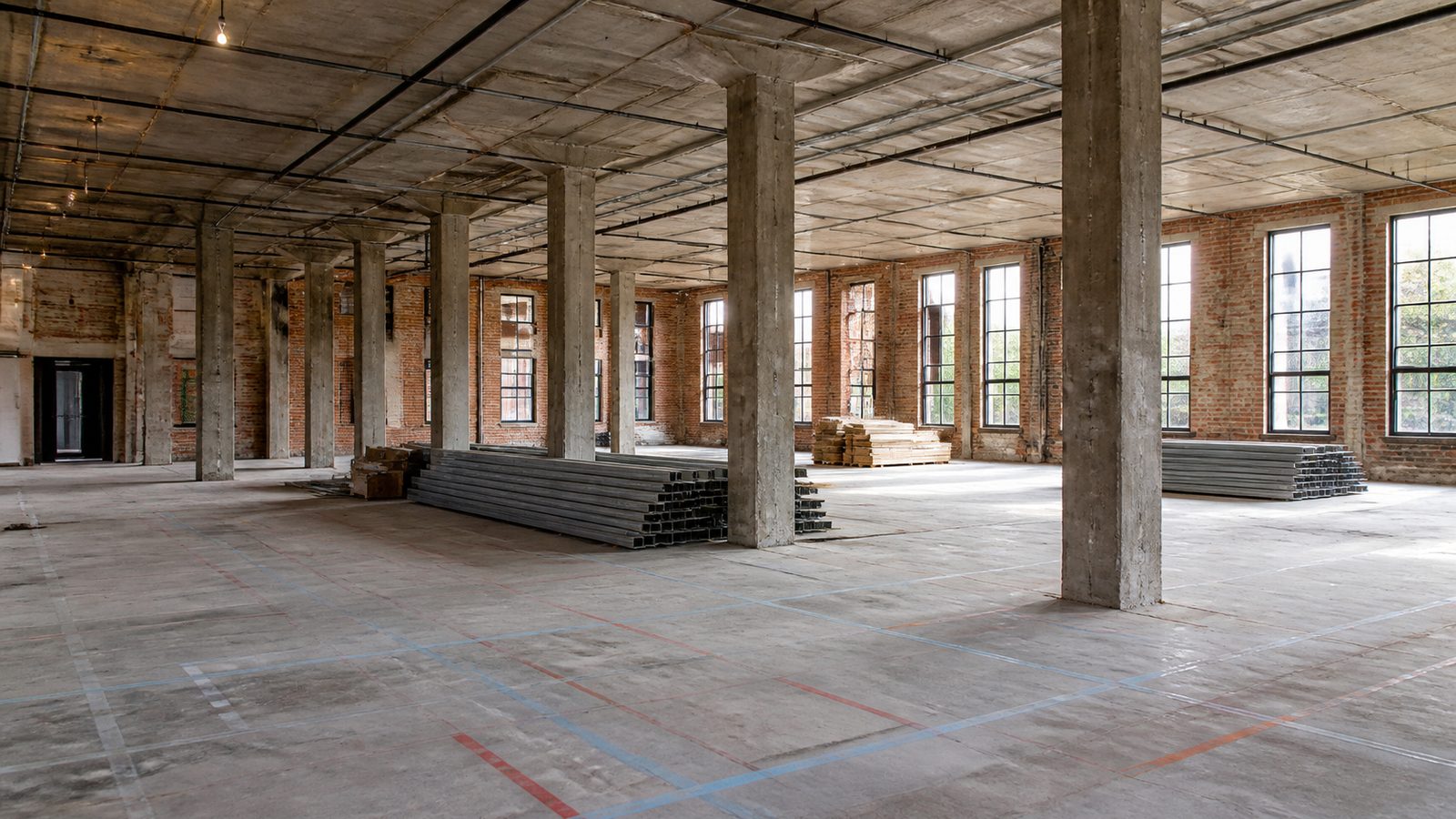
6. Adaptive Reuse of Older Commercial Stock in Springfield and East Jacksonville
Springfield and East Jacksonville sit within 10 minutes of Downtown and contain a significant inventory of 1920s–1970s commercial buildings — brick masonry warehouses, former light-industrial buildings, and early retail blocks. Developers are converting this stock to mixed-use, food and beverage, creative office, and live-work product. Adaptive reuse in Jacksonville requires navigating Duval County's building department on structural assessments, MEP (mechanical, electrical, plumbing) replacement in buildings with no existing drawings, and occasionally AHCA (Agency for Health Care Administration) review if any healthcare use is proposed. JK has completed adaptive reuse work in Springfield and understands the documentation requirements. Structural surprises during demo are common; a GC that self-performs framing can respond immediately rather than waiting for a sub to remobilize.
7. Pre-Engineered Steel Structures Gaining Ground for Industrial and Light Commercial
Pre-engineered metal buildings (PEMBs) from manufacturers like Nucor Building Systems, BlueScope Buildings, and Varco-Pruden now represent a meaningful share of Jacksonville's new light industrial and flex commercial product. Lead times in 2024 ran 16–22 weeks from order to delivery; planning around that lead time is essential on any project targeting a 2025 completion. PEMBs work well for clear-span warehouse, flex industrial, and some retail applications. They do not replace tilt-up concrete for high-cube distribution (clear heights above 36 feet) and are not appropriate for occupied medical or office interiors without significant supplemental framing. JK erects and finishes PEMB structures and can advise on whether steel or concrete tilt-up better suits your program and site.
Ready to talk through your 2025 project? Get a written estimate in 48 hours. Call (904) 944-0278 or request a consultation.
No call center. No coordinator. A JK principal reviews every inquiry and replies with a real number, not a range, not a follow-up form.
Request Free Estimate →