Florida added more than 180,000 new housing units in 2023. The majority were production homes built by regional and national builders in master-planned communities from Nocatee to Babcock Ranch. Production building is a legitimate model — it delivers predictable homes at controlled costs on developer-owned land. But it is a fundamentally different product from custom construction, and buyers who confuse the two models are often disappointed by the process before the foundation is even poured.
Understanding these differences before you start is not about which model is better in the abstract. It is about which model fits your specific situation — your lot, your timeline, your priorities, and how much control you want over what you end up with. The seven differences below are the ones that matter most for Northeast Florida buyers considering a custom build.
1. Design Control: Your Plan vs. a Catalog
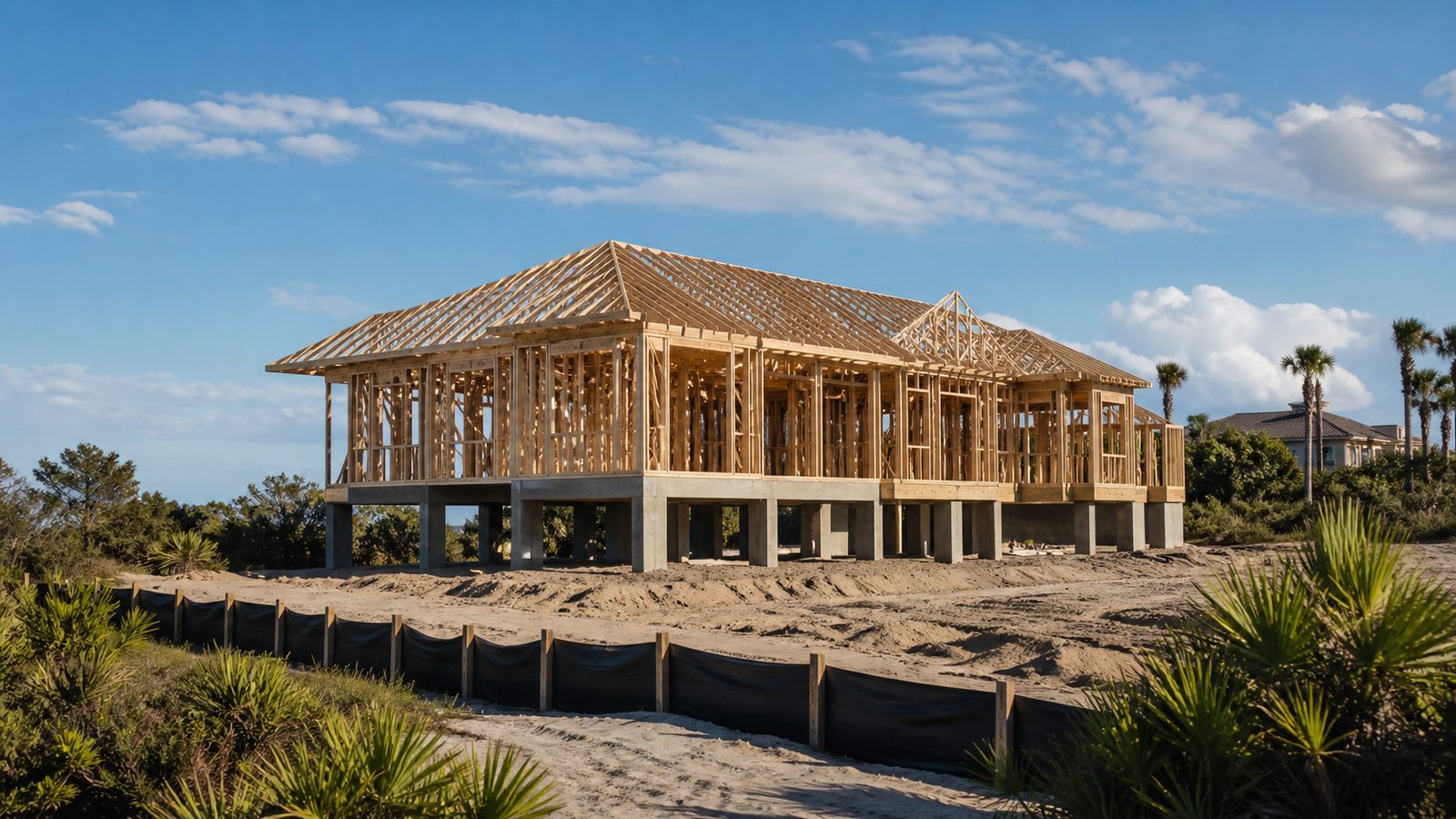
A production builder offers a fixed library of floor plans — typically 8 to 20 models with a set of structural option upgrades available at additional cost. You choose from what they have built, not from what you want to build. Structural changes to a production home's approved plan — moving walls, changing the staircase, adding a second primary suite — are typically not available. A custom builder starts with a blank slate: your architect or their design team draws a plan specific to your lot, your program, and your preferences. In Jacksonville's infill neighborhoods — San Marco, Avondale, Murray Hill — the lot shape, existing trees, and setback constraints often require a custom plan anyway, because no catalog floor plan was designed around your specific site conditions.
2. Material Quality: Owner-Selected Specs vs. Volume-Purchase Commodity Materials
Production builders purchase materials at volume pricing across dozens of simultaneous projects. The result is a standardized spec sheet — one flooring selection, one countertop line, one window manufacturer — selected for cost efficiency at scale. Upgrade options are available, but they are limited to what the builder has a volume relationship with. A custom builder allows the owner to specify any material on the market: a specific window manufacturer, a particular quartzite slab, a custom cabinetmaker whose work they've seen. The selection process takes more time, but the result reflects the owner's priorities rather than the builder's procurement relationships. In the Northeast Florida custom market, owner-selected materials are the primary driver of finish quality differentiation.
3. Principal Involvement: Your GC Answers Your Calls vs. a Customer Service Rep
This is the operational difference that owners feel most acutely during construction. A production builder assigns a customer relations representative to manage owner communication during the build. That person typically works from a script, has limited authority to make field decisions, and escalates issues through an internal chain that may not resolve quickly. A principal-led custom GC answers calls directly — the founder or senior principal is available by phone, walks the site with you, and has full authority to make decisions in the field. At JK Prestige Construction, the founder answers every call and walks every project. In a 12-month construction cycle, direct principal access prevents the weeks-long communication delays that turn small issues into significant ones.
4. Location Flexibility: Your Lot vs. Their Subdivisions
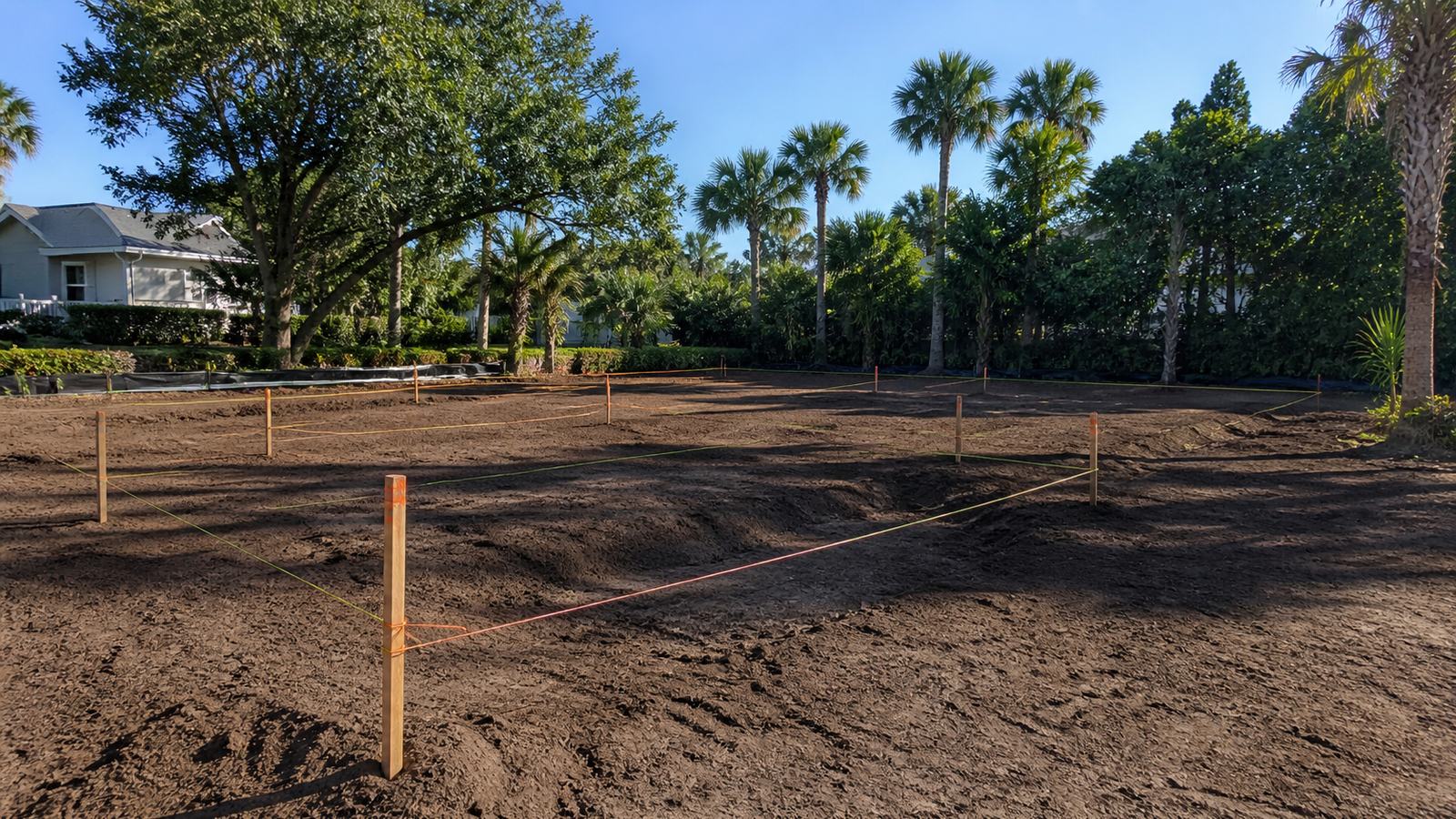
Production builders build in their own subdivisions, on land they have entitled and developed. If you own a lot in Riverside, Ortega, Mandarin, or anywhere outside a production builder's active subdivision, you cannot use that builder — period. A custom builder works wherever your lot allows: infill lots in established neighborhoods, rural lots in Clay County, waterfront lots in Fleming Island, or teardown lots in historic Avondale. This location flexibility is the primary reason custom builders dominate Jacksonville's established neighborhoods. Nocatee and similar master-planned communities have some custom lot sections, but the design guidelines and community restrictions may still limit what a custom builder can actually build there.
5. Price Certainty: Fixed-Price Custom Is as Certain as Production — With More Flexibility
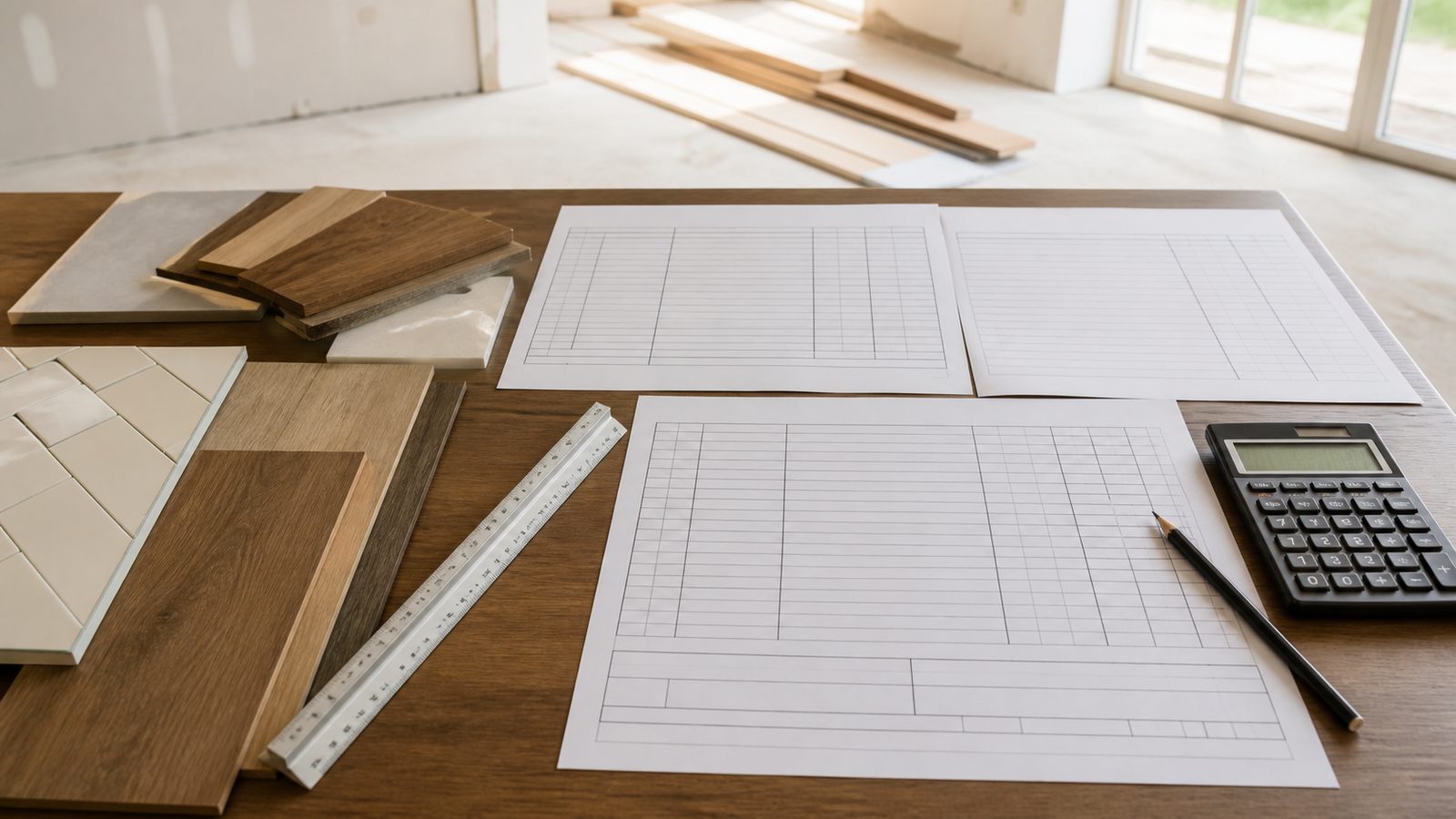
A common misconception is that custom construction is inherently less price-certain than a production build. Production builders offer a fixed price on a fixed plan — the price certainty comes from the inflexibility of the product. A custom GC with a fixed-price contract offers the same price certainty on the specific scope you've defined, with the flexibility to make that scope reflect your actual priorities. The key variable is not custom vs. production — it is cost-plus vs. fixed-price. A custom GC working on a cost-plus basis is unpredictable; a custom GC with a fixed-price contract and a pre-construction selection lock is as predictable as any production builder. JK Prestige Construction operates exclusively on fixed-price contracts with 48-hour estimate turnaround.
6. Timeline: Custom 10–16 Months vs. Production 6–10 Months
Production builders run parallel permit tracks across dozens of simultaneous builds, have existing trade relationships with crews who work their subdivisions exclusively, and have completed identical plans hundreds of times. This allows them to compress timelines to 6 to 10 months from contract to close. A custom home requires a unique plan set, a site-specific permit application, and coordination of trades around a single project. The realistic range in Northeast Florida for a custom home above 2,500 square feet is 10 to 16 months from design completion to certificate of occupancy. This is not a quality compromise — it is the cost of specificity. Owners who need occupancy in 8 months should be realistic about whether custom construction can meet that schedule.
7. Resale Value: Custom Homes Hold Value Better in Established Jacksonville Neighborhoods
Production homes in master-planned communities are valued partly by the community itself — the HOA amenities, the school district, the proximity to commercial services within the development. As similar homes in the same subdivision trade, the comparable sales set a ceiling on individual home value regardless of finish quality. A custom home in an established Jacksonville neighborhood — Ortega, Ponte Vedra Beach, San Marco — is compared against a thinner set of comparables, many of which are also custom. In those markets, the specific finish quality, lot characteristics, and design differentiation have more room to influence appraised value. Locally, real estate professionals consistently report that custom homes in established Duval County neighborhoods hold value through market cycles better than production homes in new subdivisions.
Get a written estimate in 48 hours. Call (904) 944-0278 or request a free consultation.
JK Prestige Construction builds custom only, operates on fixed-price contracts, and keeps the principal on every project. Learn more about our custom home process and how JK works.
No call center. No coordinator. A JK principal reviews every inquiry and replies with a real number, not a range, not a follow-up form.
Request Free Estimate →