Every hurricane season, Jacksonville and the rest of Duval County see an influx of out-of-state roofing companies following storm damage. Some are legitimate. Many are not. But even setting storm chasers aside, a standard residential roofing estimate can hide serious problems in its line items — or in what those line items are missing entirely.
A low roofing bid is not a deal. It's a question: what did they leave out? Here are 7 red flags to check in any roofing estimate before you sign.
1. No Permit Line Item
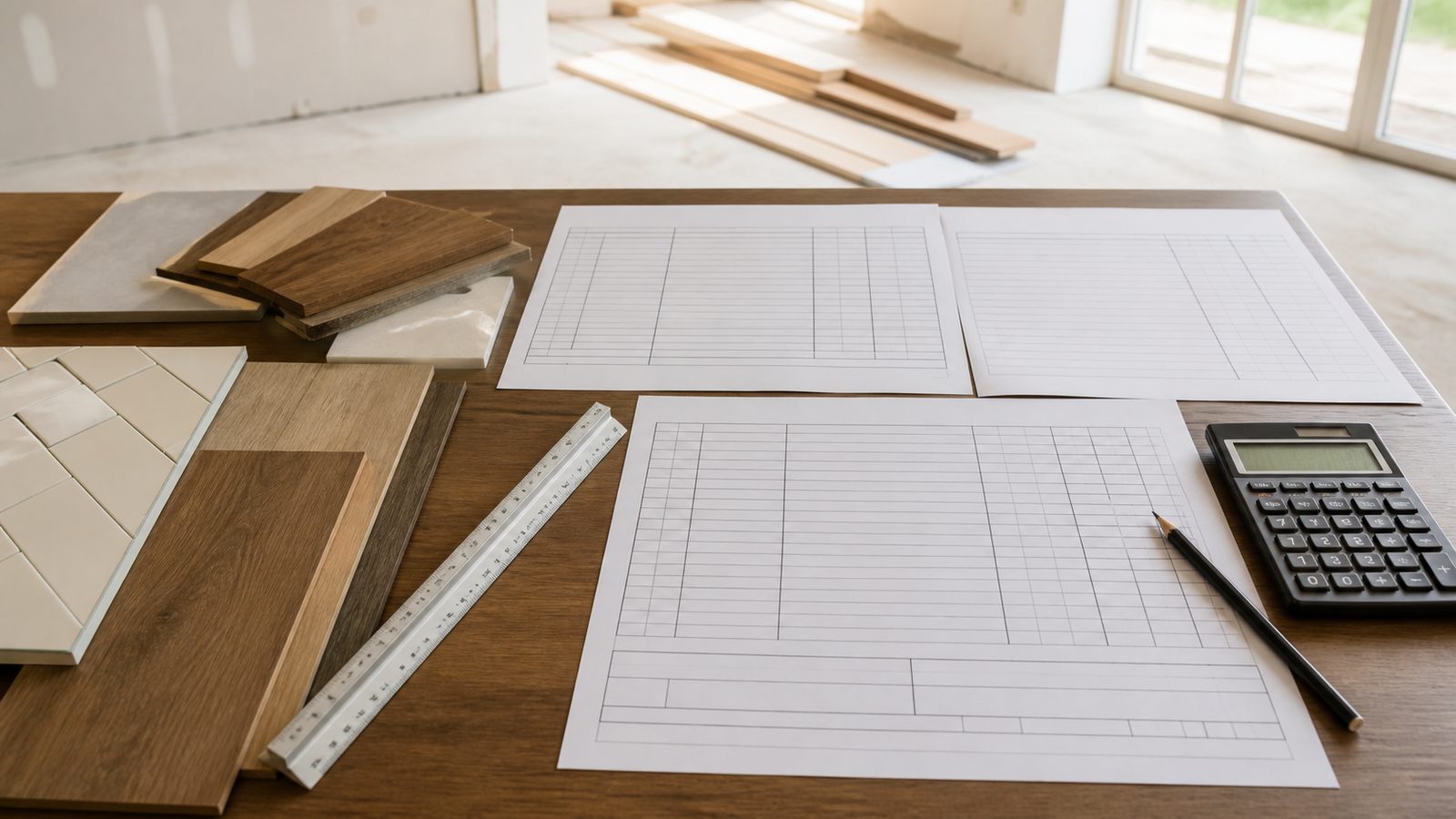
If a roofing estimate has no line item for a building permit, the contractor is planning to skip it. In Jacksonville, a roof replacement requires a permit from the Duval County Building Inspection Division. The permit triggers an inspection that confirms proper decking, underlayment, flashing, and shingle installation — the documentation that matters if you ever have a wind damage claim with your insurance company.
Skipping the permit is illegal. More practically, it transfers liability to you: if an unpermitted roof fails or causes damage, your homeowner's insurance may deny the claim. A permit for a standard Jacksonville residential roof runs $150–$400 depending on square footage. Any GC who leaves it out of the bid either doesn't know it's required or is hoping you won't notice. Ask directly: "Is the permit included in this estimate?" If it isn't, require it.
2. Overlay Instead of Full Tear-Off
An overlay means new shingles are installed on top of your existing shingles. Florida Building Code prohibits more than two layers of roofing on a residential structure, and most insurers will not write coverage on a roof with two layers. But beyond code and insurance, overlays hide existing deck problems.
When a roofer tears off your old roof, the decking is exposed. That's when rotten plywood, delaminated OSB (oriented strand board), or failed sheathing gets caught and replaced. Overlay over damaged decking means you're attaching a 30-year shingle to a substrate that won't survive one hurricane-force wind event. In Jacksonville's coastal climate — where sustained winds during a named storm can exceed 100 mph — this is not a theoretical risk. A full tear-off costs more because it involves labor and disposal. It's the correct standard. Any bid that proposes overlay on a replacement (as opposed to a patch repair) should be declined.
3. Reuse of Existing Flashings
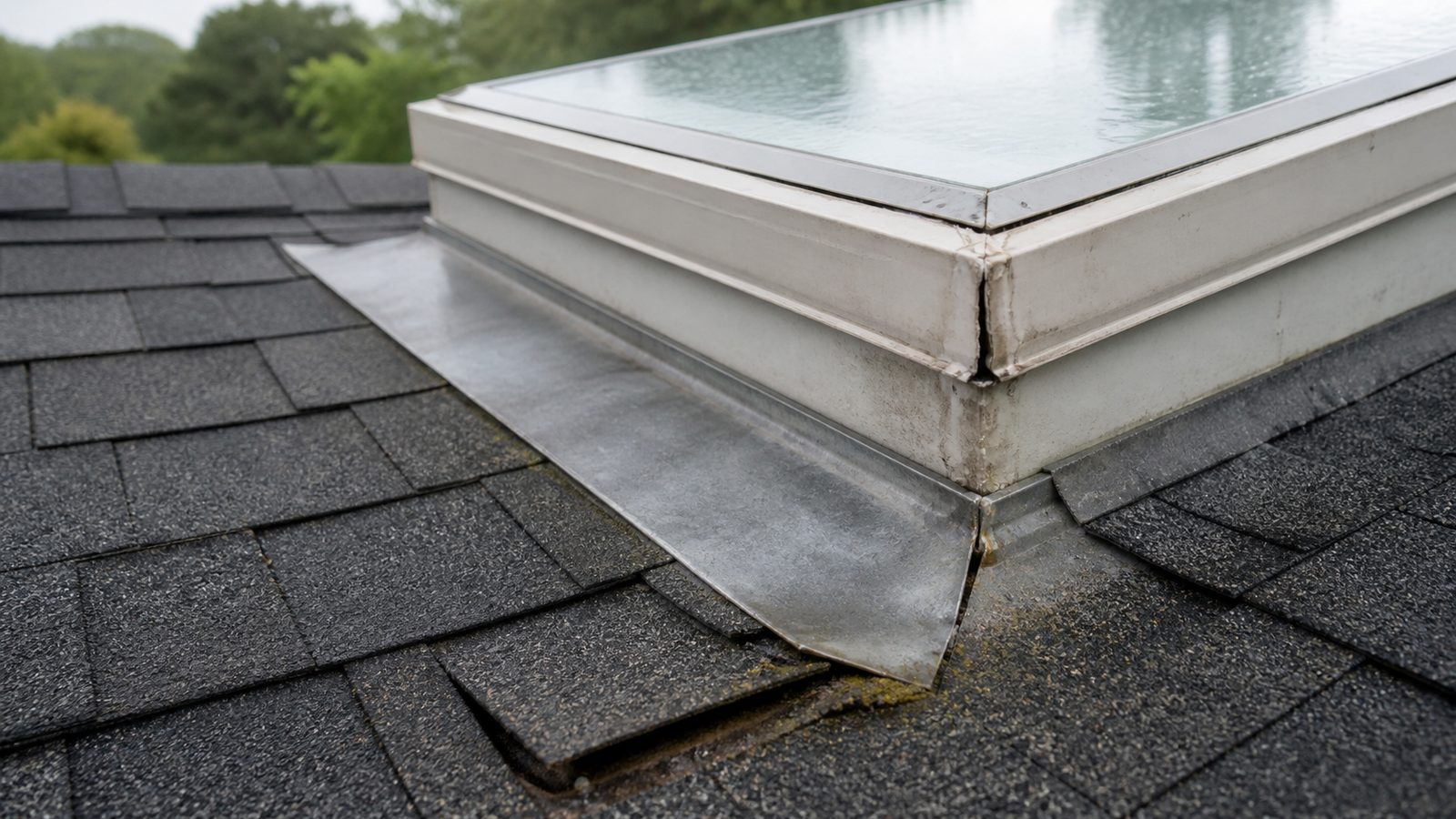
Flashings are the metal or composite strips that seal roof penetrations — chimneys, pipe boots, skylights, the valley between two roof planes. They fail at approximately the same rate as the shingles they accompany. An estimate that proposes to reinstall existing flashings on a new roof is essentially installing new shingles on old failure points.
Step flashings at dormers and wall intersections are especially prone to deterioration in Florida's UV and moisture environment. If a 20-year-old roof is being replaced, its 20-year-old flashings need to go with it. The cost of new flashing is minor relative to the total roof replacement — typically $200–$800 on a standard home depending on penetration count. A contractor who proposes reusing existing flashings is cutting costs in the place that causes the most water damage when it fails.
4. No Drip Edge or Starter Strip Line Item
Drip edge is the metal L-bracket that runs along the eaves and rakes of the roof to direct water away from the fascia and into the gutter. Starter strips are pre-coated shingle strips installed along the perimeter before the field shingles, providing adhesion at the roof edge. Both are required under the Florida Building Code and by every major shingle manufacturer, including GAF and CertainTeed, as a condition of their material warranty.
If your estimate doesn't list drip edge and starter strips as separate line items, ask whether they're included. "It's standard, it's always included" is not the answer you want — you want to see it on paper. Installing shingles without a starter strip on a Florida home is a warranty-voiding shortcut that leaves your roof edge vulnerable to wind uplift, which is exactly how a roof peels back in a storm.
5. Unfamiliar or Unlisted Brand Materials
Major roofing manufacturers — GAF, CertainTeed, Owens Corning (OC) — have established shingle performance data, manufacturer warranties, and quality control processes. Their products are also the basis for contractor certification programs: GAF Master Elite, CertainTeed SELECT ShingleMaster, and OC Platinum are credentials that require training, volume commitments, and customer satisfaction verification.
An estimate listing "architectural shingles" or "30-year shingles" without naming the manufacturer is a yellow flag. An estimate listing a brand you can't find on a manufacturer website is a red one. Off-brand or closeout shingles may have no manufacturer warranty at all, which means your only recourse on a material failure is against a contractor who may be out of business or out of state by the time the problem shows up. Require the manufacturer, product line, and shingle color to be specified in writing before you sign. JK Prestige Construction is a GAF Master Elite contractor — one of fewer than 3% of roofing contractors nationally to hold that designation — which means access to GAF's strongest warranty options and accountability standards. See more at our roofing page.
6. No Disposal or Haul-Away Line Item
A full tear-off generates one to three tons of old shingles, underlayment, and fasteners per average Jacksonville home. That material has to go somewhere. If your estimate has no line item for debris disposal or dumpster, one of two things is happening: either it's buried in the overall price (ask), or you're going to find a pile of old shingles in your yard that the contractor expects you to handle.
In some cases, unlicensed or under-capitalized crews dispose of roofing debris in Dumpsters that belong to neighboring job sites or commercial properties — which is illegal and creates liability for the property owner if the debris is traced. Get the disposal addressed in writing: who arranges it, who pays for it, and when it leaves your property.
7. Verbal-Only Warranty — Nothing in Writing
A roofing warranty has two distinct components: the manufacturer's material warranty (covering the shingles themselves) and the contractor's workmanship warranty (covering installation defects). A credible roofing estimate includes both in writing. A contractor who says "I guarantee my work" with nothing on paper is offering you nothing enforceable.
In the Jacksonville market, post-storm chasers in particular offer verbal 10-year warranties that disappear when the company does. Get the workmanship warranty in the contract: minimum years, what it covers (leaks from installation defects, not storm damage), and how a warranty claim is initiated. For GAF Master Elite contractors, the Golden Pledge warranty includes both lifetime material coverage and 25-year workmanship coverage — backed by GAF, not just the installing contractor. That matters if the contractor goes out of business in year three.
JK Prestige Construction provides written, itemized estimates for every roofing project in Jacksonville and Duval County. Every estimate includes permit, full tear-off, manufacturer-specified materials, and written warranty terms. Get a written estimate in 48 hours. Call (904) 944-0278 or get a free consultation.
No call center. No coordinator. A JK principal reviews every inquiry and replies with a real number, not a range, not a follow-up form.
Request Free Estimate →