Safety training credentials are one of the easier things to verify on a GC, and one of the most frequently overlooked by owners who focus primarily on price and schedule. OSHA 30 certification is a real differentiator — not because it guarantees a safe job site, but because it indicates a minimum floor of hazard awareness, affects what projects a GC can bid, and has a direct connection to the GC's insurance cost and claim history.
JK Prestige Construction requires OSHA 30 for all superintendents and OSHA 10 as a minimum for all field personnel. That's not a marketing line — it's a contract requirement that flows down to every crew on a JK site. Here's what those credentials actually mean, and why they matter to the people paying for the building.

1. OSHA 30 Is a 30-Hour Training Program Covering 19 Construction Hazard Modules
The Occupational Safety and Health Administration's (OSHA) 30-hour outreach training program for construction covers 19 defined hazard modules: fall protection, scaffolding, cranes and rigging, electrical safety, excavation and trenching, materials handling, struck-by hazards, caught-in hazards, and more. The program is delivered by OSHA-authorized trainers and concludes with a wallet card issued by the OSHA Training Institute (OTI) Education Centers.
The 30-hour course is not a general safety awareness class — it's specific to construction site hazards and designed for supervisors who need to recognize, evaluate, and control hazard exposures in the field. Each module covers the regulatory standard, the common failure modes, and the corrective actions. Completion takes a minimum of 30 classroom or online hours and cannot be self-certified.
2. It's Required on Many Public and Institutional Projects by Specification
Florida public projects — including state agency construction, county and city projects in Jacksonville and Duval County, and many federally funded projects — increasingly include OSHA 30 requirements in the project specifications. The specification typically reads that all on-site supervisors must hold current OSHA 30 cards, and that verification must be provided to the owner's representative before mobilization.
Hospital project specifications — including those issued by UF Health, Baptist Health, and other Northeast Florida healthcare systems — routinely require OSHA 30 for all supervisory personnel. GCs who don't maintain OSHA 30 across their superintendent team are disqualified from bidding these projects before the price is ever submitted. This is not a soft preference — it's a go/no-go criterion in the RFQ stage.
3. OSHA 30 Holders Are Qualified as "Competent Persons" for Their Trained Hazard Types
OSHA regulations require a "competent person" — defined as someone capable of identifying existing and predictable hazards and with authority to take corrective action — for specific activities: fall protection systems, excavation work, scaffolding, and others. OSHA 30 training contributes to competent person qualification for the hazard types covered in the training, when combined with relevant field experience.
This matters because it's a legal standard, not just a training credential. If an OSHA inspector visits a site and asks who the competent person is for the scaffolding erection in progress, the answer needs to be a specific named individual with documented qualifications. A superintendent without OSHA 30 training has a weaker basis for that designation, which creates regulatory exposure for the GC and the owner on projects where the owner is the controlling employer.
4. OSHA 30 Is Not a Substitute for Site-Specific Safety Plans
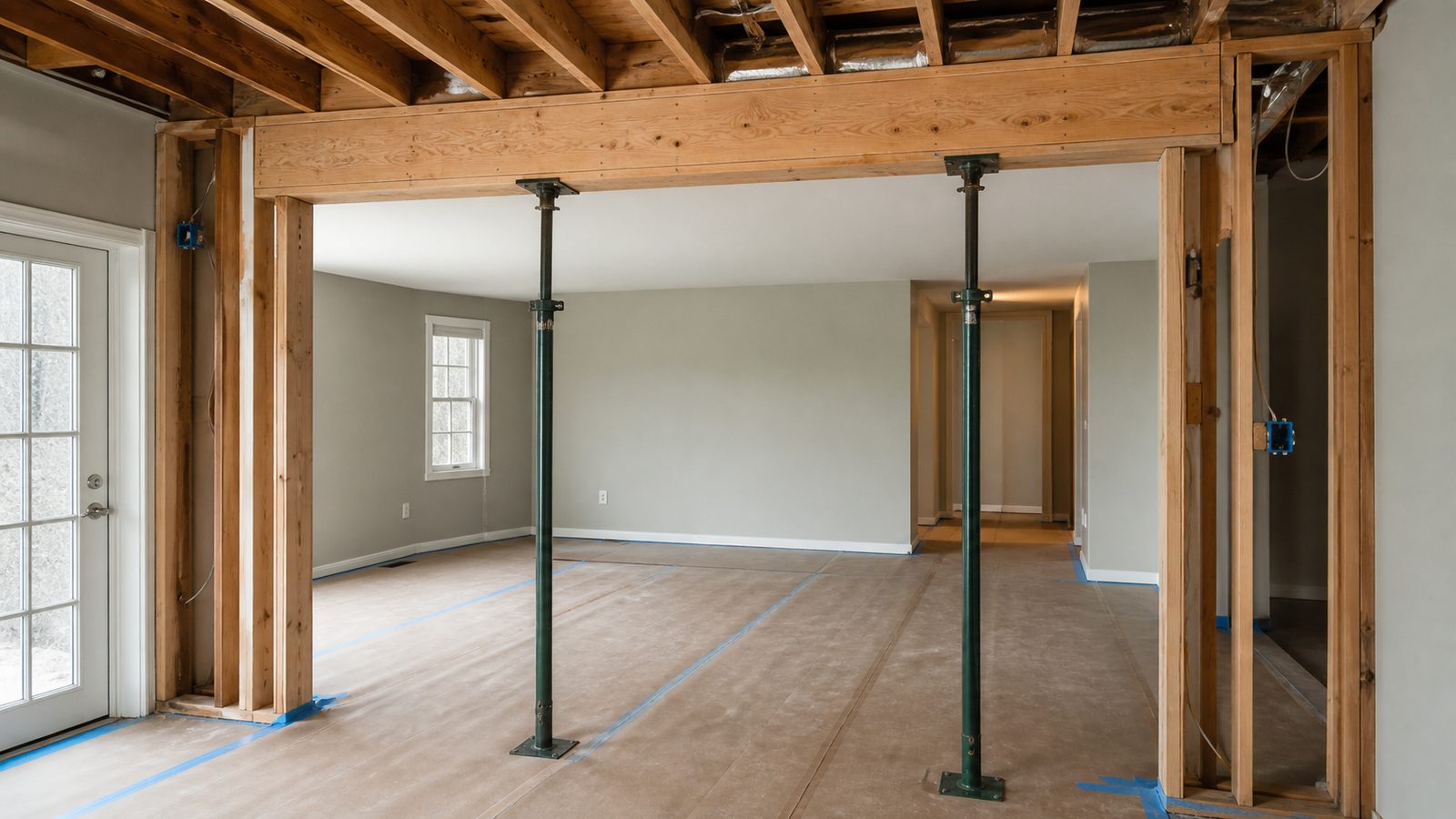
OSHA 30 training is foundational knowledge, not a project-specific safety plan. Every construction project requires its own safety documentation: a written site safety plan, a fall protection plan addressing the specific conditions of that project, Job Hazard Analyses (JHAs) for high-risk tasks, an emergency action plan with site-specific contacts and routes, and activity hazard analyses for crane lifts, excavations, and confined space entries.
OSHA 30 gives the superintendent the knowledge framework to write and implement these documents correctly. It does not generate them. A GC who checks the OSHA 30 box but doesn't maintain site-specific safety documentation is halfway to compliance — not there. JK Prestige maintains project-specific safety plans on every build, updated as site conditions change.
5. OSHA 30 Crews Have Lower Workers' Comp Claim Frequency — Which Lowers the GC's EMR
The Experience Modification Rate (EMR) is the insurance industry's measure of a GC's historical claim frequency relative to the industry average. An EMR of 1.0 is industry average; below 1.0 means better-than-average claim history. EMR directly affects workers' compensation premium: a GC with an EMR of 0.75 pays meaningfully less per dollar of payroll than one with an EMR of 1.20.
OSHA 30 training is one of the documented factors that correlates with lower claim frequency. When supervisors can recognize hazards before incidents occur, claims happen less often. A GC with a low EMR and documented safety training has a real cost advantage: lower overhead from reduced insurance premiums, and a track record that institutional owners use as a pre-qualification filter. In Florida, where workers' comp rates are a significant overhead line for GCs, EMR management matters financially.
6. It Signals to Institutional Owners That the GC Takes Safety Seriously
Hospitals, government agencies, and school districts in Jacksonville apply pre-qualification criteria before inviting GCs to bid. OSHA training credentials are on every pre-qualification questionnaire. Beyond the credential itself, the question of what a GC does beyond the minimum — requiring OSHA 30 for all field leadership, not just for compliance on a specific project — signals organizational commitment to safety culture.
Institutional owners like Duval County Public Schools, the City of Jacksonville, and Northeast Florida healthcare systems have had bad experiences with GCs who treat safety as a compliance exercise. The GCs they return to are the ones who treat it as an operational standard. OSHA 30 across the entire superintendent team is one of the visible indicators they look for.
7. OSHA 10 Is the Minimum for Field Workers; OSHA 30 Is for Supervisors
OSHA 10 is a 10-hour outreach training program covering basic construction safety hazards. It's designed for entry-level and field workers who need baseline hazard awareness. Many Florida public project specifications require OSHA 10 for all workers on site, not just supervisors. OSHA 30 is the supervisor-level credential — covering more modules in greater depth and preparing the holder to manage hazard identification and correction for a crew.
The two are not interchangeable. A crew of OSHA 10-certified workers led by a supervisor without OSHA 30 is not the same as a crew led by an OSHA 30 superintendent. JK Prestige requires OSHA 10 as the floor for all field personnel and OSHA 30 for superintendents — the full stack, not just the minimum.
Get a written estimate in 48 hours. Call (904) 944-0278 or request a consultation.
Learn more about the JK Prestige approach to project delivery and our hospital construction experience, where OSHA 30 and ICRA training are required on every project.
No call center. No coordinator. A JK principal reviews every inquiry and replies with a real number, not a range, not a follow-up form.
Request Free Estimate →