Change orders are the single largest source of budget overruns on construction projects. Some are legitimate — genuinely unforeseen conditions that no one could have predicted. Most are not. Most change orders are the result of incomplete design decisions made before construction started, poor communication during construction, or scope that was not clearly defined in the original contract. Every one of those causes is preventable.
A fixed-price contract reduces your exposure to change orders from contractor estimation errors, but it does not eliminate changes driven by design gaps, owner decisions, or field conditions that pre-construction work should have caught. These seven practices address the actual causes — not the symptoms. JK Prestige's pre-construction process is specifically designed to eliminate causes 1, 2, and 5 on this list before the contract is signed.
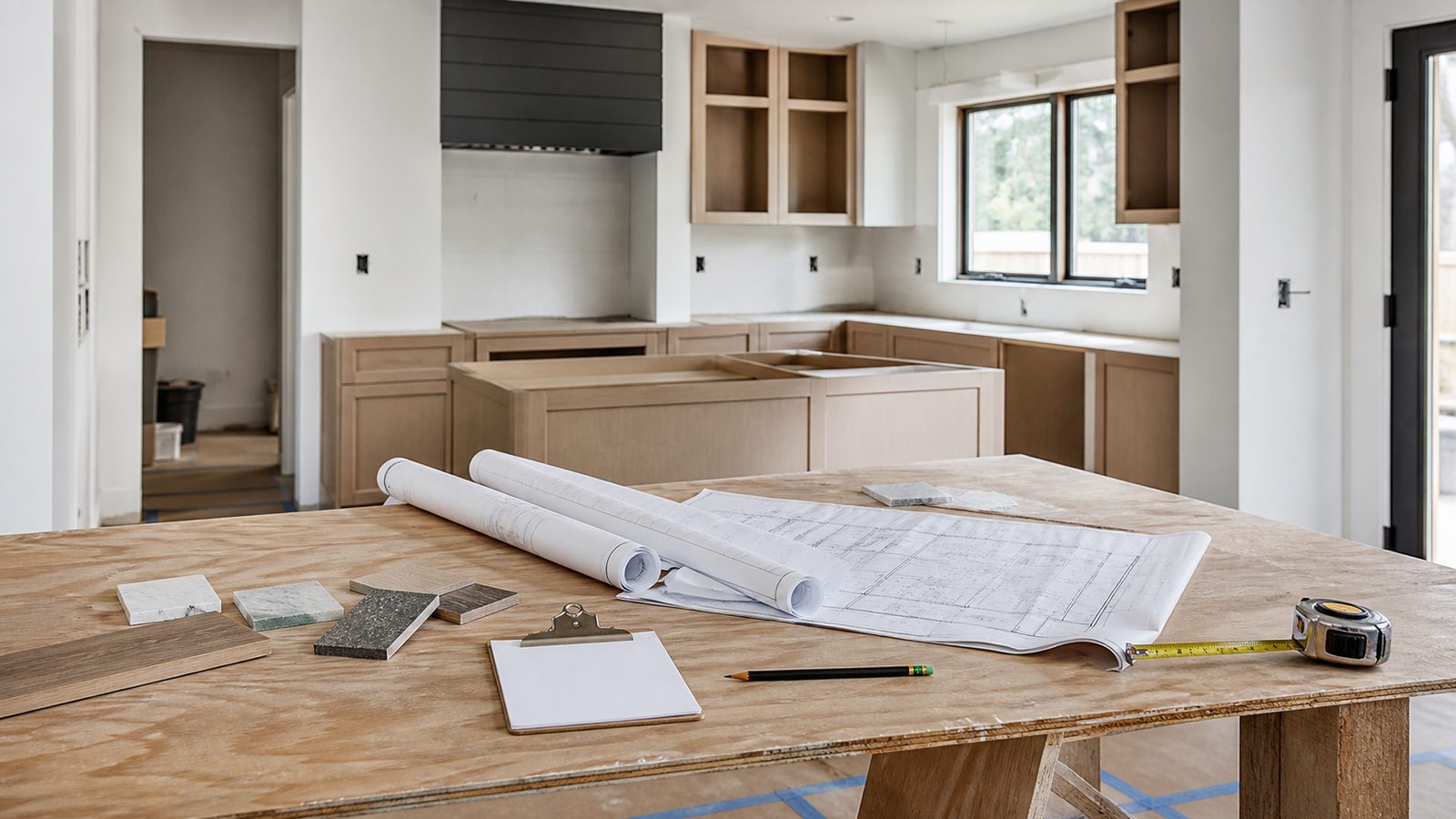
1. Lock All Design Decisions Before Ground Breaks
The most change-order-prone projects are those where design is still in progress when construction starts. "We'll finalize the kitchen layout while they're framing" sounds efficient and is consistently expensive. Every in-flight design decision downstream of an already-built element creates the possibility of a conflict — a wall that needs to move because the final kitchen layout requires a window in a different location, a rough-in that needs to be relocated because the fixture was not specified when the plumber rough-in was. In Jacksonville's current labor market, calling a crew back to modify completed work runs $800–$2,500 per trade mobilization before any materials. Lock all design decisions — materials, dimensions, fixture specs, finish selections — before the construction contract is signed. If decisions are not locked, use allowances explicitly, and set realistic numbers.
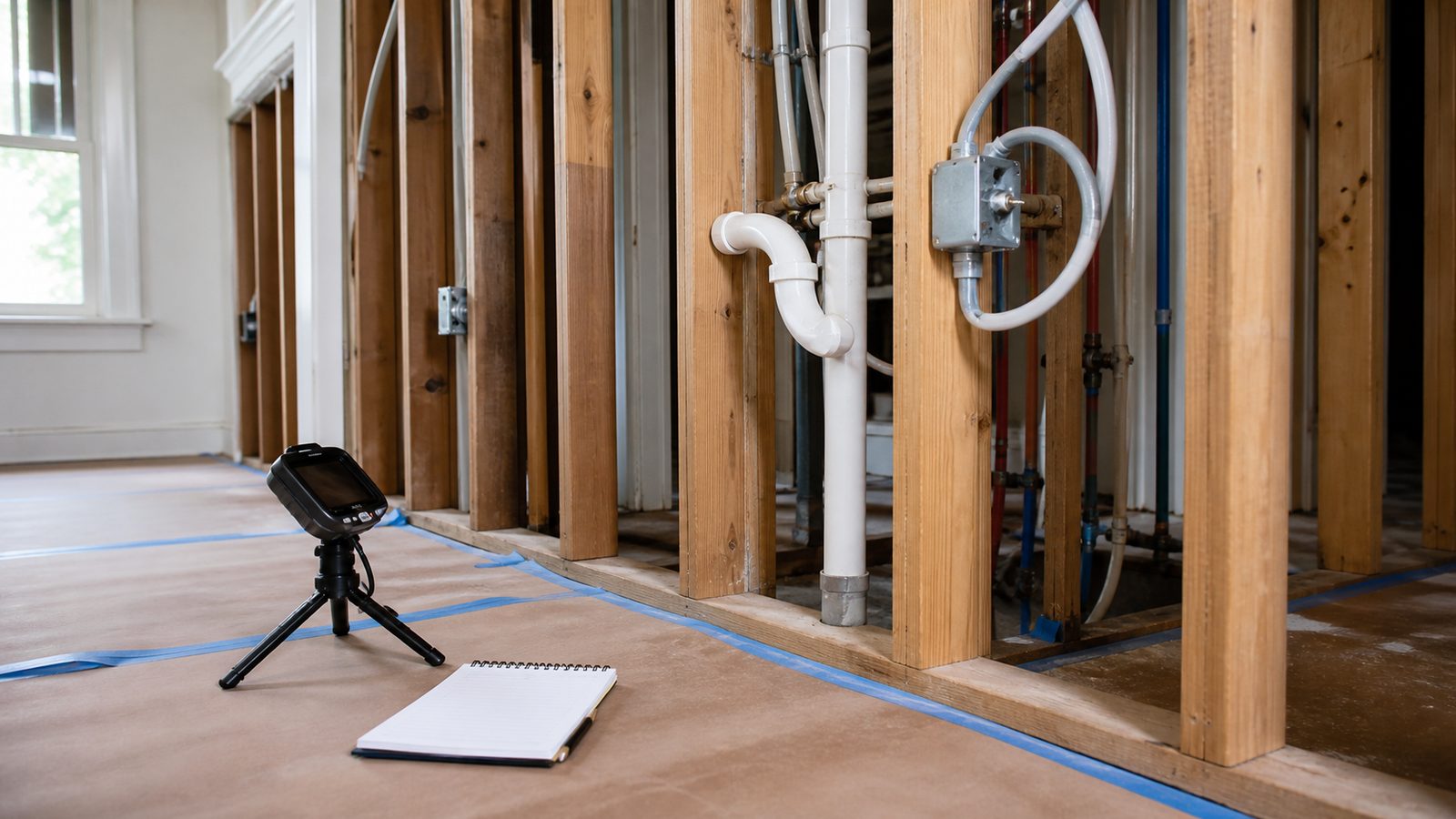
2. Do a Subsurface Inspection Before Demo
Hidden conditions behind walls, under slabs, and beneath existing finishes are the most common source of legitimate change orders in renovation work. You cannot price what you cannot see. The alternative to finding these conditions during construction — when the cost of the discovery is maximum — is finding them before construction, when the cost is a few hundred dollars of targeted exploratory work. JK crews regularly perform targeted demo as part of pre-construction on renovation projects: opening a wall section to verify actual framing configuration, probing beneath a floor to verify subfloor condition, checking behind a shower wall before specifying the tile scope. In older Jacksonville construction — homes built before 1980 are common throughout Riverside, Springfield, and San Marco — this pre-construction investigation consistently finds conditions that would have become change orders.
3. Use a Fixed-Price Contract — It Makes the Contractor Estimate More Carefully
A contractor bidding time-and-materials has limited incentive to estimate carefully — cost overruns become the owner's problem. A contractor bidding fixed-price bears the cost of estimation errors. That asymmetry makes fixed-price contractors more rigorous in their pre-bid investigation, more likely to ask questions before the contract is signed, and more likely to identify scope ambiguities that would otherwise become change orders mid-project. Fixed-price does not eliminate change orders, but it eliminates one of the most common causes: a contractor who stops paying attention to cost because the meter is running. The discipline of fixed-price contracting flows upstream into better pre-construction work, which flows downstream into fewer surprises during construction.
4. Require Complete Construction Documents — No "Design as You Go"
Complete construction documents means drawings that are fully dimensioned, fully specified, and fully coordinated before construction starts. It means the structural drawings have been reviewed against the architectural drawings. It means the MEP (mechanical, electrical, and plumbing) rough-in locations are shown on the drawings, not left to be figured out in the field. Incomplete construction documents generate RFIs (Requests for Information), and unresolved RFIs generate field decisions, and field decisions that conflict with later design intent generate change orders. For residential projects in Jacksonville, "complete construction documents" does not necessarily mean a full architectural set — it means that whoever is building the project has enough information to build it without making consequential decisions on the fly.
5. Resolve All RFIs Within 48 Hours
An RFI (Request for Information) is the contractor asking the designer or owner for clarification on an ambiguity in the drawings or scope. Every open RFI is a project at a branch point: the field either waits (costing time and money) or makes a decision (which may conflict with the owner's intent). The longer an RFI sits unanswered, the more likely it is to generate a change order — either because the field decision conflicts with the final answer, or because a follow-on task has already been built against the unanswered question. A 48-hour resolution standard is achievable on most projects and requires both parties to prioritize it. JK's project managers flag open RFIs in every weekly update. When the designer or owner is slow to respond, we escalate. Unanswered RFIs are a leading indicator of downstream change orders.
6. Choose a GC Who Self-Performs Critical Trades
When a general contractor subcontracts every trade, scope gaps between subcontractors become change orders. The framing sub says the blocking for the cabinet installer is not in their scope. The plumber says the gas line to the range was not in their drawings. The electrician says moving the panel was not included. Each gap generates a change order with markup — the sub's markup and the GC's markup on top. A GC who self-performs framing, concrete, drywall, and finish carpentry eliminates the internal scope-gap problem for those trades. JK self-performs all five of those trades on every project. When the same crew frames the wall, hangs the drywall, and installs the trim, "that's not in my scope" is not a sentence that gets said.
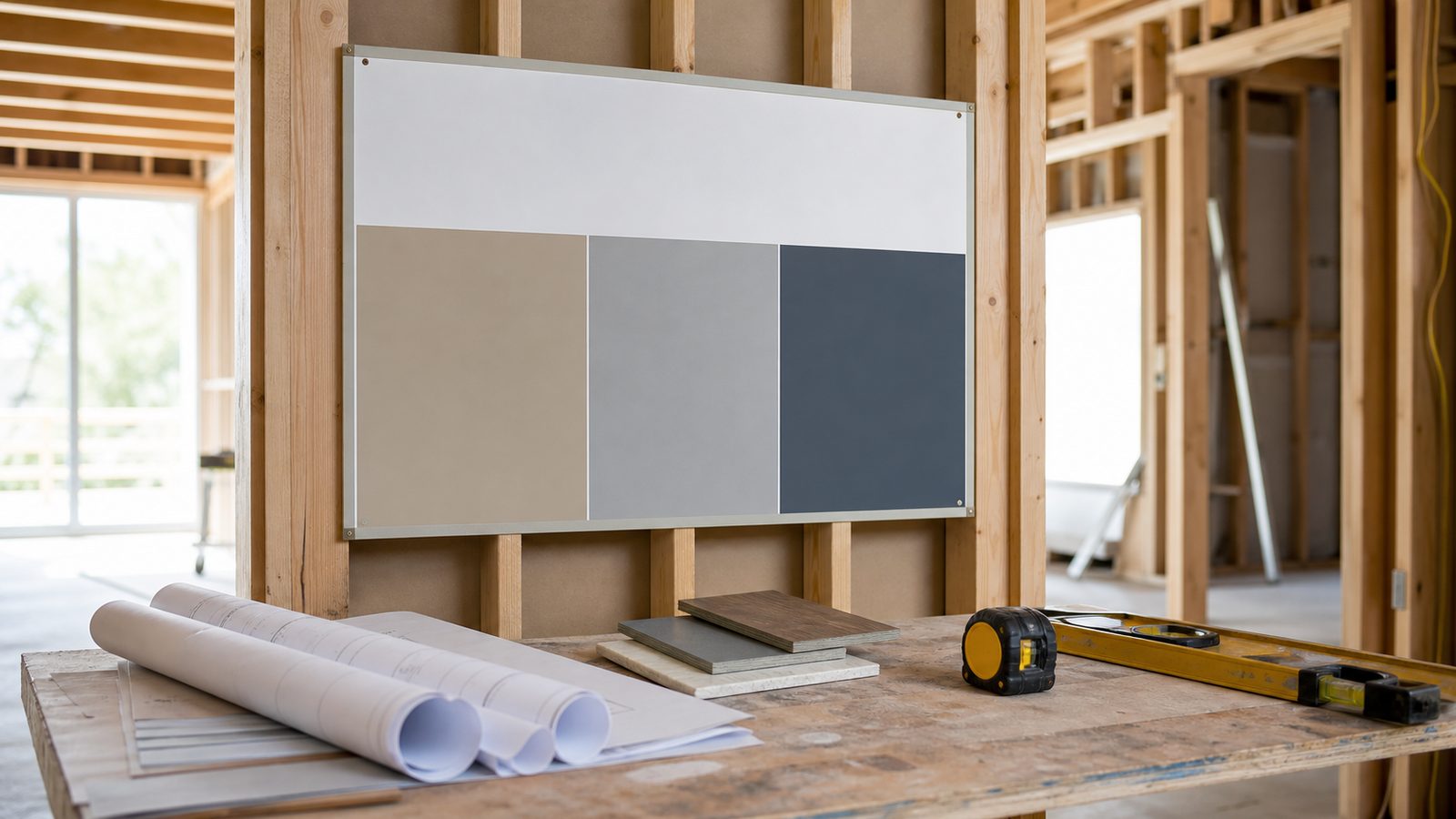
7. Don't Add Scope During Construction
Owner-initiated scope changes during construction are the most predictable source of change orders, and they are also the most expensive ones. Adding scope during construction carries a premium that pre-contract scope does not: the contractor is in production mode, procurement timelines are compressed, and scheduling disruptions from added scope cascade through the remaining project plan. "While the walls are open, can we also add a bathroom?" sounds logical but carries a mobilization cost, a material procurement cost, and a schedule extension that would not exist if the bathroom was in the original scope. The rule: if you know you want it, put it in the original contract. If you discover you want it during construction, understand that you are paying a premium for that timing. The most change-order-free projects are the ones where the owner made all their decisions before ground broke.
The goal of pre-construction is not process for its own sake — it is building a project that stays on budget and on schedule because the decisions were made at the cheapest possible moment: before anything was built. Learn more about how JK's project process eliminates cost surprises, and see the residential projects we self-perform in Jacksonville.
Get a written estimate in 48 hours. Call (904) 944-0278 or request a free inspection.
No call center. No coordinator. A JK principal reviews every inquiry and replies with a real number, not a range, not a follow-up form.
Request Free Estimate →