Jacksonville's Atlantic coast position and the predictability of June 1 as the official start of hurricane season give homeowners one advantage most disaster-prone regions don't have: a known deadline. The problem is that most homeowners wait until a named storm is in the Gulf before thinking about their roof. By then, every licensed roofer in Duval County is booked two to three weeks out, lumber yards have run dry of plywood, and tarps are sold out from St. Augustine to Fernandina Beach.
The work in this list takes two to four weeks to complete if you start in March or April. It takes two to three months to schedule if you call in late May. Do the math and set a calendar reminder. These are the eight tasks that matter, in roughly the order you should address them.
1. Schedule Your Roof Inspection Between March and May
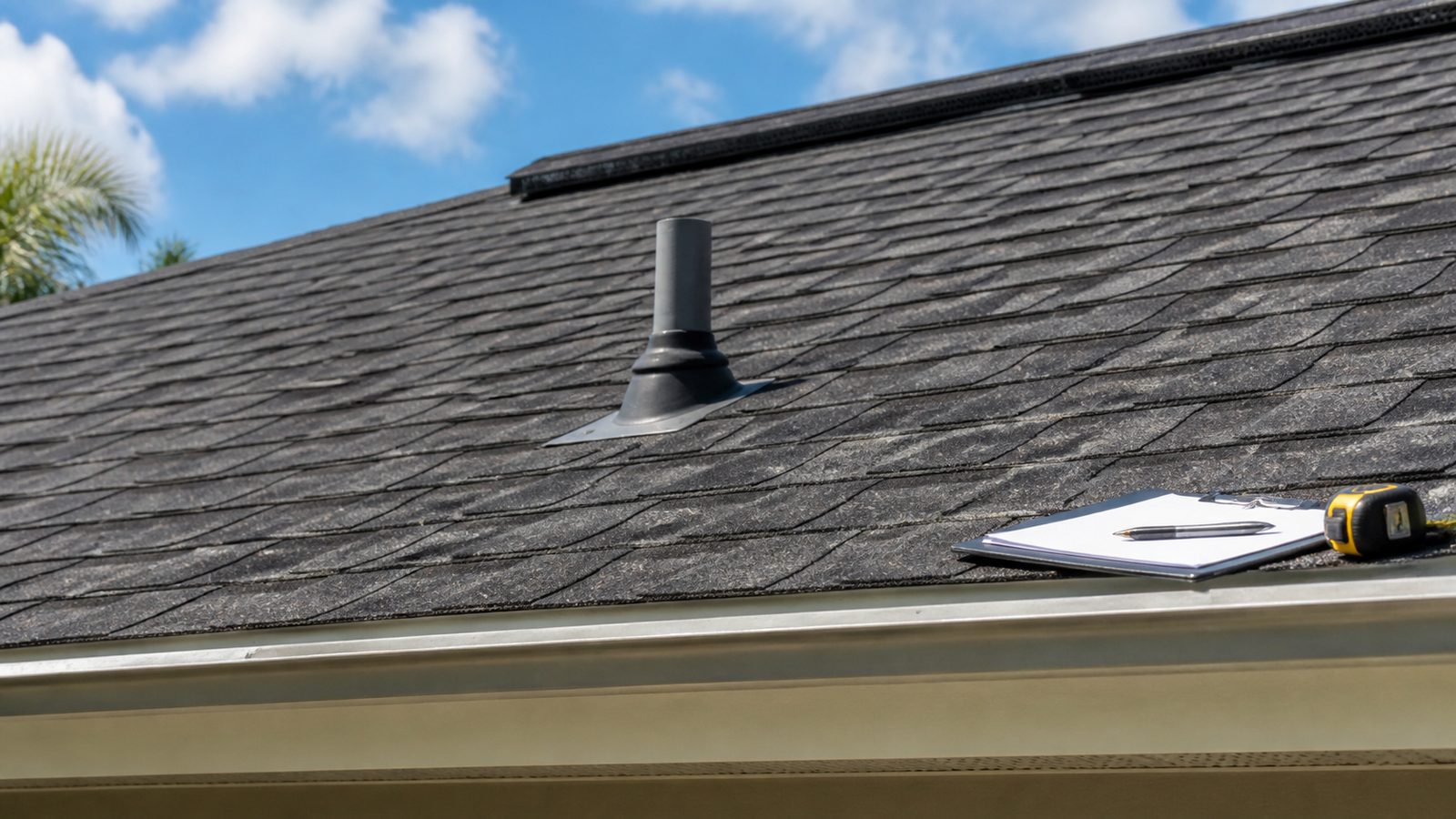
The single highest-leverage action is a professional inspection before the June 1 seasonal backlog. A thorough inspection identifies everything on this list that requires a contractor: missing ridge cap, lifted flashing, soft decking, damaged pipe boots. Inspectors have full availability in March and April; by the last two weeks of May, scheduling runs two to three weeks out in Jacksonville. JK Prestige provides free inspections with a written findings report — no commitment required. The report documents existing condition, which also serves as your pre-storm baseline photograph for insurance purposes (see task 6). Schedule your inspection through our contact page before the queue fills.
2. Replace Missing or Damaged Ridge Cap Shingles
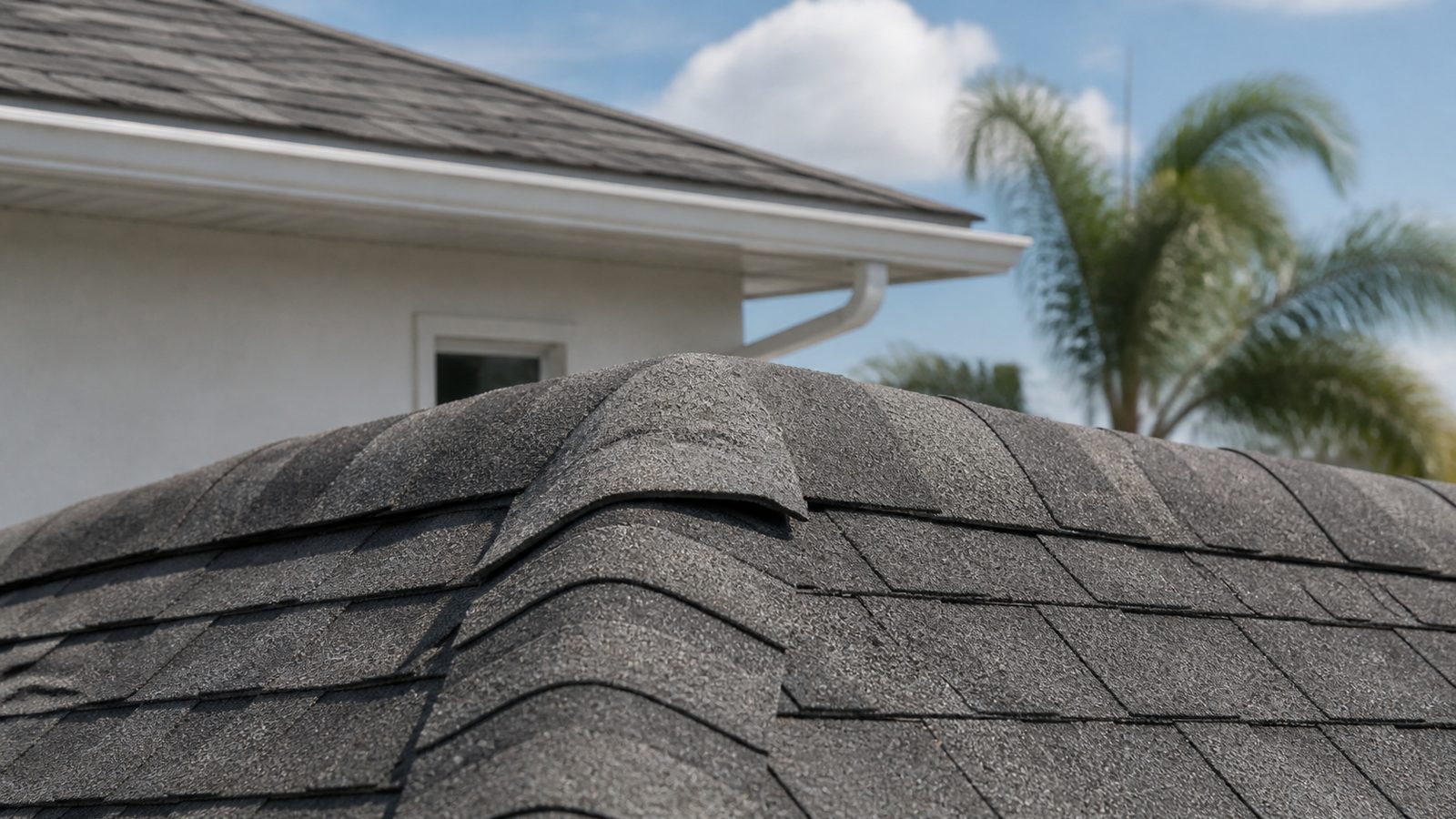
Ridge cap shingles — the thick, folded shingles that run along the peak of the roof — are the highest point of wind exposure on any roof. They are also among the first components to show wear, because they are bent at a sharp angle during installation and exposed on both sides. In a high-wind event, a missing or lifting ridge cap shingle creates a direct entry point for wind-driven rain into the attic. Replacing damaged ridge cap is a defined, limited repair that can typically be completed in half a day by a qualified crew. The cost is low relative to the damage a water entry at the ridge causes. From the ground, look for any shingles at the peak that are visibly lifted, cracked, or missing. If you are not sure, the inspection will flag it.
3. Re-Secure Lifted Flashing at Pipe Boots and Chimneys
Pipe boot flashing — the rubber or metal collar around plumbing vent pipes — and chimney step flashing are the two most common active leak points on Jacksonville roofs. Rubber pipe collars degrade in Florida UV in 10–15 years; the collar pulls away from the pipe and creates a gap. Chimney step flashing pulls away from the mortar joint as the mortar ages. Either condition allows wind-driven water to enter during a storm with no need for any shingle damage. A professional can re-seat lifted flashing and replace deteriorated pipe collars in a few hours. This is not a caulk-only repair — caulk over a failed collar is a temporary measure that will fail again in the next UV season. Specify flashing replacement, not caulking, when getting estimates.
4. Clear Gutters and Confirm Downspouts Drain 10+ Feet From Foundation
Jacksonville's sandy, well-drained soil does not give much margin when gutters overflow at the foundation line. In a tropical storm event, rainfall rates of 2–4 inches per hour are common. If gutters are clogged with live oak debris — a constant reality in Jacksonville neighborhoods with mature tree canopy — that rate of rainfall cannot move through the gutter system and instead overflows at the fascia, saturating the soffit and the top of the foundation. Clear gutters completely and flush the downspouts. Confirm each downspout discharges at least 10 feet from the foundation and directs water away from the slab. Splash blocks and downspout extensions are inexpensive; foundation repairs from sustained water intrusion are not.
5. Check Attic Ventilation — Blocked Vents Increase Pressure Differential
Attic ventilation affects roof performance in a storm in a way most homeowners don't expect: it regulates the pressure differential between the attic space and the exterior during high-wind events. When the attic is under-ventilated or when ridge and soffit vents are blocked by debris or blown-in insulation, negative pressure inside the attic increases during a storm, and that pressure differential works against the shingle adhesive strips from below. The result is that shingles lift at lower wind speeds than their rated performance. Check that soffit vents are clear — push back any insulation that has crept over them — and that ridge vents are not blocked by debris. This is a 30-minute inspection that can meaningfully improve the roof's wind performance at no cost.
6. Photograph Your Current Roof Condition for Insurance Baseline
Before any storm, photograph your roof from the ground from all four sides, and photograph your gutters and downspouts. Date-stamp everything. If you have attic access, photograph the underside of the decking. This baseline documentation is your evidence that any damage identified after a storm did not pre-exist the event. Insurance adjusters in Jacksonville routinely deny or reduce claims by asserting that damage was pre-existing wear, not storm damage. Your dated pre-storm photographs — especially combined with a written inspection report from a licensed roofer — rebut that argument with specificity. Cloud storage with automatic date-stamping (Google Photos, iCloud) is sufficient. Do this every year.
7. Confirm Your Insurance Deductible and RCV vs. ACV Status
Many Jacksonville homeowners first read their wind and hail deductible on a claims summary after the storm — and discover it is 2% of their insured value, not a flat dollar amount. On a home insured for $400,000, that is an $8,000 deductible. Know your deductible before June 1 so you can plan financially. Equally important: confirm whether your policy pays ACV (Actual Cash Value, which factors in depreciation) or RCV (Replacement Cost Value, which pays the full replacement cost). Florida's insurance market has tightened significantly since 2022 reforms; many policies that previously carried RCV have been re-issued with ACV riders. Call your agent and ask directly: "Does my current policy pay RCV or ACV for a full roof replacement?"
8. Stage a Tarp Kit Before the Season Starts
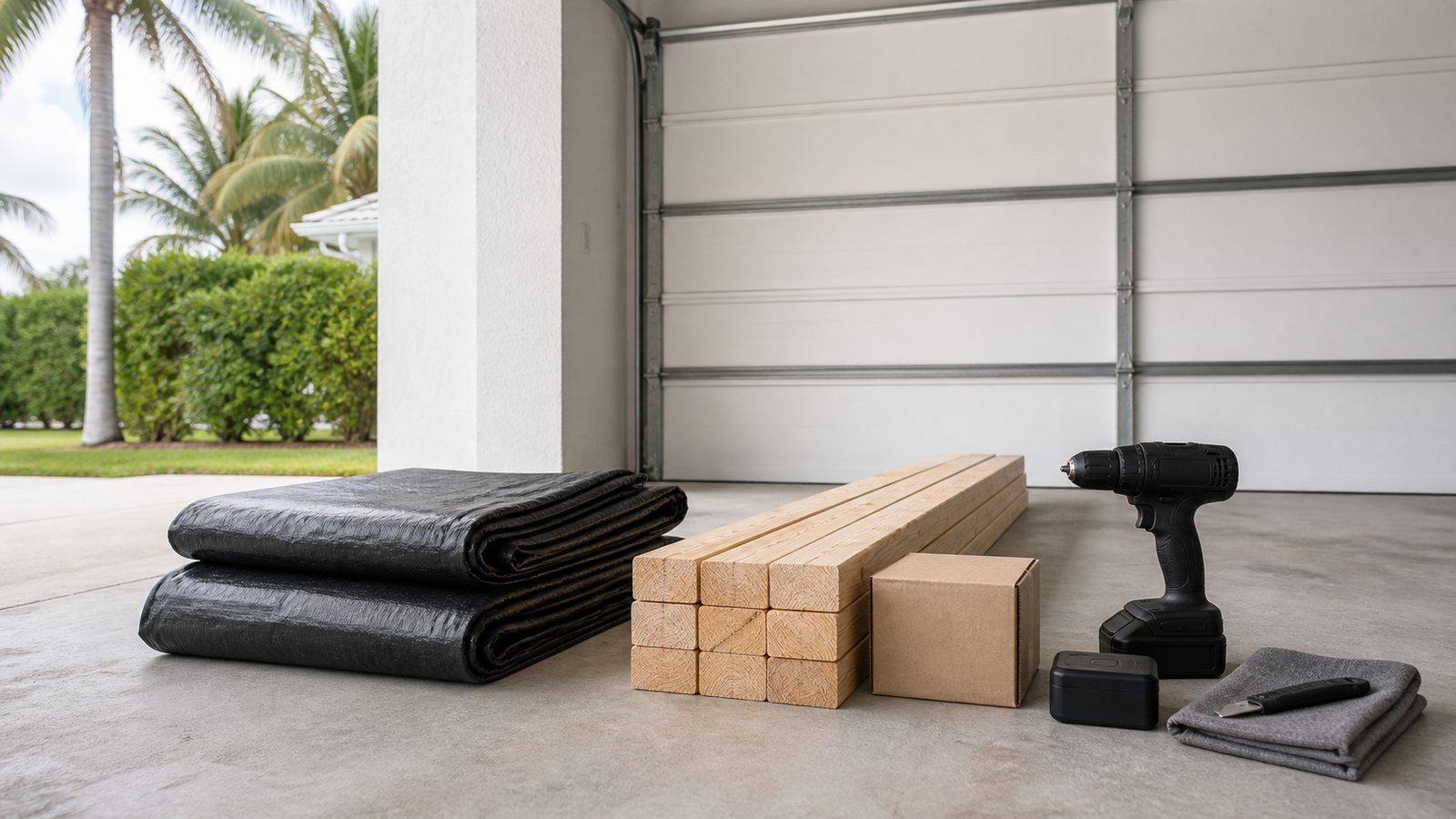
If your roof is breached in a storm, you have a window — potentially 24 to 48 hours — before secondary water damage to the interior becomes severe. A tarp kit lets you or a neighbor cover the breach before licensed roofers can respond. A functional tarp kit for a Jacksonville residential roof: two rolls of 6-mil polyethylene tarp (20x30 ft minimum), ten 2x4 lumber pieces cut to 8 ft, a box of 3-inch deck screws, a battery-powered drill with charged spare battery, and a utility knife. The 2x4s secure the tarp edges without driving fasteners through the tarp itself, which causes tears. Stage this in your garage before June 1. After a major storm, hardware stores in Jacksonville sell out of tarps within 48 hours.
Six of these eight tasks are self-performed or low-cost. Tasks 2 and 3 require a licensed roofer, and both are straightforward repairs when caught before a storm rather than emergency patches after one. Learn more about how JK approaches roofing inspections and storm prep, or read about the full scope of residential work we self-perform.
Get a written estimate in 48 hours. Call (904) 944-0278 or request a free inspection.
No call center. No coordinator. A JK principal reviews every inquiry and replies with a real number, not a range, not a follow-up form.
Request Free Estimate →