Every commercial general contractor in Jacksonville claims healthcare experience. Very few have it. The distinction matters: healthcare construction in occupied facilities carries patient safety stakes that are categorically different from any other building type. A GC that has built medical office buildings but has never worked in an occupied acute care hospital does not have hospital experience — they have experience in a building that happens to serve healthcare tenants. Those are not the same thing.
JK Prestige Construction can produce references from infection control officers at completed Jacksonville-area hospital projects. The eight signals below are what separate GCs with genuine hospital experience from those who have added "healthcare" to their website after completing a clinic build-out. Use this list during your GC selection process. JK's hospital construction approach addresses every item on it. Read about the JK Way to understand how principal involvement works on healthcare projects.
1. They Mention ICRA Class and Risk Matrix Without Prompting
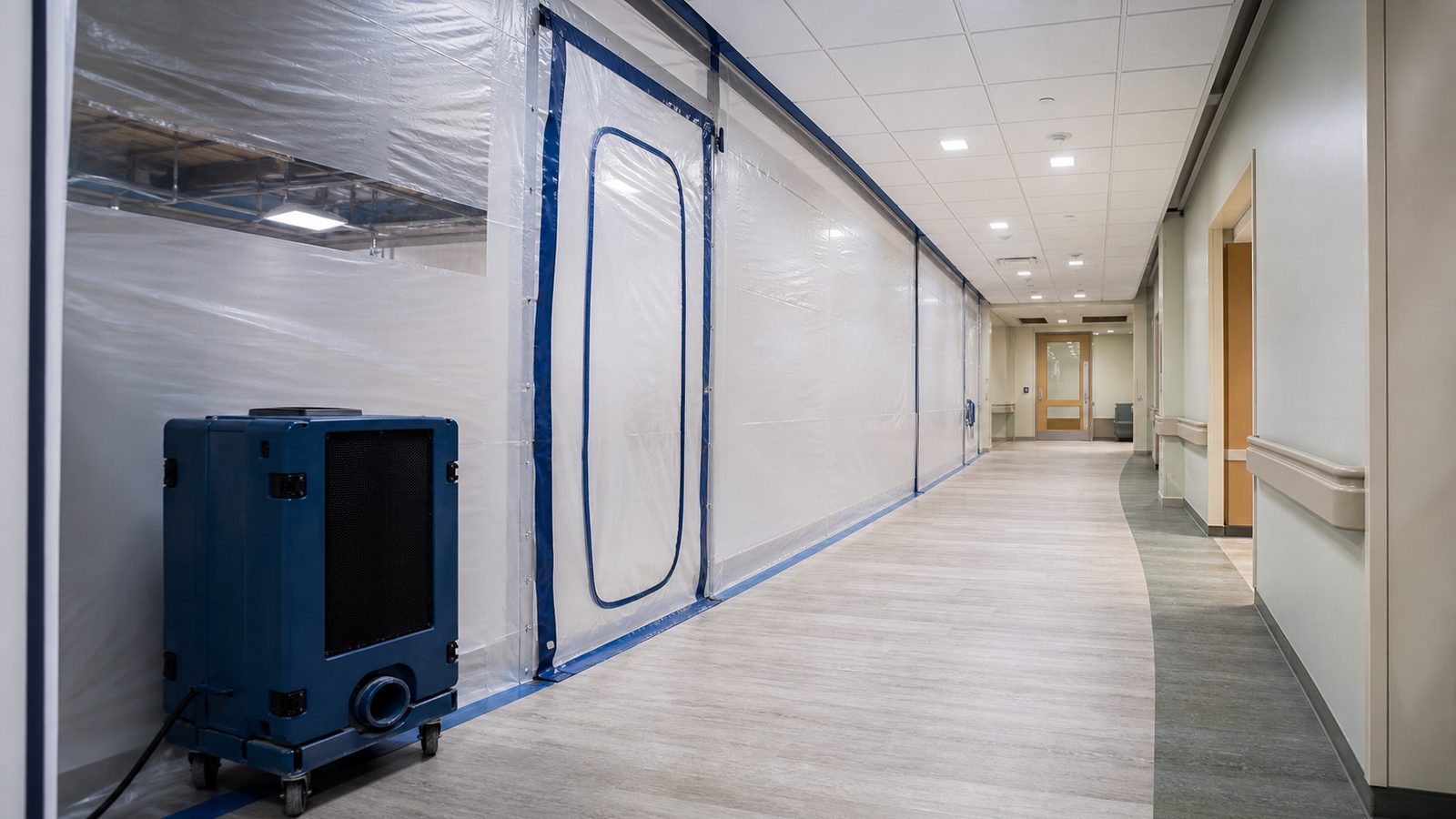
In a first conversation with a prospective GC for a hospital renovation, ask an open-ended question: "How do you approach infection control during construction?" A GC with real hospital experience will immediately reference ICRA — Infection Control Risk Assessment — and will likely describe the activity type/patient risk group matrix that drives barrier design decisions. A GC without that experience will describe dust barriers and plastic sheeting. The vocabulary is different because the discipline is different. If you have to explain what ICRA is to a GC that claims hospital experience, that GC does not have hospital experience. At JK, ICRA is the starting point of every hospital preconstruction conversation — not a term we reach for after the client raises it.
2. They Ask About Adjacent Patient Populations in Pre-Construction
Before a qualified healthcare GC scopes any hospital renovation, they need to know what is adjacent to the construction zone. Not just "patient rooms" — they need to know the specific patient population: medical-surgical, ICU (intensive care unit), oncology, bone marrow transplant, NICU (neonatal intensive care unit), or operating suite. That information determines the ICRA risk group classification and, by extension, the barrier type, pressure relationship, and PPE requirements. A GC that scopes hospital renovation without asking this question is pricing a scope they cannot safely execute. JK's preconstruction checklist requires adjacent patient population documentation — confirmed by the infection control practitioner (ICP) — before we issue a price on any occupied hospital renovation in Jacksonville or surrounding Northeast Florida counties.
3. Their Superintendent Has Personally Worked in Occupied Hospital Environments
The superintendent on a hospital project is responsible for day-to-day ICRA compliance: barrier integrity checks at every shift, pressure monitoring, PPE enforcement for all workers entering the containment zone, and immediate escalation when a clinical event requires work to stop. This is not a skill set learned in a classroom. It requires having experienced an ILSM (Interim Life Safety Measures) event on a live project, having managed a barrier failure, and knowing what a Joint Commission surveyor is looking for when they walk into a construction zone. Ask the superintendent candidate directly: describe a specific ICRA compliance challenge you managed on a completed hospital project. The answer should be specific — a particular pressure differential issue, a specific barrier penetration problem, a real coordination event with a clinical team. Vague answers indicate classroom knowledge without field application.
4. They Can Describe Their Noise and Vibration Control Approach
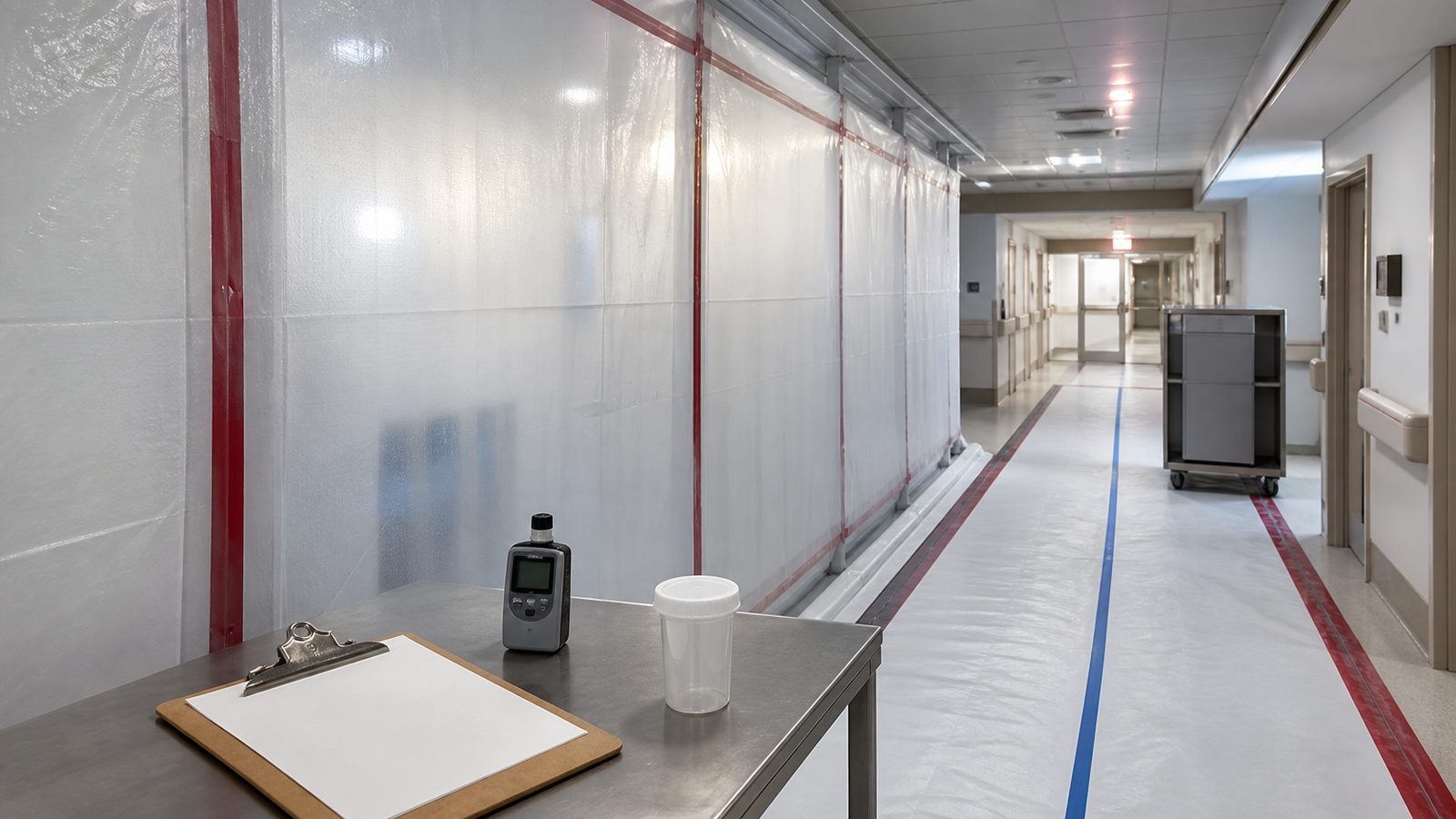
Hospital construction adjacent to clinical areas — particularly imaging suites with MRI (Magnetic Resonance Imaging) or CT equipment, operating rooms, and procedure areas — requires active noise and vibration management. A qualified healthcare GC can describe their approach: sequencing high-vibration demo activities during off-clinical hours, using construction-grade noise meters to document levels at the barrier perimeter, and coordinating with the MRI physicist or biomedical engineering team on vibration sensitivity thresholds for specific equipment. A GC without hospital experience will say they are careful and quiet. A GC with hospital experience can tell you what dBA (decibels A-weighted) limit was specified at the barrier perimeter on their last imaging suite adjacent project and how they achieved it. That level of specificity is the difference between operational knowledge and a marketing claim.
5. They Know What NFPA 99 Category 1 vs. Category 2 Wiring Means
NFPA 99 (Health Care Facilities Code) classifies patient care spaces into risk categories that determine the wiring methods, equipment standards, and redundancy requirements for electrical systems. Category 1 — spaces where system failure is likely to cause death, such as operating rooms and cardiac catheterization labs — requires specific wiring methods, isolated power systems, and redundant power feeds that do not apply to Category 2 (general patient care) areas. A healthcare GC without this knowledge will spec the wrong conduit type, miss the isolated power panel requirement, and create a costly field change when the electrical inspector or AHCA reviewer catches it. JK's project managers understand NFPA 99 Category classification and require MEP drawings to specify the Category assignment of each space before we price the electrical scope. This knowledge comes from completing real hospital electrical scopes under AHCA review.
6. They Ask About AHCA Documentation Requirements
Florida's AHCA (Agency for Health Care Administration) review process for licensed healthcare facility construction is separate from the local building department permit and runs on its own timeline — typically 6–12 weeks for complex projects. A GC that does not ask about AHCA documentation at the scoping stage either does not know it exists or assumes it is the facility's problem. It is not — it is a project schedule driver that affects when construction can begin and what documentation the GC must produce (sealed drawings, specification sections, fire protection calculations). JK asks about AHCA applicability and documentation requirements at the first preconstruction meeting and includes AHCA documentation preparation time and cost in our GMP or fixed-price proposal. If a GC does not raise AHCA in your first conversation, you are not talking to a GC with Florida hospital experience.
7. They Propose GMP Rather Than Fixed-Price for Complex Healthcare
Fixed-price contracts are appropriate for well-defined commercial scopes. Hospital renovation — particularly in occupied facilities with complex phasing, MEP shutdowns, and AHCA-driven design review cycles — contains inherent uncertainty that a GC cannot fully price without detailed construction documents. A GC that offers a fixed-price on a complex hospital renovation before documents are complete is either guessing or planning to manage scope with change orders. The appropriate contract type for complex healthcare is GMP (Guaranteed Maximum Price): the GC establishes a maximum cost with a defined scope, and savings below the GMP are shared. That structure aligns the GC's interests with the owner's and provides cost certainty without requiring the owner to absorb all scope uncertainty. JK recommends GMP for complex hospital projects and fixed-price for well-defined medical office and clinic scopes. We will tell you which applies to your project at the first meeting.
8. Their TRIR Is Below 1.0 and They Can Document It
TRIR (Total Recordable Incident Rate) is the OSHA (Occupational Safety and Health Administration) metric that measures recordable work-related injuries per 100 full-time employees per year. The construction industry average TRIR runs 2.5–3.5. Hospital construction — with its proximity to patients, strict PPE requirements, and complex work environments — demands a higher safety standard. A TRIR below 1.0 indicates a GC with active safety management: daily toolbox talks, supervisor OSHA 30 certification, incident investigation protocols, and a culture where workers report near-misses without fear of retaliation. Ask your prospective healthcare GC for their Experience Modification Rate (EMR) and TRIR for the last three years. If they cannot produce those numbers in writing, within 48 hours of your request, they do not track them — and that tells you everything about their safety culture. Contact JK to request our safety documentation.
Get a written estimate in 48 hours. Call (904) 944-0278 or request a consultation.
No call center. No coordinator. A JK principal reviews every inquiry and replies with a real number, not a range, not a follow-up form.
Request Free Estimate →