A renovation budget that holds through the project is the exception, not the rule. Most cost overruns are not random — they come from a predictable set of causes that repeat across projects, across contractors, and across years. Some causes are specific to Jacksonville's building stock: older homes with problematic histories, permit processes at Duval County Building Services, and a labor market that has tightened considerably through 2024 and 2025. Others are universal to renovation work anywhere.
JK Prestige's pre-construction process is specifically designed to catch the first three items on this list before they become construction-phase surprises. The rest require planning, realistic budgeting, and a contract structure that assigns risk correctly. Here are the eight that appear most frequently on Jacksonville renovation projects.
1. Hidden Mold, Rot, or Asbestos in Older Homes
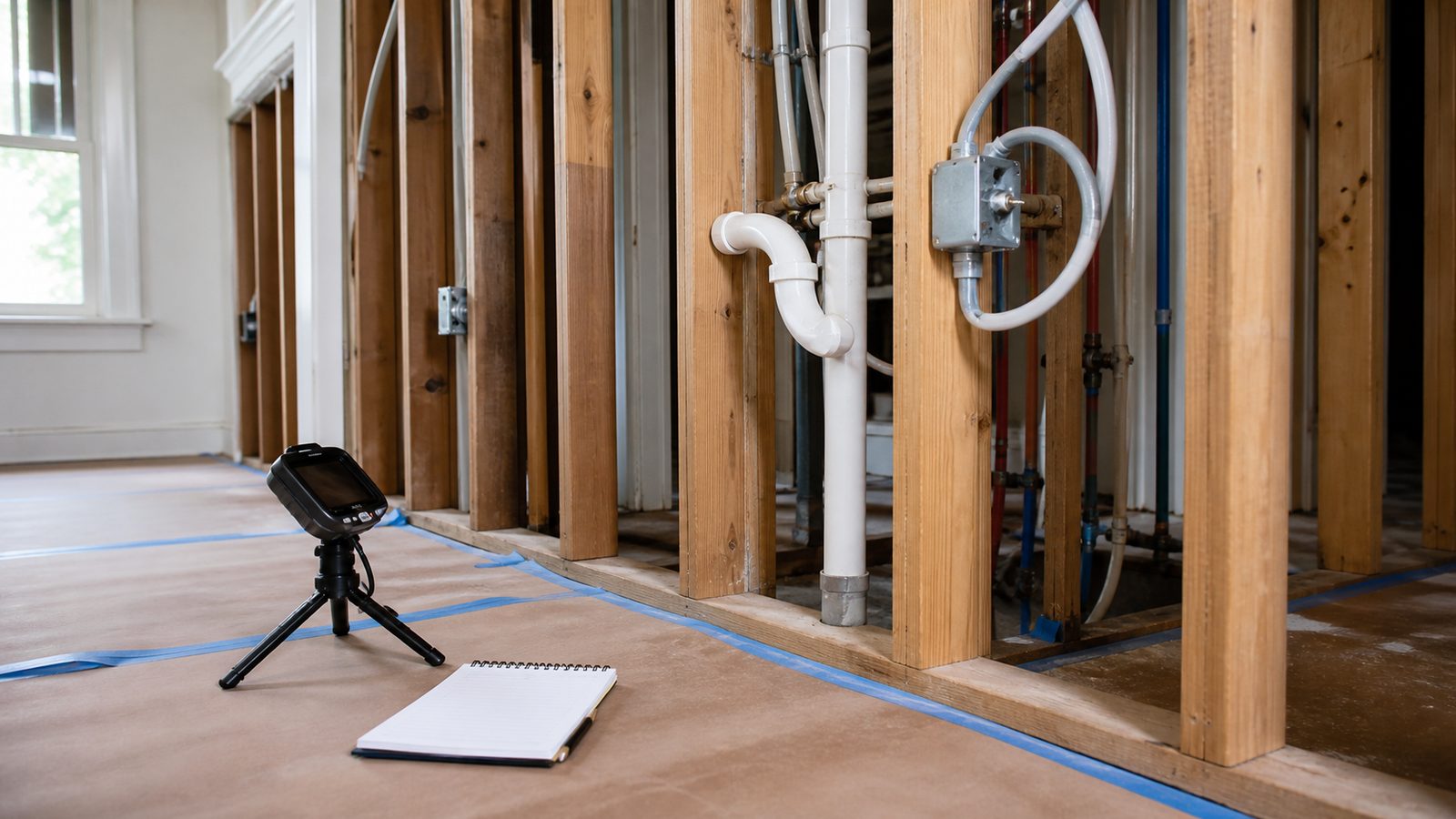
Jacksonville has substantial housing stock built between 1940 and 1980 in neighborhoods like Springfield, Riverside, Avondale, and Murray Hill. These homes regularly contain conditions behind walls, under floors, and in attics that were neither disclosed nor visible during purchase: mold colonies established by slow plumbing leaks, wood rot at window and door frames from decades of condensation, and asbestos in floor tile, pipe insulation, and ceiling texture. Discovery during active construction — after walls are open and crews are on-site — is the most expensive way to encounter these conditions. Mold remediation on a mid-project discovery adds $2,000–$15,000 depending on extent. Asbestos abatement on floor tile can add $3,000–$8,000. JK performs targeted pre-construction investigation — opening wall sections, probing under floors — to identify these conditions before the construction contract is signed and priced.
2. Unlicensed Previous Work Requiring Tear-Out and Redo
Unlicensed work — plumbing, electrical, structural modifications done without permits or by unlicensed trades — is common in Jacksonville's older residential stock. The problem surfaces when a renovation triggers a permit, which triggers an inspection, which identifies the unlicensed work as non-compliant. The inspector does not care that the unlicensed work was done by the previous owner 15 years ago; it must be corrected before the new permit can be approved. Correcting unlicensed electrical in a kitchen can add $3,000–$8,000 to a renovation. Correcting a load-bearing wall modification done without structural engineering can add considerably more. Before estimating any permitted renovation on an older Jacksonville property, pull the permit history through the Duval County Building Services portal and cross-reference it with any modifications visible in the home.
3. Non-Standard Dimensions in Historic Homes
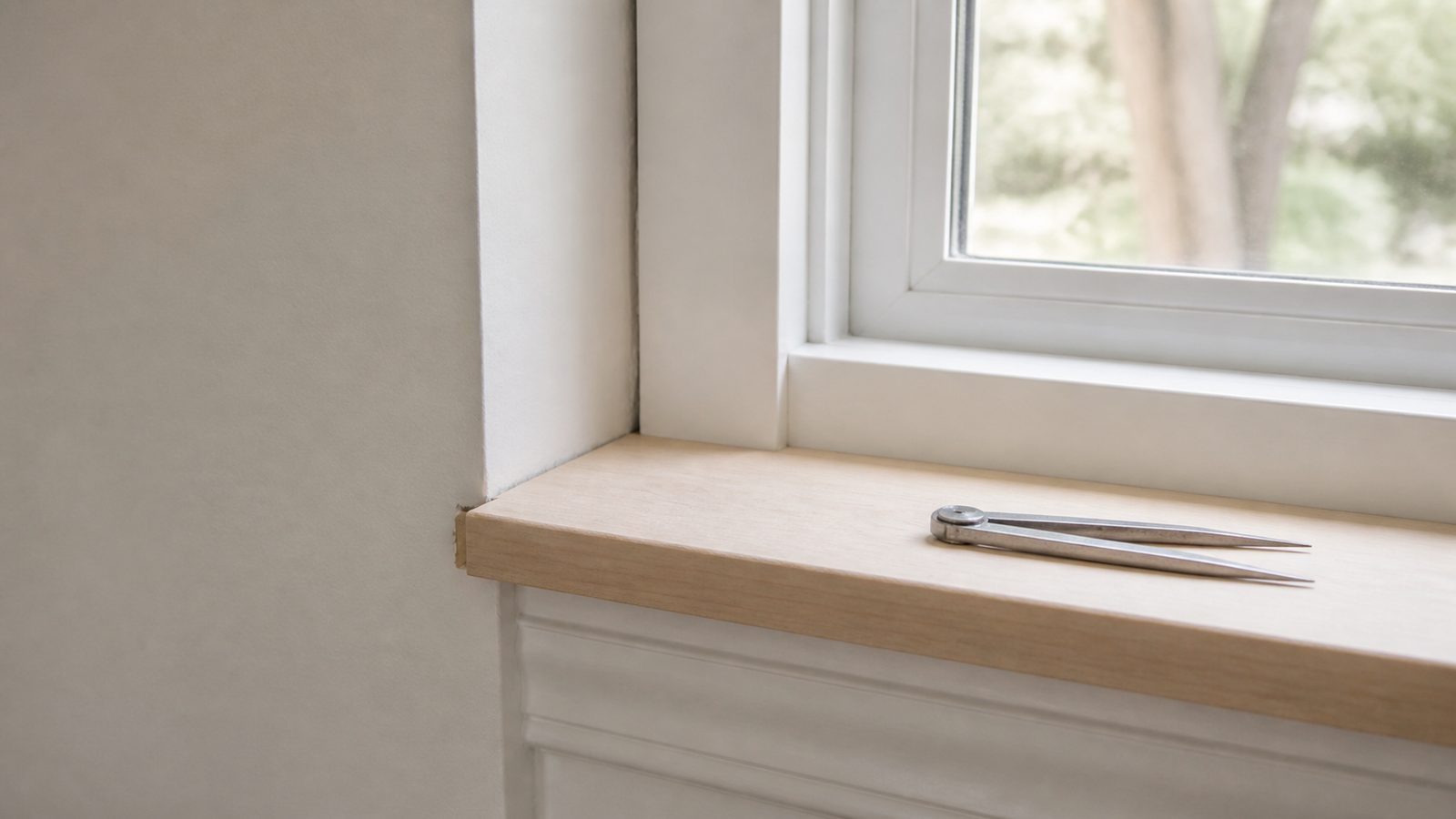
Historic Jacksonville homes — particularly those in neighborhoods that qualify for historic designation — were built with dimensions that do not match modern standard products. Door openings that run 7'2" instead of 6'8". Window openings that are odd widths requiring custom sash. Trim profiles that match no available stock profile and require custom millwork. Cabinet runs that are neither 24 inches deep nor 30 inches tall, which means no stock cabinet fits without filler pieces that look like afterthoughts. Each non-standard dimension adds cost: custom millwork runs two to four times the cost of stock material, and lead times on custom orders can extend a project schedule by four to six weeks. JK self-performs finish carpentry, which means we can field-fabricate non-standard elements rather than waiting on custom orders for every deviation.
4. Permit Delays Extending Carrying Costs
Permit processing at Duval County Building Services varies significantly by project type and current application volume. Straightforward residential permits can process in one to two weeks; complex projects involving structural review or MEP coordination can run four to eight weeks. For homeowners who are renting during a renovation — paying rent plus mortgage while the project sits waiting on permit — each week of delay is a real cost. For investors carrying hard money at 10–12%, a six-week permit delay on a $400,000 renovation project is $4,600–$5,500 in carrying cost alone. JK submits permit applications with complete documents the first time to avoid back-and-forth with the building department; incomplete applications add two to four weeks to the review cycle and are among the most avoidable delay causes.
5. Supply Chain Delays on Specialty Items
The supply chain disruptions that peaked in 2021–2022 have normalized for most commodity construction materials — lumber, drywall, standard fixtures. Specialty items remain problematic: custom cabinetry with lead times of 12–16 weeks, certain electrical panels and switchgear with allocation delays, specialty tile from European manufacturers, and high-end plumbing fixtures from brands that have not caught up to pre-2020 inventory levels. In Jacksonville, HVAC equipment — specifically high-efficiency systems — has seen intermittent supply constraints that extend lead times to eight to twelve weeks at peaks. Identify all long-lead items during pre-construction and order them before demolition begins. A kitchen renovation that waits until demo is complete to order cabinets will sit with open walls for three to four months.
6. Inadequate Drawings Requiring Field Decisions
Renovation projects that start construction with incomplete or schematic-level drawings generate field decisions — the contractor or crew determines on-site what was not resolved in the design. Some field decisions are minor and inconsequential. Others — where a partition wall goes, how MEP routes through the structure, where an opening is framed — have downstream consequences that become change orders when the field decision conflicts with what the owner actually wanted, or when an inspector rejects an arrangement that was not shown on the approved drawings. Every drawing review before construction is cheap; every re-do in the field is expensive. JK's project managers require construction-ready documents before scheduling crews. When design is incomplete, we pause rather than proceed.
7. Owner Scope Changes After Demolition
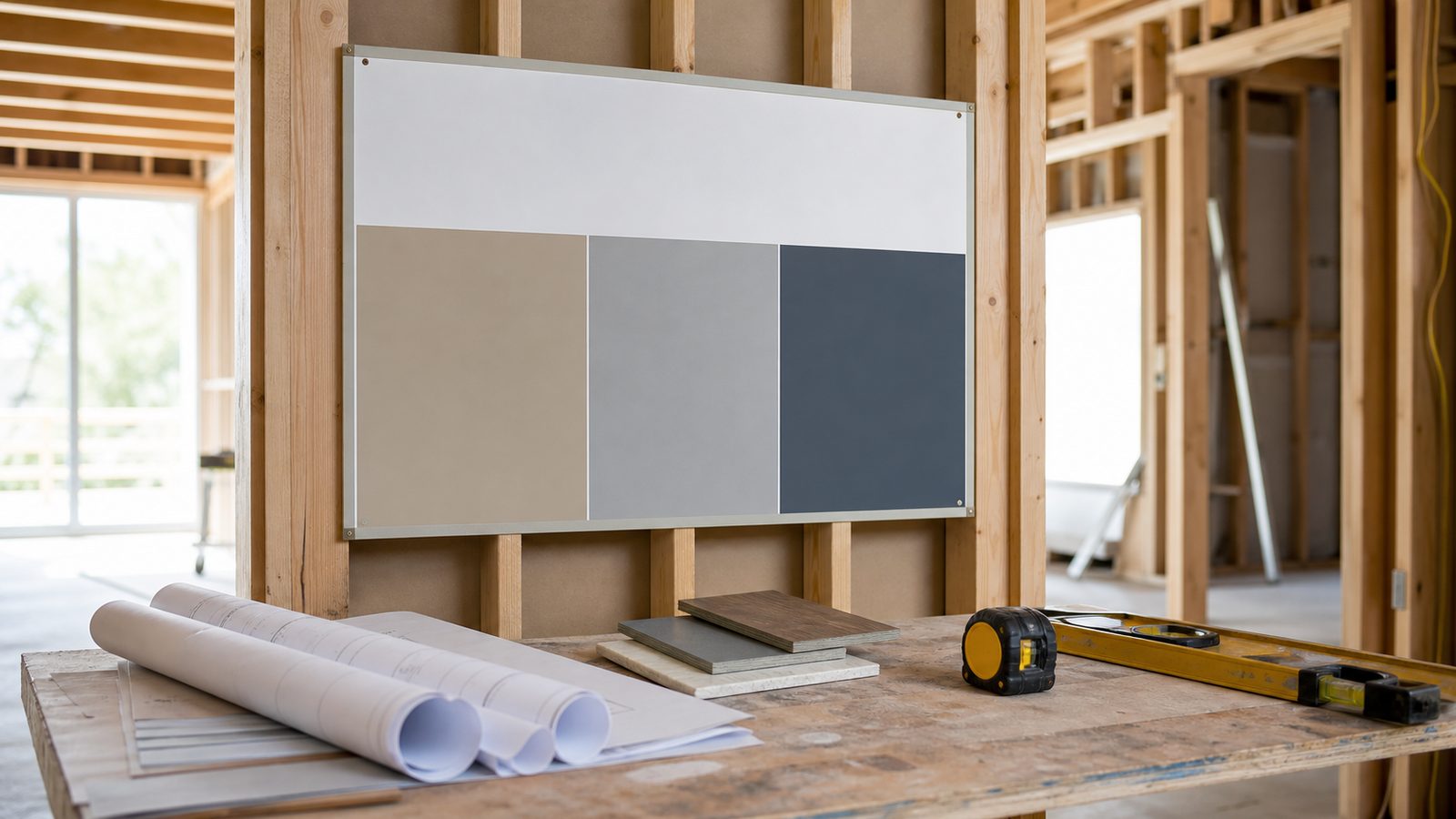
The moment a renovation is at stud walls — all the existing finishes removed, the structure visible — owners regularly reconsider decisions that seemed fixed. "Now that I can see the space, can we move this wall?" or "The bathroom looks bigger than I thought — let's add the double vanity we cut from the budget." These are understandable impulses. They are also the most expensive moment to make them, because the existing work was built to the original scope and must now be modified at full labor rates with no schedule buffer. Scope added at stud walls in Jacksonville's 2025 labor market runs 20–35% higher per unit than the same scope in the original contract, because it carries mobilization overhead and schedule disruption. The discipline is to use the design phase — before demo — to make these decisions when they are cheap to change on paper.
8. Jacksonville Labor Market Tightness in 2025
Jacksonville's construction labor market has tightened steadily through 2024 and into 2025. Duval County's residential and commercial pipeline has grown faster than the available licensed trade workforce. The practical effect is that skilled labor — particularly electricians, plumbers, and finish carpenters — commands a premium, and crew availability is constrained. For owners who have not locked a contractor before starting the design phase, finding available crews can add four to eight weeks to a project start, and competitive bidding for available labor pushes unit costs higher than they would have been in 2022. JK self-performs five trades — framing, concrete, drywall, finish carpentry, and roofing — which means our labor availability is not subject to the subcontractor market. Projects are scheduled, not auctioned.
Most of these eight cost drivers are predictable and avoidable with the right pre-construction process. Catching conditions 1, 2, and 3 before contract is the most direct path to a renovation that finishes on budget. Learn more about how JK's pre-construction process works and the residential renovation work we self-perform in Jacksonville.
Get a written estimate in 48 hours. Call (904) 944-0278 or request a free inspection.
No call center. No coordinator. A JK principal reviews every inquiry and replies with a real number, not a range, not a follow-up form.
Request Free Estimate →