Custom home construction in Northeast Florida ranges from $200 per square foot for a straightforward build in Clay County to $500 per square foot and above for a high-finish project in Ponte Vedra Beach or along the Ortega River. Within any given cost range, the difference between a smart budget and a wasteful one often comes down to decisions made before the permit is filed — not during construction.
The eight strategies below are not about cutting corners. They are about making the choices that preserve structural integrity and long-term finish quality while eliminating cost categories that add complexity without adding value. A GC who self-performs framing and drywall and works on a fixed-price contract has the same interest in cost efficiency you do — because their margin is fixed and every unnecessary cost comes out of it.
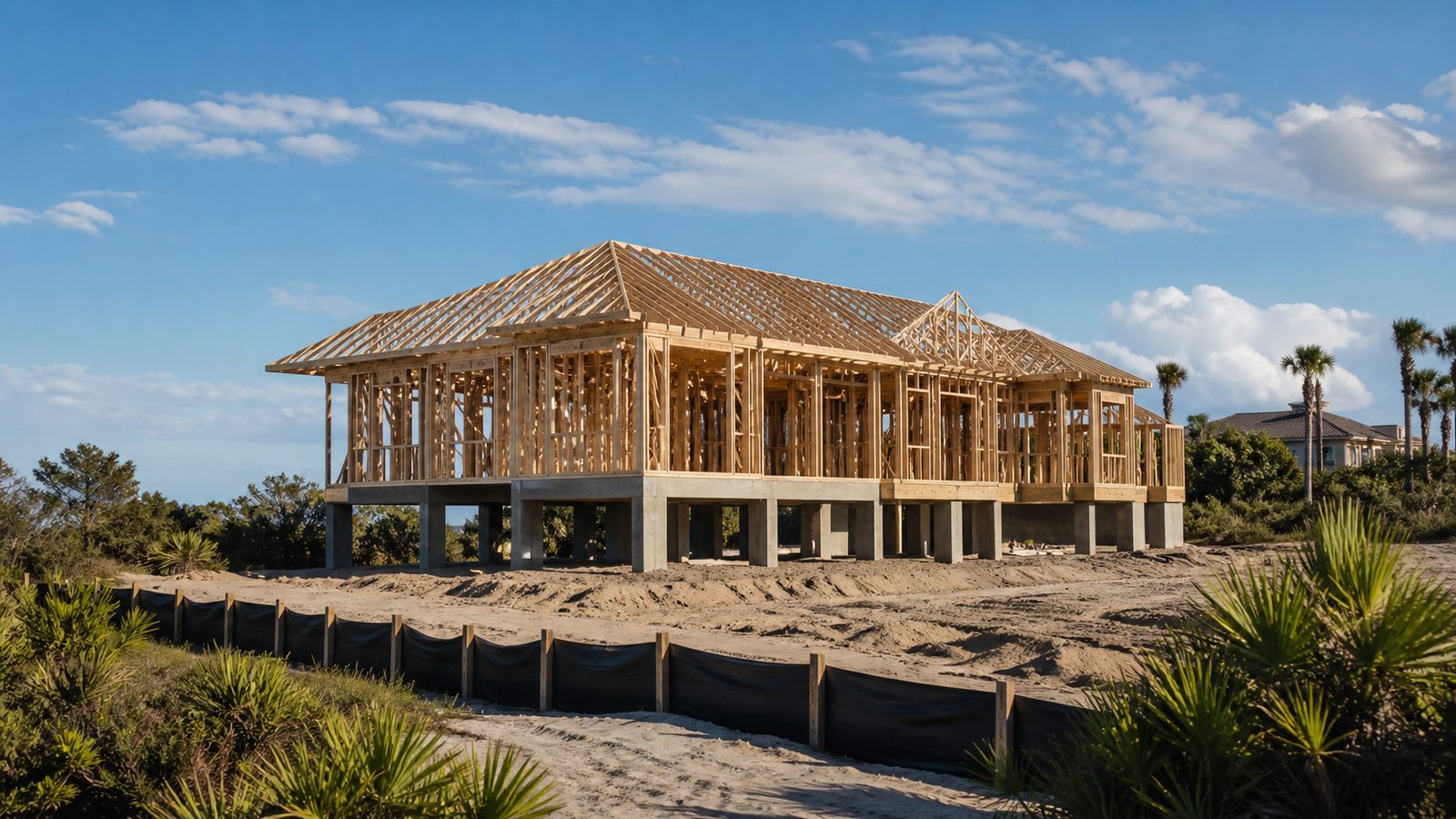
1. Right-Size the Plan — Every Square Foot Costs Money
The most direct way to reduce construction cost is to build fewer square feet. A 2,800-square-foot home that uses every room daily is more valuable than a 3,400-square-foot home with a formal living room and a formal dining room that are used six times a year. In the Jacksonville market, most custom home buyers who look back on their build wish they had been more intentional about eliminating rooms that exist by convention rather than by actual use. Before finalizing the floor plan, walk through a week of your family's actual daily movement. Identify rooms you never go into in your current home and eliminate them from the program. Every 100 square feet eliminated saves $20,000 to $50,000 depending on finish level and the complexity of the construction in that area of the building.
2. Standardize the Floor Plan Layout — Shorter MEP Runs Mean Lower Costs
Mechanical, electrical, and plumbing (MEP) cost is directly tied to how far the systems travel from their sources to their endpoints. A plan that stacks bathrooms vertically — master bath directly above a guest bath — uses a shared plumbing wall and minimizes drain stack routing. A plan that clusters the kitchen, laundry, and powder room in the same wing reduces the supply and waste run to a fraction of a scattered layout. Kitchens that are located far from the exterior wall require longer exhaust duct runs, which lose efficiency and add cost. Before finalizing a floor plan, have your GC review it specifically for MEP routing efficiency. A small plan modification — moving the laundry 8 feet closer to the main bath stack — can reduce rough plumbing cost by $2,000 to $4,000 on a project where that decision costs nothing.
3. Choose a Simple Roof Form — Complex Hip-and-Valley Combinations Add 15–25% to Roofing Cost
Every hip-to-hip intersection, valley, and dormer on a roof requires additional framing, additional flashing, and additional labor to waterproof correctly. A roof with four intersections costs significantly more to frame and roof than a roof with two, for the same overall square footage. In Northeast Florida, where roof cost as a share of total construction is elevated by wind-zone framing and hurricane strap requirements, a complex roof geometry can add 15 to 25% to roofing cost compared to a simpler form. The aesthetic trade-off is real — complex rooflines read as more architecturally interesting — but on a budget-constrained project, simplifying the roof form from six valleys to two valleys is one of the highest-leverage cost decisions available.
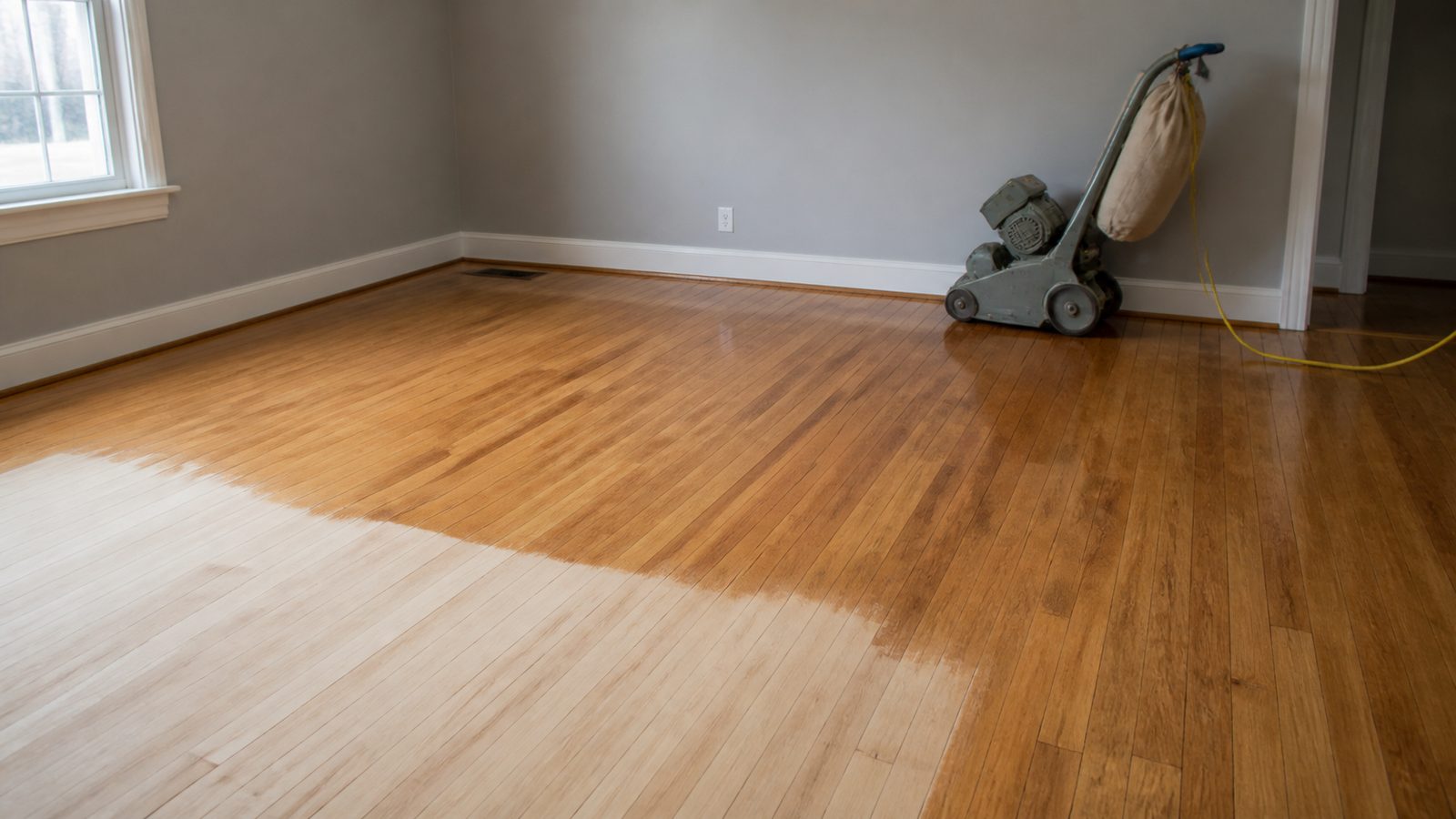
4. Use Engineered Hardwood Instead of Solid Wood Floors
As noted in JK's post on interior finishes that add value, engineered hardwood outperforms solid hardwood in Florida's humidity conditions and costs 20 to 35% less installed. On a 2,000-square-foot main level, that is a savings of $8,000 to $18,000 with no functional or visible quality compromise. The finish is real wood, the surface can be refinished, and the dimensional stability in Northeast Florida's seasonal humidity swings is superior. This is not a downgrade — it is the correct specification for the climate. A GC who pushes solid hardwood on a slab-on-grade Florida home is either uninformed about the product or has a procurement relationship with a solid hardwood supplier.
5. Select Quartz Countertops Over Natural Stone in the Kitchen
Natural stone countertops — particularly marble and certain quartzites — require annual sealing, are vulnerable to acid etching in kitchen environments, and can absorb stains from cooking oils and wine. Quartz engineered countertops are non-porous, require no sealing, and resist heat and scratch damage better than most natural stone. They also cost $20 to $40 per square foot less installed than premium quartzite or marble. In a kitchen with 60 square feet of countertop area, the savings are $1,200 to $2,400. In bathrooms, where daily acid exposure is lower and the visual impact of natural stone is higher, the trade-off calculation reverses — stone in the primary bath is a reasonable allocation of a reduced budget. Save the budget where performance matters; spend it where aesthetics are the primary driver.
6. Allocate Budget to Structure and Mechanical Systems
The components of a custom home that last the longest and are the most expensive to repair or replace are the ones hidden inside the walls: framing, insulation, HVAC, electrical panel and wiring, plumbing rough-in. The components that are easiest and least expensive to upgrade later are the visible ones: paint, light fixtures, plumbing trim, hardware, and landscape. A budget-constrained custom home should prioritize overbuilding the structure and mechanical systems — thicker wall insulation, a larger HVAC system with a better SEER rating, a 200-amp panel with room to grow — and allocate less to the finish categories that can be changed inexpensively as budgets allow. In Jacksonville's heat and humidity, a properly sized and properly insulated mechanical envelope saves more money in annual energy cost than any surface finish decision.
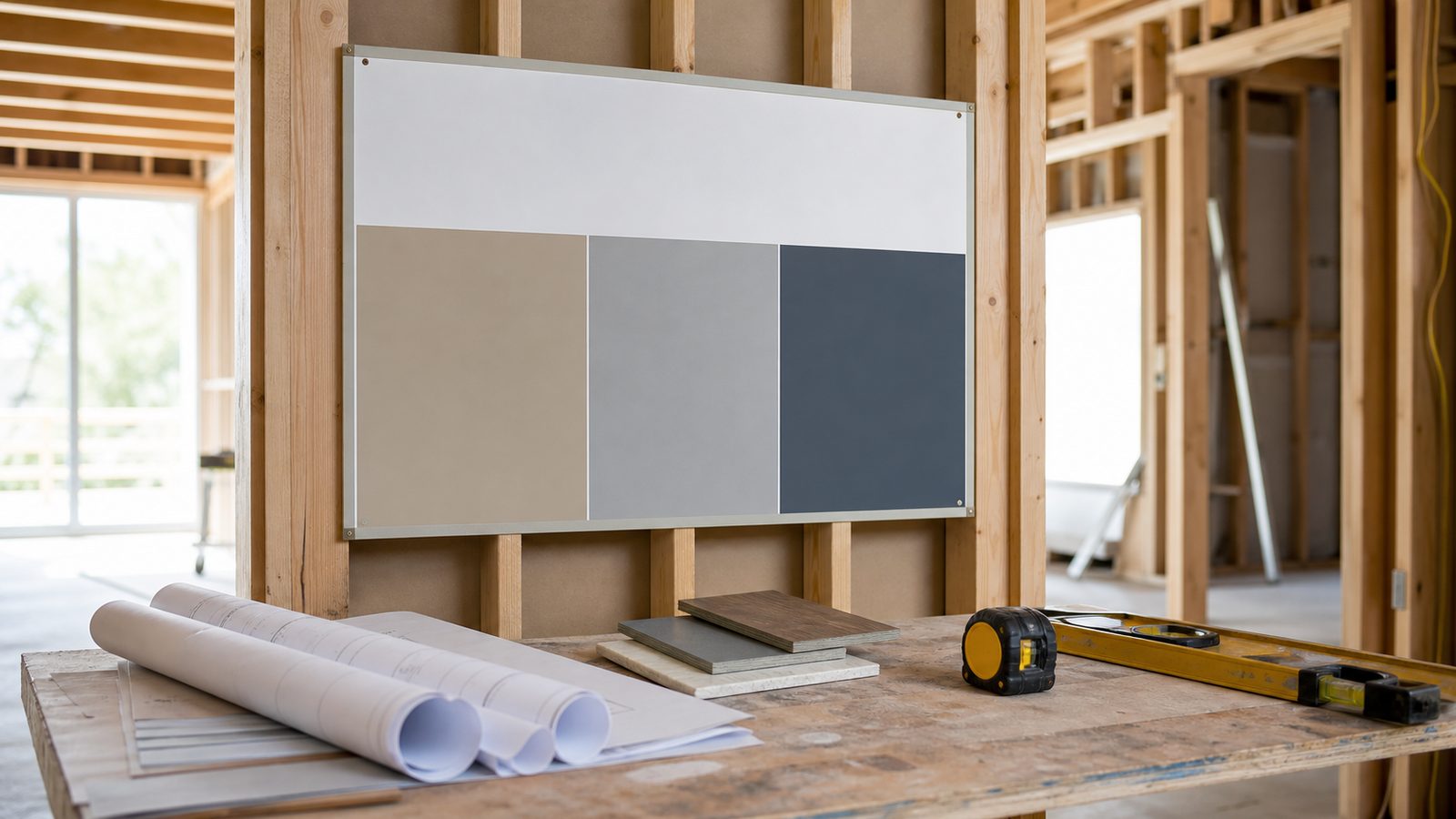
7. Lock All Selections in Pre-Construction — Change Orders During Construction Cost 2–4x
A selection that costs $3,000 at the pre-construction phase costs $6,000 to $12,000 if changed after framing is complete and materials are ordered. The cost multiplier reflects material restocking fees, re-ordering delays, labor to remove installed work, and schedule impact on downstream trades. The discipline required is to complete all finish selections — tile, cabinetry, countertops, fixtures, hardware, flooring — before the contract is signed, not during construction when you have less time and less leverage. JK Prestige Construction's fixed-price model includes a pre-construction selection lock: every finish item is confirmed, priced, and in writing before the permit application is filed. This eliminates the change order cost entirely and gives the owner a true fixed price from day one.
8. Use a GC Who Self-Performs Framing and Drywall
Framing and drywall are the two largest labor cost categories in residential construction. When a GC subcontracts both trades, they add a markup — typically 10 to 20% — to the subcontractor's invoice. On a 3,000-square-foot custom home, framing labor alone may be $40,000 to $80,000 depending on wall height and roof complexity. A 15% markup on that single trade is $6,000 to $12,000 in cost that does not go into the building. A GC who self-performs framing and drywall eliminates that markup layer entirely and applies the full subcontract amount to actual labor and materials. JK Prestige Construction self-performs framing, concrete, drywall, finish carpentry, and roofing — the five trades that together represent the largest share of construction cost on any Jacksonville custom home.
Get a written estimate in 48 hours. Call (904) 944-0278 or request a free consultation.
JK's fixed-price model, pre-construction selection lock, and self-perform trades are built to give Jacksonville custom home buyers maximum cost efficiency without compromising the structural and finish quality that determines long-term value. Learn more about how we work and our renovation approach.
No call center. No coordinator. A JK principal reviews every inquiry and replies with a real number, not a range, not a follow-up form.
Request Free Estimate →