An Infection Control Risk Assessment (ICRA) is a documented, multi-disciplinary evaluation of the infection risk that construction activity poses to hospital patients and staff. Every hospital renovation requires one. But the ICRA document itself is only the beginning — it is the daily implementation record that tells you whether a GC actually manages infection control on the jobsite or simply checks the box during the pre-bid meeting. Before you award a renovation contract in a live hospital, you need to audit the GC's ICRA compliance record from a prior project. This post explains what that record should contain, what to ask for, and which gaps indicate that the GC's ICRA program exists on paper only.
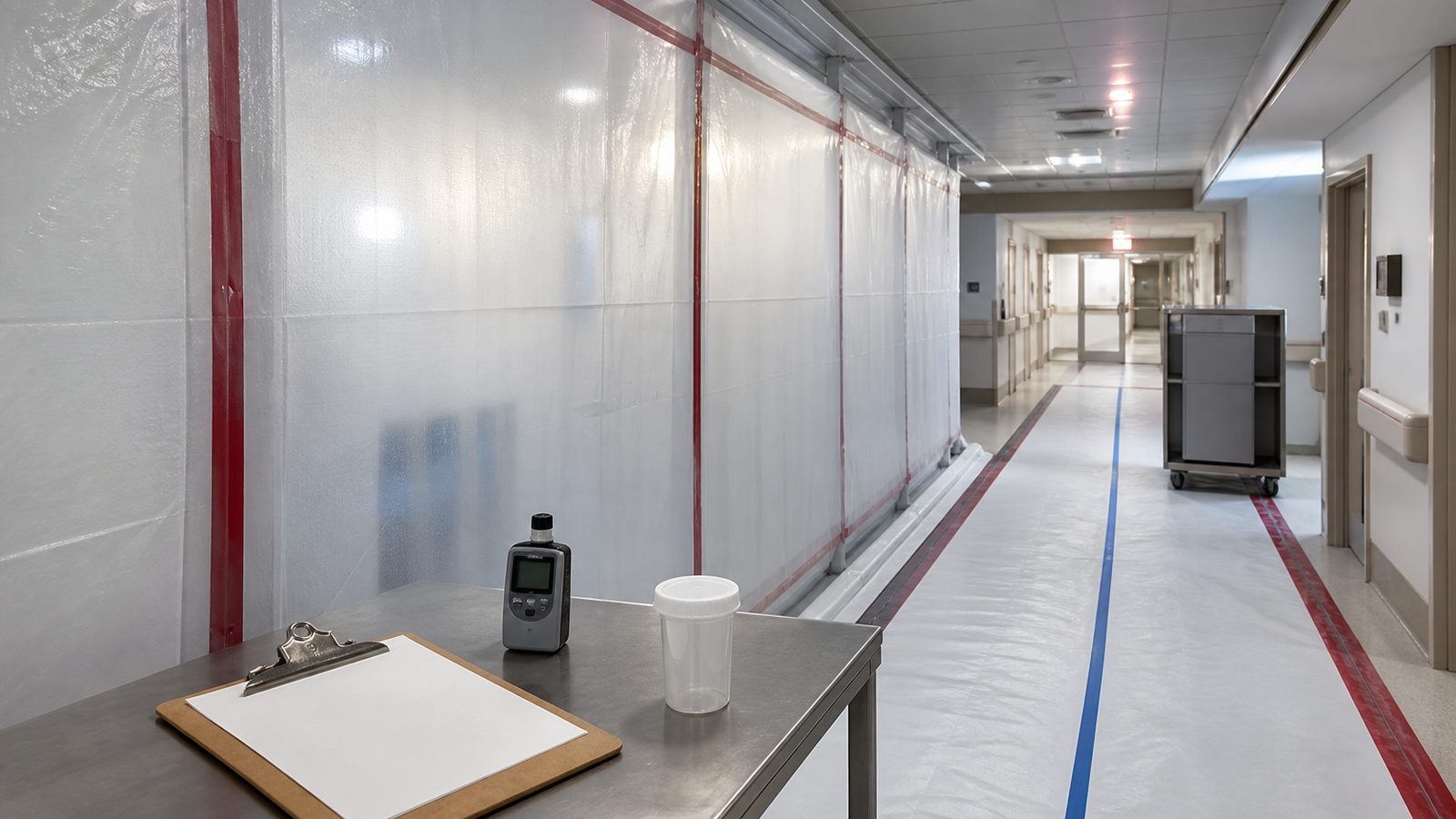
What a Legitimate ICRA Compliance Record Contains
A GC with a functioning ICRA program produces a structured compliance file for each healthcare project. At minimum, that file should contain the following categories.
Barrier Inspection Logs (Daily)
Physical barriers separating the construction zone from occupied patient areas must be inspected daily. The log should record:
- Date and time of inspection
- Inspector name and role (typically the ICRA-trained superintendent or a designated ICRA officer)
- Barrier integrity status by section — walls, floor penetrations, ceiling grid, door seals, pass-through openings
- Any deficiencies noted and the corrective action taken, including who performed the correction and at what time
A log that shows every day as "pass" with no deficiencies and no corrective actions is a red flag. On any active construction project, barriers experience minor damage — adhesive failures, temporary material passes, accidental cuts. A log that never records a deficiency is a log that was filled in after the fact.
Look for a log that shows deficiencies, corrective actions with timestamps, and superintendent sign-off on resolution. That is evidence of a working daily inspection process.
Negative Pressure Readings
Class III and Class IV ICRA projects (the highest-risk categories, covering ICUs, ORs, bone marrow transplant units, and immunocompromised patient areas) require the construction zone to be maintained at negative air pressure relative to adjacent occupied spaces. This ensures that airborne particulates generated by construction — dust, drywall debris, airborne pathogens stirred up by demolition — flow from the occupied area into the construction zone rather than the reverse.
The compliance record should include:
- Pressure differential readings at the primary barrier entrance, taken at a documented frequency (typically at the start of each shift and after any barrier breach)
- The instrument used (a magnahelic gauge or electronic pressure monitor with a calibration date)
- Recorded values — typically -0.01" to -0.03" water gauge relative to adjacent occupied space
- Any readings that fell out of the required range and the corrective action (typically running additional air scrubbers or sealing a discovered leak in the barrier)
If the GC's ICRA record does not contain pressure differential readings, their negative pressure system was not being monitored. That is a disqualifying gap for any Class III or IV project.
Air Change Verification During Construction
Beyond pressure differential, the construction zone air scrubbers must produce enough volume to maintain the required number of air changes per hour (ACH) in the work area. The compliance record should show:
- Air scrubber specifications (make, model, CFM capacity, HEPA filter certification)
- Calculation showing the number of units deployed relative to the volume of the work area
- Filter change log — HEPA filters in construction zone scrubbers must be changed at manufacturer-specified intervals or when contaminated
Anteroom Breach Incidents and Resolution
A properly constructed ICRA barrier for Class III and IV projects includes an anteroom — a decontamination space between the construction zone and the occupied corridor. Workers entering and exiting must pass through the anteroom, remove dusty outer garments, and seal the construction-side door before opening the occupied-side door. If the construction-side and occupied-side doors are open simultaneously, the pressure differential is breached.
The incident log should record:
- Every anteroom breach (simultaneous door opening, door left ajar, material delivery procedure not followed)
- Immediate corrective action (area cleared, negative pressure verified restored, incident documented)
- Retraining records if a worker was responsible for the breach
A GC who claims zero anteroom breach incidents across a six-month renovation has either a perfect crew or incomplete records. The honest record shows incidents and resolutions.
Worker Infection Control Orientation Records
Before any worker enters a live hospital construction zone, they should be briefed on the ICRA protocols specific to that project — barrier locations, anteroom procedure, prohibited activities near occupied areas, escalation procedure for a breach. The compliance record should include:
- Signed orientation acknowledgment from every worker who accessed the construction zone
- Date of orientation and the topic outline covered
- Records for subcontractor workers, not only JK direct employees — the GC is responsible for all workers in the zone
If subcontractor workers are not documented in the orientation log, the GC is not managing infection control comprehensively. A breach caused by a subcontractor plumber who was never oriented is the GC's breach.
ICRA Class Upgrades During Construction
As construction progresses, conditions change. A project that began as a Class II renovation (low risk, minor construction in a non-critical area) may require an upgrade to Class III if demolition reveals conditions that increase dust generation or if adjacent patient populations change. The compliance record should document:
- Any ICRA class changes during the project and the date of change
- The rationale (typically driven by the infection preventionist and the GC's superintendent jointly)
- Barrier and procedure modifications implemented in response to the upgrade
An ICRA record with no class changes across a complex renovation is not necessarily wrong, but it is worth asking about. If conditions were static throughout, verify that the original risk assessment captured the full scope accurately.
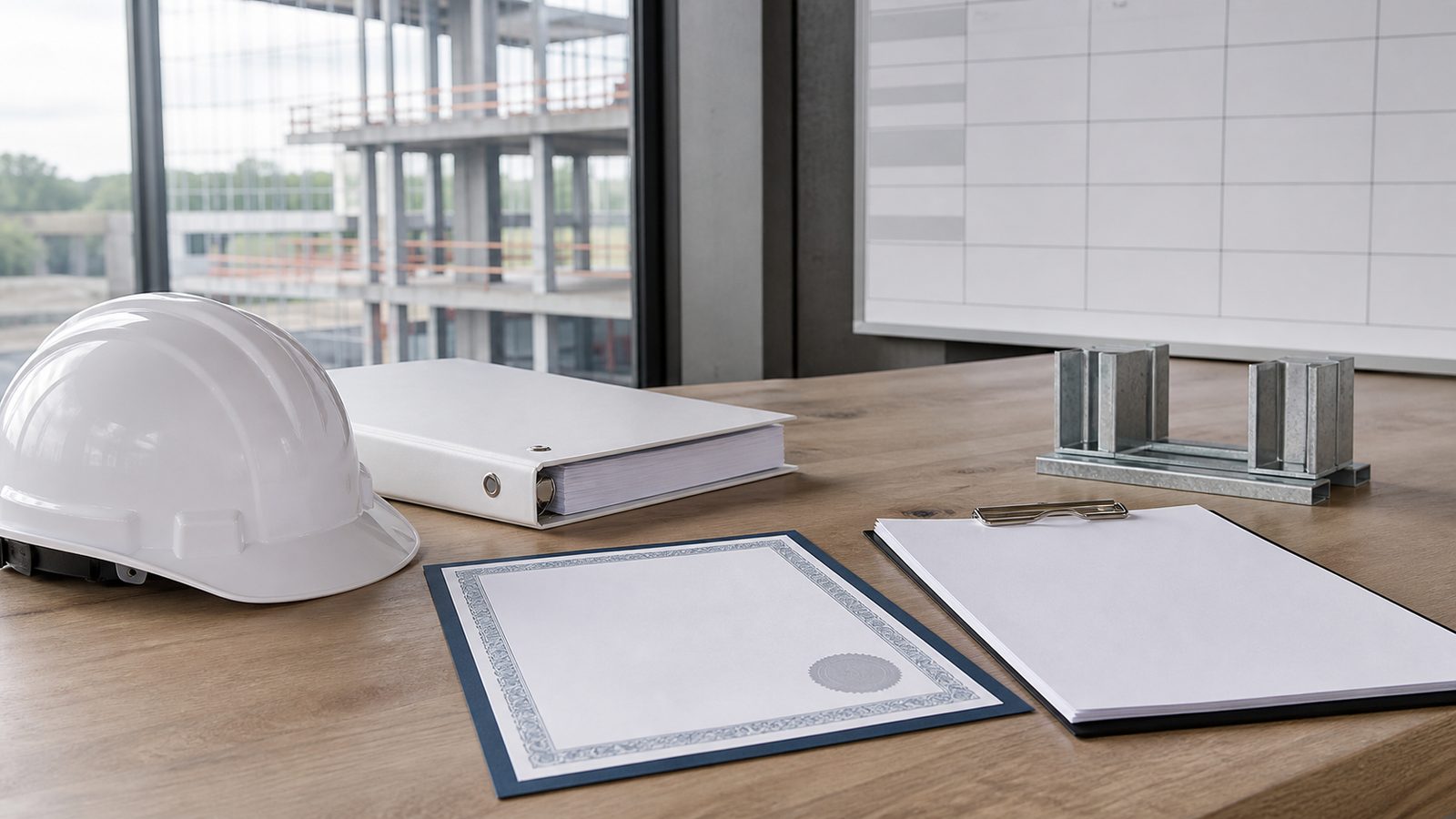
What to Request Before Awarding
When you are evaluating a hospital renovation GC, request the following documents from a completed project within the last three years:
- Sample barrier plan — a drawing showing the barrier configuration for a specific phase, with dimensions, material specifications (typically two layers of 6-mil poly or equivalent), and negative pressure equipment locations
- Superintendent ICRA training certificate — JK uses ICRA-trained superintendents on all hospital projects. Ask for the specific training course name, the certifying body, and the date of training
- One month of daily barrier inspection logs (selected from mid-project, not the first or last month)
- 30 days of negative pressure readings for the same period
- The incident log for the full project duration — every breach, every corrective action
Do not accept a summary statement ("our ICRA program meets all requirements"). Request the actual documents. A GC with a functioning ICRA program has these on file and can produce them within 48 hours.
Red Flags in an ICRA Record
- No daily inspection logs — the superintendent was not running daily barrier checks
- No pressure differential readings — negative pressure was not being monitored
- No worker orientation records for subcontractors — infection control was not being enforced across the full workforce
- No incident log — either there were no incidents (implausible on any multi-month project) or incidents were not being recorded
- Superintendent training certificate from a one-hour online course — ICRA training for a healthcare superintendent is a multi-hour, hands-on program. A 30-minute online module is not equivalent
- Logs that are clearly filled in retrospectively — identical handwriting throughout, all entries made on the same date, no variation in recorded conditions
JK Prestige's ICRA-trained superintendents manage daily compliance on all live hospital renovations. The compliance record from every project is available for owner review.
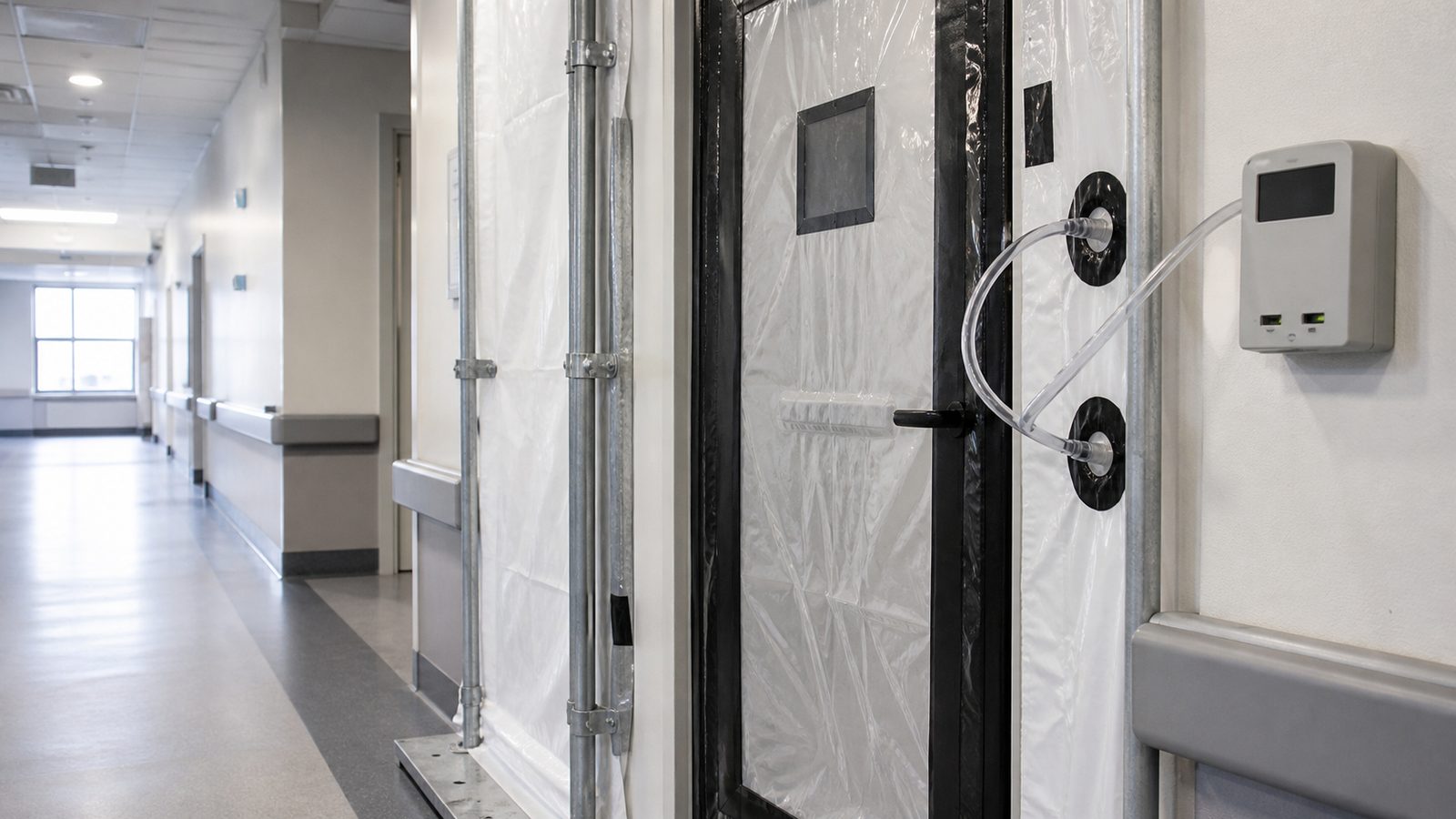
What Questions to Ask the Superintendent Directly
Ask the proposed superintendent — not the sales principal — the following:
- Walk me through how you set up a negative pressure enclosure. What materials? How do you verify pressure?
- What do you do if a worker opens both anteroom doors at the same time?
- What ICRA class did your last hospital project start at, and did it change during construction?
- How do you manage a subcontractor who shows up without infection control orientation?
A superintendent who has actually run ICRA programs answers these questions in operational detail. A superintendent who has not gives you policy language.
Review how JK Prestige structures superintendent accountability and daily jobsite management.
Get a free written estimate in 48 hours. contact JK Prestige Constructor or call (904) 944-0278. A principal answers.
No call center. No coordinator. A JK principal reviews every inquiry and replies with a real number, not a range, not a follow-up form.
Request Free Estimate →