Most homeowners who build in their own city can visit the jobsite weekly. When you are building a custom home in a state where you do not live — whether you are a Jacksonville resident building in New York, or a New York buyer building on the Florida coast — the GC selection decision carries more weight. You cannot drive by. You cannot have an impromptu conversation with the superintendent. Every update has to come through a structured communication channel, and if that channel is a project coordinator who was not on the site walk, you have a problem.
A general contractor (GC) who builds out of state is not inherently more capable than a local one. But a GC who travels with their own crews — who is not assembling a team of unfamiliar local subcontractors each time they land in a new market — brings a consistency of execution that local-sub networks cannot replicate. The question is how to tell the difference before you sign.
What Multi-State Licensing Actually Means for a Custom Home Builder
Licensing requirements differ by state. Florida requires a Certified General Contractor license issued by the Florida Department of Business and Professional Regulation. New York requires a Home Improvement Contractor license at the local level (most counties) plus a business registration. North Carolina, Connecticut, and other states have their own licensing frameworks with varying reciprocity for out-of-state applicants.
A GC who says they "work in 14 states" is making a claim you should verify before the conversation goes further. The verification steps:
Step 1: Check the GC's license status in the state where you are building. Every state has a public license lookup. In Florida, that is the DBPR online portal. In New York, it is the Department of State. An active license in good standing — no violations, no complaints, no expired status — is the baseline.
Step 2: Confirm the license covers the scope you are building. In Florida, a Certified General Contractor license covers most residential and commercial construction. In some states, a residential-only license does not cover a $4M custom estate the way a full GC license does. The distinction matters.
Step 3: Verify insurance in the state of construction. General liability and workers' compensation policies must be active in the state where work is performed. An out-of-state GC whose workers' comp policy does not cover your state creates an exposure for you as the property owner.
JK Prestige is licensed, bonded, and insured in Florida and has delivered custom home projects in New York, Connecticut, North Carolina, and other states. Our licensing status in each state is documented and available on request before any contract discussion.
Review JK Prestige's custom home capabilities
Local Subs vs. Own Crews: Why It Matters More Out of State
When a GC builds out of their home market, the standard approach is to subcontract the critical trades to local subcontractors they have not worked with before. This creates two problems:
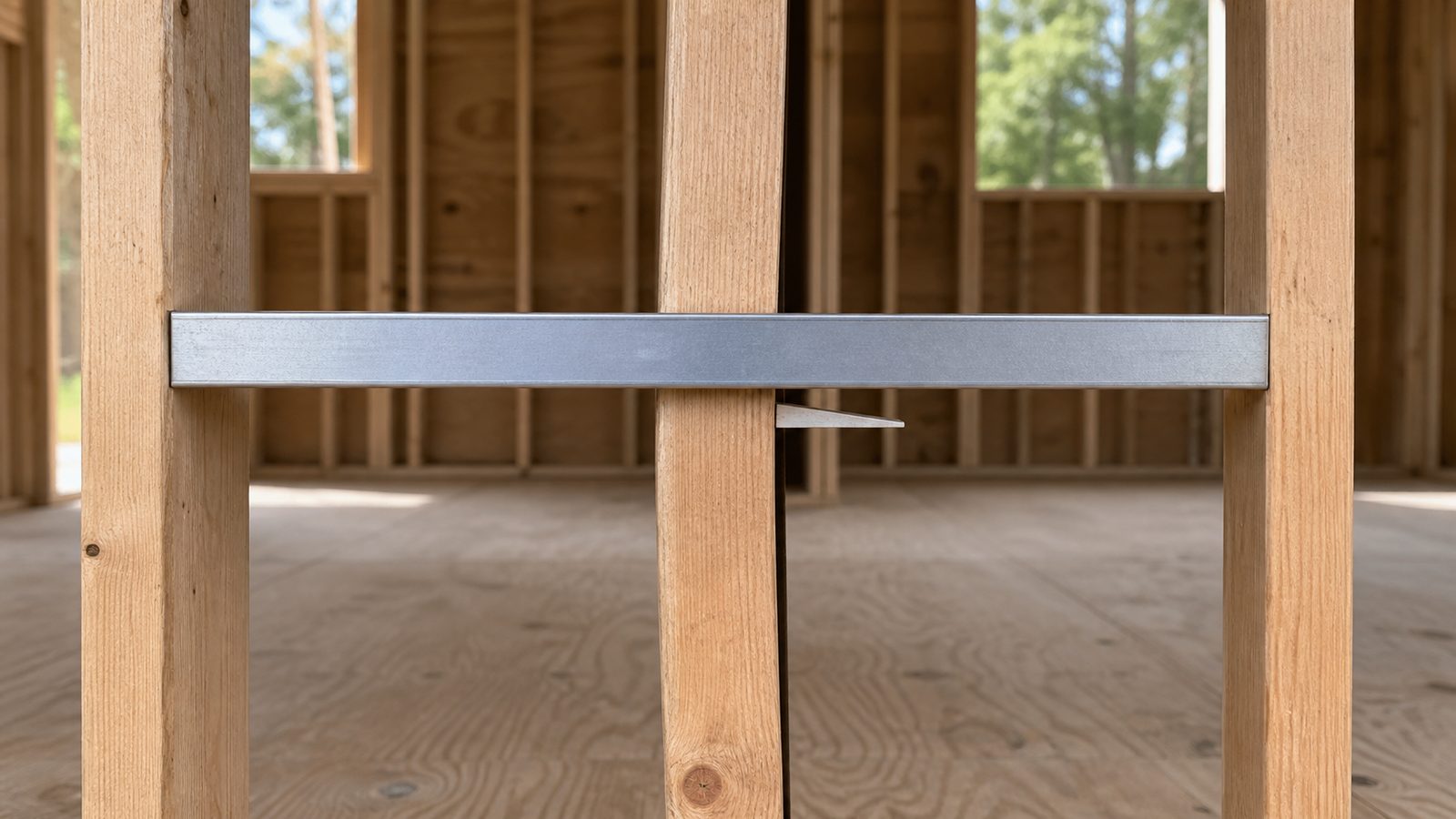
Quality consistency breaks down. The GC's reputation at home is built on crews they know. The local sub in your state is unknown. The GC cannot vouch for the finish quality of a framing crew they hired off a referral phone call.
Accountability gaps form. When a framing defect appears, the GC points to the framing sub. The framing sub points to the plans. You are the one living in the house.
A GC who travels with their own crews — self-performing framing, drywall, and finish carpentry — brings the same people who built their last ten projects. The superintendent who oversaw the Hollowbrook Estate in New York in 2024 knows JK's framing tolerances, JK's finish carpentry standards, and JK's daily documentation requirements because they have worked inside that system for years. A local sub hired for a single project does not.
JK's model: our own framing and finish carpentry crews travel with the project. For trades we do not self-perform — plumbing, electrical, HVAC — we vet local subcontractors in the project market in advance, before mobilization, not after we arrive. Licensing verification, insurance certificates, reference checks, and a site interview are standard before any sub is brought into a JK project.
What the Hollowbrook Estate Demonstrated
The Hollowbrook Estate in New York, delivered in 2024, was an 11,200 sqft custom home. JK's Jacksonville-based framing crew and superintendent relocated to the project for the duration of the structural and finish carpentry phases. The local electrical and plumbing subs were selected and vetted by JK's principal eight weeks before mobilization.
For the owner — based in Florida — the communication structure was a weekly written owner report covering budget variance, schedule status, open RFIs, and a look-ahead for the following two weeks. Monthly site walks with the JK principal, not a superintendent handoff. A named direct number in the contract, not a call center.
Questions to Ask Before Hiring an Out-of-State Custom Home GC
These questions separate a GC who has genuine multi-state experience from one who is expanding geographically on your project:
1. What is your active license number in the state where I am building, and what scope does it cover? This should take 30 seconds to answer. If the GC needs to "check on that," they are not licensed yet.
2. Which trades does your own crew perform, and which will be subcontracted to local trades? You want a specific answer: "We self-perform framing and finish carpentry. We will subcontract plumbing, electrical, and HVAC to local licensed subs." Any answer that is vague about what "our team" does should prompt more questions.
3. How have you selected the local subcontractors for my project, and can I see their licenses and insurance certificates before we sign? A GC who has not yet identified the local subs — and will do so "once we get started" — is assembling a new team on your project. That is a risk.
4. What does weekly owner communication look like for a remote build? The answer should include a specific format (written report), a specific cadence (weekly), and a specific name (the principal, not a coordinator). If the answer is "we'll set up a Zoom when you want to talk," the communication system is not structured enough for a remote project.
5. Can you give me three references from homeowners who built with you out of state? References from local projects do not demonstrate remote project management capability. Ask specifically for homeowners who built in a state different from the GC's home market.
See how JK Prestige structures the principal-led build process
What a Principal-Led Remote Build Actually Looks Like
Principal-led construction means the person whose name is on your contract is the person on your project. Not a regional manager. Not a project coordinator hired after the contract is signed. The principal who walked your site, who signed the fixed-price contract, and who is named in the contract is the person who answers a call at 8pm about a framing concern.
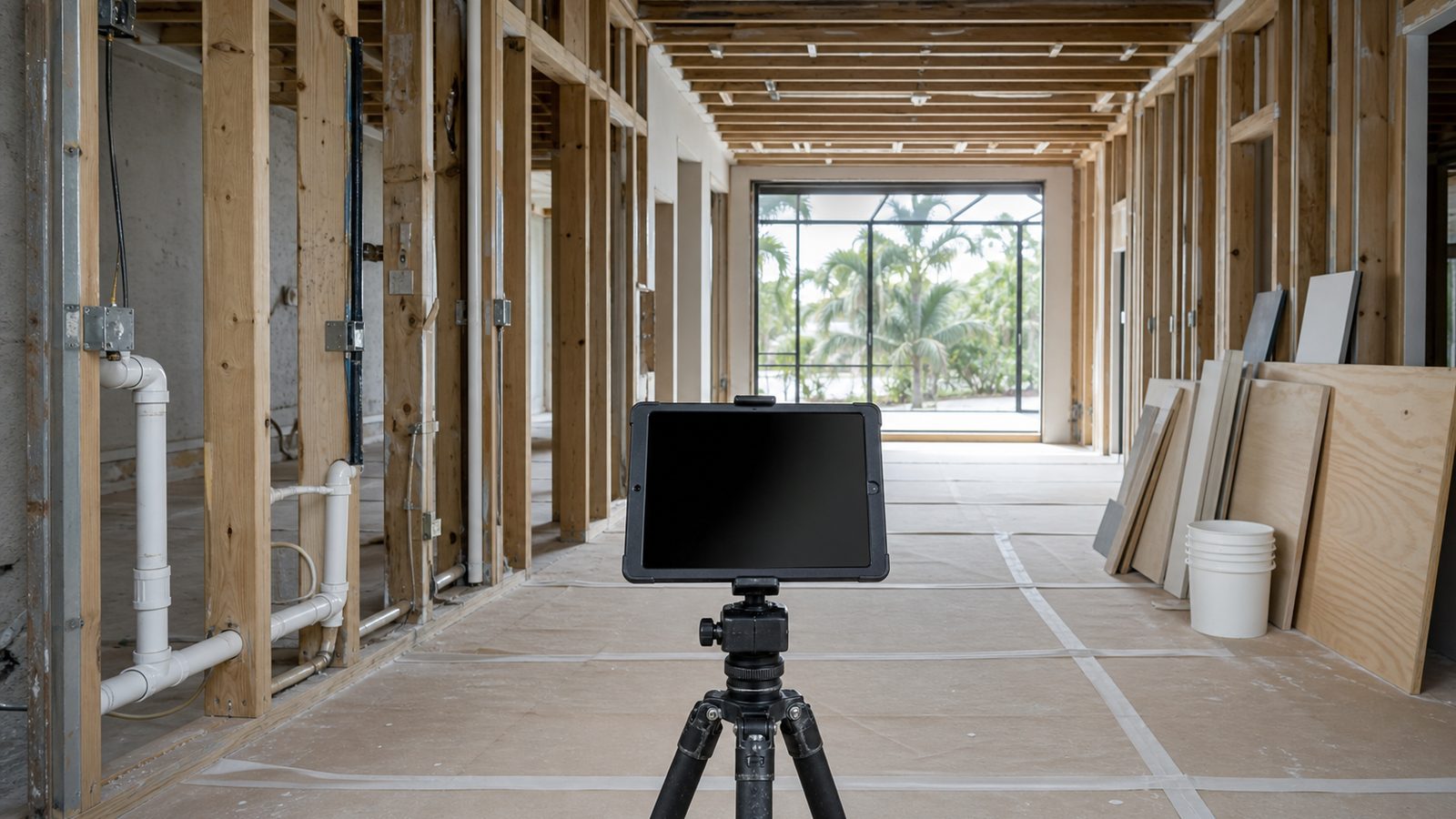
For a remote build, this matters more than it does for a local project. When you cannot walk the site, the quality of your information is entirely dependent on the quality of your GC's reporting. JK's weekly owner report for remote builds includes:
- Budget variance: every line item, actual versus budget, updated weekly
- Schedule status: activities completed this week, activities planned for next week, any delays and their source
- Open RFI log: every unanswered question to the design team, with who owns the response and when it is due
- Photo documentation: minimum 20 field photos per week, tagged by location and activity
- Look-ahead: activities planned for the next four weeks, flagged if any prerequisite is not yet resolved
This report arrives by Friday of each week without being requested. It is not a summary conversation — it is a written document the owner can review on their own time and track over the life of the project.
View completed custom home projects
Get a free written estimate in 48 hours. contact JK Prestige Constructor. Call (904) 944-0278. A principal answers.
No call center. No coordinator. A JK principal reviews every inquiry and replies with a real number, not a range, not a follow-up form.
Request Free Estimate →