Carlisle SynTec and Firestone are the two most-used commercial roofing membrane brands in the United States. Both manufacture thermoplastic polyolefin (TPO) and ethylene propylene diene terpolymer (EPDM). Both have contractor certification programs. Both offer long-term warranties. The choice between them is not a matter of one being better than the other in absolute terms — it is a matter of which system fits a specific building's substrate, the Florida climate conditions it operates in, and the warranty terms a property owner needs.
JK Prestige holds certifications for both Carlisle SynTec and Firestone, which means either system is available under one contract with full manufacturer warranty access.
TPO Roofing Contractor Florida: Understanding the Two Systems
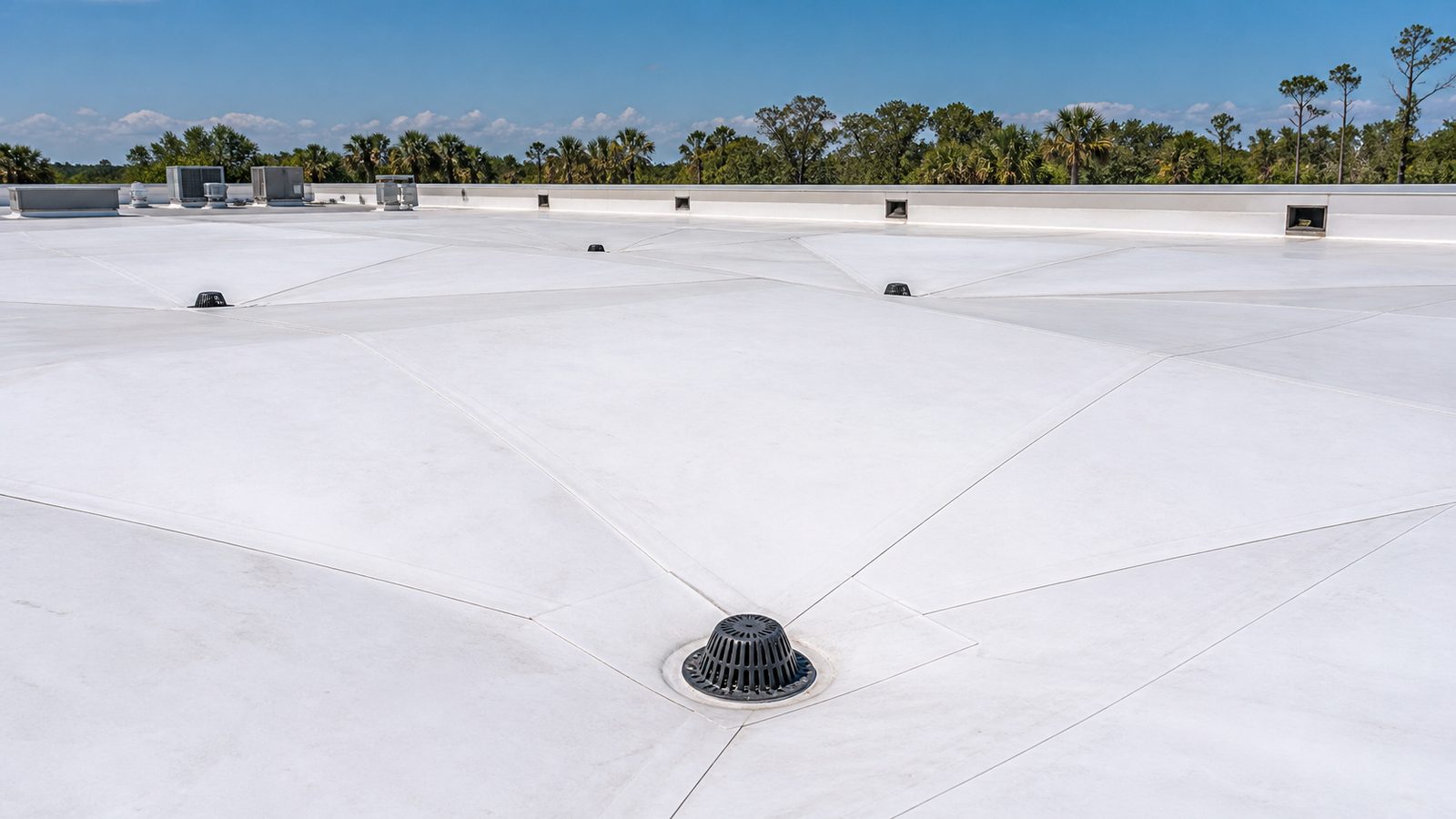
Before comparing brands, the basics: TPO is a heat-welded single-ply membrane installed over roof insulation on low-slope commercial roofs. In Florida, it is the dominant commercial flat roofing system because it reflects UV radiation, tolerates thermal movement, and is weldable in hot weather. EPDM is a single-ply synthetic rubber membrane — black or white — adhered, mechanically attached, or ballasted. EPDM has a longer field track record but does not reflect heat the same way white TPO does.
Both Carlisle and Firestone manufacture both. The decision between brands is a secondary choice to the decision between systems.
Carlisle SynTec: System Overview for Florida
Carlisle SynTec manufactures EverGuard TPO and SURE-WELD TPO under the SynTec line, and FleeceBACK TPO for recover applications. The standard commercial specification in Florida is the 60-mil EverGuard TPO.
Membrane Thickness and Seam Standards
Carlisle's standard is 60 mil for commercial applications. The 60-mil thickness provides:
- Better puncture resistance than 45-mil membranes (relevant on walkable roofs and roofs with heavy HVAC foot traffic)
- Greater seam surface area, which supports stronger heat-welded seams
- Better long-term heat aging performance — relevant in Florida where roof surface temperatures regularly exceed 160°F in summer
Carlisle specifies minimum 1.5" weld width on seams, with 2" recommended on field seams. Seam width is a quality indicator that certified contractors are tested on — non-certified installers frequently under-weld, which is the primary cause of early TPO seam failure.
EverGuard Warranty Program
Carlisle's commercial warranty program is structured as:
- EverGuard 15: 15-year material and labor warranty, contractor certification required
- EverGuard 20: 20-year material and labor warranty, enhanced certification tier required
- No Dollar Limit (NDL) options available at 15 and 20 years — meaning Carlisle covers repair costs without a dollar cap
Florida-specific consideration: Carlisle's EverGuard warranty includes wind uplift coverage up to 55 psf (pounds per square foot), which matters for Jacksonville properties in Duval County's 130 mph design wind speed zone. Verify attachment method (mechanically attached vs. fully adhered) against the building's uplift requirement.
Carlisle ISO Insulation Compatibility
Carlisle manufactures SecurShield polyisocyanurate (polyiso) insulation designed for use with EverGuard membranes. Using manufacturer-compatible insulation enables:
- Single-source warranty (membrane and insulation from one manufacturer)
- Pre-tested thermal resistance (R-value) performance in Florida's climate
- No compatibility disputes if insulation-related warranty claims arise
This matters on recover projects where new insulation is installed over an existing deck: using Carlisle ISO under Carlisle TPO gives the owner a single warranty document for the full system.
Firestone: System Overview for Florida
Firestone manufactures UltraPly TPO and RubberGard EPDM, along with TPO FR (fire-retardant) and a range of mechanically attached and adhered variants.
UltraPly TPO and InseamSafe Technology
Firestone's InseamSafe specification is a heat-welding process standard that Firestone-certified installers are tested on. The core spec:
- Minimum 2" field seam width
- Minimum 1.5" lap at T-joints
- Probe testing of all seams before warranty inspection
In Florida's heat, seam quality is the single most important installation variable. TPO membranes expand and contract significantly with temperature swings. A narrow or under-welded seam opens over thermal cycling. Firestone's InseamSafe program addresses this with a prescriptive installation process — certified installers must demonstrate seam quality before warranty is issued.
Firestone 20-Year NDL Warranty
Firestone offers a 20-year No Dollar Limit (NDL) warranty on UltraPly TPO systems installed by Firestone-certified contractors. The NDL terms cover:
- Material defects
- Seam failures attributable to the membrane (not installation error — which is why contractor certification matters)
- Wind uplift up to 55 psf with proper attachment
For a Jacksonville commercial building, the 20-year NDL from Firestone is one of the strongest warranty instruments available in the flat roofing market. Getting it requires a certified contractor — not every commercial roofer qualifies.
RubberGard EPDM
Firestone's RubberGard EPDM is a 60-mil or 90-mil black EPDM membrane. In Florida, EPDM is less common on new construction because black rubber absorbs rather than reflects heat — a disadvantage in a state where cooling loads drive energy costs. However, EPDM performs well in:
- Recover situations where the existing system was EPDM
- Applications where cost-per-square is the primary driver
- Buildings with existing adhesive-based systems where TPO transition costs are high
White EPDM (Firestone manufactures it) closes most of the reflectivity gap with TPO.
Florida-Specific Performance Factors: Heat Aging and UV Resistance
Both systems face the same Florida stress factors: prolonged UV exposure, surface temperatures exceeding 160°F in summer, daily thermal cycling through 30–40°F ranges from morning to afternoon, and hurricane-season wind load events.
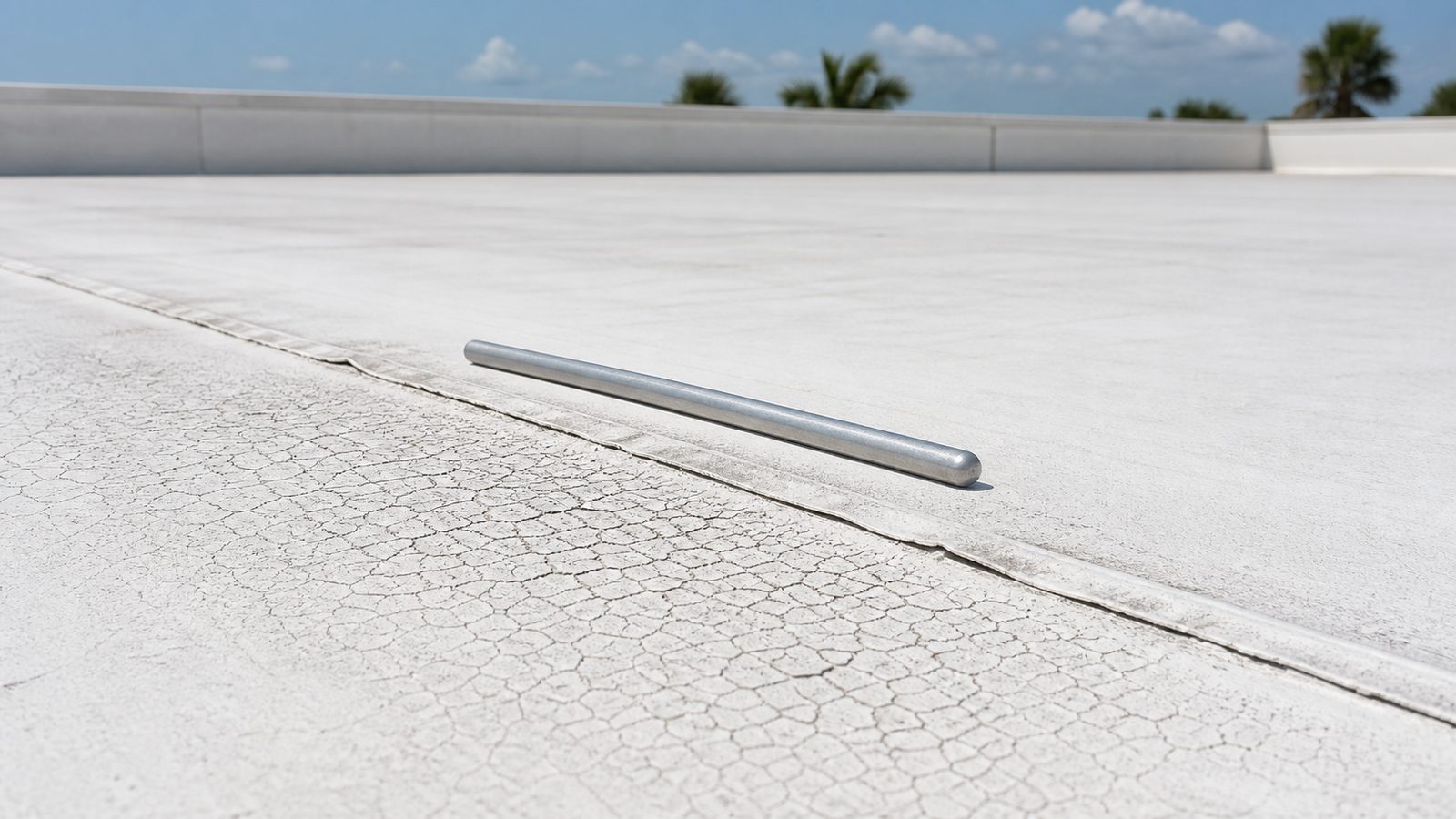
Heat aging is the primary long-term failure mechanism for TPO in Florida. TPO membranes that are under-compounded — meaning the plasticizer and stabilizer package was not formulated for extended high-temperature exposure — become brittle over time. Both Carlisle and Firestone compound their membranes for Florida conditions, but the compounding quality is not visible to the eye on installation. It shows up at year 10 as surface cracking (alligatoring) or seam brittleness.
Third-party testing from SPRI (Single Ply Roofing Industry) and FM Global has shown:
- 60-mil membranes consistently outperform 45-mil on heat aging tests
- Fully adhered systems outperform mechanically attached on thermal cycling because the membrane has no localized stress points at fastener locations
- White TPO maintains Solar Reflectance Index (SRI) values above 85 for at least 3 years in Florida field conditions (Cool Roof Rating Council data)
UV resistance correlates with the titanium dioxide (TiO2) content in the membrane's top ply. Both Carlisle and Firestone use stabilized TiO2 formulations. Independent lab testing does not show a consistent material advantage for either brand — installation quality (seam welding, fastener spacing, flashing detail) determines field performance more than brand choice.
Contractor Certification Requirements
This is where brand choice has the most practical impact for a property owner. Both Carlisle and Firestone require contractor certification to issue their warranty programs. Certification involves:
- Company application and review
- Installer training and testing (seam quality, flashings, penetrations)
- Active project inspections during the warranty period
- Continuing education and annual recertification
A roofer who installs Carlisle membrane but is not Carlisle-certified cannot issue an EverGuard warranty. The same applies to Firestone's NDL warranty. When hiring a commercial roofing contractor, the first question is: certified by which manufacturers, and can you show the current certificate?
JK Prestige holds active certifications for both Carlisle SynTec and Firestone. Both manufacturer warranty programs are available depending on the specification. See the full roofing division capabilities for current certification status, and review completed commercial projects for reference.

How JK Prestige Recommends Between the Two Systems
The decision between Carlisle and Firestone at JK Prestige comes down to:
- Existing system: if the building already has Carlisle insulation or a prior Carlisle membrane, the recover path is typically Carlisle to maintain single-source warranty continuity.
- Warranty term needed: if the owner needs a 20-year NDL, both programs offer it — the deciding factor becomes substrate compatibility and regional warranty claim response.
- Insulation specification: if the building requires a high R-value slope assembly, Carlisle's SecurShield tapered ISO performs well; Firestone has comparable products.
- Budget: in competitive commercial bids, material pricing between the two brands is close — within 3–5% on comparable systems. Labor cost is identical for a certified installer.
JK Prestige delivers a written specification identifying the recommended system, membrane thickness, attachment method, insulation R-value, and warranty tier before any contract is signed. Scope and price do not change after the contract is executed.
Learn how the JK Way governs fixed-price delivery and principal accountability on every commercial roofing project.
Book a Free Commercial Roof Assessment
JK Prestige provides a free 24-point commercial roof inspection covering membrane condition, seam integrity at sample locations, drain function, insulation condition at core cuts, and penetration flashing. Written report and specification recommendation delivered in 48 hours.
Book your free commercial roof assessment — or call (904) 944-0278. A principal answers.
No call center. No coordinator. A JK principal reviews every inquiry and replies with a real number, not a range, not a follow-up form.
Request Free Estimate →