Commercial renovation pricing in Jacksonville gets quoted in a wide range — and the range is legitimate, not evasion. A $35 per square foot office renovation and a $140 per square foot restaurant renovation are both real numbers for Jacksonville in 2025. They describe very different projects.
This guide breaks down cost per square foot by project type and explains what drives the number up and down within each category. If you're planning a commercial renovation in Duval County or St. Johns County, this is the baseline for evaluating what you're told.

Why Cost Per Square Foot Has Wide Ranges
Commercial renovation cost is driven by three factors:
- MEP density: How much mechanical, electrical, and plumbing work does this use require? A law office has very little MEP beyond standard lighting and HVAC. A restaurant has commercial kitchen ventilation, grease drainage, make-up air, refrigeration, fire suppression in the hood, and high-amperage electrical. The MEP cost difference can be $30–$60 per square foot between low-density and high-density uses.
- Finish level: Class B office finish (painted drywall, commercial carpet, standard grid ceiling, basic lighting) is very different from Class A office finish (millwork reception, wood floors, architectural lighting, specialty ceiling). The finish-level difference alone is $15–$35 per square foot.
- Existing conditions: Starting from a vanilla shell, a cosmetically dated second gen space, or a prior-use space requiring full demo to begin are three fundamentally different cost starting points.
Cost Ranges by Project Type (Jacksonville, 2025)
Professional Office Build-Out
Class B finish, vanilla shell: $45–$65 per square foot Class A finish, vanilla shell: $70–$95 per square foot Class B finish, second gen cosmetic refresh: $25–$45 per square foot
What's in a Class B professional office at $45–$65 per square foot:
- Drywall partitions with acoustic insulation at conference rooms and private offices
- Standard 2x4 drop ceiling with lay-in tile (Armstrong or equivalent)
- Standard lighting (2x4 troffer LED)
- Single-zone HVAC distribution (rooftop unit with standard ductwork to each zone)
- Carpet tile in offices, LVT in reception and corridors
- Standard hollow-core doors on painted HM frames
- Basic millwork: reception desk, break room cabinetry
What pushes Class A above $70 per square foot:
- Architectural lighting (indirect cove, pendant fixtures, dimmers)
- Specialty ceiling (exposed grid, acoustic clouds, painted drywall ceilings)
- Solid-surface or stone countertops at break room and reception
- High-end LVT or engineered wood flooring throughout
- Frameless glass offices and conference rooms
- Custom millwork reception desk
Medical and Dental Office
Standard medical office: $75–$110 per square foot Dental office: $90–$130 per square foot Imaging suite (no MRI shielding): $100–$140 per square foot
Medical offices cost more than general office because:
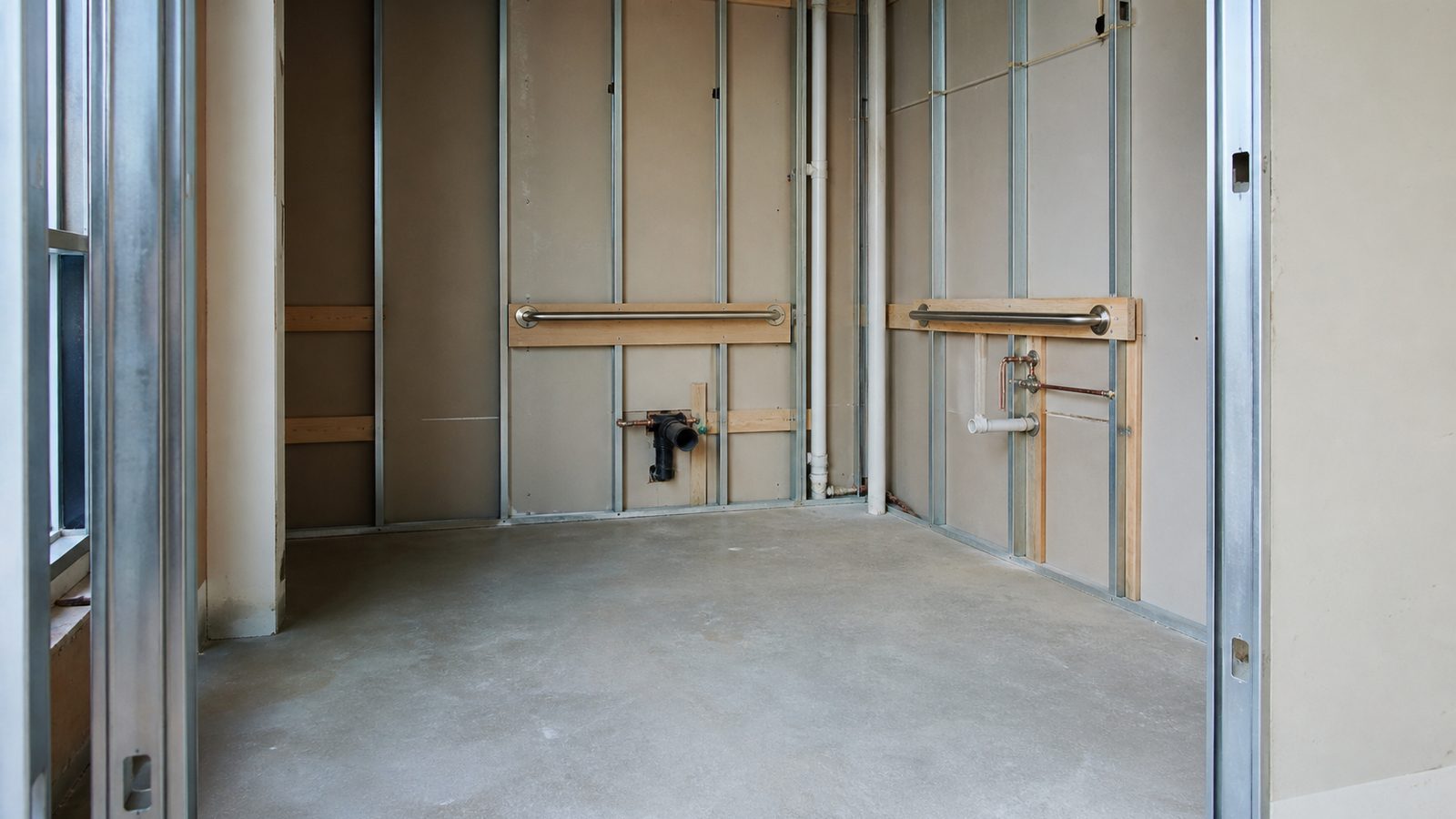
- Exam room plumbing (one sink per exam room minimum, typically 8–12 sinks in a standard practice)
- ADA accessible restroom ratios are higher than in standard office
- Flooring must be impervious (LVT or sheet vinyl) throughout clinical areas
- HVAC zoning must be more precise — exam rooms need individual control
- Electrical for medical equipment (X-ray rooms, procedure rooms) requires dedicated circuits and specific outlet types
- Privacy partitions and specific door clearances for ADA exam rooms
Dental offices add the specialized dental cabinetry, dental air compressor rooms, nitrous oxide and oxygen plumbing, and X-ray room shielding.
Restaurant Build-Out
Quick service / fast casual (no full hood required): $55–$85 per square foot Full-service restaurant with Type I hood: $100–$160 per square foot Second gen restaurant cosmetic refresh: $30–$60 per square foot
Restaurant build-outs are the most MEP-intensive commercial use. The cost drivers:
- Type I hood and fire suppression system: A commercial exhaust hood system with ansul suppression runs $15,000–$40,000+ depending on the hood size and cooking equipment. That's $10–$25 per square foot on a 1,600 sq ft kitchen footprint.
- Grease interceptor: JEA requires a grease interceptor for any new restaurant. Sizing and installation: $3,000–$8,000 depending on flow rate and interceptor location.
- Make-up air unit: Replacing the air exhausted by the commercial hood requires a dedicated make-up air system: $6,000–$15,000 installed.
- Walk-in refrigeration: A walk-in cooler and freezer suite with refrigeration equipment: $18,000–$40,000 depending on size.
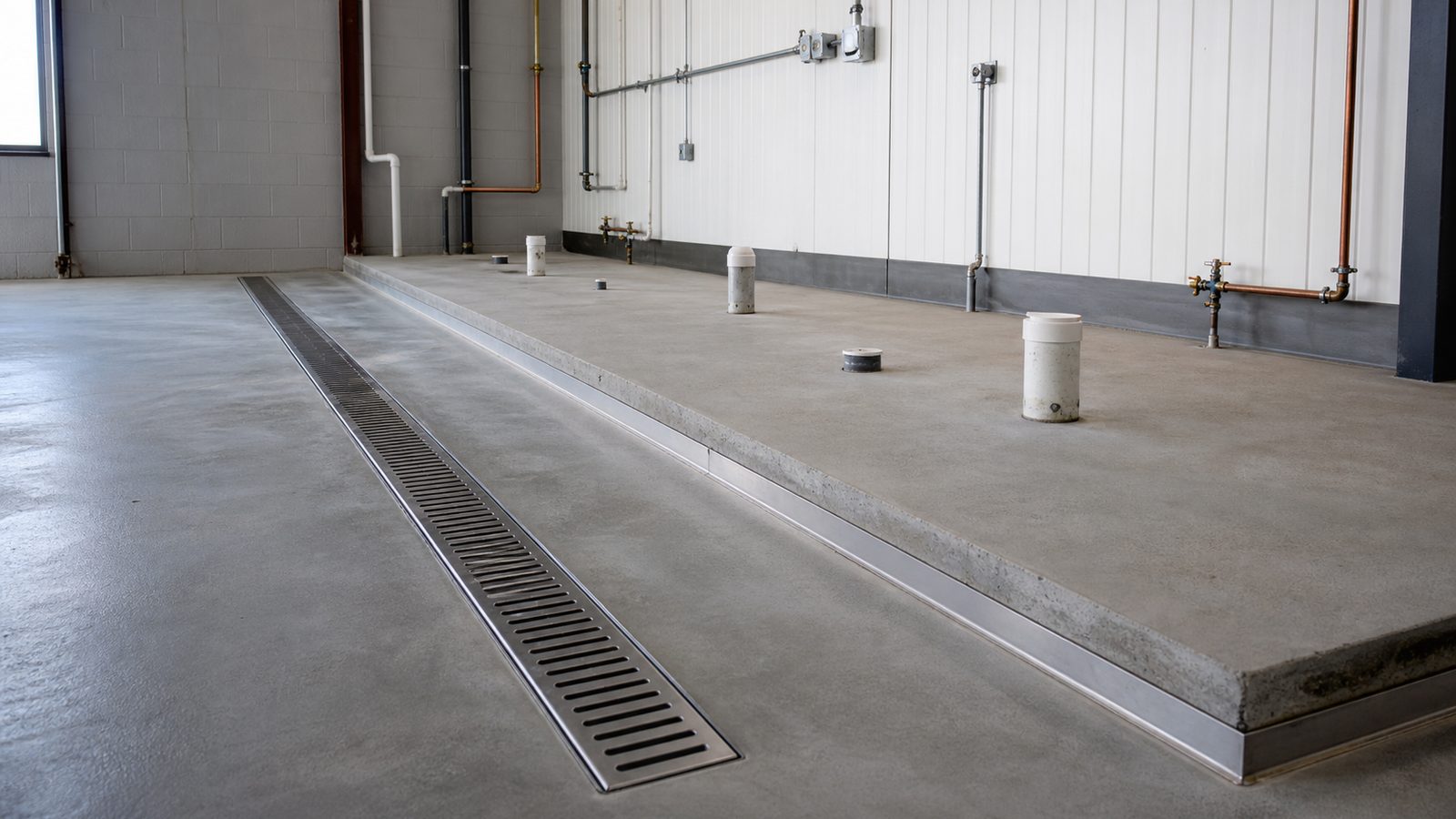
- Commercial-grade flooring and floor drains: Quarry tile with epoxy grout and floor drains throughout the BOH; LVT, stained concrete, or ceramic throughout the FOH. Budget $8–$18 per square foot for flooring alone.
Retail Fit-Out
Standard retail: $30–$55 per square foot High-end retail (boutique, jewelry, specialty): $60–$100 per square foot
Standard retail is the least expensive commercial fit-out because the MEP requirements are modest and the finishes are often practical. What drives standard retail to the higher end of the range: complex lighting design, specialty display fixtures, epoxy or polished concrete floors, and architectural feature walls.
High-end retail at $60–$100 per square foot reflects boutique-quality millwork, stone floors, architectural lighting, and custom display case construction.
Warehouse Conversion to Office or Flex Space
Warehouse-to-office conversion: $35–$65 per square foot for the office portion Full flex space (office + warehouse): $20–$40 per square foot for the combined footprint
Warehouse conversions add cost for:
- Adding HVAC to the office area (the warehouse is typically unconditioned)
- Fire sprinkler modifications for the new occupancy
- Restroom additions for the new tenant load
- Drywall and partition installation in what was an open warehouse
The warehouse area cost is lower because it typically remains unconditioned and requires only minor modifications for the new tenant.
What Changes the Number Most on Any Commercial Renovation
1. Permit and code upgrades: Any commercial renovation that changes use or requires a building permit triggers ADA path-of-travel requirements. A space that was built 20 years ago may not have compliant accessible restrooms or accessible entry. Budget $5,000–$25,000 for ADA upgrades if the space is more than 15 years old, depending on what's there.
2. Structural changes: Any scope involving load-bearing wall removal, roof penetrations, or floor core drilling for new plumbing adds to base renovation cost. See our separate guide on load-bearing wall removal for specific cost data.
3. Existing MEP condition: If the existing HVAC equipment is at end of life, or the electrical panel has no capacity for new circuits, those systems need replacement before the fit-out can proceed. A new commercial HVAC unit for a 2,000 sq ft space is $8,000–$15,000 installed. A new electrical panel upgrade is $3,500–$8,000.
4. Timeline compression: If you need the space occupied in 8 weeks and the normal schedule is 14 weeks, you pay for overtime, accelerated deliveries, and parallel trade coordination that compresses the schedule. Plan for 10–20% added cost for compressed schedules.
Fixed-Price vs. Allowance Contracts for Commercial Renovation
Two contract structures are common in Jacksonville commercial renovation:
Allowance-based contracts: The GC quotes a base construction cost with specific allowances for finishes (flooring at $X per square foot, tile at $X per square foot). The final cost depends on the actual selections. If you select product above the allowance, you pay the difference. These contracts feel lower on paper but frequently land higher at closeout.
Fixed-price contracts: JK Prestige's model. A complete scope is defined before signing, and the price doesn't move if the scope doesn't move. You know the number before you start, not after.
For commercial renovation, the fixed-price model is a better fit for most tenants and developers. You're signing a lease based on a build-out budget — that budget needs to be real, not a range that can expand.
No call center. No coordinator. A JK principal reviews every inquiry and replies with a real number, not a range, not a follow-up form.
Request Free Estimate →