Every building owner with an aging commercial roof eventually faces this decision: spend $1.50-3.00 per square foot on a fluid-applied coating, or spend $8-18 per square foot on a full membrane replacement? The math looks obvious at first. But a coating applied over a compromised substrate is a money-losing decision. Here is how JK approaches the assessment and why getting this call wrong costs more than making the right one.
What a Roof Coating Is (and What It Isn't)
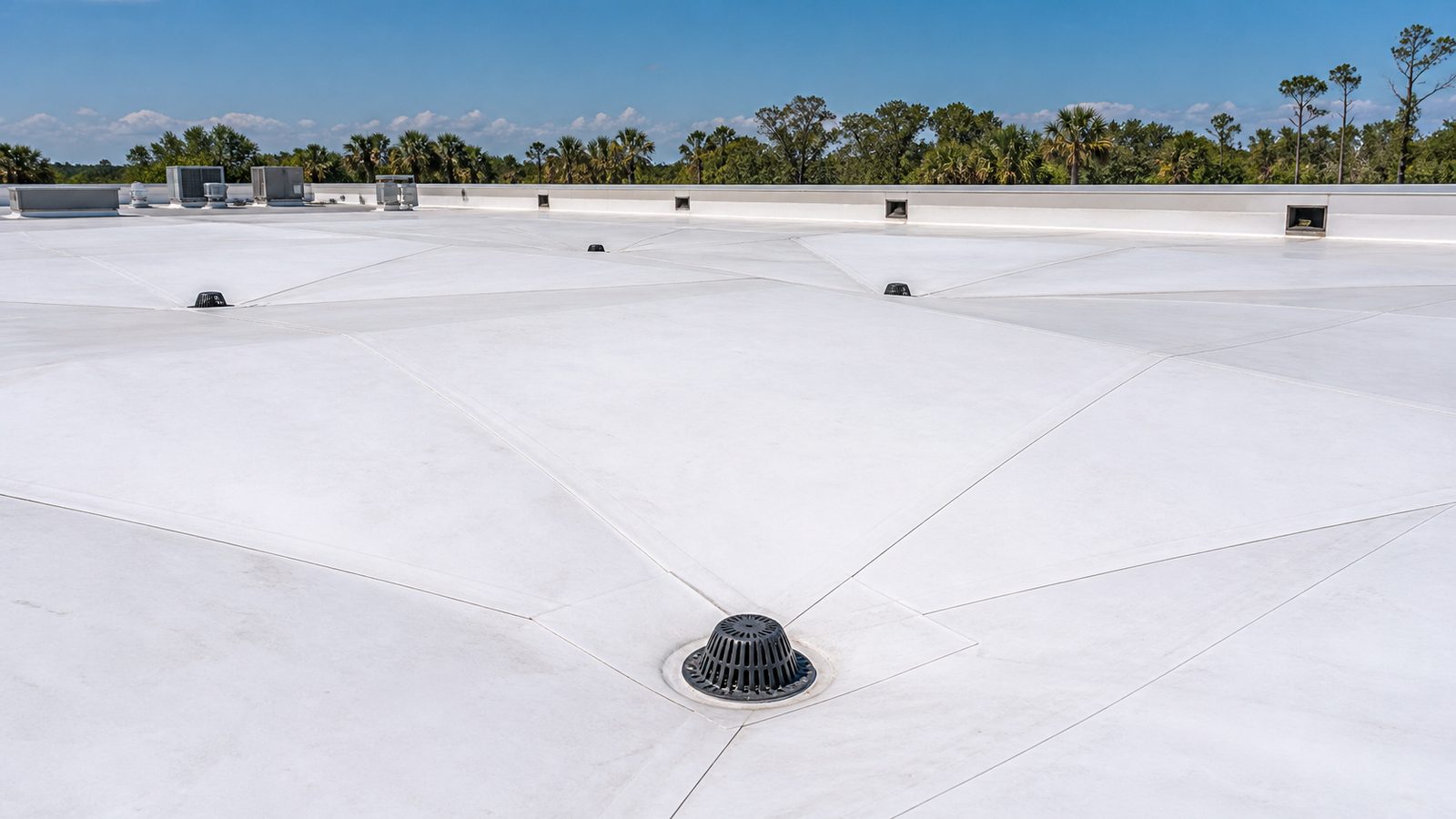
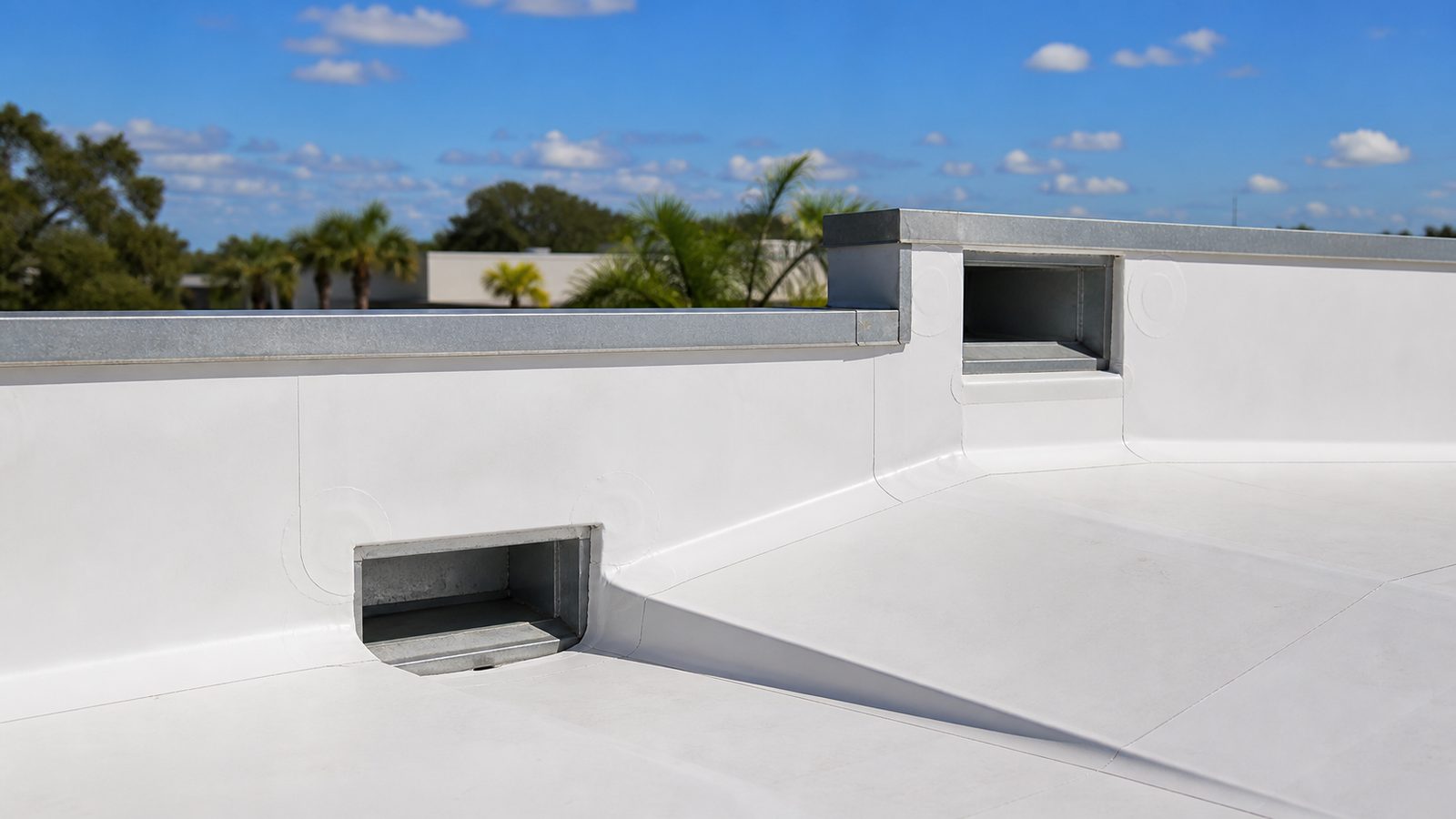
A fluid-applied commercial roof coating is a seamless elastomeric or acrylic membrane applied over an existing roofing system. Common products:
- Silicone coatings — best UV resistance and ponding water tolerance; not a new standalone membrane but a restoration layer
- Acrylic coatings — lower cost, good reflectivity, not recommended for areas with standing water
- Polyurethane coatings — excellent abrasion resistance, used in high-traffic roof areas
- Butyl/EPDM-based coatings — compatibility depends on existing substrate
A coating restores reflectivity, seals minor surface cracks and open seams, and can extend a roof's service life. It is not a replacement for a failed substrate, a saturated insulation board, or a membrane that has lost its physical integrity.
Applying a coating over a wet insulation system seals moisture inside the assembly. The wet insulation continues to degrade, the roof deck below continues to corrode or rot, and the coating fails prematurely because the substrate is moving beneath it. You have spent money to hide a problem, not solve it.
The Assessment: What Has to Happen Before You Make the Decision
The only way to make the coating vs. replacement decision correctly is a proper roof assessment. JK's commercial roofing assessment includes:
1. Nuclear or Capacitance Moisture Survey
An infrared survey or nuclear densitometer survey of the roof surface identifies areas of wet insulation beneath the membrane. Wet insulation shows as warm areas on infrared (evening survey) or elevated density on nuclear. The percentage of wet deck area is the most important variable in the coating vs. replacement decision:
- Under 15% wet area: Replacement of wet sections and coating of remaining roof may be cost-effective
- 15-25% wet area: Decision point — evaluate cost of section replacement plus coating vs. full replacement
- Over 25% wet area: Full replacement is almost always the better investment
This survey is not optional. Estimating coating suitability by walking and poking the roof is not reliable in Florida's climate where TPO and EPDM membranes can appear sound while the insulation beneath is saturated.
2. Core Sampling
A core cut through the membrane and insulation at representative locations documents the existing assembly: membrane type, insulation type and R-value, number of existing roofing layers, deck type, and moisture condition at the cut location. Core samples cost $50-150 each and provide ground-truth data for the moisture survey.
3. Remaining Life Assessment
Even if the membrane is dry and intact, age matters. A 20-year-old TPO membrane approaching the end of its manufacturer's expected service life may pass a moisture survey today and fail within three years. Coating a roof in the last few years of its service life extends it by 5-7 years — at coating cost, that math may work. Coating a roof with 15+ years of useful life remaining is a better value proposition.
4. Warranty Status
Most commercial roofing manufacturers require a minimum remaining membrane life for the existing system to qualify for an enhanced coating warranty. If the existing roof is out of warranty and the membrane has aged past manufacturer's coating eligibility requirements, a coating carries no manufacturer warranty — you are relying on contractor workmanship only.
JK's commercial roofing scopes come with a manufacturer's warranty where the substrate qualifies. GAF Master Elite certification supports extended warranty options on qualifying projects.
When Coating Is the Right Answer
Coating makes sense when:
- Moisture survey shows less than 15% wet insulation — wet sections can be cut, dried, and replaced before coating
- Membrane has physical integrity — no blisters, major delamination, or fatigue cracking in the field
- 10+ years of remaining service life in the existing membrane
- Flat or low-slope roof without chronic ponding — silicone coatings tolerate ponding; acrylic coatings do not
- Building owner plans to sell or refi in the next 5-7 years — coating provides a new-looking, warranted surface at a fraction of replacement cost
On these criteria, a coating is a legitimate, cost-effective decision.
When Replacement Is the Right Answer
Full replacement is required when:
- Moisture survey shows more than 25% wet insulation — the wet sections cannot be isolated and replaced cost-effectively; the whole system is compromised
- Multiple existing roofing layers — Florida Building Code limits the number of roof layers on a structure; a third layer on a building that already has two is not permissible and requires full tearoff
- Substrate or deck damage — if the structural deck (steel, concrete, or wood) shows corrosion, rot, or deflection, no surface treatment addresses it
- Manufacturer's coating eligibility not met — aged-out membrane with no available manufacturer warranty for coating
- Significant chronic leak history — roofs with active leak history that cannot be isolated to discrete failures need to come off
Replacement also makes sense when the building ownership expects to hold the asset for 15+ years. A new 60-mil TPO or EPDM system with a 20-year manufacturer warranty, properly installed over dry new insulation, costs more upfront but eliminates the interim coating cycle.
GC-Backed Roofing vs. Standalone Roofer
Commercial roof replacement in Jacksonville is frequently bid by standalone roofing contractors. There is nothing wrong with that. But for commercial building owners who also have other facility needs — HVAC penetration coordination, parapet flashing tied to masonry work, roofing related to a larger renovation project — a GC-backed roofing scope provides integration that a standalone roofer cannot.
JK self-performs commercial roofing with in-house crews — TPO, EPDM, modified bitumen, and architectural shingle. The roofing scope is not brokered to a third-party sub. JK holds GAF Master Elite certification, which supports extended warranty options (NDL warranties up to 30 years on qualifying TPO and shingle installations).
Cost Ranges: Florida Commercial Market (2025-2026)
Commercial roofing cost ranges in Northeast Florida:
- Fluid-applied silicone coating (with section replacement of wet areas): $1.75-3.25/sqft
- Acrylic coating (suitable conditions only): $1.25-2.50/sqft
- TPO 60-mil full replacement (tearoff and redeck if needed): $9-16/sqft
- EPDM 60-mil full replacement: $9-15/sqft
- Modified bitumen replacement: $7-13/sqft
Roof access, drain count, penetration quantity, and building height affect cost. JK provides a written, fixed-price estimate after site inspection and moisture survey — not a number that changes after mobilization.
The Janney Comparison: Where Coating Coverage Falls Short
Janney Roofing and similar residential/commercial roofers in Jacksonville publish helpful homeowner content on storm damage and insurance claims. Their coating content is typically thin: "apply coating, extend life, save money." What is missing: moisture survey requirements, substrate eligibility criteria, and the conditions under which coating is a waste of money. JK's commercial roofing clients get a documented assessment before any coating decision is made.
No call center. No coordinator. A JK principal reviews every inquiry and replies with a real number, not a range, not a follow-up form.
Request Free Estimate →