In Florida, no building is legally occupied until the authority having jurisdiction issues a Certificate of Occupancy (CO). That single document represents the legal conclusion of a construction project — the point at which the building official confirms the structure complies with the Florida Building Code (FBC), local amendments, and every applicable technical standard. Without it, your lender won't release funds, your insurer may void coverage, and the building is off-limits to occupants.
Most project delays we see in Jacksonville trace back to CO-related problems that were entirely avoidable: inspection sequences done out of order, open permits from previous owners never closed, fire department sign-offs requested too late. The CO process is not complicated, but it rewards preparation and punishes improvisation.
This guide walks through what a CO is, what inspections lead to it, the distinction between temporary and final COs, what causes delays in Duval County, and the legal consequences of occupying early. Whether you're a homeowner finishing a custom build or a developer completing a commercial tenant improvement, understanding this process before your final phase begins is worth the time.
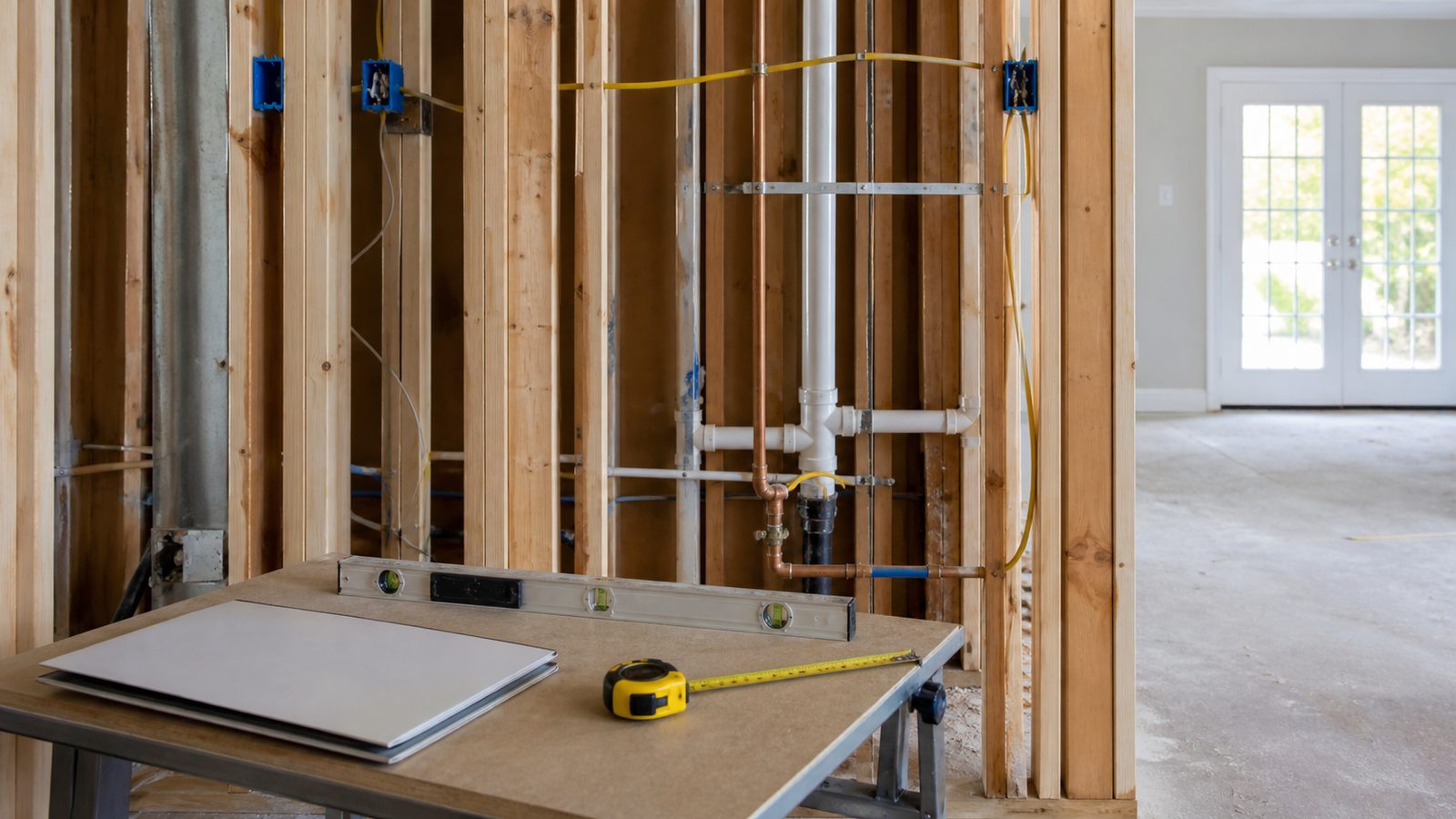
What a CO Is and Why It's the Legal Finish Line
A Certificate of Occupancy is a legal document issued by the local building department — in Jacksonville, that's the City of Jacksonville Building Inspection Division — confirming that a newly constructed or substantially renovated building complies with all applicable codes and is safe for its intended use.
The CO specifies the occupancy classification (residential, commercial, assembly, industrial, etc.), the building's permitted use, and the maximum occupant load where applicable. It is not a formality. Florida Statute 553.79 prohibits occupancy of any new building or structure — or any portion of it — until a CO has been issued.
The CO is the final output of a sequential inspection process. The building official issues it only after every required trade inspection has passed. That means the CO can't move faster than the slowest inspection. If your plumbing final fails on Tuesday and the re-inspection isn't scheduled until Thursday, every other trade is waiting.
For ownership transfers, CO status matters directly. Title companies and lenders routinely check for open permits and unissued COs on existing properties. A CO-deficient property can kill a sale or require escrow holdbacks until the issue is resolved.
Temporary CO vs. Final CO: What Each Allows and What's Still Required After a TCO
A Temporary Certificate of Occupancy (TCO) allows partial or conditional occupancy of a building before all work is complete. The building official has discretion to issue a TCO when the structure is substantially complete and safe for the proposed occupancy, but specific items remain outstanding — exterior landscaping, parking lot striping, punch-list millwork, or similar low-risk items.
A TCO is time-limited. In Jacksonville, TCOs are typically issued in 30-day increments. Extensions require renewed application and may require re-inspection of outstanding items. Each extension is not automatic — the building department reviews progress before granting it.
What a TCO does not do: it does not convert to a final CO automatically, and it does not release the contractor from completing outstanding items. The final CO requires every remaining inspection to pass and every outstanding permit condition to be met. Lenders financing construction projects — particularly construction-to-permanent loans — often require the final CO before releasing the final draw or converting to permanent financing.
If your project has a TCO and you're approaching closing, confirm with your lender exactly which document they require. Many will not accept a TCO in place of a final CO for loan conversion.
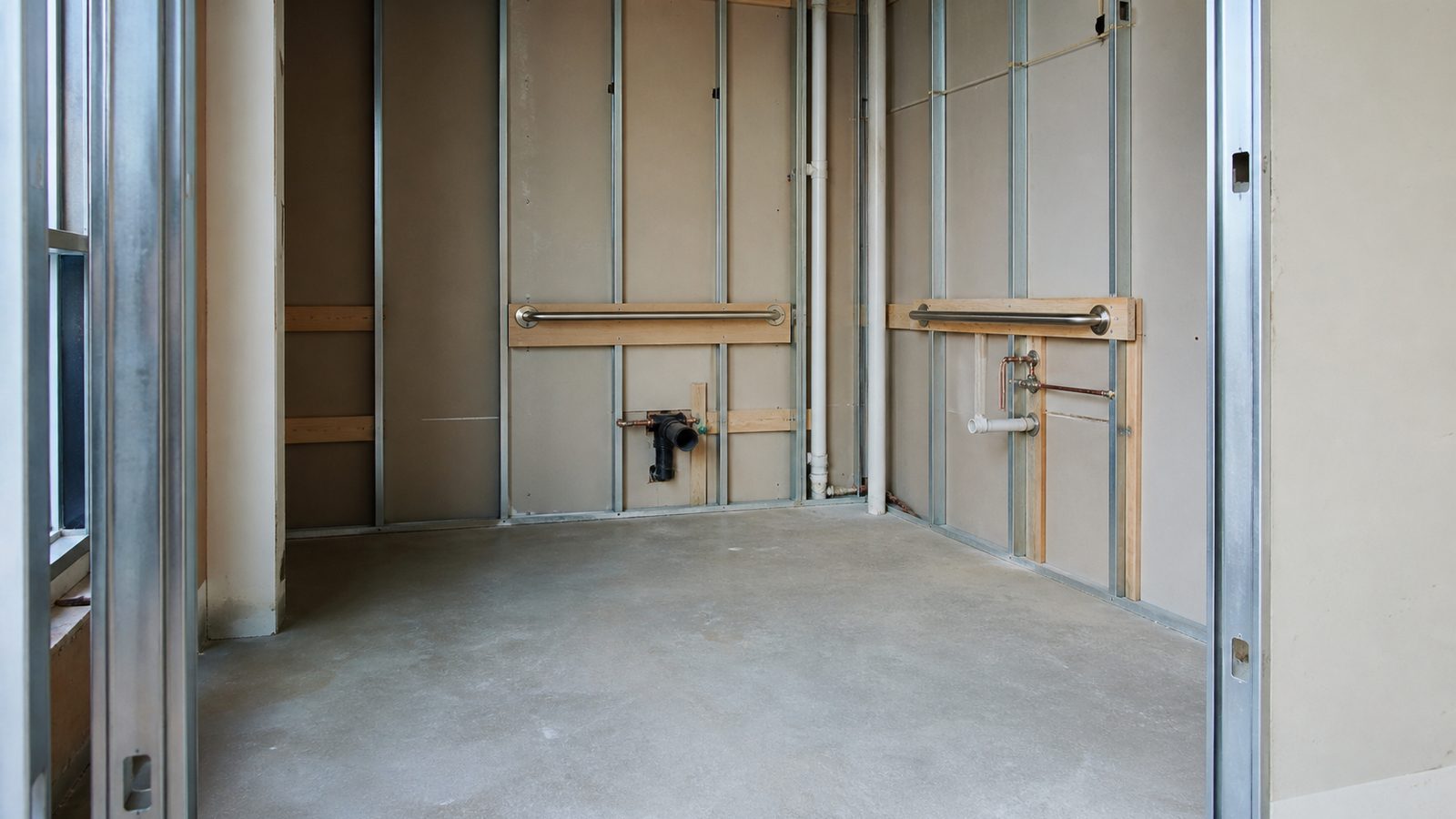
Required Inspections Before CO: Sequence Matters
The final CO requires passing four core trade inspections: building final, electrical final, plumbing final, and mechanical final. Each corresponds to a separate inspection by a licensed inspector. All four must pass before the building official issues the CO.
Building Final
The building final inspection covers structural compliance, life safety systems, means of egress, exit signage, emergency lighting, and compliance with approved architectural drawings. The building inspector compares the as-built condition to the permitted set of drawings. Deviations — even minor ones — can trigger a correction notice.
Electrical Final
The electrical final covers the service entrance, panel labeling, GFCI and AFCI protection, fixture installation, and proper grounding. In Florida, the electrical final often takes the longest to schedule because demand for inspectors is highest in the electrical trade.
Plumbing Final
The plumbing final covers all supply, drain, waste, and vent systems; fixture installation; water heater installation; and backflow prevention where required. In Jacksonville, the plumbing final also verifies that the sewer connection and meter are properly installed.
Mechanical Final
The mechanical final covers HVAC equipment installation, duct system completion, ventilation rates, and exhaust fan operation. For commercial projects, this includes verifying that ventilation meets the requirements of ASHRAE 62.1 as adopted by the FBC.
Why Sequence Matters
JK Prestige schedules all four finals within the same 48-hour window. When inspections are scheduled sequentially over several days, a single failed inspection can cascade into a week-long delay. Scheduling all finals together compresses re-inspection risk and keeps the CO timeline predictable.
Commercial CO: Additional Requirements
Commercial projects require everything residential projects require, plus additional sign-offs that must be coordinated with agencies outside the building department.
Fire Inspection
The Jacksonville Fire and Rescue Department (JFRD) conducts an independent fire inspection before a commercial CO can issue. This inspection covers sprinkler system certification, fire alarm system testing, exit hardware, fire-rated assembly integrity, and occupant notification systems. The JFRD inspection must be scheduled separately from the building department inspection and often runs on a different queue.
Sprinkler Certification
If the building has a fire suppression system, a certified fire protection contractor must provide a completed NFPA 13 contractor's material and test certificate before the JFRD inspection. Missing this document is one of the most common causes of last-minute commercial CO delays.
Elevator FDACS Certificate
Buildings with elevators require a certificate from the Florida Department of Agriculture and Consumer Services (FDACS) elevator safety program. The FDACS inspector must inspect and certify the elevator independent of the building department process. Lead times for FDACS inspections in Northeast Florida are typically 2–4 weeks.
ADA Documentation
Commercial projects must demonstrate compliance with the Americans with Disabilities Act (ADA) and the Florida Accessibility Code (FAC) before CO. This typically means submitting as-built drawings stamped by the designer of record confirming accessibility features as installed.
As-Built Survey
A signed and sealed as-built survey confirming the building's location, setbacks, and finished floor elevation is required for commercial COs in Jacksonville. This survey must be prepared by a Florida-licensed professional land surveyor.
What Causes CO Delays in Jacksonville
Open Permits on the Property
If the property has open permits from prior owners or prior contractors, the building department will flag the property in CityView and may refuse to schedule finals until those permits are resolved. In Jacksonville's older commercial inventory, this is more common than buyers expect. A permit search before closing or before starting work is standard practice on any JK project.
Failed Inspections
Each failed inspection adds a minimum of one re-inspection cycle. In Duval County, re-inspections are typically scheduled 1–3 business days out. A failed electrical final on a Monday might not be re-inspected until Thursday, pushing all other finals back and delaying the CO by 3–5 business days.
Fire Department Hold
The JFRD hold is independent of the building department queue. If the fire inspector flags issues — unsealed penetrations in fire-rated walls, missing pull station, a sprinkler head out of coverage — the building department will not issue the CO until JFRD releases the hold. Fire holds can add 1–3 weeks to a project if they're not anticipated.
Incomplete As-Built Drawings
If the as-built drawings submitted to the building department don't reflect the work as actually constructed, the building official will require revised drawings stamped by the engineer of record. Revisions can take 5–15 business days depending on the engineer's workload.
Substantial Completion vs. Final CO: Legal Distinctions That Affect Money
In Florida, substantial completion is defined as the point at which the project is sufficiently complete — in accordance with the contract documents — so that the owner can occupy or use the project for its intended purpose. This is a legal and contractual concept, not a building-code concept.
Substantial completion triggers specific legal events: the start of the lien limitation period under Florida Statute 713.06, the release of retainage (typically 10% of the contract price held until substantial completion), and the transfer of risk of loss to the owner in most AIA contract forms.
A CO, by contrast, is a regulatory event. A building can reach substantial completion before the CO is issued — and often does. The CO is a necessary condition for permanent occupancy and full legal use, but the financial and legal clock on a construction contract often starts running at substantial completion, not at CO.
Developers and owners should specify in their contracts exactly how each of these milestones is defined and what each one triggers. Conflating substantial completion with CO issuance in contract language creates disputes.
Occupying Before CO in Florida: The Real Penalties
Florida Statute 553.79 is unambiguous: occupying a structure without a CO is unlawful. The practical consequences reach across three areas.
Fines in Jacksonville can reach $500–$5,000 per day for commercial occupancy violations, depending on the occupancy type and the building official's determination. Residential violations are lower but still meaningful.
Insurance voidance is the more immediate risk. Many property and commercial general liability policies exclude coverage for losses occurring in a space that was illegally occupied. If a fire or injury occurs in a building occupied before CO, the insurer may deny the claim in full.
Lender issues compound the problem. Construction loans typically include a covenant against illegal occupancy. Pre-CO occupancy can trigger a loan default, accelerate the entire loan balance, or cause the lender to refuse disbursement of the final draw.
The decision to occupy early almost never saves enough time to justify these exposures.
Re-Inspection Fees in Duval County
As of 2025, Duval County charges $65–$100 per re-inspection, depending on the trade and the inspection type. Re-inspection fees are assessed when an inspection fails or when the contractor requests a re-inspection after a correction notice. Fees must be paid before the re-inspection is scheduled.
On a project with four trade inspections and one failure in each, re-inspection costs can reach $400 before accounting for the schedule delay. The real cost is the time: each re-inspection adds 1–3 business days to the CO timeline.
How to Track Inspections via the CityView Portal
The City of Jacksonville's CityView portal (cvweb.coj.net) allows contractors, owners, and the public to search permits, view inspection results, and check permit status in real time. Each inspection result — pass, fail, or correction — is posted to CityView within 24 hours of the inspection.
Setting up CityView alerts for your permit number is standard practice on JK projects. When an inspection result posts, the project team reviews it immediately and schedules re-inspections or coordinates corrections without delay.
JK's CO Process: Inspection Sequencing to Avoid Delays
JK Prestige Construction coordinates CO scheduling as part of the construction schedule from project kickoff. Before entering the final phase of any project, the project manager confirms: all open permits on the property are closed, all as-built documentation is complete and stamped, the fire department pre-final is scheduled, and all four trade finals are scheduled within the same 48-hour window.
This sequencing approach compresses the tail end of every project. Rather than discovering a fire department hold after the building finals are done, we surface it 2–3 weeks before finals and resolve it in parallel. The result is a predictable CO timeline — typically within 5–7 business days of finals scheduling — without surprise delays.
Learn more about how JK Prestige manages construction projects and our approach to residential construction.
Ready to start? Get a written estimate in 48 hours. Call (904) 944-0278 or request a free consultation.
No call center. No coordinator. A JK principal reviews every inquiry and replies with a real number, not a range, not a follow-up form.
Request Free Estimate →