Every construction project requires the owner to make a foundational decision before a single drawing is produced: how will design and construction be contracted? That decision — the delivery method — determines who holds design risk, who controls the schedule, how change orders are generated and priced, how cost transparency is managed, and what the owner's role is during the construction phase. It affects the project at every subsequent step, from the first contractor conversation to the final certificate of occupancy (CO).
Most owners make this decision by default. They hire an architect the way they always have, the architect produces drawings, and the GC is hired to build what the architect designed. That default is design-bid-build (DBB), and it is correct for many projects. It is not correct for all of them — and the cost of discovering that after design begins, or after the GC is onboard, is measured in months of schedule and significant dollar amounts.
This guide covers every primary delivery method in commercial construction — DBB, design-build (DB), construction management at risk (CMAR), and integrated project delivery (IPD) — along with the GMP (Guaranteed Maximum Price) hybrid that combines elements of multiple methods. It explains risk allocation, cost and schedule performance, Florida public procurement requirements, and the decision matrix that determines which method fits which project. Jacksonville and Northeast Florida examples are used throughout.

Why Delivery Method Selection Is the Most Consequential Early Decision an Owner Makes
The delivery method is not an administrative detail. It determines:
Who holds design risk: in DBB, the owner. In design-build and CMAR, the contractor. In IPD, the risk is shared under a multi-party contract.
Who controls schedule: in DBB, the architect controls the design schedule and the GC controls the construction schedule, with the owner managing the gap between them. In design-build and CMAR, a single entity or tightly integrated team controls both.
How cost is established: in DBB, cost is established through competitive bid after complete design. In design-build, cost is established through a GC-controlled process without competitive bidding. In CMAR, cost is established through a GMP negotiated with the at-risk construction manager.
How changes are priced: in DBB, change orders are priced by the GC at their discretion, with limited owner leverage once the GC is the only party who can execute the change. In CMAR, change order pricing is governed by the open-book cost structure of the GMP.
The owner's active management role: DBB requires the owner to manage the gap between their design team and their construction team. CMAR front-loads the owner's management effort in preconstruction, where it has the most value.
JK Prestige's delivery approach starts with understanding the owner's constraints — schedule, budget, design completeness — before recommending a delivery structure.
Design-Bid-Build: The Traditional Competitive Bid Model
Design-bid-build proceeds in three sequential phases, each completed before the next begins.
The design phase begins when the owner engages an architect. The architect leads the design team — structural, MEP, civil engineers — through schematic design (SD), design development (DD), and construction documents (CDs). CDs are the complete drawings and specifications used for bidding. The design team is responsible for design completeness and code compliance.
The bid phase begins when CDs are complete. The owner solicits fixed-price bids from qualified GCs. The bid period typically runs 3–4 weeks. GCs review the documents, engage subcontractors for pricing, and submit bids. The owner evaluates bids — typically on price alone in public procurement, on best-value criteria in private — and awards the contract.
The build phase begins with GC onboarding. The GC manages construction, the architect administers the contract (reviewing submittals, responding to RFIs, observing construction), and the owner manages the design-construction interface.
DBB advantages: competitive bidding produces the most aggressive pricing for a well-defined scope. The owner maintains a separate design team working exclusively in the owner's interest. Cost is established before construction begins on a complete scope.
DBB disadvantages: sequential phasing is the slowest delivery structure — design must be complete before construction begins. The owner holds design risk; errors in the construction documents become field change orders that the owner pays. There is no GC input during design on constructability, cost, or schedule.
JK Prestige's residential and defined-scope commercial work is frequently delivered under fixed-price DBB contracts.
Design-Build: Single-Source Contract for Design and Construction
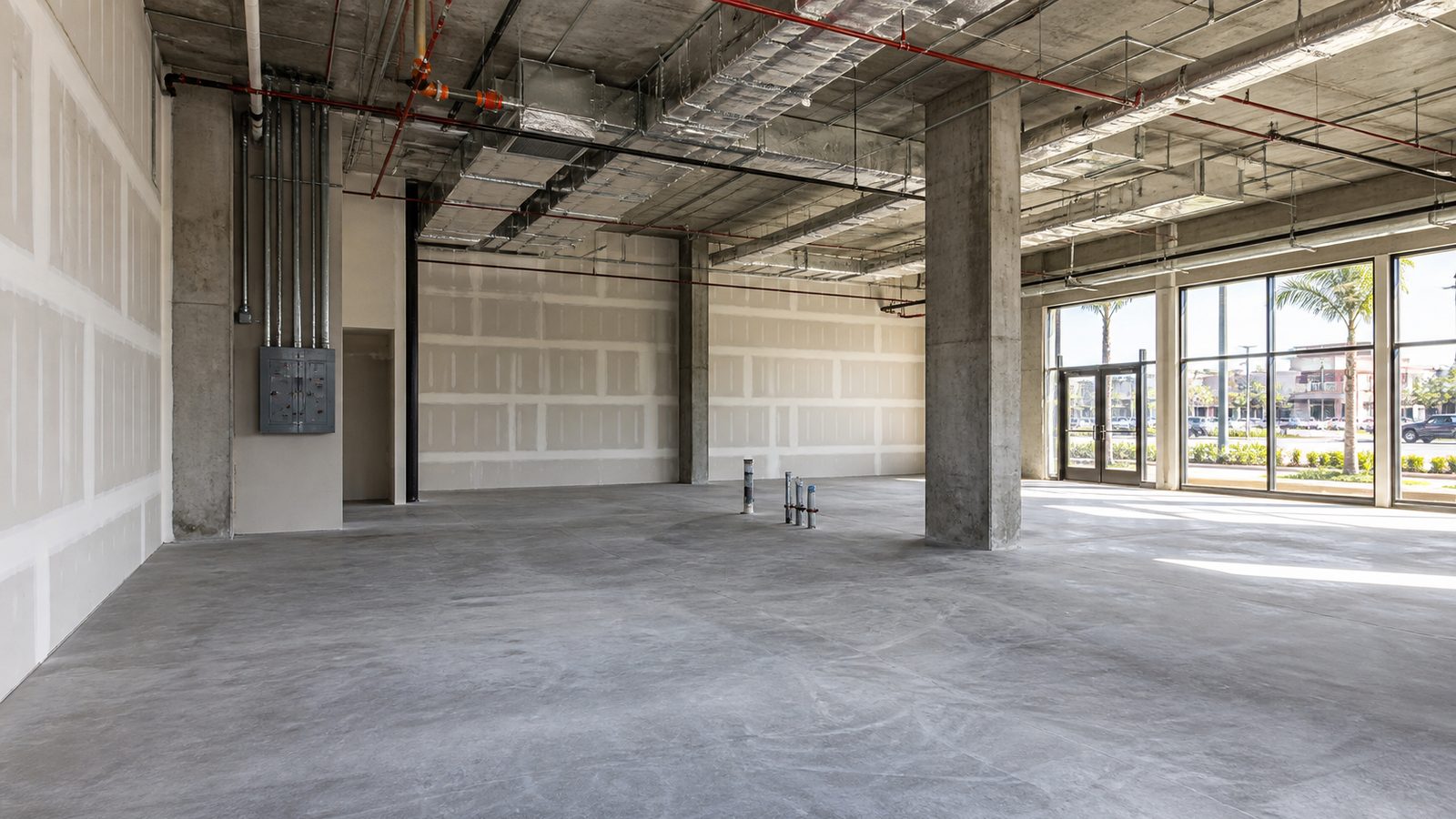
Design-build (DB) consolidates design and construction into a single contract with one entity — the design-builder — who is responsible for both delivering the design and constructing the building.
The owner's first deliverable is a program document: a narrative description of the building's requirements, performance standards, functional requirements, and finish expectations. The design-builder uses the program to develop a design and a fixed price. Once the price is accepted and the contract is executed, the design-builder controls all design decisions within the constraints of the program.
DB compresses schedule by overlapping design and construction: foundation design can be complete and foundation work can begin while MEP engineering is still underway. This compression typically delivers projects 10–20% faster than DBB.
The design risk transfer is the other primary benefit: if the design-builder's design contains an error that requires field correction, the cost falls on the design-builder, not the owner. This is meaningful protection on complex projects.
DB disadvantages: the owner sacrifices design control. Changes to the design after contract execution are the owner's cost — and the design-builder prices those changes without competitive bidding, often at elevated rates. The scope gap risk — items not explicitly in the program that are required for the building to function — is real and requires careful program documentation.
Florida licensing note: Florida Statute 489.149 requires design-build firms to have a licensed design professional (architect or engineer) as a full-time employee or under contract. A GC without an in-house licensed design professional cannot legally perform design-build in Florida.
Construction Management at Risk: The Hospital and Institutional Standard
Construction Management at Risk (CMAR) is the delivery method that dominates hospital, institutional, and complex commercial construction in Florida. Understanding CMAR is essential for any developer working in healthcare or large commercial projects.
In CMAR, the owner hires a construction manager (CM) early — typically at schematic design — who provides preconstruction services as a consultant while design progresses. The CM attends design meetings, provides cost estimates at each design milestone, reviews documents for constructability, identifies long-lead equipment, and develops the project schedule. The CM is paid a preconstruction fee for this phase.
At a defined point — typically 60–75% construction document completion — the CM and owner negotiate a Guaranteed Maximum Price (GMP). The GMP is the ceiling on the owner's construction cost. Construction begins immediately after GMP execution, overlapping with the completion of design.
The risk transfer at GMP execution is the defining characteristic of CMAR: the CM takes on "at-risk" status, meaning they are responsible for delivering the project within the GMP. If construction costs exceed the GMP, the CM absorbs the overage. If costs come in below the GMP, savings are shared per the contract's savings sharing provision.
CMAR advantages: the CM's early engagement produces better cost control, fewer design errors (the contractor's constructability input during design reduces coordination conflicts), compressed schedule (construction begins before design is complete), and open-book cost transparency under the GMP structure.
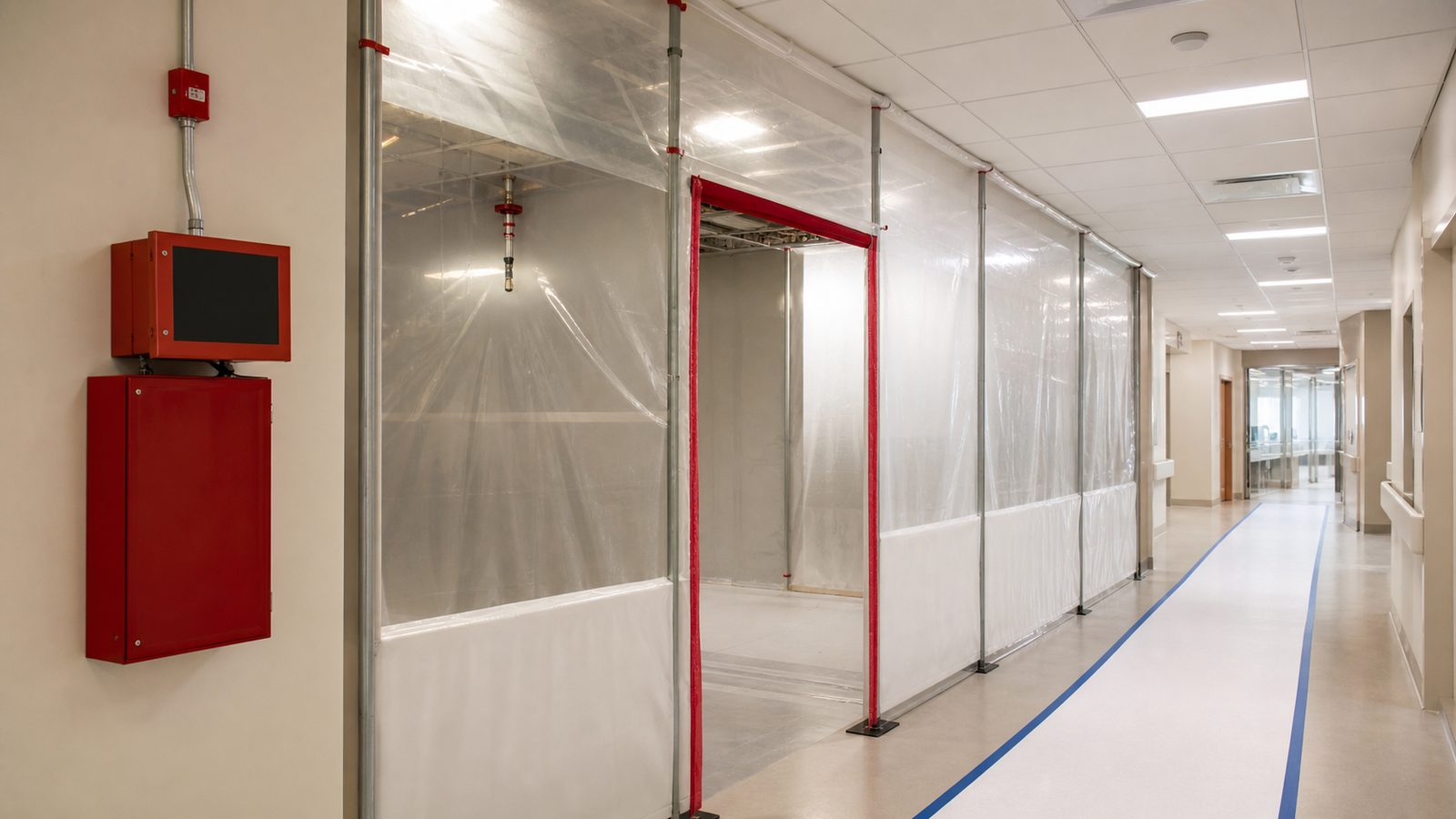
CMAR on hospital projects: every major hospital construction project in Florida — Baptist Health, UF Health, HCA Healthcare — uses CMAR delivery. The clinical program evolution inherent in hospital design, the AHCA (Agency for Health Care Administration) review process, and the ICRA (Infection Control Risk Assessment) requirements during construction in occupied facilities make CMAR the only practical delivery method at hospital scale.
JK Prestige's hospital and healthcare project experience is executed under CMAR and GMP structures.
Integrated Project Delivery: Multi-Party Contracts for Complex Projects
Integrated Project Delivery (IPD) is a multi-party contract structure that shares risk and reward among the owner, architect, and GC (and often key subcontractors) in a single agreement. All parties share in the project's contingency pool and, if the project comes in under budget, share in the savings. If costs exceed the target, all parties share in the overrun up to their contingency commitment.
IPD is BIM (Building Information Modeling)-intensive by nature — the collaborative decision-making required for a multi-party shared-risk structure requires a single federated model that all parties work from simultaneously. IPD typically uses a co-located project team (the "big room" model, where owner, architect, and GC representatives work from a shared project office during design and construction).
IPD is best suited to complex projects over $50 million where the owner wants maximum team alignment, is willing to invest in intensive preconstruction collaboration, and has the organizational capacity to participate actively in integrated decision-making. IPD is rare in Florida commercial construction outside of large healthcare systems and university projects.
IPD is not appropriate for most private commercial development in Jacksonville — the transaction costs of the multi-party agreement structure and the intensity of owner participation required exceed the benefits on projects below $50M.
How Florida Public Agencies Select Delivery Methods
Florida public agencies operate under procurement law that restricts delivery method selection and GC selection criteria. Private owners do not face these restrictions, but understanding public procurement is relevant for developers who work with public partners or on publicly funded projects.
Florida Statute 255.20 governs public construction contracts. Public agencies must competitively bid construction contracts above certain thresholds. DBB is the default delivery method for public projects because it is most compatible with competitive bid requirements.
Florida Statute 287.055, the Consultants' Competitive Negotiation Act (CCNA), governs how public agencies select architects and engineers. Qualification-based selection — not price-based selection — is required for professional services. The public agency must negotiate fees with the top-ranked firm.
Florida's Design-Build authorization for public projects (Florida Statute 255.20 and related statutes) requires a two-step selection process: qualifications-based shortlisting, followed by evaluation of technical proposals and price. Pure price-based selection is not permitted for design-build on public projects.
CMAR for public projects in Florida requires the CMAR to be selected through a qualifications-based process (CCNA-style, or qualification-based proposal) before the GMP is negotiated. The GMP itself is then negotiated, not bid. This structure is common on Florida public school and university projects through the Florida Department of Management Services (DMS) and the State University System.
Decision Matrix: When to Use Each Delivery Method
Use design-bid-build when: the design is or will be 100% complete before construction begins; the owner wants maximum competitive pricing on a well-defined scope; the project is publicly funded and competitive bidding is required; the design requires intensive owner input through the full design phase; the project is under $5M with standard scope.
Use design-build when: the schedule is the primary driver; the program is clear and the owner does not anticipate significant design changes; the owner wants a single point of accountability and is willing to trade design control for schedule compression and design risk transfer; the project is a straightforward commercial building over $3M.
Use CMAR when: the project is complex (hospital, institutional, large commercial); design will not be complete before construction must begin; the owner needs open-book cost transparency and active GC input during design; the project is over $15M; the owner has organizational capacity to actively participate in GMP negotiation and ongoing cost review.
Use IPD when: the project exceeds $50M; the owner has sophisticated project management capacity and is prepared for intensive preconstruction collaboration; the project involves complex clinical or institutional programming that benefits from maximum team integration; the owner's goals include innovation in delivery process, not just cost and schedule performance.
Cost Implications of Each Delivery Method
The cost comparison across delivery methods is nuanced. On paper, DBB competitive bidding produces the lowest construction contract price — multiple GCs competing on a complete set of documents with no design scope uncertainty drive the price to its competitive minimum.
In practice, the total project cost — including design fees, change orders, schedule carrying costs (interest on construction loans, delayed revenue from the completed building), and owner's project management expense — often favors CMAR and design-build on complex projects.
DBB: lowest construction contract price, highest design scope risk (change orders from design errors are the owner's cost), slowest schedule, no GC input during design.
Design-build: construction contract price 3–8% above DBB for equivalent scope, design risk transferred to design-builder, fastest schedule (10–20% compression), limited owner design control.
CMAR: construction price similar to or 2–5% above DBB for equivalent scope (GMP negotiated, not competitively bid), open-book cost transparency, compressed schedule (construction begins before design is complete), highest preconstruction cost (the CM's preconstruction fee), best risk-adjusted total project cost on complex projects.
IPD: construction price typically within 3–5% of CMAR, highest transaction cost (multi-party agreement structure), best collaborative outcomes on projects over $50M with sophisticated owner capacity.
The GC's Role in Each Delivery Method
The GC's operational role differs significantly across delivery methods.
In DBB, the GC receives a complete set of construction documents, prices the work, and executes. The GC's value is construction efficiency and quality, not design input. The GC manages subcontractors, schedules inspections, and administers the construction contract. Design decisions are not in the GC's scope.
In design-build, the GC holds the design-builder role and manages the design process in addition to construction. The GC's design team produces construction documents; the GC reviews them for constructability and price efficiency. This requires a GC with genuine design-build organizational capability, not just a subcontract with an architect.
In CMAR, the GC's role is two-stage: preconstruction consultant, then at-risk constructor. The preconstruction role is high-value: providing real cost feedback that shapes the design, identifying long-lead equipment, running constructability reviews, and developing the GMP. The construction phase is similar to DBB, with the addition of the open-book GMP structure and savings sharing accountability.
In IPD, the GC is a collaborative partner from project inception, sharing risk and reward with the owner and architect. The GC's estimating team is involved in design decisions from the first schematic design meeting, using 5D cost modeling to give real-time cost feedback as the design evolves.
Selecting the Right Delivery Method for a Jacksonville Commercial or Healthcare Project
For a Jacksonville commercial developer in 2025, the delivery method decision reduces to a few specific questions.
Is the design complete before construction must begin? If yes, DBB. If no, consider CMAR or design-build.
Is the schedule fixed by a lease commencement, healthcare opening date, or market window? If yes, design-build or CMAR — both compress schedule relative to DBB.
Is the project a hospital, healthcare facility, or complex institutional building? CMAR is the industry standard. The GC's early engagement in design prevents MEP coordination conflicts, AHCA review delays, and clinical program changes from becoming late-stage change orders.
Does the owner have the organizational capacity to actively manage a GMP and GC through preconstruction? CMAR requires an engaged owner or owner's representative. DBB requires less active owner involvement during design but produces more cost surprises during construction.
Is the project under $5M with a complete program? DBB or design-build.
Contact JK Prestige to discuss which delivery method is appropriate for your Jacksonville commercial or healthcare project. The founder answers every inquiry personally.
JK Prestige's Experience Across DBB, Design-Build, and GMP Delivery
JK Prestige Construction has delivered projects under DBB, design-build, and GMP structures since 2017. Residential custom homes and defined-scope commercial projects are typically executed under fixed-price DBB contracts. Commercial and healthcare projects with fast-track schedules or incomplete design at groundbreaking use GMP structures with open-book cost reporting.
JK Prestige's self-perform trades — framing, concrete, drywall, finish carpentry, and roofing — are a direct asset in any delivery method. In CMAR, the GC who controls critical path labor during preconstruction can make schedule commitments that a fully brokered GC cannot. In design-build, controlling the critical path trades means the compressed design-build schedule is achievable because the GC does not wait on subcontractor mobilization.
Every project, regardless of delivery method, includes a written fixed-price estimate within 48 hours of the site visit, a principal who walks every site, and a contract structured to eliminate ambiguity about what is included.
Start your Jacksonville commercial, healthcare, or residential project with JK Prestige.
Ready to start? Get a written estimate in 48 hours. Call (904) 944-0278 or request a free consultation.
No call center. No coordinator. A JK principal reviews every inquiry and replies with a real number, not a range, not a follow-up form.
Request Free Estimate →