Construction is one of the most dangerous industries in the United States, and Florida's climate adds heat and humidity to every other hazard present on a jobsite. Falls are the leading cause of construction fatalities in Florida and nationally. Excavation collapses, electrical contact, and struck-by events account for a significant share of the remaining fatalities. Heat illness sends Florida construction workers to the emergency room more frequently than in any northern state.
OSHA enforcement in Florida is carried out by federal OSHA (Florida is not a state-plan state), operating out of OSHA area offices in Jacksonville, Tampa, and other Florida cities. The Jacksonville OSHA area office covers Duval County and the surrounding region. Penalties for serious violations in Florida currently run up to $16,131 per violation, and willful or repeated violations can reach $161,323.
JK Prestige Constructor operates with OSHA 30-certified crews, daily JSA (Job Safety Analysis) protocols, and a safety program designed to keep our workers, our subcontractors' workers, and building occupants safe. This guide explains the regulatory framework, the most common violations, and how to evaluate any GC's safety program before you sign a contract. Use it whether you are an owner, a developer, or a subcontractor selecting a GC partner.
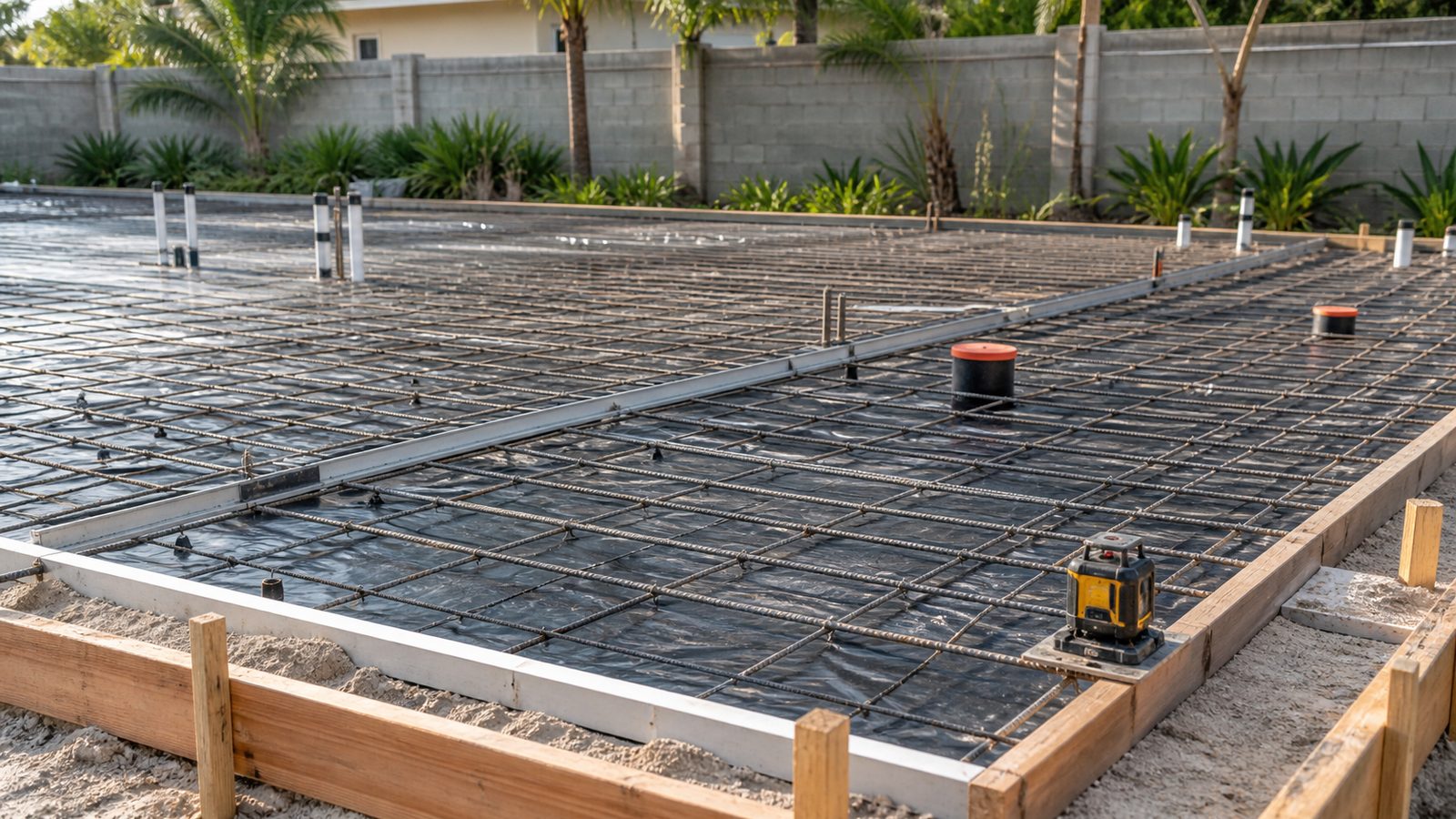
OSHA 1926 Overview: The Primary Federal Construction Safety Standard and How Florida Enforces It
OSHA 29 CFR Part 1926 is the primary federal standard for construction safety. It covers every major hazard category present on construction sites: fall protection, scaffolding, excavation, electrical, personal protective equipment, materials handling, powered industrial trucks, cranes, fire protection, and more. Part 1926 applies to any construction, alteration, repair, or demolition work, including residential.
Florida does not have an OSHA-approved State Plan for private sector employment, which means federal OSHA has jurisdiction over private sector employers in Florida. Federal OSHA enforces Part 1926 through programmed inspections (targeting high-hazard industries), unprogrammed inspections (triggered by complaints, fatalities, or referrals), and follow-up inspections.
OSHA's Jacksonville area office covers Duval County. OSHA inspectors conduct site inspections without advance notice. A construction site that receives an OSHA inspection should expect the inspector to review: fall protection systems in use, documentation of safety training, OSHA 300 injury log, written safety programs (fall protection plan, hazard communication program, emergency action plan), and site conditions for any active high-hazard work (excavation, elevated work, power tool use).
The inspector's report produces citations in one of four categories: Other-than-serious, Serious, Willful, and Repeat. Serious violations — those where there is a substantial probability of death or serious physical harm — carry current penalties up to $16,131 per item. Willful violations (OSHA has evidence the employer knew the hazard existed and chose not to correct it) carry penalties up to $161,323 per item.
The Most Frequently Cited OSHA Violations on Florida Construction Sites
OSHA's national "Fatal Four" — the four violation categories responsible for the largest share of construction fatalities — are consistently the most frequently cited in Florida as well:
Fall protection (29 CFR 1926 Subpart M): Most frequently cited OSHA violation nationally and in Florida. Fall protection deficiencies include: failure to provide fall protection at heights above the trigger threshold, deficient personal fall arrest systems (incorrect anchorage, improper harness fit, lanyard length exceeding free-fall limits), and leading-edge work without protection.
Scaffolding (29 CFR 1926 Subpart L): Deficiencies include: scaffolding erected without a competent person overseeing erection, missing midrails and toeboards, scaffolding on unstable footing, and workers on scaffolding during erection or dismantling without fall protection.
Electrical safety (29 CFR 1926 Subpart K): Most commonly: Ground Fault Circuit Interrupter (GFCI) protection absent or non-functional, extension cords used as permanent wiring, damaged tools and cords in use, and work within minimum approach distance of energized conductors.
Excavation and trenching (29 CFR 1926 Subpart P): See dedicated section below.
Struck-by: Failure to maintain 10-foot clearance from overhead power lines, equipment operating without spotters in pedestrian areas, unsecured materials stored at height, and workers in the swing radius of cranes or excavators without barriers.
Fall Protection Requirements: 6-Foot Residential Trigger, 15-Foot Leading Edge, Active vs. Passive Systems
Fall protection requirements under 29 CFR 1926.502 establish the trigger height and acceptable systems based on the type of work and worksite.
Residential construction trigger: 6 feet above a lower level. Any work surface above 6 feet in residential construction must have guardrails, personal fall arrest systems (PFAS), or safety nets. The residential trigger applies to all JK Prestige home construction projects.
Commercial construction leading edge trigger: 6 feet above a lower level for most commercial work. Leading edge work — where the floor surface extends as work progresses — has a 15-foot trigger under specific conditions when alternative fall protection methods are used under a written fall protection plan.
Active fall arrest systems (PFAS): A harness, lanyard, and anchorage point rated for the specific fall arrest forces. Anchorage must support at least 5,000 pounds per attached worker, or be designed by a qualified person as part of a complete fall arrest system. Lanyards must limit free fall to 6 feet and total fall to 18.5 feet. Workers must be trained on harness inspection, donning, and deceleration device limits.
Passive systems: Guardrails (top rail at 42 inches +/- 3 inches, midrail at 21 inches, capable of withstanding 200 pounds in any outward or downward direction) and safety nets. Passive systems are preferred where feasible because they protect all workers in the area regardless of harness use.
Skylights and floor holes: Every skylight and every floor hole large enough for a person to fall through must be covered or guarded. Skylight covers must be capable of supporting 200 pounds and must be secured or marked with "HOLE" or "COVER" to prevent accidental removal.
On JK Prestige projects, fall protection plans are written before elevated work begins. Our OSHA 30-certified superintendents verify fall protection system installation before any worker accesses an elevated surface.
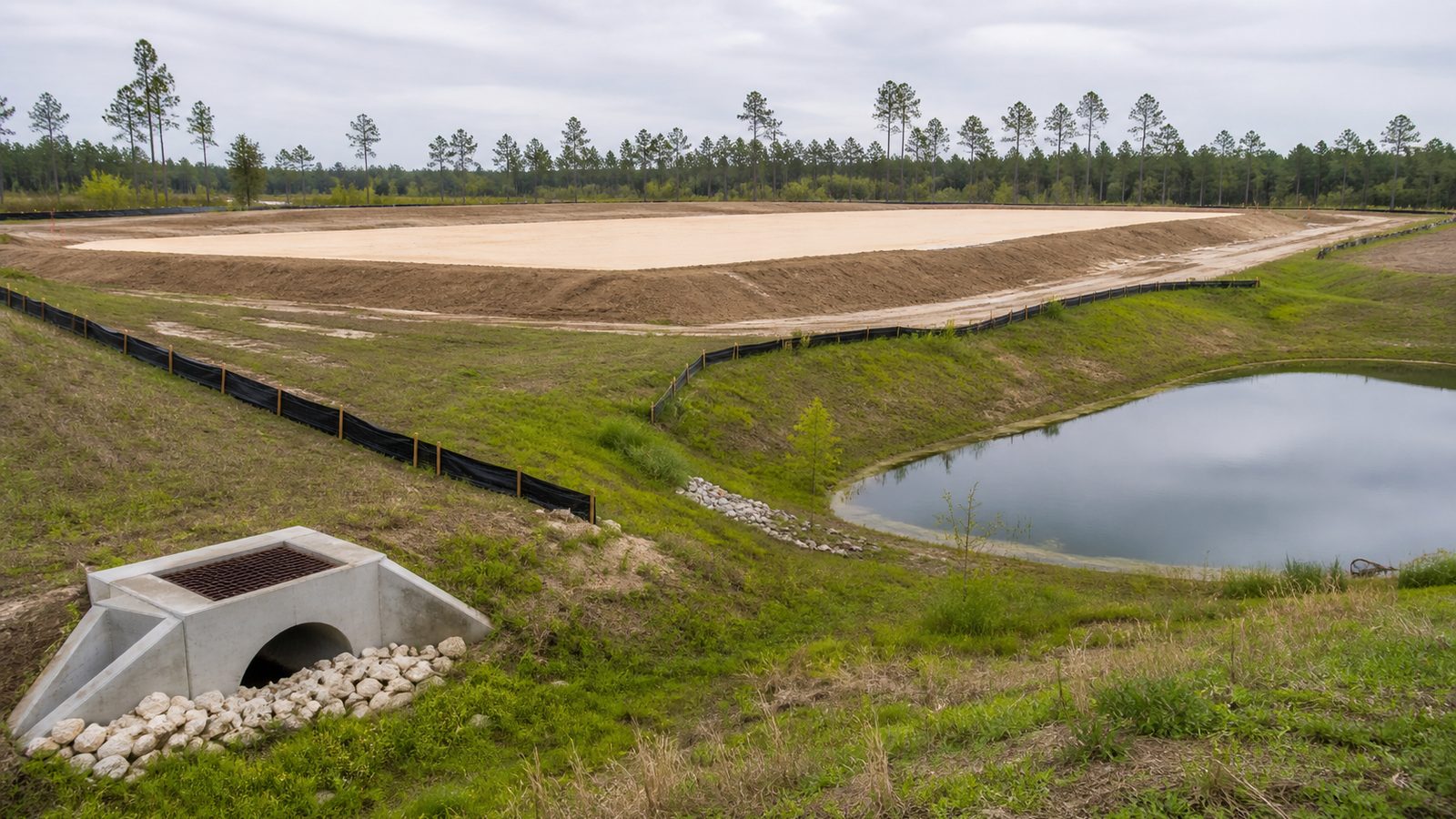
Excavation and Trenching Safety in Florida: Sandy Soil Type C Classification, Trench Box Requirements, Groundwater
Excavation and trenching work in Florida has a specific soil challenge: Florida's sandy soils classify as Type C under OSHA 29 CFR 1926 Subpart P Appendix B. Type C is the least stable soil classification. Trenches in Type C soil collapse without warning, and the collapse of a 5-foot trench can bury a worker under 3,000+ pounds of material — a fatal event that occurs in seconds.
OSHA's excavation standard requires that all excavations 5 feet or deeper in Type C soil be protected by one of three methods: sloping, shoring, or trench box.
Sloping: Excavation walls cut back at 1.5H:1V (horizontal to vertical) for Type C soil. In a 5-foot deep trench, this means 7.5 feet of horizontal clearance on each side — a total trench width of 15 feet plus the trench bottom width. In urban Jacksonville where excavations are often in tight sites adjacent to existing structures, sloping to Type C standards is frequently impractical.
Trench box (Protective System): A pre-engineered steel or aluminum shoring box that is placed in the excavation and provides protection to workers inside. Trench boxes must be used, moved, and removed per the manufacturer's tabulated data and an OSHA-compliant excavation plan.
Florida-specific issue — groundwater: Much of Jacksonville's urban core has a shallow water table, particularly in low-lying areas along the St. Johns and its tributaries. Groundwater encountered in excavation both increases the instability of surrounding soil (further degrading soil classification) and requires dewatering, which itself requires permits from the St. Johns River Water Management District for dewatering that discharges more than a de minimis quantity.
Excavation work below 5 feet in Jacksonville requires a competent person present at all times during excavation and worker entry. The competent person must inspect the excavation at the start of each shift and after any event that may have increased hazard (rain, ground movement, adjacent construction).
Heat Illness Prevention in Florida: OSHA's Enforcement Posture, HI-ALERT Thresholds, Mandatory Requirements
Florida's outdoor workers face heat index conditions that exceed OSHA's high-risk threshold for most of the summer construction season. Heat index values above 91°F are classified as "high risk" on OSHA's heat safety scale; above 103°F is "very high risk." Jacksonville's average daily high in July is 92°F with high humidity, producing heat index values of 100–110°F routinely from June through September.
OSHA's National Emphasis Program on heat hazards (initiated in 2021 and ongoing) targets outdoor construction sites in high-heat conditions. OSHA inspectors in Florida are authorized to initiate inspections when the heat index reaches 80°F or higher. OSHA cites heat illness violations under the General Duty Clause (Section 5(a)(1)) — which requires employers to protect workers from recognized hazards that are causing or likely to cause death or serious physical harm — because there is currently no specific OSHA heat standard for outdoor workers.
OSHA's enforcement guidance, which functions as a de facto standard, requires employers to: provide water (at least 1 quart per hour per worker in high-heat conditions), shade accessible within 1 minute, and scheduled rest breaks during which workers are not required to perform strenuous activity. Workers new to outdoor work must complete a heat acclimatization period — beginning with no more than 20% of the workday in heat exposure and increasing by no more than 20% per day over 7–14 days.
JK Prestige's heat illness prevention program for Jacksonville summer construction: water coolers on every level of the project, shaded rest areas at the site, scheduled rest breaks every 45 minutes during the hottest part of the day, and new crew members subject to a 7-day acclimatization schedule before full-day outdoor assignments.
Multi-Employer Citation Policy: When a GC Is Cited for a Subcontractor's Violation
OSHA's multi-employer citation policy (CPL 02-00-124) is the policy framework that determines which employers can be cited when a violation exists on a construction site with multiple employers present. For owners and developers, this policy is relevant because it describes the GC's compliance obligations and exposure.
Under the policy, OSHA categorizes employers at multi-employer sites as: creating employers (who cause the hazardous condition), exposing employers (whose workers are exposed to the hazard), correcting employers (who are responsible for correcting the hazard), and controlling employers (who have overall responsibility for the site or the specific work area).
A GC who is the controlling employer on a site can be cited for subcontractor violations when: the GC knew or should have known of the violation, and the GC failed to exercise reasonable care to detect and correct it. The reasonable care standard requires actual supervision — walking the site, documenting conditions, and issuing corrections. A GC who reviews safety documentation in the office but does not regularly inspect subcontractor work areas is not exercising reasonable care.
For owners and developers who hire GCs: the GC's multi-employer compliance posture is a risk allocation question for you. A GC who does not supervise subcontractor safety exposes the owner to project disruption, OSHA citations that delay the project, and potential civil liability if a worker is injured. Request the GC's safety inspection logs before contract award to verify that they actually supervise subcontractor safety rather than just maintaining paper safety programs.

Written Safety Plans Required on Florida Construction Projects
Three written safety plans are required on most Florida commercial construction projects:
Fall Protection Plan: Required when work at heights uses alternative methods to guardrails (i.e., when PFAS are the primary system or when specific leading-edge conditions apply). Must be prepared by a qualified person, be site-specific, and describe the fall hazards and protection measures for each elevated work operation.
Hazard Communication Program (HazCom): Required under 29 CFR 1926.59 for any site where hazardous chemicals are present (paints, solvents, adhesives, concrete additives). The program must include a list of all hazardous chemicals on site, Safety Data Sheets (SDS) for each, and training records documenting worker training on SDS and chemical handling.
Emergency Action Plan (EAP): Required on sites with 10 or more employees. Must specify emergency evacuation routes, muster points, procedures for workers who remain to operate critical equipment during evacuation, and notification procedures for emergencies. Must be reviewed with all workers at the start of employment and updated when site conditions change significantly.
JK Prestige maintains current, site-specific versions of all three plans on every qualifying project. Plans are reviewed with all workers during site orientation and are available to OSHA inspectors upon request.
OSHA 30 vs. OSHA 10: Who Needs Which, What Each Covers, What It Qualifies the Holder to Do
OSHA 10-Hour Construction: A 10-hour training course covering the most common construction hazards — fall protection, electrical safety, struck-by, caught-in/between, PPE, and site health. Completion is recognized by OSHA as evidence of basic hazard awareness training. Required for workers on some public projects in Florida. Does not qualify the holder as a competent person for any specific OSHA standard.
OSHA 30-Hour Construction: A 30-hour training course covering all major OSHA 1926 standards in depth, including fall protection, scaffolding, excavation, cranes and rigging, health hazards, materials handling, and safety management. Required for supervisors and safety officers on many public and institutional projects in Florida. Completing OSHA 30 is a prerequisite for competent person designation under most OSHA standards, but competent person status also requires demonstrated practical knowledge and authority to correct hazards.
JK Prestige requires OSHA 30 certification for all superintendents and foremen. Workers without OSHA 10 minimum certification are not allowed on JK Prestige project sites.
TRIR and EMR: How to Benchmark Your GC's Safety Performance
Two metrics allow owners to compare safety performance across GCs:
TRIR (Total Recordable Incident Rate): Calculated as (number of recordable incidents x 200,000) / total hours worked. A recordable incident is any work-related injury or illness that requires medical treatment beyond first aid. The construction industry national average TRIR is approximately 2.8. A GC with a TRIR below 2.0 has an above-average safety record. A TRIR above 4.0 is a red flag.
EMR (Experience Modification Rate): A factor calculated by the National Council on Compensation Insurance (NCCI) based on the employer's historical workers' compensation claims relative to industry average. EMR = 1.0 is average. EMR below 1.0 (typically 0.7–0.9) indicates a better-than-average safety record and results in lower WC premiums. EMR above 1.0 indicates a worse-than-average record. An EMR above 1.5 is disqualifying for many public projects in Florida.
Request TRIR and EMR for the prior three years from any GC before contract award. If the GC cannot provide these metrics, that itself is a data point.
JK Prestige's Safety Program: OSHA 30 Crew, TRIR Below Industry Average, JSA Protocol
JK Prestige's safety program reflects our self-perform model: because our own crews perform the highest-risk trades (framing, roofing, concrete), we have direct control over the safety execution of the most dangerous scopes of work.
Our program components:
OSHA 30-certified superintendents: Every JK Prestige superintendent and lead foreman holds a current OSHA 30-hour Construction certification. No exceptions.
JSA protocol: Before any day's work begins, the responsible foreman or superintendent completes a JSA for that day's planned tasks. The JSA documents the task, the hazards, and the specific controls. It is signed by the competent person and retained in the project safety file.
Daily site inspections: JK superintendents conduct documented daily safety inspections of all active work areas, including subcontractor work areas. Violations are corrected immediately and documented. Repeated violations trigger a stop-work notice to the subcontractor crew.
Subcontractor OSHA compliance: As described in our GC partner standards, all trade partners on JK sites must maintain a designated competent person on site, complete a daily JSA, and meet our PPE and HEPA requirements on occupied projects.
If you want to discuss JK Prestige's safety program in detail before contracting, our principal answers every call. Contact us or call (904) 944-0278.
Ready to start? Get a written estimate in 48 hours. Call (904) 944-0278 or request a free consultation.
No call center. No coordinator. A JK principal reviews every inquiry and replies with a real number, not a range, not a follow-up form.
Request Free Estimate →