Every owner who has engaged a GC on a hospital, institutional, or large commercial project has encountered the term Guaranteed Maximum Price (GMP). Most have signed one. Fewer understand what it actually guarantees — and what it does not. A GMP contract is not a fixed-price contract. The guarantee is a ceiling on what the owner pays, not a promise that the GC will deliver at a specific price. Within that ceiling, the composition of the number matters enormously: how the fee is structured, what is buried in general conditions, who controls contingency, and whether the contract has teeth on savings sharing.
The Jacksonville commercial and healthcare construction market has matured significantly since 2017. Hospital expansions at Baptist Health, UF Health, and Mayo Clinic's Jacksonville campus have generated a generation of owners and healthcare developers with experience negotiating GMP contracts. Smaller commercial developers entering the healthcare space — medical office buildings (MOBs), ambulatory surgery centers (ASCs), behavioral health facilities — often encounter GMP contracts for the first time and negotiate against experienced GC teams who use the contract structure to their advantage. This guide levels the field.
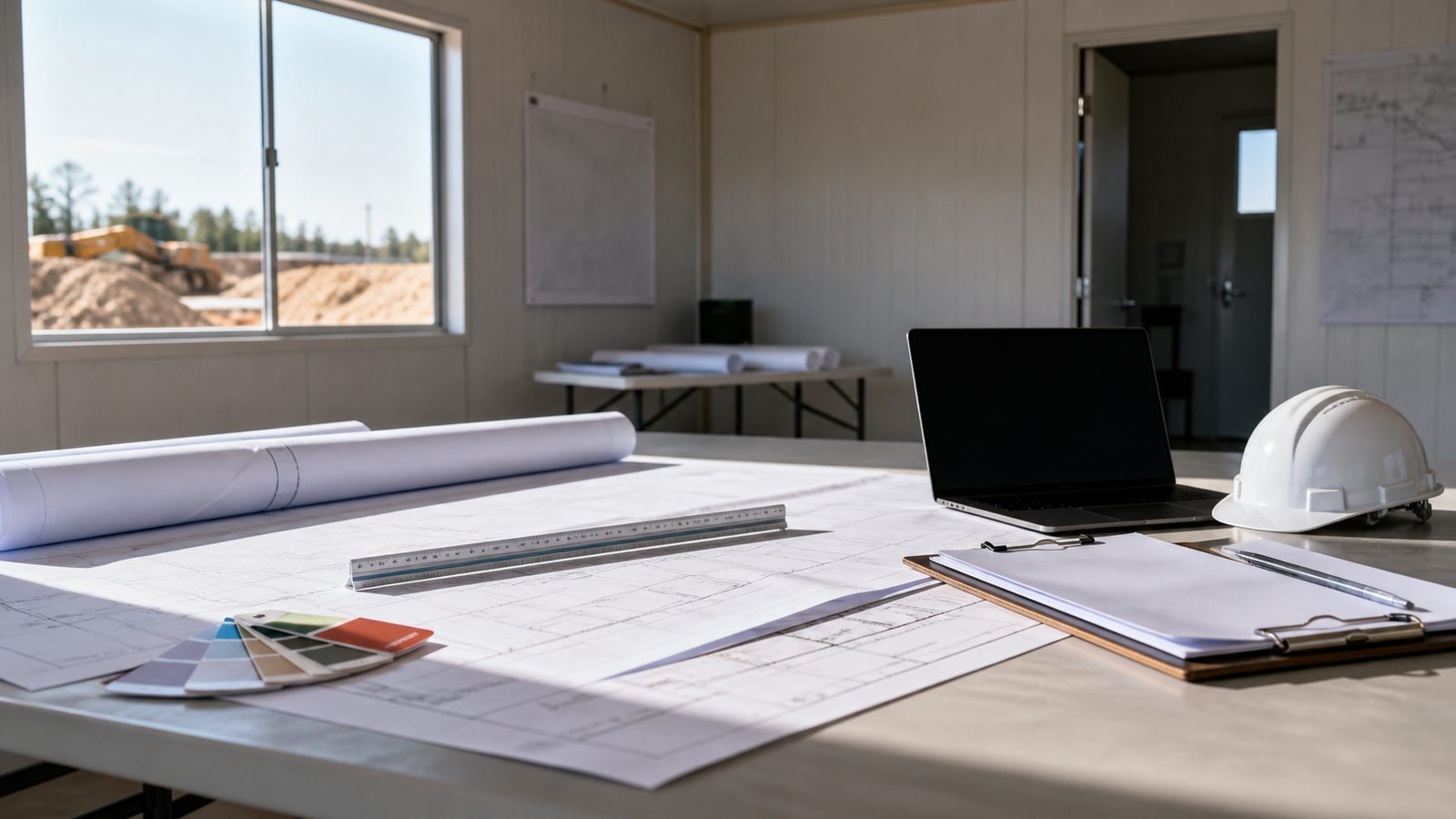
GMP Defined: What It Is, What It Isn't, and Why It's Different from Fixed-Price and Cost-Plus
A Guaranteed Maximum Price (GMP) is a contract structure where the GC agrees to deliver the project for a price not to exceed the GMP amount. If actual costs exceed the GMP, the GC absorbs the overage. If actual costs come in below the GMP, the savings handling is defined in the contract — typically shared between owner and GC at a negotiated ratio.
A fixed-price (lump sum) contract is simpler: the GC delivers a defined scope for a fixed price, period. Savings belong to the GC; overages are the GC's problem. There is no open-book requirement.
A cost-plus contract passes all project costs to the owner at actual cost, plus a fee (fixed or percentage). The owner pays whatever the project costs. There is no ceiling.
GMP sits between these: it has a ceiling (like fixed-price) but is constructed on a cost-plus foundation (the owner has visibility into actual costs). The ceiling provides owner cost certainty; the open-book structure provides cost transparency and alignment.
GMP is the standard delivery vehicle for hospital and institutional construction because those projects typically begin construction before design is 100% complete. Fixed-price contracts require complete design to price accurately. GMP contracts allow construction to begin with 60–80% complete design documents, with remaining design risks captured in contingency.
JK Prestige's project delivery approach is transparent on fee and general conditions from the first conversation.
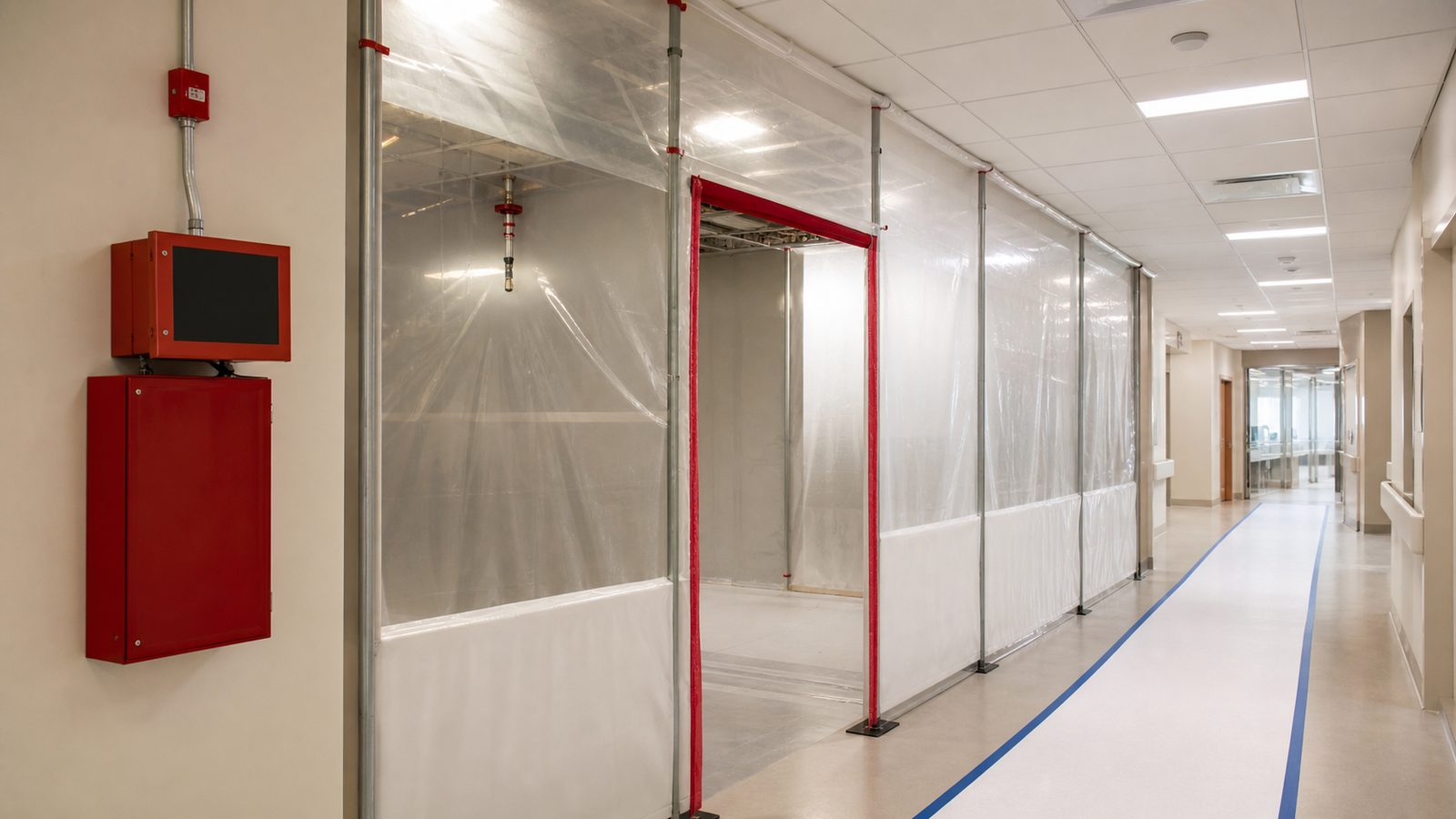
Why GMP Is Standard in Hospital, Institutional, and Large Commercial Construction
The GMP contract structure emerged as the dominant vehicle for hospital construction because of the inherent design complexity of clinical facilities. An inpatient hospital unit requires NFPA 101 life safety compliance, AHCA (Agency for Health Care Administration) plan review in Florida, medical gas systems, infection control risk assessment (ICRA) management during construction, and coordination of clinical operations during building additions. No architect produces complete, conflict-free 100% construction documents for a $50M hospital addition before breaking ground.
The GMP structure allows the owner and GC to begin early work packages — sitework, foundations, structural steel — while the design team completes MEP (mechanical, electrical, and plumbing) design and the GC completes MEP bidding. The GMP is typically established at 60–75% construction document (CD) completion, with owner-held contingency covering design evolution risk.
On large commercial projects over $20M — distribution centers, industrial facilities, mixed-use developments — GMP is increasingly used when the owner needs to compress schedule by overlapping design and construction phases.
JK Prestige's hospital and healthcare project work operates under GMP contract structures that are auditable at every phase.
The Anatomy of a GMP: What Every Line Item Means
A GMP is built from five components. Understanding each one is the foundation of GMP negotiation.
GC Fee
The GC fee is the contractor's profit margin on the project, typically stated as a percentage of total direct costs. On commercial projects, GC fees run 3–7%. On hospital projects, where risk and complexity are higher, fees run 4–8%. The fee percentage is negotiated; the base to which it applies is equally important — verify whether the fee applies to general conditions costs (it should not, in most owner-favorable structures).
General Conditions
General conditions are the GC's project overhead: the superintendent's salary, project manager time, temporary utilities, job trailer, site security, small tools, and similar site-level costs. General conditions are the most variable and most frequently padded component of a GMP. A GC who self-performs multiple trades can legitimately reduce general conditions; a GC who subcontracts everything has higher coordination overhead.
Request a detailed general conditions breakdown before signing. Superintendent hours should be specified by name and rate. PM time should be allocated by percentage. Equipment should be listed individually. Vague general conditions line items are an audit risk.
Estimated Direct Costs
The trade costs — what the GC pays subcontractors and self-perform crews for the actual construction work. These are the costs the owner has the right to audit under an open-book GMP. Direct costs should be based on actual subcontractor proposals or, where work is not yet bid, the GC's best estimate with explicit assumptions documented.
Owner Contingency
Owner contingency covers design evolution — changes to the design that occur between GMP establishment and project completion. Owner contingency is controlled by the owner and requires owner authorization for each draw. Typical owner contingency: 5–10% of estimated direct costs on a project with 70% complete design documents; 8–15% for a project at 50% CDs.
GC Contingency
GC contingency covers the contractor's risks: estimating errors, subcontractor scope gaps, minor scope growth not attributable to owner changes. GC contingency is controlled by the GC without owner approval for each individual draw, though most contracts require reporting when GC contingency exceeds a threshold. Typical GC contingency: 2–5% of direct costs.
The GMP ceiling is the sum of all five components. The total is the owner's maximum exposure under the contract.
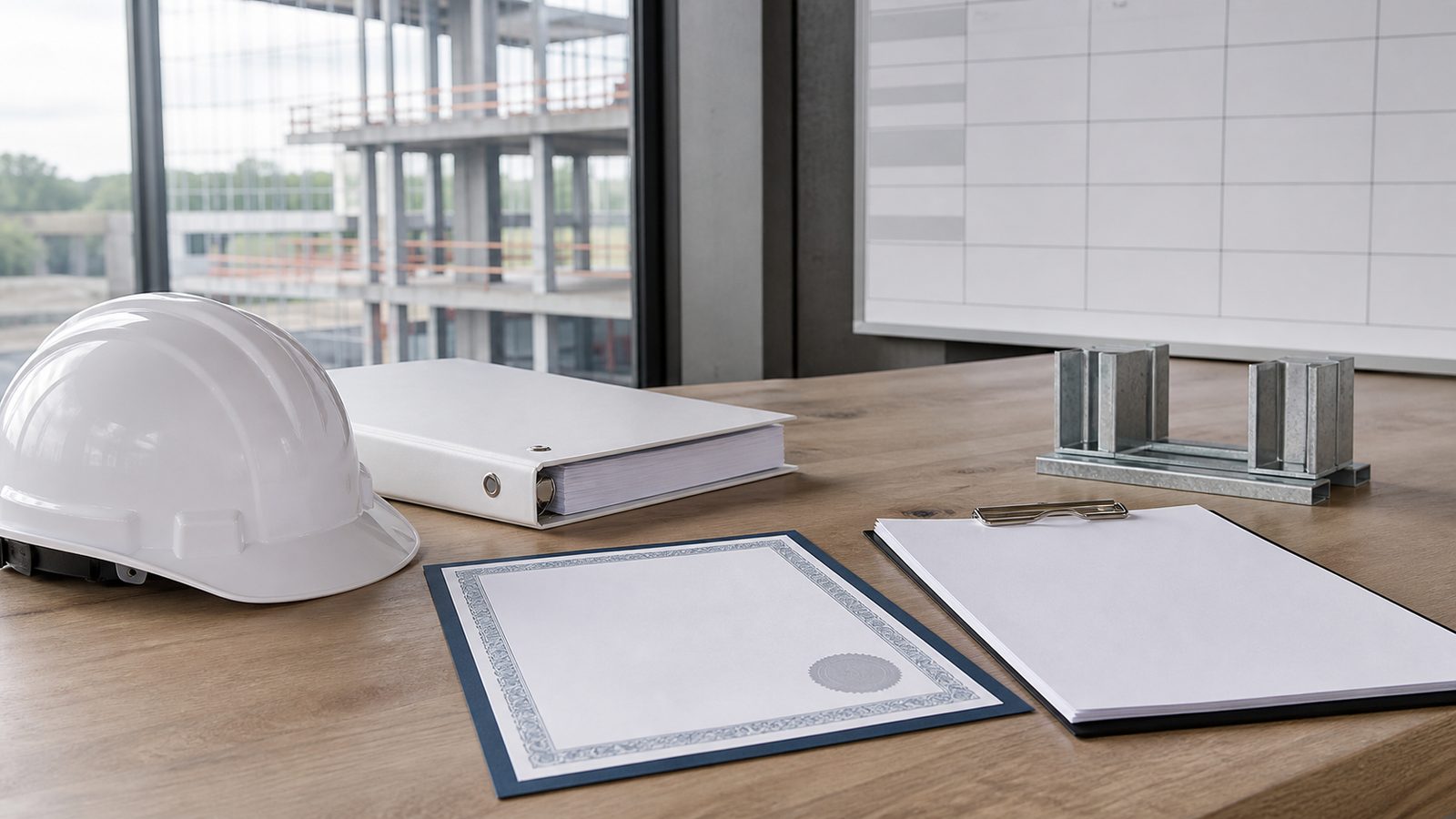
Open-Book Cost Auditing: What It Means in Practice
The phrase "open-book GMP" appears in virtually every GMP contract, but its practical meaning varies by contract language. At minimum, open-book means the owner has the right to audit actual costs — to see the invoices the GC received from subcontractors, the payroll records for self-perform crews, and the receipts for general conditions expenditures.
In practice, most GCs produce a monthly cost report that shows budget vs. actual vs. committed costs by line item. The monthly cost report is the primary open-book mechanism. But the right to audit means more than receiving a report: it means the owner (or owner's representative) can request and receive the underlying invoices on demand.
What to audit each month:
- Verify that subcontractor invoices match the approved subcontract amounts
- Confirm general conditions expenditures are consistent with the approved general conditions breakdown
- Check that any GC contingency draws are within the contract-defined discretionary authority
- Verify that change orders have been properly authorized before cost is committed
Owners who do not exercise audit rights on a GMP contract are relying entirely on the GC's cost reporting — which is not the same as verification.
Owner Contingency vs. GC Contingency: Who Controls What
The distinction between owner and GC contingency is one of the most consequential provisions in a GMP contract.
Owner contingency draws require the owner's written authorization. The GC cannot draw from owner contingency without an owner-approved change order or written direction. This means the owner retains real control over design changes and scope additions.
GC contingency draws are at the GC's discretion, typically up to a per-draw threshold ($25,000 is common) without owner approval. The GC must report GC contingency usage monthly. GC contingency covers contractor-side risk: a subcontractor who underbid their scope, a material price increase not covered by escalation clauses, or a coordination error that requires field rework.
The boundary between owner and GC contingency is frequently contested on complex projects. If the electrical subcontractor discovers that the engineer's drawings had an error that requires additional conduit runs, is that an owner contingency draw (design error = owner risk) or GC contingency (the GC accepted design risk at GMP execution)? The contract must define the boundary explicitly.
Savings Sharing: How Unspent Contingency Gets Allocated at Completion
If the project is completed and actual costs are below the GMP ceiling, the difference is "savings." How savings are allocated is negotiated at contract execution.
Common savings sharing structures:
- 100% to owner: all savings revert to the owner. The GC has no upside on savings but has a ceiling on losses. This structure is owner-favorable but gives the GC no financial incentive to control costs beyond the minimum.
- 50/50 split: savings are split equally between owner and GC. This is the most common structure. It aligns the GC's interest with cost control while giving the owner a return on savings.
- Tiered split: the first X% of savings go 100% to the owner; savings above X% are split 50/50. This rewards the GC for delivering well below the GMP.
The savings sharing provision only applies to savings against the GMP ceiling — not to GC contingency. GC contingency that goes unspent typically reverts to the owner; confirm this in contract language.
Preconstruction Services Under GMP: The Value of Paying a GC Fee Before Construction Begins
On a GMP project, the owner engages the GC before design is complete — often at schematic design (30% CDs) or design development (60% CDs). The GC provides preconstruction services: cost estimating, constructability review, subcontractor pre-qualification, long-lead equipment identification, and schedule development. The GC is paid a preconstruction fee for this work, typically a fixed amount or an hourly rate against a not-to-exceed budget.
Preconstruction is where GMP value is created. A GC who reviews structural drawings during design development and identifies a coordination conflict between concrete slab thickness and the MEP engineers' ceiling height requirement saves 10 weeks of RFI (request for information) delay and a field change order. A GC who identifies a 28-week switchgear lead time at week 4 of design can have the owner order the equipment under a purchase order before the GMP is executed, eliminating a critical path risk.
Pay for preconstruction. The cost is typically 0.5–1.5% of estimated project value; the value is multiples of that in avoided field change orders and schedule risk.
Common GMP Abuses: What to Watch For
GMP contracts offer structural opportunities for GCs to capture value that belongs to the owner. The most common patterns:
Inflated General Conditions
General conditions are line items the GC controls and cannot be easily benchmarked. A superintendent at $185/hour for 60 hours per week for 18 months is $7.99M in general conditions on that line item alone — before trailer rental, utilities, safety equipment, and the rest. Request full general conditions disclosure and benchmark against industry standards.
Double-Counted Contingency
Some GC proposals include contingency within individual subcontract line items ("allowances") and then add a separate GC contingency line. If a MEP line item includes a 10% allowance built in, and the GMP also has a 4% GC contingency, the GC may be drawing from both pools for the same risk event. Require that all contingency be in a single, transparent contingency line.
Vague Scope That Broadens Later
A GMP established on incomplete drawings with loose scope assumptions creates opportunities for the GC to claim that additional work was outside the original scope — triggering owner contingency draws for work the owner assumed was included. Write scope inclusions and exclusions explicitly, even if the drawings are incomplete.
How to Audit a GMP on a Quarterly Basis
A quarterly GMP audit is the owner's primary control mechanism after the monthly cost report. Request the following documents:
- Complete subcontractor invoice file for the quarter, matched to the approved subcontract schedule of values
- GC payroll records for any self-perform trade labor charged to the project
- General conditions expense log with receipts for line items over $5,000
- GC contingency draw log for the quarter
- Owner contingency draw log matched to approved change orders
- Change order log showing status (pending, approved, rejected) and cost impact
Compare total project costs to date against the approved project budget and GMP ceiling. If the project is tracking above budget at the 60% completion mark, the issue is better addressed in the next 40% than in a closeout dispute.
GMP vs. Fixed-Price: When Each Is Appropriate
The choice between GMP and fixed-price is a function of design completeness, schedule, and project complexity.
Use GMP when: design is less than 80% complete at contract execution; the project requires fast-track start before full design completion; the project is a hospital or institutional facility where design evolution during construction is expected; the owner wants open-book cost visibility; the project exceeds $20M.
Use fixed-price when: design is 100% complete with no outstanding scope questions; the project is straightforward commercial construction with well-defined scope; the owner wants maximum price certainty without ongoing cost management; the project is under $10M with a complete set of bid documents.
GMP and fixed-price are not mutually exclusive. Large commercial and hospital projects sometimes use a GMP for the initial phase (foundation, structure) and convert to a fixed-price lump sum once design is complete. This hybrid captures both the schedule benefit of early-start GMP and the cost certainty of lump-sum for the majority of the work.
JK Prestige works with commercial and industrial developers on GMP and fixed-price contract structures tailored to the project type and owner preference.
JK Prestige's GMP Contract Structure and Open-Book Approach
JK Prestige Construction offers fixed-price contracts as its default structure for residential and defined-scope commercial projects. For hospital, complex healthcare, and large commercial projects where fast-track schedule or design evolution requires a GMP structure, JK Prestige provides a fully open-book GMP with monthly cost reporting, a detailed general conditions breakdown auditable at any point, and a savings sharing structure that aligns GC and owner interests.
Every GMP JK Prestige executes includes a preconstruction services phase where the founder is personally involved in constructability review and long-lead identification. Fixed-price certainty is offered wherever the scope and drawings support it — because delivering a project on budget is not a differentiator, it is the baseline.
Contact JK Prestige to discuss which contract structure is appropriate for your Jacksonville commercial or healthcare project.
Ready to start? Get a written estimate in 48 hours. Call (904) 944-0278 or request a free consultation.
No call center. No coordinator. A JK principal reviews every inquiry and replies with a real number, not a range, not a follow-up form.
Request Free Estimate →