The Florida homeowner's insurance market has been through more structural change in the past three years than in the prior two decades. Senate Bill 2-D and Senate Bill 2-A, passed in 2022 and 2023 respectively, reshaped the legal framework for property insurance claims in ways that directly affect how Jacksonville homeowners file and collect on roofing claims. Some changes benefit policyholders. Many benefit insurers. All of them affect what you need to do to get paid what you are owed.
This guide is not written to help you commit insurance fraud. It is written because most Florida homeowners file roofing claims without understanding their own policy, without documenting their damage adequately, and without knowing that the first adjuster's estimate is frequently not the final word on what the insurance company owes them. The result is systematic underpayment that the homeowner accepts because they do not know they can dispute it.
JK Prestige Construction is a Jacksonville-based general contractor and GAF Master Elite certified roofing contractor. We have worked alongside Florida homeowners navigating the insurance claim process. The perspective in this guide comes from that experience. See our roofing services at https://jkprestigeconstruction.com/#/roofing.
Florida's Insurance Landscape Post-2023: What SB 2-D and SB 2-A Changed for Roof Claims
Senate Bill 2-D (December 2022) and Senate Bill 2-A (March 2023) made the following changes relevant to roofing claims:
One-way attorney fees were eliminated for most property insurance disputes. Previously, if a homeowner won a claim dispute, the insurer paid the homeowner's attorney fees. That fee structure incentivized attorneys to take property insurance cases and created a litigation-driven market. Eliminating one-way fees reduced the volume of insurance litigation but also removed a financial lever that pushed insurers to settle fairly.
The assignment of benefits (AOB) for property insurance was effectively banned for residential property insurance claims. An AOB allowed a homeowner to sign their claim rights to a contractor, who then negotiated directly with the insurer. Contractors used AOBs to inflate claims; insurers used the AOB prevalence to justify restrictive underwriting. The ban means homeowners now must manage their own claims rather than assigning them.
The claim filing deadline for wind damage was reduced from three years to two years. A roofing claim for wind damage occurring after January 1, 2023, must be filed within two years of the date of loss. Missing this deadline results in claim denial.
Citizens Property Insurance — Florida's insurer of last resort — implemented additional eligibility and depopulation requirements that pushed some policyholders into the private market at significantly higher premiums. Citizens also implemented stricter roof-age policies, declining coverage for roofs over 20 years old in most cases.
Policy Types and What They Cover: HO-3, HO-5, and Dwelling Fire Policies
Most Florida homeowners carry one of three policy types, and the fine print differences on roof damage coverage are significant.
An HO-3 (Special Form) policy covers the dwelling on an open-perils basis — meaning it covers all causes of damage except those explicitly excluded. Wind and hail damage are typically covered causes under HO-3. However, HO-3 policies often contain specific provisions for roofing, including cosmetic damage exclusions, functional damage-only coverage requirements, and age-of-roof conditions that affect payment basis.
An HO-5 (Comprehensive Form) policy provides broader coverage on both the dwelling and personal property, but roof coverage provisions are similar to HO-3 in practice. Premium for HO-5 is higher; the incremental benefit for roofing claims specifically is typically in how quickly coverage is confirmed, not in the ultimate settlement amount.
A Dwelling Fire (DP-1, DP-2, or DP-3) policy is common for investment properties and older homes. DP-1 provides named-perils coverage only — if wind is not named as a covered peril, a wind claim is denied. DP-3 provides open-perils coverage similar to HO-3. Many Jacksonville homeowners with older homes or non-owner-occupied properties carry DP policies without understanding how the coverage differs from a homeowners policy.
Read your declarations page and policy document before storm season. If you cannot locate your policy, request a copy from your agent. The relevant sections are the dwelling coverage amount, the ACV vs. RCV designation, the hurricane deductible percentage, and the roof exclusions and conditions.
ACV vs. RCV: How to Know Which You Have and How It Affects Your Payout
Actual Cash Value (ACV) and Replacement Cost Value (RCV) are not just different payout calculations. They represent a fundamental difference in what your insurance company owes you after a loss.
An RCV policy pays you the cost to replace your roof with a like-kind-and-quality new roof, subject to your deductible. If your roof replacement costs $15,000 and your deductible is $3,000, your insurer pays $12,000.
An ACV policy pays the depreciated value of your damaged roof. Depreciation is calculated based on the roof's age and expected service life. A 15-year-old architectural shingle roof with a 20-year expected life might be depreciated 75% — meaning a $15,000 replacement cost generates a $3,750 payment before your deductible. After a $3,000 deductible, your net payment is $750 on a $15,000 repair.
Some policies are RCV policies that pay ACV initially and release the remaining RCV (the "recoverable depreciation") after the work is completed. This structure requires you to complete the repair, submit documentation of completion, and request the depreciation release — a step many homeowners miss, leaving recoverable money with the insurer.
To know which you have: look at your declarations page for the terms "Replacement Cost," "Actual Cash Value," or "ACV." If the document lists "Loss Settlement — ACV" or similar language, you have an ACV policy. If in doubt, call your agent and ask directly: "Does my policy pay replacement cost or actual cash value for roof damage?"
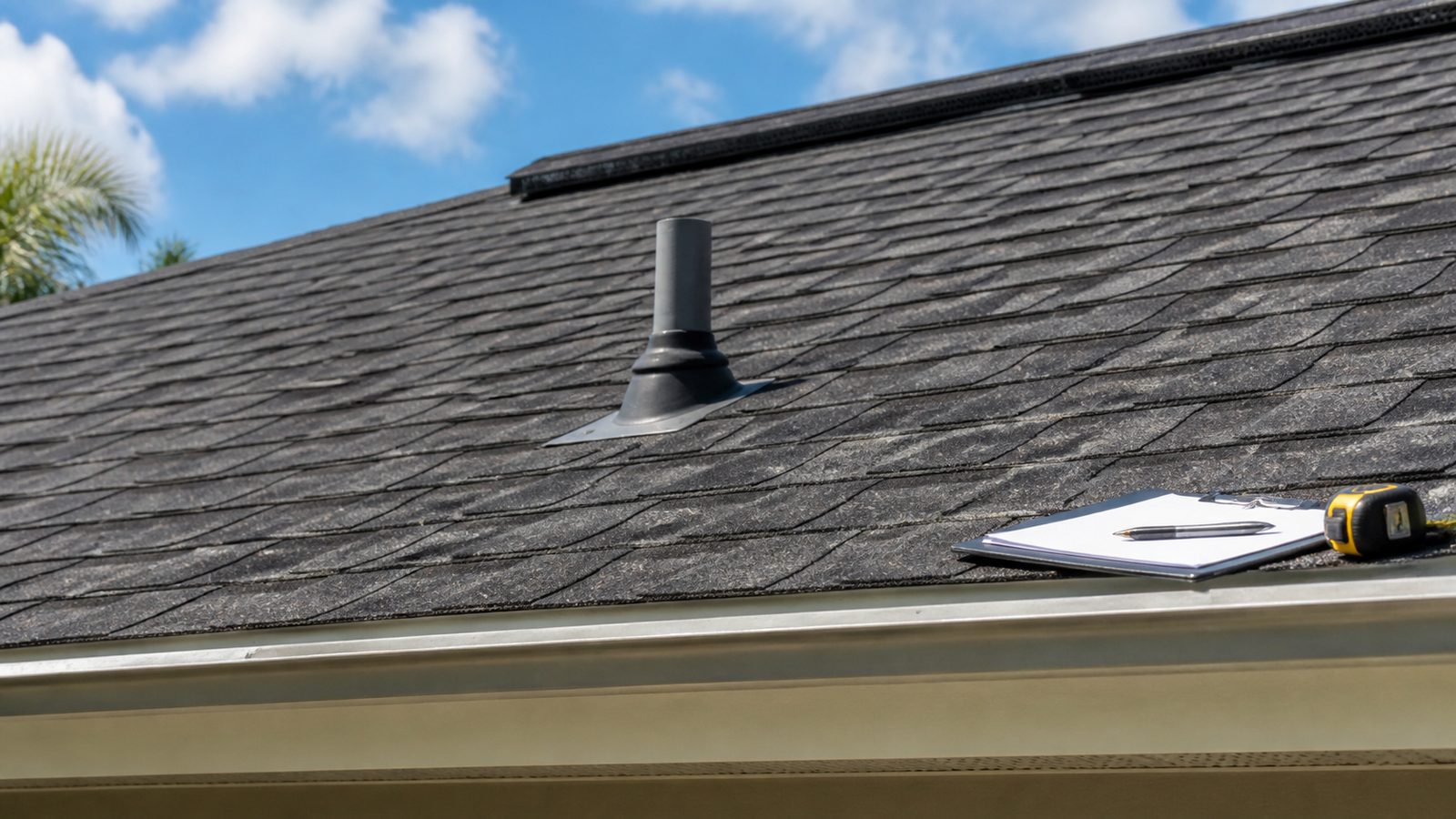
Documenting Damage the Right Way: Time-Stamped Photos, Written Log, and Neighbor Documentation
Insurance claims are disputes. Disputes are resolved by evidence. The homeowner who files a claim with comprehensive, time-stamped, well-organized documentation is better positioned than the homeowner who calls their insurer and says "there was a storm and my roof is damaged."
Immediately after discovering damage:
Take photographs of every damaged area, with your phone's location services and timestamp enabled. Photograph the full roof from the ground, close-up shots of specific damage, and interior evidence of water intrusion (ceiling stains, wet insulation, damaged personal property). Photograph your neighbor's property if they sustained visible damage from the same event — this establishes that the damage was storm-caused, not pre-existing.
Create a written log. Date and time of the storm event, date and time you discovered the damage, description of what you observed, and a list of everyone you contacted and when.
Preserve physical evidence. If shingles blow off, collect and save them — they may be relevant to a coverage dispute. Do not throw away damaged materials before the adjuster's visit unless they create an immediate safety hazard.
Check NOAA's storm reports for the date of your damage event. NOAA publishes storm data — wind speeds, hail reports, tornado activity — by county and date. A NOAA report confirming wind events in Duval County on the date of your loss strengthens your claim causation argument.
Filing the Claim: The Two-Year Deadline, What to Say, and What Not to Say
File the claim promptly. For wind damage occurring after January 1, 2023, Florida law gives you two years from the date of loss. Do not wait to see whether the damage "gets worse" — this delays the claim and can create coverage questions.
When filing: provide your policy number, the date of loss (the storm event date, not the date you discovered the damage), the cause of loss ("wind damage" or "hail damage" for most roofing claims), and a description of the damage you can currently observe. You do not need to have a contractor's estimate before filing.
What not to say: do not speculate about the extent of damage you cannot directly observe. Do not describe pre-existing conditions as new storm damage — this creates fraud exposure. Do not say the damage is "minor" or "cosmetic" if you have not had a licensed contractor assess it — adjusters will reference your own characterization of the damage in their assessment.
What to request at filing: a claim number, the name and contact information for your assigned adjuster, and the timeline for the adjuster's inspection.
After filing, do not make permanent repairs before the adjuster's visit without insurer authorization. Emergency tarping and interior protection are generally covered as emergency repairs; permanent roof replacement before adjuster inspection is frequently used as a basis for claim denial.
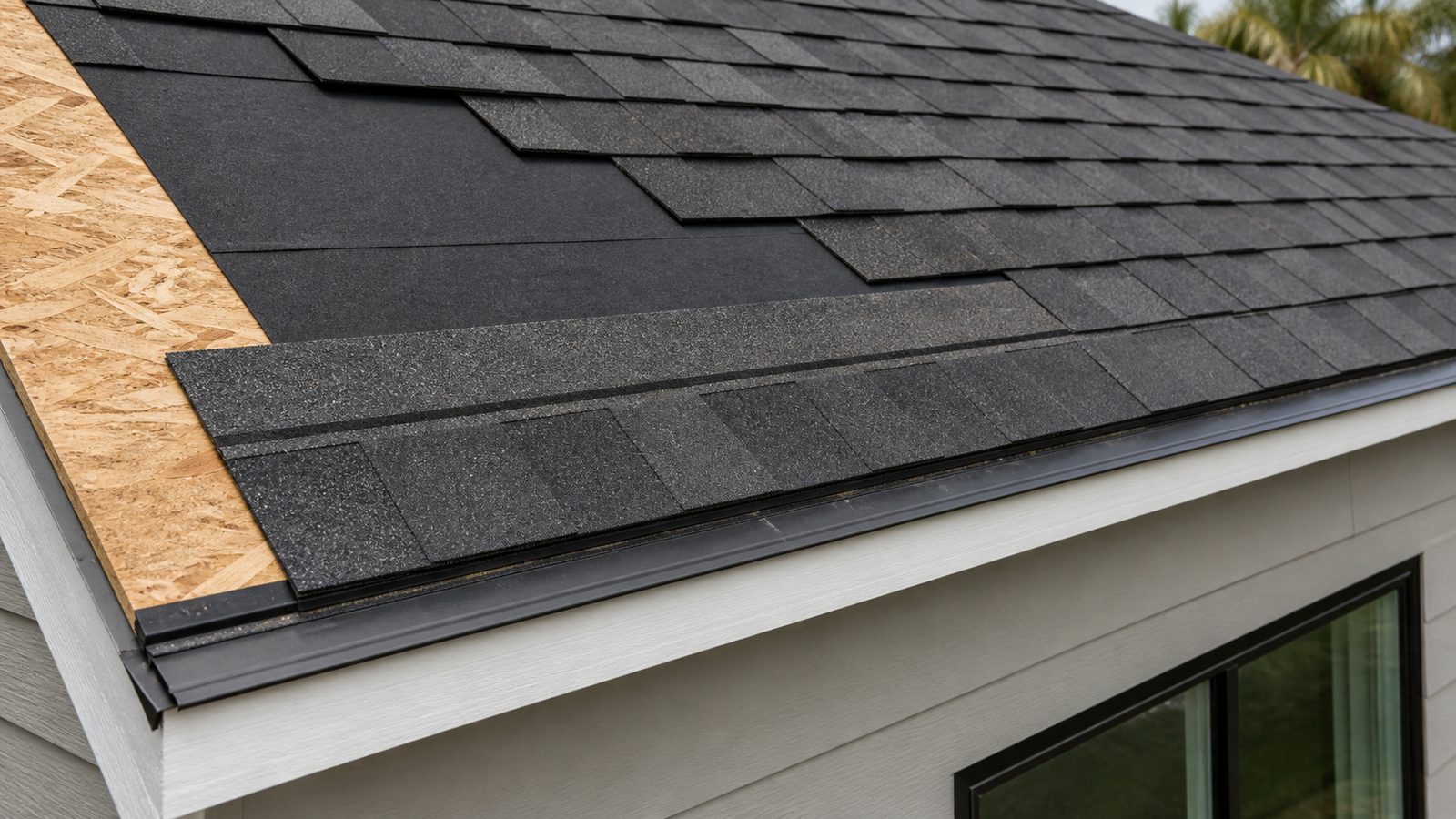
The Adjuster Visit: What Adjusters Look For and What They Commonly Miss
Your insurer's adjuster is a professional assessing your claim on behalf of the insurer. They are trained to identify covered damage and to identify conditions that support limiting or denying coverage. They are not your advocate.
Adjusters commonly miss: damage to flashing, gutters, and fascia that is directly attributable to the wind event; interior damage caused by roof penetration that was not immediately visible; damage to low-slope roof areas (porch overhangs, flat additions) that may be outside their standard inspection path; and deterioration of shingles and underlayment that is accelerated by storm impact but not obviously visible as "storm damage."
Request to accompany the adjuster during the inspection if you are able. You have the right to be present. Bring your own photo documentation and point out every area of damage you have identified. If you hired a contractor for a pre-adjuster estimate (discussed below), provide that estimate to the adjuster.
After the adjuster's visit, you will receive an Explanation of Benefits or claim estimate. Review every line item against your own contractor's estimate. Scope differences — items in your contractor's estimate not in the adjuster's estimate — are the basis for the supplement process.
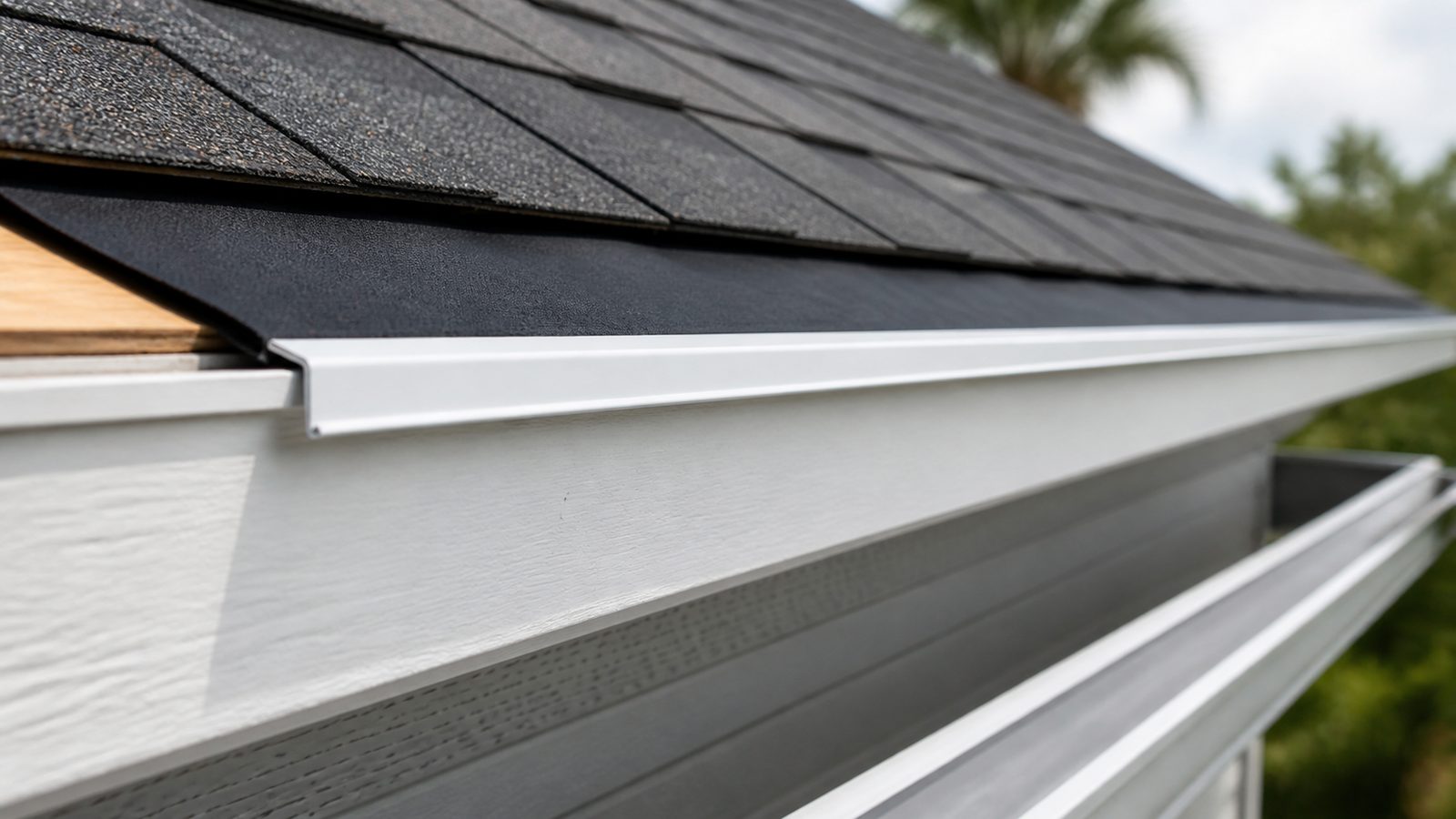
Getting an Independent GC Estimate Before the Adjuster Arrives
This single step produces more favorable claim outcomes than anything else a homeowner can do. Get a licensed roofing contractor to inspect your roof and provide a written estimate before the insurance adjuster's visit. Not after — before.
The contractor estimate serves three purposes. First, it establishes your documented understanding of the damage scope before the insurer's adjuster characterizes it. Second, it gives you a comparison document to use during the claim negotiation process. Third, if the adjuster's estimate is lower than the contractor's estimate, you have a credible, licensed professional opinion supporting your position rather than a dispute between your memory of what the damage looked like and the adjuster's written assessment.
The estimate should be line-itemmed by trade: tear-off, disposal, deck repair allowance, underlayment, flashing, field shingles, ridge cap, and permit. It should reference the specific materials by manufacturer, product name, and Florida Product Approval number.
JK Prestige provides written estimates in 48 hours. Our principal walks every site personally. Contact us at https://jkprestigeconstruction.com/#/contact before your adjuster visit, not after.
Disputing an Underpayment: The Supplement Process, Public Adjusters, and Umpire Arbitration
If the insurer's estimate is lower than your contractor's estimate, you have three escalation options.
The supplement process is the first step. Submit your contractor's estimate to the insurer with a written request for a scope review. Identify each line item in the contractor's estimate not included in the adjuster's estimate and explain why it is attributable to the covered loss. Most insurers have a supplement review process managed by a desk adjuster or supervisor. Legitimate scope additions — missed flashing replacement, deck repair, interior damage — are frequently paid through the supplement process without escalation.
A public adjuster is a licensed insurance professional who represents the policyholder in a claim dispute, not the insurer. Post-2023, public adjusters in Florida may charge a maximum of 20% of the settlement on non-catastrophe claims and 10% on claims during a state of emergency. For complex claims with significant underpayment, the fee is often cost-justified. Verify the public adjuster's license at the Florida Department of Financial Services before signing an engagement agreement.
Umpire arbitration (appraisal) is a binding dispute resolution process defined in most Florida property insurance policies. Both parties select a competent, disinterested appraiser. The two appraisers select an umpire. The panel determines the amount of loss. Appraisal is typically invoked for significant disputes — $10,000 or more in contested amount — where the supplement process has failed and litigation is not practical.
AOB (Assignment of Benefits) Post-2023: What's Banned and What to Watch For
The assignment of benefits ban enacted in SB 2-A prohibits homeowners from assigning their residential property insurance claim rights to a third party — including a contractor — for claims filed after January 1, 2023.
Before the ban, contractors could obtain an AOB from a homeowner, negotiate directly with the insurer, and bill the insurer for their work. This system led to contractor overreach, inflated claims, and systematic insurer abuse that contributed to carrier insolvency across the Florida market.
The ban means you cannot sign your claim rights to a contractor. You remain the claimant. You hire and pay the contractor; your insurer pays you. Any contractor who presents you with a document characterized as an AOB for a new roofing claim is presenting an illegal agreement under current Florida law.
Post-ban tactics to watch for: contractors offering a "Direction to Pay" or "Assignment of Post-Loss Benefits" document that attempts to achieve the functional result of an AOB without using the term. These documents are legally contested and may affect your claim. Consult your insurer or an attorney before signing any document that assigns your claim-related rights to a third party.
Contractor Selection After a Claim: Storm Chaser Red Flags in the Jacksonville Market
After any significant storm event, Jacksonville neighborhoods see an influx of out-of-area contractors who establish a temporary local presence, solicit door-to-door, and offer to "handle the insurance process" in exchange for signing a contract before the adjuster visits. These contractors are storm chasers. Their business model is to collect as many deposits as possible during the post-storm demand surge and perform work — when they perform it — at a quality level calibrated to margin, not durability.
Red flags specific to the Jacksonville market:
No Florida CCC (Certified Roofing Contractor) license. Verify before any conversation goes further — search the DBPR website in 90 seconds. Out-of-state license plates on work vehicles. Solicitation within 48 hours of a named storm making landfall. Pressure to sign before the adjuster visits. Inability to provide a local project reference list with Jacksonville-area addresses. No physical local office address (not a P.O. box, not a national franchise phone number).
JK Prestige Construction has been based in Jacksonville since 2017. We are family-operated. The same principal who founded the company answers every call and walks every site. We do not solicit door-to-door and we do not ask you to sign anything before we have walked your roof and provided a written, line-itemmed estimate. Learn more at https://jkprestigeconstruction.com/#/the-jk-way.
Ready to start? Get a written estimate in 48 hours. Call (904) 944-0278 or request a free consultation.
No call center. No coordinator. A JK principal reviews every inquiry and replies with a real number, not a range, not a follow-up form.
Request Free Estimate →