Every commercial renovation in Florida carries ADA compliance exposure that developers frequently underestimate at the budget stage. The Americans with Disabilities Act (ADA) is a federal civil rights law — not a building code — and it operates on a different trigger mechanism than typical code compliance. You don't have to add a ramp to a building simply because it doesn't have one. But the moment you alter a primary function area, you've triggered the path of travel obligation, and the compliance clock starts running.
For Jacksonville commercial developers, the interaction between federal ADA requirements, the Florida Accessibility Code (FAC), and the Florida Building Code (FBC) creates a layered compliance picture that must be understood before design begins. Getting it wrong means retrofits after permit issuance, civil enforcement actions, or private ADA lawsuits — all of which are more expensive than building it right the first time.
This guide covers how ADA and Florida law interact, what triggers path of travel obligations, the most common deficiencies found in Jacksonville's existing commercial inventory, cost ranges for typical remediation work, and who bears responsibility between landlord and tenant under Florida lease structures.
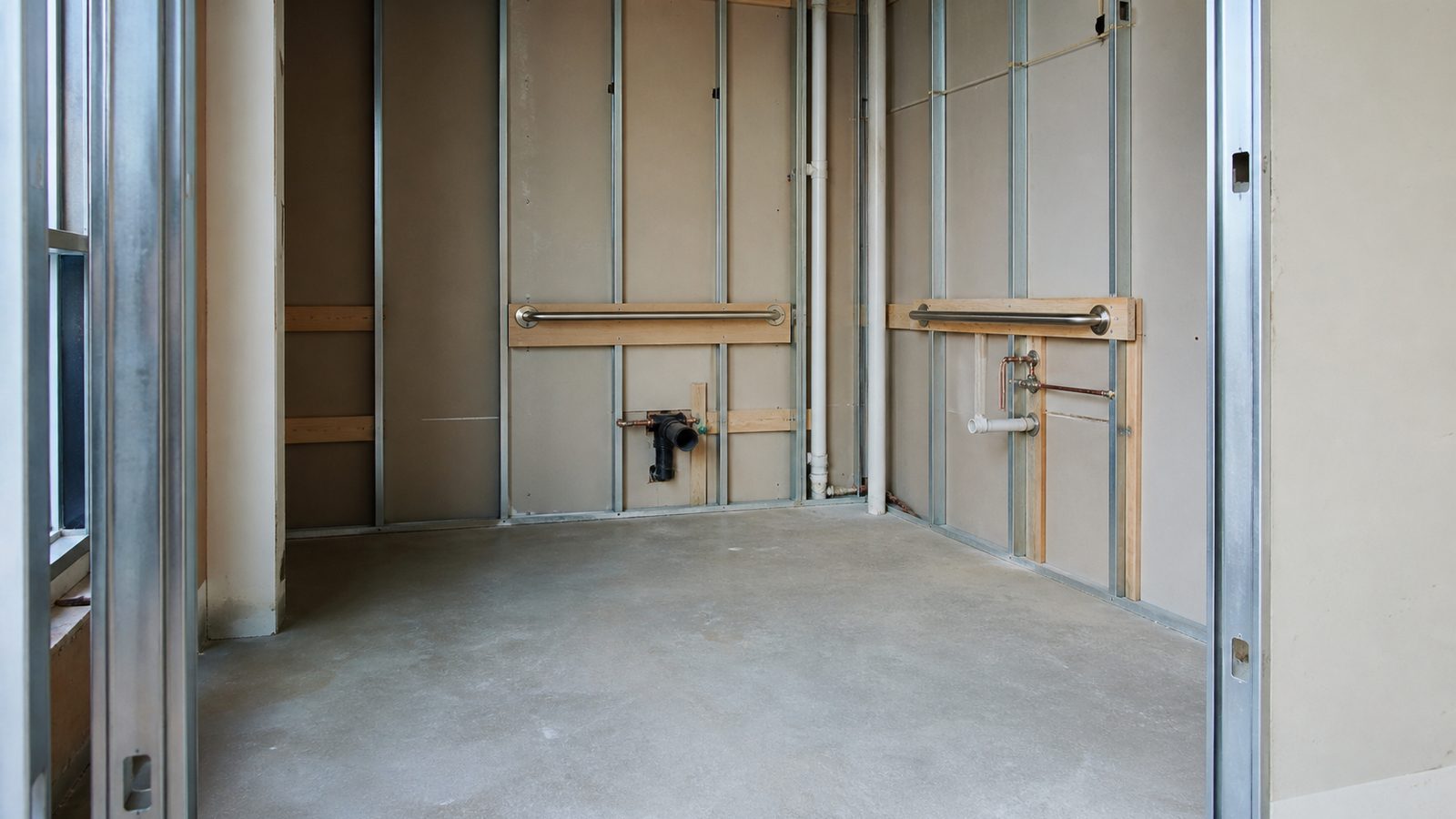
ADA vs. Florida Accessibility Code: Which Governs and How They Interact
The ADA is a federal civil rights law enforced by the U.S. Department of Justice (DOJ) and, for employment-related matters, the Equal Employment Opportunity Commission (EEOC). The 2010 ADA Standards for Accessible Design (2010 ADAS) are the current federal technical standard for construction and alterations.
The Florida Accessibility Code (FAC) is the state's technical standard for accessibility, adopted under Chapter 553, Florida Statutes. The FAC is incorporated into the Florida Building Code and is enforced by local building officials through the permit process. Florida has adopted the 2010 ADAS as the technical standard within the FAC, with limited state-specific modifications.
In practice: the FBC and FAC govern what gets permitted and inspected by the local building department. The ADA governs what can be enforced by the DOJ, private plaintiffs, and the courts. Both standards apply simultaneously. A building can pass a building department inspection and still be subject to an ADA civil action if the as-built condition doesn't comply with the 2010 ADAS.
For Jacksonville developers, this means treating accessibility compliance as a legal requirement parallel to — not subordinate to — the permit process.
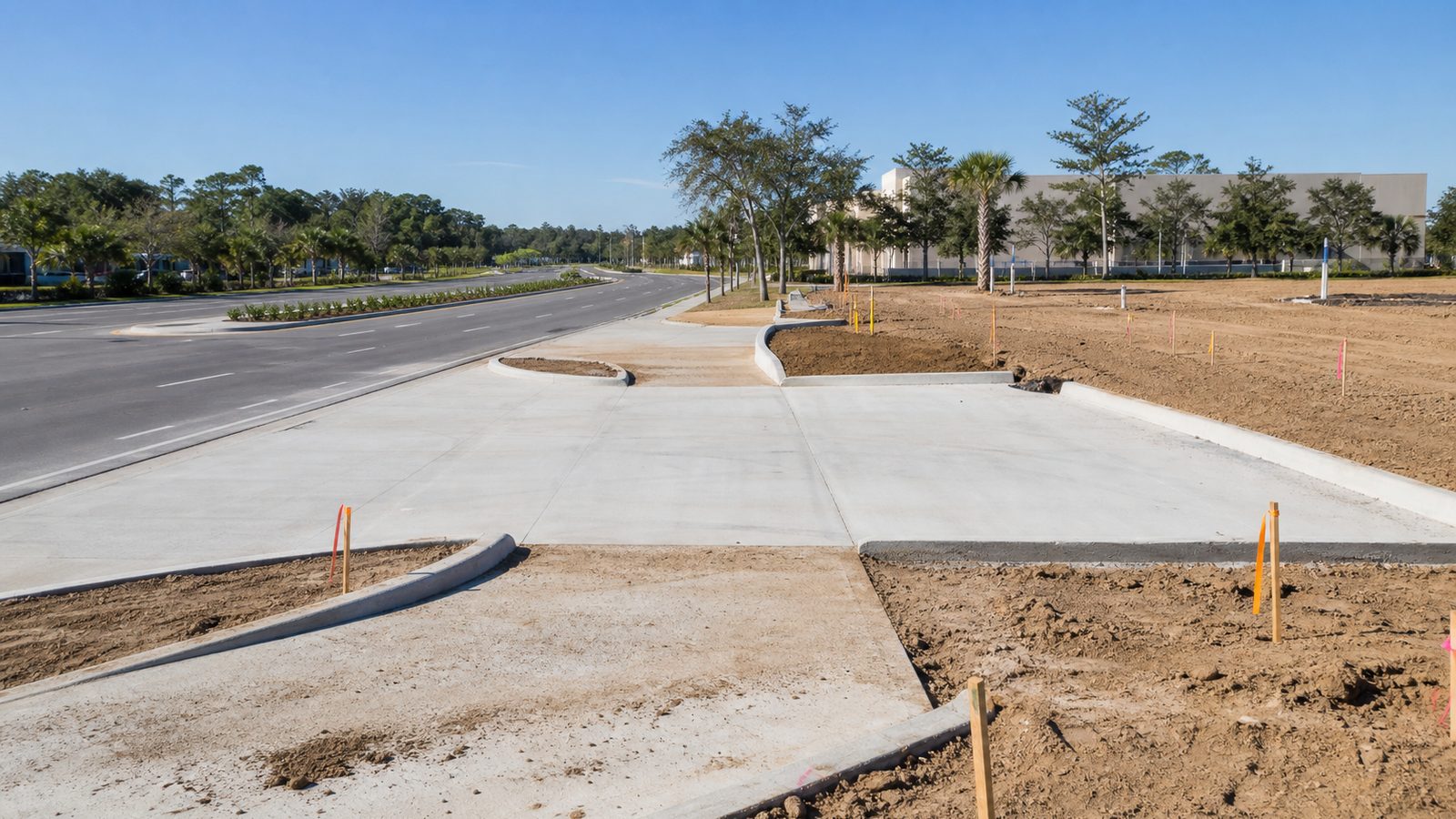
Path of Travel Requirement: What Triggers It and the 20% Cost Rule
The path of travel obligation is the central ADA compliance concept for commercial renovations. Under 28 CFR Part 36 and the 2010 ADAS, when any alteration is made to a "primary function area" — a space used for a major activity, such as retail sales floor, office workspace, restaurant dining area, or medical exam rooms — the path of travel to and from that area must be made accessible to the extent it is "readily achievable."
The ADA defines readily achievable as "easily accomplishable and able to be carried out without much difficulty or expense." This is a relative standard that accounts for the size and financial resources of the entity. For most commercial operations, readily achievable means the path of travel work required to make the altered area accessible.
The 20% rule provides a cost cap: the expenditure required to make the path of travel accessible need not exceed 20% of the cost of the alteration to the primary function area. Example: if a tenant improvement to a 3,000-square-foot office costs $200,000, the path of travel remediation obligation is capped at $40,000. If full path of travel compliance costs $60,000, the developer must spend $40,000 — prioritizing the most critical elements — and document why the remaining work was not required.
This 20% cap is not a budget exemption. It determines how much must be spent on path of travel work, not whether the obligation exists. The obligation exists the moment you alter a primary function area.
Common ADA Deficiencies in Jacksonville Commercial Buildings
Jacksonville's commercial inventory includes a substantial number of buildings constructed before ADA technical standards were fully established in the early 1990s. When conducting pre-renovation assessments for clients, JK Prestige finds the same deficiencies repeatedly.
Accessible Parking Count and Dimensions
Parking lots must provide the number of accessible spaces required by Table 208.2 of the 2010 ADAS based on total parking capacity, plus at least one van-accessible space for every six accessible spaces. Many older Jacksonville parking lots have accessible spaces that are too narrow (required: 60 inches minimum for car, 96 inches for van), have slopes exceeding 2%, or lack compliant access aisles (60 inches minimum, 96 inches for van).
Accessible Routes
An accessible route must connect accessible parking to the building entrance, connect all primary function areas within the building, and connect to accessible restrooms, drinking fountains, and telephones. Breaks in the accessible route — a step, a steep ramp, a door threshold too high — constitute non-compliance.
Door Hardware
Lever hardware is required on accessible routes. Knob hardware is non-compliant because it requires tight grasping and twisting. Many older Jacksonville office buildings still have knob hardware on interior doors along accessible routes.
Restroom Turning Radius
Accessible restrooms must provide a 60-inch turning radius within the restroom for a wheelchair. Many single-occupant restrooms in older Jacksonville commercial buildings were built with insufficient floor area to meet this requirement.
Counter Heights
Transaction counters — check-in desks, retail checkout, reception desks — must have an accessible portion no higher than 36 inches above finish floor. Full-height counters without an accessible section are non-compliant.
ADA for Medical Facilities: Additional Requirements
Medical office, outpatient clinic, and ambulatory surgical center renovations face additional accessibility requirements beyond standard commercial. The 2010 ADAS Section 805 addresses medical care facilities specifically.
Patient exam rooms must provide a 60-inch turning radius and accessible exam tables. Procedure rooms must provide clearance on both sides of exam tables (typically 36 inches minimum). Accessible medical equipment — including exam tables with adjustable height — is covered under separate DOJ guidance for medical facilities, though the technical standards continue to evolve under active rulemaking.
For Jacksonville medical office renovations, the intersection of ADA compliance, Florida Department of Health facility requirements, and AHCA (Agency for Health Care Administration) standards for licensed facilities creates a multi-agency compliance picture. JK Prestige coordinates with the owner's healthcare compliance counsel before commencing medical facility renovation work to ensure the design addresses all three frameworks simultaneously.
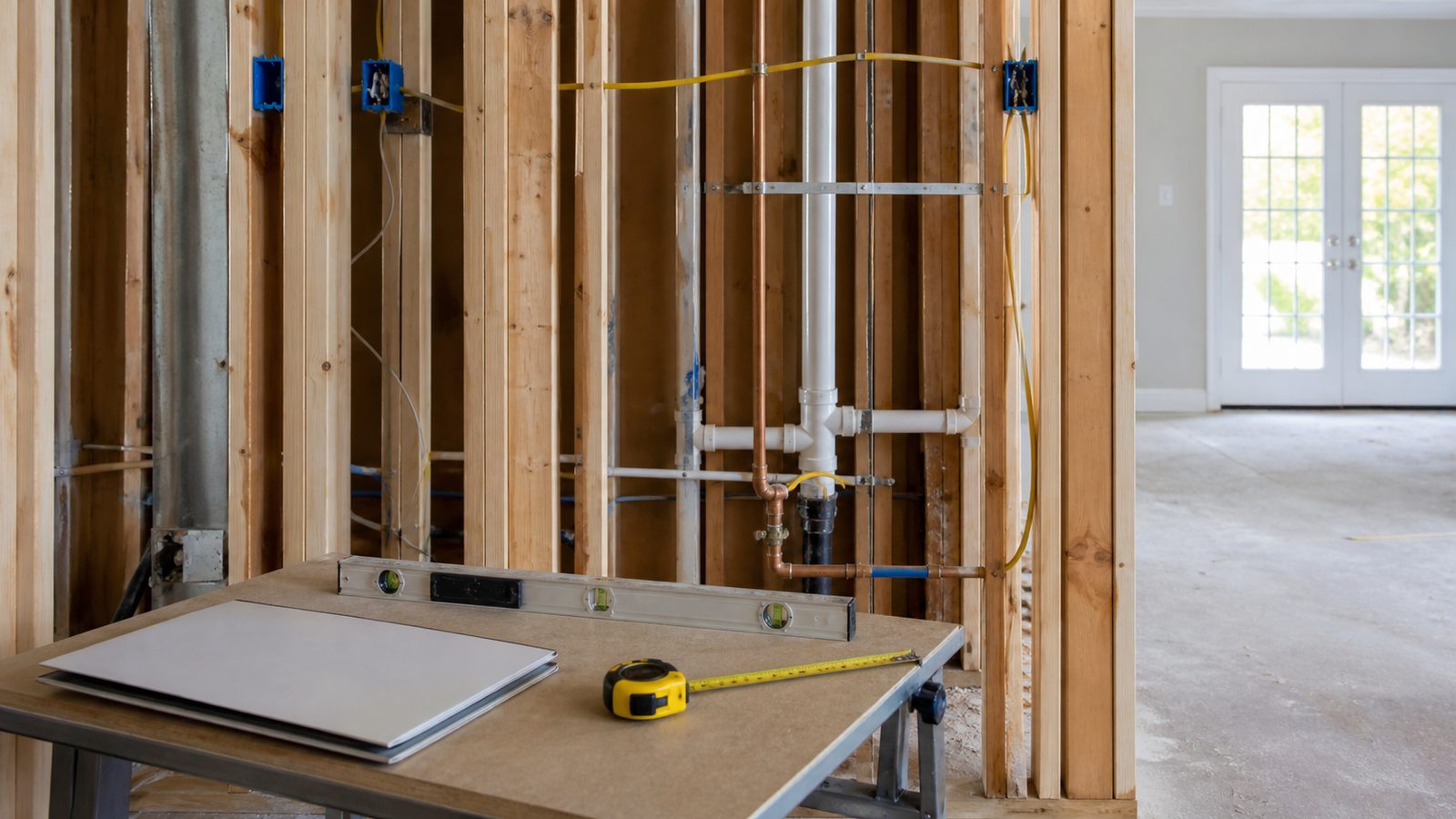
How to Conduct an ADA Compliance Assessment: The 4-Priority Order
The DOJ's ADA guidance establishes a four-priority order for allocating accessibility improvement expenditures when resources don't cover full compliance. Developers conducting self-assessments or engaging accessibility consultants should use this framework.
Priority 1: Accessible approach and entrance — accessible parking, accessible route from public way, accessible building entrance. This is the highest priority because it determines whether people can reach the facility at all.
Priority 2: Access to goods and services — accessible routes within the facility to the areas where goods and services are provided.
Priority 3: Access to restrooms — accessible restrooms serving the primary function areas.
Priority 4: Access to other items — drinking fountains, telephones, signage.
When path of travel expenditures hit the 20% cap before full compliance is achieved, spending should follow this priority order.
Who's Responsible: Landlord vs. Tenant Under Florida Lease Law
ADA responsibility between landlord and tenant is a contractual matter — the ADA itself holds both landlord and tenant liable for compliance within their respective areas of control, regardless of what the lease says. The lease can allocate the financial burden between parties but cannot eliminate either party's ADA exposure.
Under Florida lease practice, triple-net leases typically place ADA compliance responsibility for tenant-controlled interior space on the tenant, and responsibility for building common areas, exterior paths, and parking on the landlord. However, when a tenant's alteration triggers path of travel obligations that extend into landlord-controlled common areas, the allocation of cost is often negotiated case by case.
Developers leasing commercial space in Jacksonville should address ADA compliance allocation explicitly in the lease — including path of travel obligations triggered by future tenant improvements — rather than defaulting to ambiguous language that creates disputes at renovation time.
ADA in Historic Buildings: Section 3408 FBC Alternative Compliance Path
Buildings listed on the National Register of Historic Places or designated as locally significant historic structures have access to alternative compliance under Section 3408 of the Florida Building Code. The alternative compliance path allows modifications that would otherwise be required for accessibility to be avoided when full compliance would threaten or destroy the historic character of the structure.
Section 3408 requires the building official to consult with the State Historic Preservation Officer (SHPO) before allowing alternative compliance. The Florida Division of Historical Resources serves this function for properties on the National Register.
Jacksonville's historic downtown and Riverside/Avondale districts include numerous properties where this provision may apply. The alternative compliance path is not a blanket exemption — it requires specific findings and documentation. JK Prestige has worked on historic commercial renovations in Duval County where Section 3408 was invoked, and the process requires engaging a historic preservation consultant alongside the design team.
GC Scope for ADA Remediation: What Requires a Licensed Contractor
ADA remediation work spans a wide range of scopes. Some tasks — door hardware replacement, threshold modifications, directional signage — can be performed by facilities staff without a contractor's license in Florida. Other tasks require a licensed general contractor or licensed specialty contractor.
Work requiring a licensed contractor in Florida: ramp construction, restroom renovation involving plumbing rough-in changes, parking lot reconfiguration involving concrete work, structural modifications to accommodate accessible routes, and any work requiring a building permit.
Work that typically does not require a licensed contractor: furniture rearrangement to improve accessible clearances, replacing door hardware with lever hardware on doors without a closer, replacing signage, adjusting door closer pressure.
When in doubt, engage a licensed contractor. Florida Statute 489.127 prohibits unlicensed contracting, and performing permitted work without a license creates significant exposure for the property owner.
Cost Ranges for ADA Remediation in Jacksonville: 2025
Ramp installation: $3,000–$15,000 depending on slope, length, handrail requirements, and surface material. A simple concrete ramp with handrails at a commercial entrance typically runs $4,000–$8,000 in the Jacksonville market.
Accessible restroom renovation: $8,000–$35,000 depending on current configuration, whether plumbing rough-in relocation is required, and fixture specifications. A restroom that simply needs grab bars, a compliant toilet, and lever hardware is at the low end. A full gut-and-reconfigure with new plumbing layout is at the high end.
Parking restriping: $500–$3,000 depending on lot size, number of accessible spaces required, and whether van-accessible spaces require a reconfigured layout. If concrete curb cuts are missing or non-compliant, add $2,000–$5,000 per curb cut.
Door hardware replacement: $150–$400 per door including hardware and labor.
Counter lowering (accessible transaction counter): $1,500–$6,000 depending on material and construction method.
Ongoing ADA Compliance: The Renovation Trigger Resets the Obligation
One aspect of ADA compliance that developers frequently misunderstand: there is no statute of limitations on path of travel obligations triggered by alterations. Each new alteration to a primary function area resets the path of travel assessment for that area. A building that achieved compliance in 2005 and underwent a renovation in 2019 must be evaluated under the 2010 ADAS for work triggered by the 2019 renovation.
This means ADA compliance is not a one-time event. It's an ongoing obligation that reactivates every time alterations occur. Developers with commercial portfolios in Jacksonville should conduct a baseline ADA assessment for each property and document the current compliance status before beginning any renovation, so that the renovation budget accurately accounts for path of travel obligations.
JK Prestige includes an ADA compliance review as part of the pre-construction phase for all commercial renovation projects. Learn more about our renovation expertise and the JK way of managing commercial projects.
Ready to start? Get a written estimate in 48 hours. Call (904) 944-0278 or request a free consultation.
No call center. No coordinator. A JK principal reviews every inquiry and replies with a real number, not a range, not a follow-up form.
Request Free Estimate →