The first question a commercial developer should answer before hiring an architect or a GC is: which delivery method will govern this project? The delivery method defines who is responsible for design errors, who controls schedule, how cost risk is allocated between the owner and contractor, and ultimately how long the project takes from design kick-off to certificate of occupancy (CO).
Most first-time developers default to design-bid-build because it is the traditional linear approach — and because most architects assume that is what the owner wants. Experienced developers often prefer design-build or a GMP (Guaranteed Maximum Price) hybrid because they have learned that compressing the design-to-construction gap is worth more than the additional cost of the design-build premium. Neither approach is universally superior. The right method depends on project type, schedule, owner capacity, and how risk is allocated.
This guide explains both primary delivery methods at a practical level, compares their cost and schedule performance, identifies the scenarios where each performs best, and covers the GMP hybrid that combines the advantages of both. It also addresses Florida-specific licensing requirements for design-build contractors — a detail that eliminates many GCs who claim design-build capability.
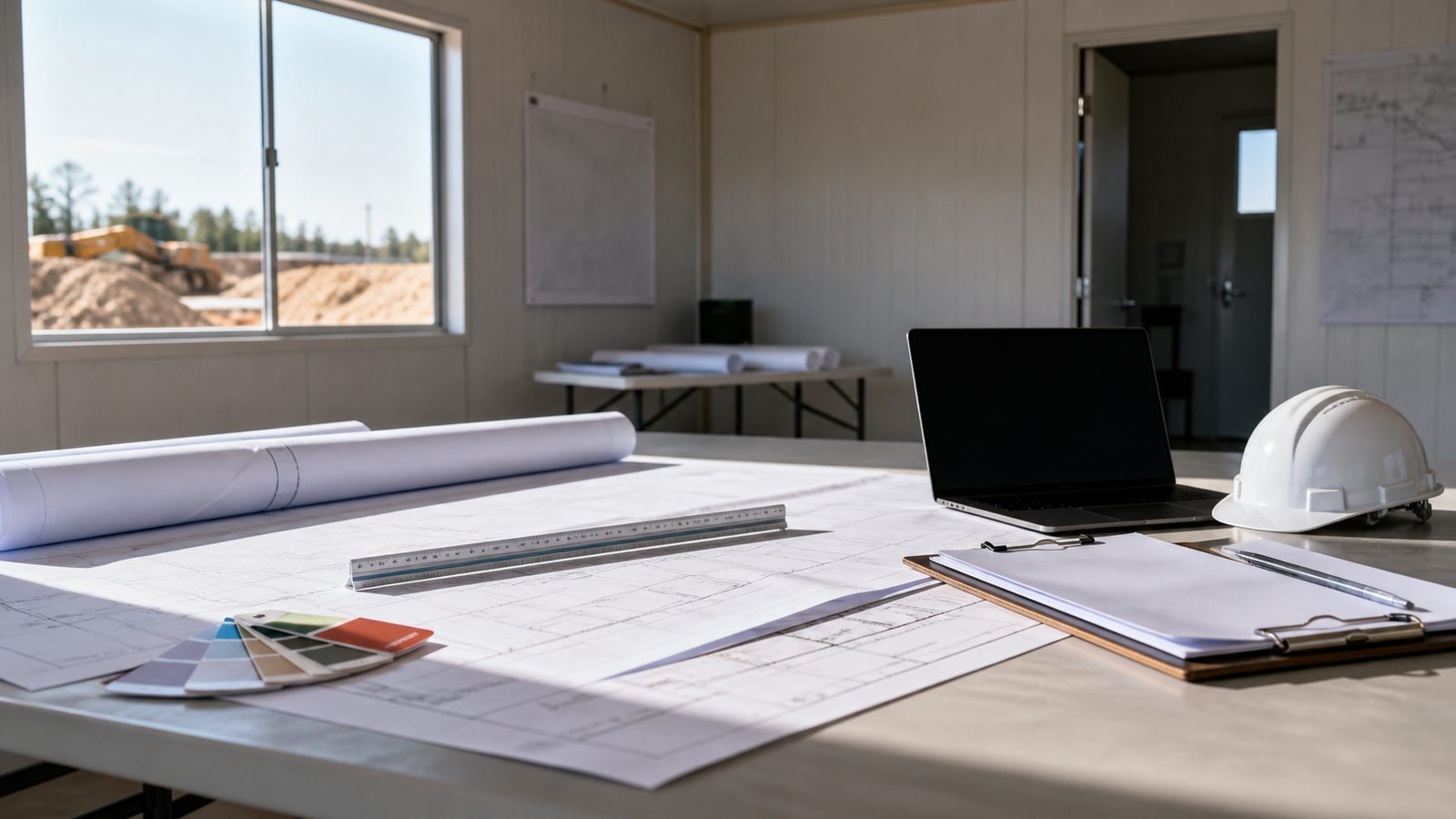
Design-Bid-Build Defined: The Traditional Linear Sequence
Design-bid-build (DBB) is the oldest and most common project delivery method in commercial construction. It proceeds in three sequential phases.
Design phase: the owner engages an architect and engineering team who produce a complete set of construction documents — drawings and specifications — representing the full scope of the project. The owner reviews and approves the design as it progresses through schematic design, design development, and 100% construction documents (CDs). The design team is responsible for design completeness and code compliance.
Bid phase: the owner or the owner's representative solicits bids from qualified GCs based on the completed construction documents. GCs review the documents and submit fixed-price proposals. The bid process typically runs 3–4 weeks. The owner evaluates bids and awards the contract — usually to the lowest responsive bidder, though private owners may use best-value criteria.
Build phase: the selected GC constructs the project according to the contract documents for the bid price. The architect administers the construction contract, reviews submittals and RFIs (Requests for Information), and observes construction progress.
The critical characteristic of DBB is sequential phasing: construction cannot begin until design is complete. This linearity adds 4–9 months to the overall project timeline compared to overlapped delivery methods, but it produces the most complete set of competitive bid documents and, historically, the lowest bid price for a defined scope.
JK Prestige delivers projects under DBB, design-build, and GMP structures and matches the delivery recommendation to the project's specific requirements.
Design-Build Defined: A Single Contract Covers Design and Construction
Design-build (DB) consolidates design and construction into a single contract with one entity. The owner executes one contract — with the design-builder — who is responsible for both producing the design and constructing the building. The design-builder may be a GC with in-house design professionals, an architect-led design-build firm, or a GC who carries a design professional under contract.
The owner's relationship with design-build is fundamentally different from DBB. In DBB, the owner has separate contracts with the designer and the builder, and uses the designer to administer and observe the builder's work. In design-build, the designer and builder are the same entity — there is no independent design administrator watching the GC's construction quality. This is the single most important structural difference in risk allocation.
Design-build compresses the project timeline by overlapping design and construction phases. Foundation design can be complete and construction can begin while MEP (mechanical, electrical, and plumbing) systems design is still underway. On a project with an 8-month design phase, design-build can save 3–5 months of overall project schedule.
The schedule savings are real. The tradeoff is that the owner surrenders independent design review, accepts that design decisions during construction are made by the party who bears the cost of those decisions, and must write a very tight program document to avoid scope gaps.
Risk Allocation Comparison: Who Holds Design Risk
This is the most consequential difference between DBB and design-build for the owner.
In DBB, the owner holds design risk. If the architect's drawings contain an error or conflict that generates a field change order, the cost of the change order is the owner's — either recovered from the architect under their professional liability insurance (a slow and contested process) or absorbed by the owner as a project cost. The owner assumes that the design will be complete and constructable, and pays for it when it is not.
In design-build, the design-builder holds design risk. If their design contains an error that requires a field change, the design-builder absorbs the cost — it is within their single contract to produce a buildable design. This is a meaningful owner benefit on complex projects where design errors are likely.
The tradeoff is price. Design-build GCs price their contracts to include a design risk premium — typically 3–8% above what a pure construction bid would cost on the same scope — to cover their exposure to design error claims and the cost of maintaining in-house or contracted design professionals.
On projects where design quality risk is high — complex MEP-intensive buildings, renovations with concealed conditions, healthcare facilities with evolving clinical programs — the design risk premium often costs less than the design errors it covers.
Cost and Schedule Comparison
The construction industry's data on design-build vs. DBB performance is consistent across multiple studies.
Schedule: design-build delivers projects 10–20% faster than DBB on average. The schedule compression comes from overlapping design and construction phases, eliminating the bid period, and allowing the GC to manage the design schedule toward their construction timeline.
Cost: design-build typically costs 3–8% more than a competitive DBB bid for the same scope. The premium reflects the design risk transfer, the absence of competitive bidding, and the cost of the design-build entity's integrated overhead. However, when change orders on DBB projects are included in the total project cost comparison, the gap narrows — DBB projects with significant design-conflict change orders can end up costing more than a design-build project for the same scope.
On Florida commercial projects over $10M, the schedule compression in design-build consistently produces schedule savings that offset the cost premium when the owner faces a lease commencement deadline, a healthcare opening date, or a market window that justifies the additional construction cost.
Scope Gap Risk in Design-Build: What Falls Between the Lines
Scope gap is the principal risk for owners in design-build contracts. A scope gap exists when an element of the building is not explicitly included in the design-build contract's scope but is required for the building to function as intended.
In DBB, the architect's drawings define the scope. If the drawings are missing something, the owner can seek recovery from the architect. In design-build, the scope is defined by the contract's program document — typically an owner-prepared document describing the building's requirements, not a complete set of drawings. If the program document is ambiguous or silent on an item, the design-builder may claim it is outside their scope.
Common scope gaps in design-build contracts:
- Finish level not specified (the design-builder's "standard" finish is below the owner's expectation)
- Site work scope undefined (how much of the parking, landscaping, and utility work is included?)
- MEP systems scope not defined by performance standard or specification
- Equipment furnishings and fixtures (FF&E) boundary between the design-build contract and the owner's FF&E budget not clearly defined
Mitigate scope gap risk by writing the program document with maximum specificity: finish level by room type, MEP performance standards, site work boundaries, and a clear FF&E boundary. Have the program document reviewed by an independent owner's representative before executing the design-build contract.
When Design-Build Is the Right Choice
Design-build performs best under the following conditions.
Budget is the primary constraint and the schedule is tight. The owner has defined their program clearly, does not anticipate significant design changes during construction, and needs the building completed by a specific date. Design-build compresses schedule and transfers design risk in exchange for a cost premium — appropriate when those tradeoffs work for the project.
The owner's program is straightforward. Standard office, retail, industrial, or flex commercial buildings with conventional systems and typical finishes are good design-build candidates. Buildings with complex clinical programs, specialized manufacturing requirements, or significant owner-design interaction are poor candidates.
The GC has demonstrated design-build delivery experience. Not every GC who claims design-build capability has actually delivered a design-build project. Request specific design-build project references — not just projects where they subcontracted the architect — and verify the delivery method with the owner reference.
JK Prestige's commercial project experience includes both design-build delivery and traditional DBB depending on owner requirements and project scope clarity.
When Design-Bid-Build Is Better
DBB performs best under the following conditions.
The owner wants maximum design control. In DBB, the owner's architect works exclusively for the owner. Design decisions are made on the owner's behalf without the conflict-of-interest that exists when the designer is employed by the same entity building the project.
The project is publicly funded or requires competitive bidding. Florida public agencies are generally required by statute to competitively bid construction contracts. Florida Statute 287.055, the Consultants' Competitive Negotiation Act, governs professional services selection. Public bid law often mandates DBB for government construction projects.
The project has complex requirements that will evolve during design. A hospital clinical program that requires multiple rounds of clinical staff input, a corporate headquarters with substantial interior programming, or a building with significant historic preservation requirements — these are projects where the design needs to be complete and stable before pricing.
The owner needs maximum design flexibility. In design-build, design changes after contract execution are expensive — they trigger scope changes that the design-builder prices and the owner must approve. In DBB, design changes before 100% CDs are part of the architect's scope, not a change order.
The GMP Hybrid: The Best of Both Methods
A GMP (Guaranteed Maximum Price) preconstruction model captures most of the schedule benefit of design-build while preserving the owner's independent design team.
The structure: the owner hires an architect under a separate contract, as in DBB. But simultaneously — at schematic design — the owner also hires a GC for preconstruction services. The GC attends design meetings, provides cost estimates at each design milestone, reviews structural and MEP systems for constructability, identifies long-lead equipment for early purchase, and develops the project schedule.
At 60–75% design completion, the GC establishes a GMP. Construction begins immediately — the first work packages (sitework, foundations) can start before design is complete. The design team completes MEP and interior design while early construction phases are underway.
The GMP hybrid delivers 70–80% of the schedule savings of design-build while retaining an independent design team and open-book cost structure. It is the standard delivery method for hospitals, institutional projects, and complex commercial development in Florida.
Contact JK Prestige to discuss whether a GMP preconstruction structure is appropriate for your Jacksonville project.
Florida Licensing Requirements for Design-Build GCs
Florida has specific licensing requirements for contractors performing design-build work that eliminate many GCs who describe themselves as design-build capable.
Florida Statute 489.149 authorizes design-build firms in Florida. To perform design-build, a GC must either: (1) hold a General Contractor license AND a separately licensed design professional (architect or engineer) who is a full-time employee of or has a contract with the GC's firm; or (2) the GC must itself hold both a contractor license and an architect or engineer license.
A GC who says "we do design-build" but does not have a licensed design professional on staff or under a design-build contract is misrepresenting their capability. Verify the design professional's Florida license at the DBPR before executing a design-build contract.
Additionally, licensed architects in Florida are prohibited from self-performing construction under the Florida Architecture Practice Act. Design-build firms led by architects typically subcontract the construction component to a licensed GC and hold the GC in a subcontract relationship.
How to Evaluate a Design-Build Proposal
Evaluating a design-build proposal requires scrutiny that goes beyond a fixed-price bid.
Scope clarity: does the proposal include a detailed program document and preliminary scope matrix showing exactly what is included and excluded? Vague program documents are a scope gap warning sign.
Design error allocation: does the contract explicitly state that the design-builder is responsible for design completeness and any costs associated with design errors? Without this language, the protection of design risk transfer is not in the contract.
Change order triggers: what constitutes an owner-directed change that triggers a contract price increase? The definition should be specific — changes to the program document, changes requested after a specific milestone, or owner-required code upgrades not anticipated in the program.
Contingency visibility: does the proposal identify the contingency included in the design-build price, and what happens to unspent contingency at project completion?
Design team identification: who specifically is the design professional of record? What is their license status and design-build project history?
JK Prestige's Design-Build Capabilities and Preferred Delivery Method Approach
JK Prestige delivers projects under design-bid-build, design-build, and GMP structures. For residential and defined-scope commercial projects, a fixed-price contract with complete drawings produces the cost certainty homeowners and commercial owners need. For complex commercial and healthcare projects, a GMP preconstruction structure with an independent architect is typically the recommended approach.
Design-build is recommended when the project is straightforward in program, the schedule is constrained, and the owner wants a single point of accountability. JK Prestige's self-perform trades — framing, concrete, drywall, finish carpentry, and roofing — are direct assets in design-build delivery, because the GC who controls the critical path labor is not dependent on subcontractor mobilization to keep the compressed design-build schedule.
Get a written estimate in 48 hours for your Jacksonville commercial project. The founder answers every call.
Ready to start? Get a written estimate in 48 hours. Call (904) 944-0278 or request a free consultation.
No call center. No coordinator. A JK principal reviews every inquiry and replies with a real number, not a range, not a follow-up form.
Request Free Estimate →