Jacksonville has more land in Special Flood Hazard Areas than any other large city in Florida. Duval County's low topography, extensive river and creek system, and proximity to the Atlantic coast place large portions of the urban core — Riverside, Springfield, parts of San Marco, Murray Hill, and numerous neighborhoods along the St. Johns River and its tributaries — in Zone AE, the high-risk flood designation on FEMA's maps. For a developer working in Jacksonville, flood zone designation is not a footnote. It is a primary driver of site selection, design, cost, and financing.
This guide explains every element of flood zone construction that a Jacksonville developer or owner needs to understand before breaking ground. It covers how to find your designation, how to read a FIRM panel, what Duval County's local amendments require beyond FEMA's minimum, and what design strategies work in AE-zone sites. JK Prestige Constructor has executed residential and commercial construction across Jacksonville's flood-prone neighborhoods and can advise on site-specific flood zone constraints before you commit to a design.
Jacksonville Flood Zone Overview: What Zone AE, Zone X, Zone VE Mean for Development
FEMA classifies flood hazard areas into zones based on the probability and type of flooding:
Zone AE: High-risk flood area with a 1% annual chance of flooding (the "100-year flood"). Base Flood Elevation (BFE) is defined on the Flood Insurance Rate Map (FIRM). Zone AE applies to riverine and coastal areas with predictable flood depths. In Jacksonville, Zone AE covers large portions of Riverside, Springfield, Ortega, Avondale, San Marco, and areas along the St. Johns, Arlington, and Pottsburg Creek corridors.
Zone X (shaded): Moderate-risk area, 0.2% annual chance of flooding (500-year flood) or areas with 1% annual chance but average depths less than 1 foot. Flood insurance is not federally required but is recommended. Many Southside and Mandarin neighborhoods fall in shaded Zone X.
Zone X (unshaded): Low-risk area, minimal flood hazard. No BFE defined. Most of western Duval County and areas with higher topography.
Zone VE: High-risk coastal zone with wave action hazard in addition to inundation. BFE includes wave crest. Applies to oceanfront properties on Jacksonville Beach and Atlantic Beach — outside city limits but within the Jacksonville metro area.
The practical development implications by zone: Zone AE and VE require elevation certificates, trigger mandatory flood insurance for federally backed mortgages, impose construction requirements below BFE, and apply the substantial improvement rule to renovation projects. Zone X (unshaded) has no mandatory flood insurance and no BFE-driven construction requirements.
Finding Flood Zone Designation: FEMA Flood Map Service Center and Duval County GIS Portal
Two tools give you flood zone designation for a specific parcel in Jacksonville:
FEMA Flood Map Service Center (msc.fema.gov): Enter the property address to retrieve the current effective FIRM panel for that location. The FIRM panel shows flood zone boundaries, BFE contours, and the panel effective date. Jacksonville's FIRM panels were last updated in 2019. Check the panel effective date — older panels may not reflect recent remapping.
Duval County Property Appraiser GIS portal: The Duval County Property Appraiser's online mapping system layers flood zone data over parcel boundaries, letting you see where a flood zone boundary falls relative to the specific parcel. This is more useful than FEMA's tool for parcels that straddle zone boundaries, which is common along drainage corridors.
If you believe the FIRM designation is incorrect — because the property has been filled, regraded, or is physically above the BFE shown on the map — you can pursue a Letter of Map Amendment (LOMA) from FEMA to formally remove the property from the flood zone. A LOMA requires an elevation certificate and is prepared by a licensed surveyor or civil engineer. Processing time: 60–90 days.
Base Flood Elevation: What It Is, How to Read a FIRM Panel, How It Sets Your Minimum Finished Floor
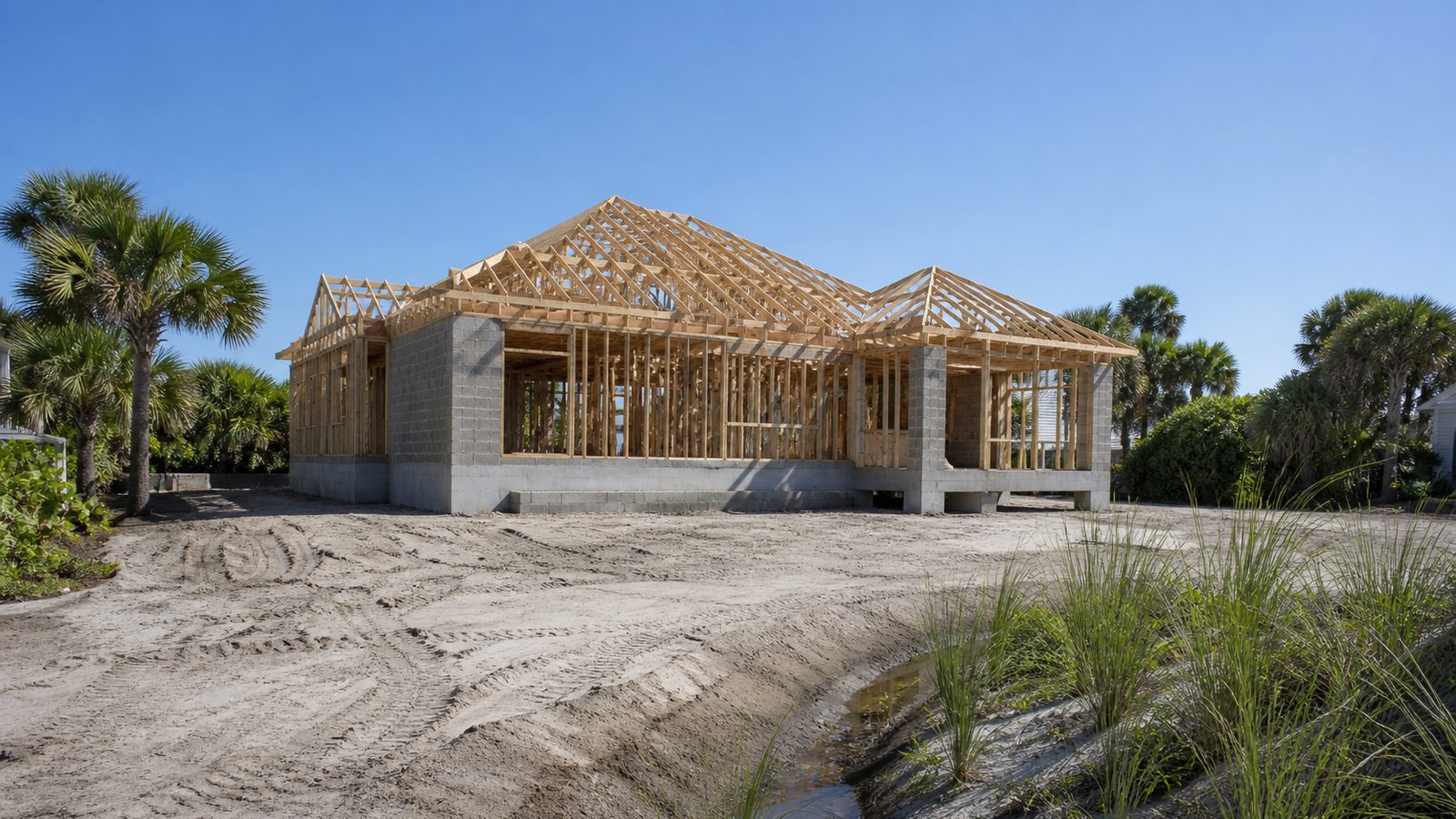
Base Flood Elevation (BFE) is the elevation to which floodwater is expected to rise during a 100-year flood event, expressed in feet above NAVD 88 (North American Vertical Datum of 1988). It is the fundamental regulatory benchmark for flood zone construction.
To read BFE from a FIRM panel: identify the flood zone boundary on the map, then locate the BFE label (shown as a number in whole feet) on the nearest labeled contour line. BFE contours are shown in blue on digital FIRM panels. In riverine Zone AE areas in Jacksonville, BFE typically ranges from 5 to 15 feet NAVD 88 depending on location relative to the St. Johns River floodplain.
The BFE sets the minimum finished floor elevation for any new structure or substantially improved structure in Zone AE. Florida Building Code and Duval County's local ordinance require the finished floor to be at or above BFE. Duval County has adopted a freeboard requirement of BFE + 1 foot, meaning the minimum finished floor for new construction and substantial improvements in Zone AE is one foot above BFE. That extra foot reduces flood insurance premiums and provides additional protection against events that exceed the 100-year design storm.
To determine whether a specific site can support required BFE + 1 elevation without excessive fill costs, commission a topographic survey before finalizing site acquisition. A site that requires 3 feet of fill across a 10,000 square foot footprint adds significant cost relative to a site that is already at or near BFE + 1.
Duval County Floodplain Management: Local Amendments More Restrictive Than FEMA Minimum Standards
FEMA establishes minimum National Flood Insurance Program (NFIP) standards. State and local governments can adopt more restrictive standards. Duval County has adopted several local amendments that go beyond the NFIP minimum:
BFE + 1 freeboard: As noted above, Duval County requires finished floor elevation at BFE + 1 for new construction and substantial improvements in Zone AE. FEMA's minimum standard is at BFE.
Floodway encroachment prohibition: Duval County prohibits any fill, development, or encroachment in the regulatory floodway that would raise BFE by any amount. FEMA's minimum standard allows encroachment that causes a maximum 1-foot rise in BFE.
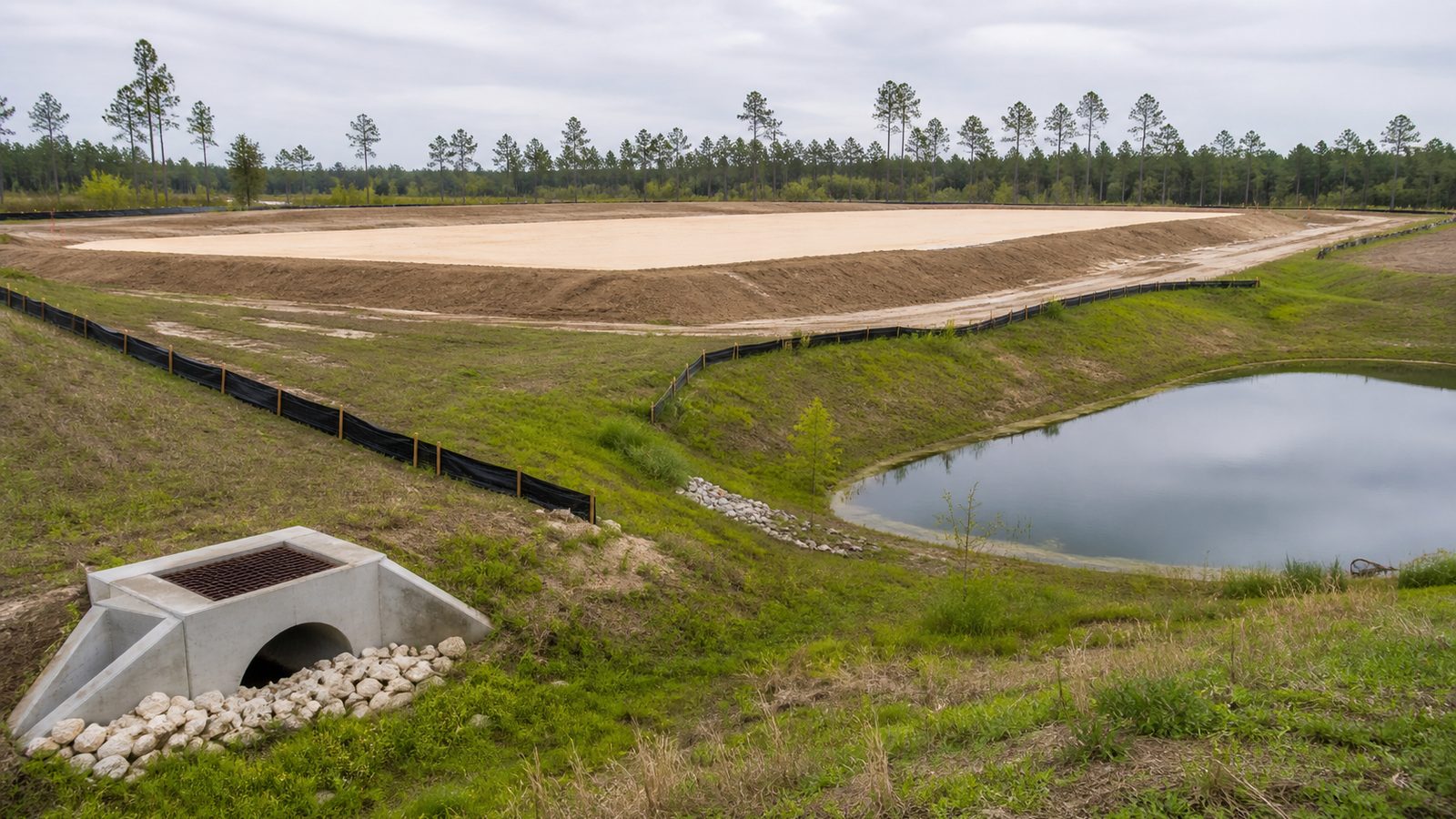
Subdivision drainage review: New subdivisions in or adjacent to flood zones in Duval County require floodplain impact analysis as part of the plat approval process.
Critical facility elevation: Essential facilities (hospitals, fire stations, emergency operations facilities) must be elevated to BFE + 2 feet under Duval County's ordinance. This applies to any JK Prestige hospital construction project in a flood zone.
Duval County's floodplain administrator reviews permit applications for compliance with local amendments. Permits for construction in Zone AE that do not demonstrate compliance with BFE + 1 will not be issued.
The Substantial Improvement Rule: 50% Threshold and What "Full Code Compliance" Means
The substantial improvement rule is the single most important flood zone regulatory concept for existing structures in Jacksonville. If the cost of renovation or reconstruction exceeds 50% of the structure's pre-improvement market value, the entire structure must be brought into compliance with current floodplain requirements.
The threshold is calculated using the assessed market value from Duval County property records, not the purchase price or the appraised value for mortgage purposes. In neighborhoods like Riverside and Springfield where market values have risen faster than Duval County's reassessment cycle, the assessed value is often lower than actual market value — which means the 50% threshold is lower in dollar terms than you might expect.
Full code compliance means: the finished floor must be elevated to BFE + 1 (or the existing structure must be elevated). All electrical, mechanical, and plumbing systems below BFE must be flood-proofed or relocated above BFE. The foundation must meet current flood-resistant construction requirements for the zone.
For a slab-on-grade structure in Riverside that currently sits at BFE - 2 feet, achieving full code compliance means either: (a) mechanically elevating the structure and rebuilding the foundation, (b) demolishing and rebuilding to compliant elevation, or (c) for non-residential structures, dry flood-proofing to BFE + 1. Option (a) or (b) adds $40,000–$100,000+ depending on structure size. That cost belongs in the renovation budget analysis before the project is approved.
Substantial damage — damage from any cause exceeding 50% of market value — triggers the same requirement. Flood-damaged structures in Zone AE that were previously grandfathered below BFE must be rebuilt to current standards if the damage meets the threshold.
Flood-Resistant Construction Requirements Below Design Flood Elevation
For structures in Zone AE where portions of the building fall below the Design Flood Elevation (DFE — which is BFE + freeboard, so BFE + 1 in Duval County), Florida Building Code Section 1612 and ASCE 24 specify flood-resistant construction requirements:
Foundation type: Stem wall foundations with flood vents (openings that allow water to enter and exit the crawl space) or pier and beam foundations are required where the lowest floor is elevated above grade. Slab-on-grade is permitted only when the slab is elevated to DFE.
Flood vents: Enclosed spaces below DFE (crawl spaces, enclosed lower levels) must have flood vents with a minimum net open area of 1 square inch per square foot of enclosed area, with a minimum of two vents per enclosed space. ICC-ES certified engineered flood vents are acceptable alternatives.
Materials below DFE: Materials used below DFE must be flood damage-resistant per FEMA Technical Bulletin 2. Class 4 or 5 materials (resistant to flood damage) are required: concrete, CMU, pressure-treated wood, ceramic tile. Standard gypsum wallboard, fiberglass insulation batts, and standard carpet are not flood-resistant and are prohibited below DFE.
Utility placement: All electrical panels, HVAC equipment, water heaters, and ductwork must be located at or above DFE. No mechanical equipment below DFE in Zone AE.
Elevation Certificate: Who Prepares It, When Required, What It Costs
An Elevation Certificate (EC) is an official FEMA form (Form 086-0-33) that documents the elevation of a structure's lowest floor, lowest adjacent grade, and other flood-related elevation data. It is prepared and certified by a licensed land surveyor, registered professional engineer, or registered architect.
When required in Jacksonville: for any new construction or substantial improvement in Zone AE; when applying for or renewing flood insurance on a Zone AE property; when seeking a LOMA from FEMA; and when applying for a building permit in Zone AE.
Cost in Jacksonville: $500–$1,500 depending on property size, accessibility, and surveyor. Get a quote from a licensed Florida surveyor before budgeting. The EC is required before permit issuance for new construction in Zone AE, so it is not optional — budget it as a permitting cost.
The EC is also a flood insurance pricing tool. A structure that is 2 feet above BFE (BFE + 2) qualifies for dramatically lower NFIP flood insurance premiums than a structure at BFE or below. A certified EC with favorable elevations can reduce annual flood insurance premiums by $2,000–$10,000 depending on structure value and location. That premium difference is real money that should factor into the freeboard decision at the design stage.
Design Strategies on AE-Zone Sites: Fill, Stem Wall Foundations, Breakaway Lower-Level Enclosures
Jacksonville developers working in Zone AE have three primary elevation strategies:
Fill to raise grade: Import fill material to raise the finished grade to or near DFE before construction. Permits the use of slab-on-grade construction at compliant elevation. Requires a fill permit and, in many cases, a drainage impact analysis showing that the fill does not redirect stormwater onto adjacent properties. Fill costs in Jacksonville run $15–$30 per cubic yard delivered and placed, plus compaction and any engineered fill specification requirements.
Stem wall foundation with elevated floor: Build a continuous concrete stem wall to the required elevation, with the finished floor platform elevated on the stem wall above grade. The space beneath the floor is either an enclosed crawl space (with flood vents) or a garage/storage area (with flood vents, no mechanical equipment). This is the most common approach for residential construction in AE zones in Riverside and Springfield.
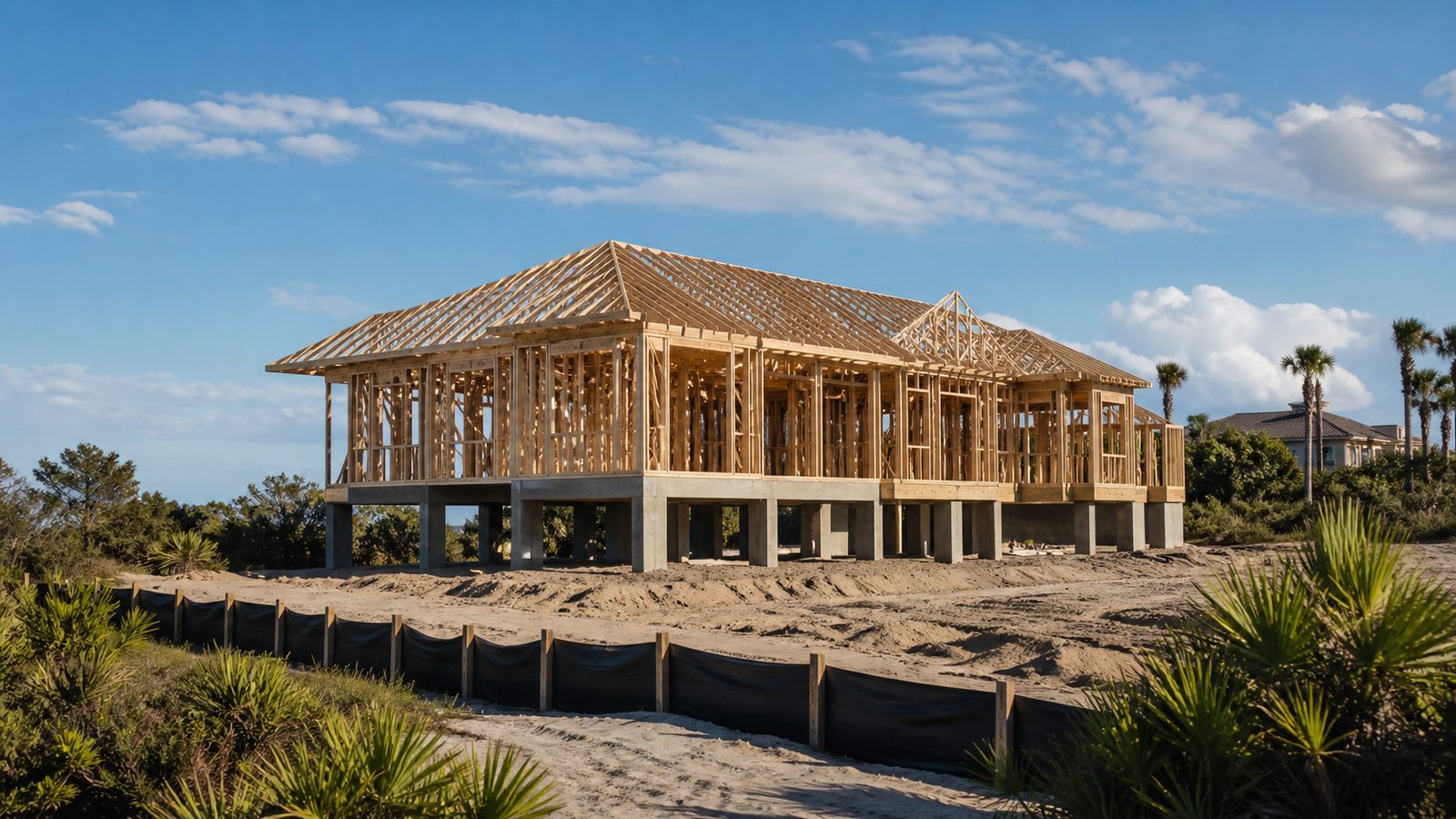
Pier and beam: Elevate the structure on concrete or steel piers driven to adequate depth, with the first floor framed above DFE. Allows stormwater to flow beneath the structure during flood events. Required in Zone VE. More expensive than stem wall but provides greater clearance and works on sites with poor bearing soils at grade.
Breakaway lower-level enclosures: In Zone VE, any enclosure below BFE must use breakaway wall construction — walls designed to collapse under flood forces without transmitting loads to the foundation piers. Not typically used in Zone AE Jacksonville, but applicable to Beaches-area coastal construction.
Flood Insurance: NFIP vs. Private Market, How BFE Affects Premium, How Elevation Certificate Reduces It
The National Flood Insurance Program (NFIP) is administered by FEMA and provides flood insurance for most structures in participating communities. Jacksonville and all municipalities within Duval County participate in the NFIP. For federally backed mortgages on Zone AE properties, NFIP or private flood insurance is mandatory.
NFIP premiums under Risk Rating 2.0 (FEMA's 2021 pricing reform) are based on property-specific flood risk characteristics rather than just flood zone. Key factors: distance to water, structure type, first floor elevation relative to BFE, replacement cost value. A structure at BFE + 2 feet will have substantially lower premiums than a structure at BFE.
Private flood insurance is an alternative to NFIP for properties where private insurers are willing to compete. Private markets have become more active in Florida since 2020, and private policies are sometimes less expensive than NFIP for properties with favorable elevation certificates. Private policies are accepted by most lenders as NFIP alternatives.
The elevation certificate directly reduces flood insurance cost. For a residential structure, each additional foot of elevation above BFE reduces annual NFIP premiums by approximately $500–$2,000 depending on structure value. On a $500,000 home, the difference between a structure at BFE and BFE + 2 can be $3,000–$5,000 per year in premium savings. That savings amortizes the cost of elevation quickly.
Case Study: Zone AE Residential Construction in Jacksonville's Riverside Neighborhood
A representative Zone AE residential project in Riverside illustrates how the constraints and solutions work in practice.
The site: a 6,000 square foot infill lot on a Riverside street adjacent to Fishweir Creek. FEMA FIRM panel shows Zone AE with BFE 8 feet NAVD 88. Duval County DFE: 9 feet NAVD 88 (BFE + 1). Existing grade on the lot: 6–7 feet NAVD 88. Fill required to reach DFE at slab: 2–3 feet over the building footprint.
Design decision: rather than filling the entire lot (which would require significant fill volume and drainage impact analysis), the design uses a stem wall foundation. The stem wall brings the floor platform to 9.1 feet NAVD 88, with a 3-foot enclosed crawl space below that has two FEMA-compliant engineered flood vents. All MEP equipment is in the conditioned space above the floor or on an elevated platform.
The elevation certificate was completed by a licensed Jacksonville surveyor and shows lowest floor at 9.1 feet, confirming DFE + 0.1 compliance. NFIP flood insurance premium for the completed structure: approximately $1,200/year, compared to an estimated $4,800/year if the structure were at BFE.
The takeaway: getting 2 feet above BFE in Zone AE Riverside does not require massive fill operations. A stem wall foundation achieves it with modest additional cost and dramatically reduces the long-term flood insurance burden.
Ready to start? Get a written estimate in 48 hours. Call (904) 944-0278 or request a free consultation.
No call center. No coordinator. A JK principal reviews every inquiry and replies with a real number, not a range, not a follow-up form.
Request Free Estimate →