Ethylene Propylene Diene Monomer (EPDM) is one of the most widely installed flat-roof membranes in the United States, and it performs well in Florida — with caveats. Black EPDM absorbs solar heat aggressively, which drives up cooling loads in a market where roof surface temperatures routinely exceed 180°F in summer. White or coated EPDM changes that calculus. Seam type and attachment method determine wind resistance, which matters in a market governed by Florida's wind design requirements. This post covers what EPDM is, how it performs in Jacksonville's climate, where it beats TPO, and where it doesn't.
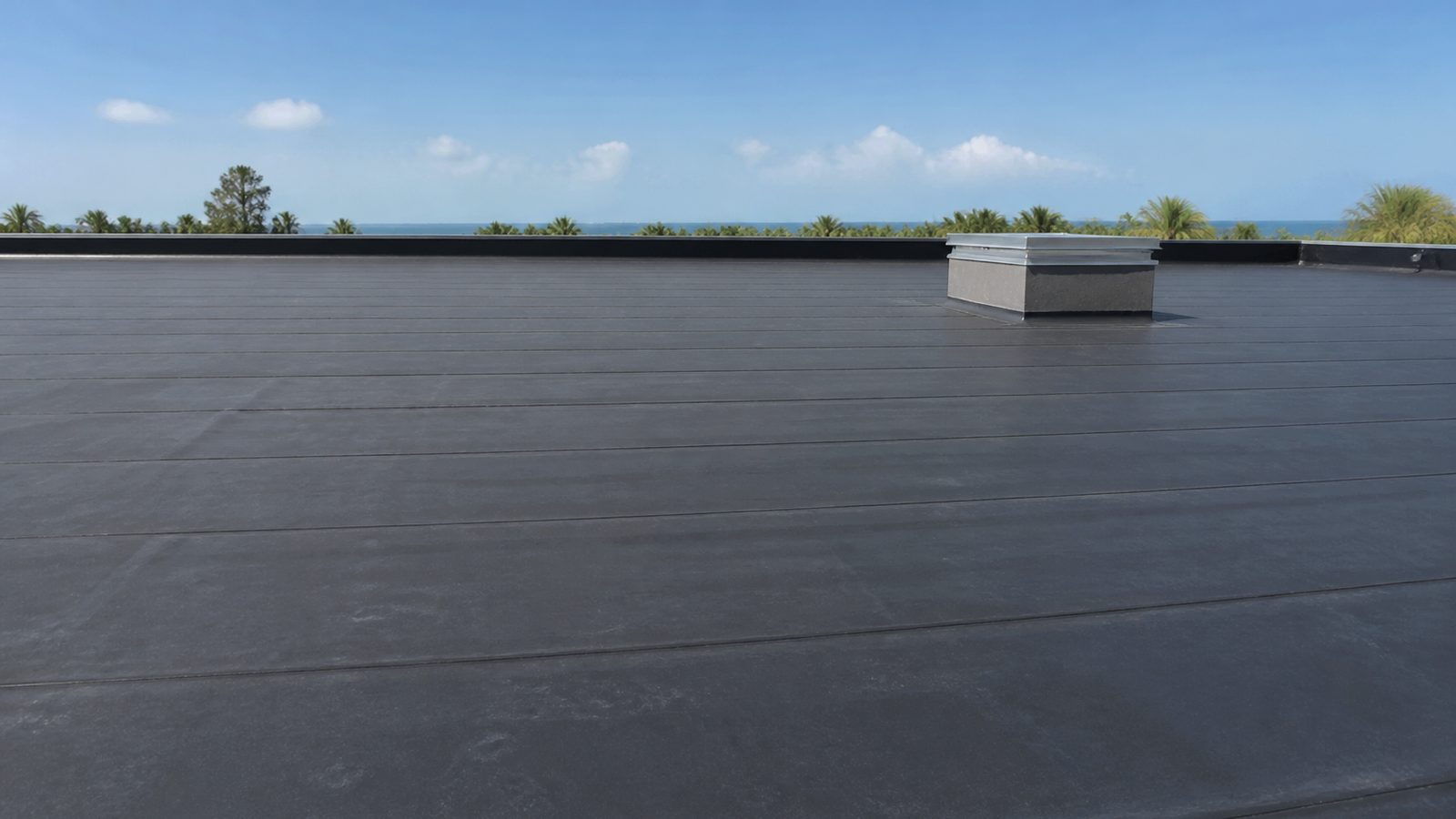
What EPDM Roofing Is and How It Is Made
EPDM is a synthetic rubber membrane manufactured from ethylene and propylene, with diene monomer added to allow cross-linking. The result is a thermoset membrane — once cured, it cannot be re-melted. This is the defining characteristic that distinguishes EPDM from thermoplastic membranes like TPO and PVC.
The membrane is produced in thicknesses from 45 mils to 90 mils. For Florida commercial applications, 60-mil is the standard minimum; 90-mil is used where puncture resistance or enhanced durability is specified. Sheets are manufactured in widths up to 50 feet and lengths up to 200 feet, which reduces seam count on large roofs — a meaningful performance factor, since seams are the primary failure point on any membrane system.
EPDM is available in two colors: black and white. The distinction is not cosmetic.
Black vs. White EPDM in Florida's Climate
Black EPDM is the legacy product and the lower-cost option. It performs well from a mechanical durability standpoint — rubber is resistant to ozone, UV degradation, and temperature cycling. The problem in Florida is thermal load. Black membrane surfaces reach 160°F to 190°F on Jacksonville summer days. That heat transfers into the building, increasing cooling costs, and it accelerates aging of the membrane itself through repeated thermal expansion and contraction.
White EPDM is the same rubber compound with a factory-applied reflective coating or white EPDM formulation. Surface temperatures drop to the 100°F to 120°F range under the same conditions. Florida's Title 24 equivalent (Florida Building Code energy provisions) and ENERGY STAR cool-roof standards favor white membranes on commercial buildings. If your building is air-conditioned — a warehouse, office, retail space — white or coated EPDM reduces your cooling load measurably.
For buildings without significant climate control (storage, agricultural, unconditioned), black EPDM remains a cost-effective option.
Attachment Methods: Fully Adhered, Mechanically Attached, and Ballasted
How the membrane attaches to the substrate determines wind resistance. In Jacksonville — and anywhere governed by ASCE 7-22 wind zone requirements — the attachment method is not a preference, it is an engineering decision.
Fully Adhered
The membrane is bonded across its entire surface to the insulation board or substrate using a contact adhesive. Fully adhered systems provide the highest uplift resistance because the entire membrane area resists wind rather than just the fastener pattern.
Advantages: Superior wind uplift resistance. Clean roof profile. No ballast weight load on structure. Required in high wind zones for many building types.
Disadvantages: Higher labor cost than mechanically attached. More time-sensitive installation (adhesive has a specific cure window). Requires clean, dry substrate for proper adhesion.
Mechanically Attached
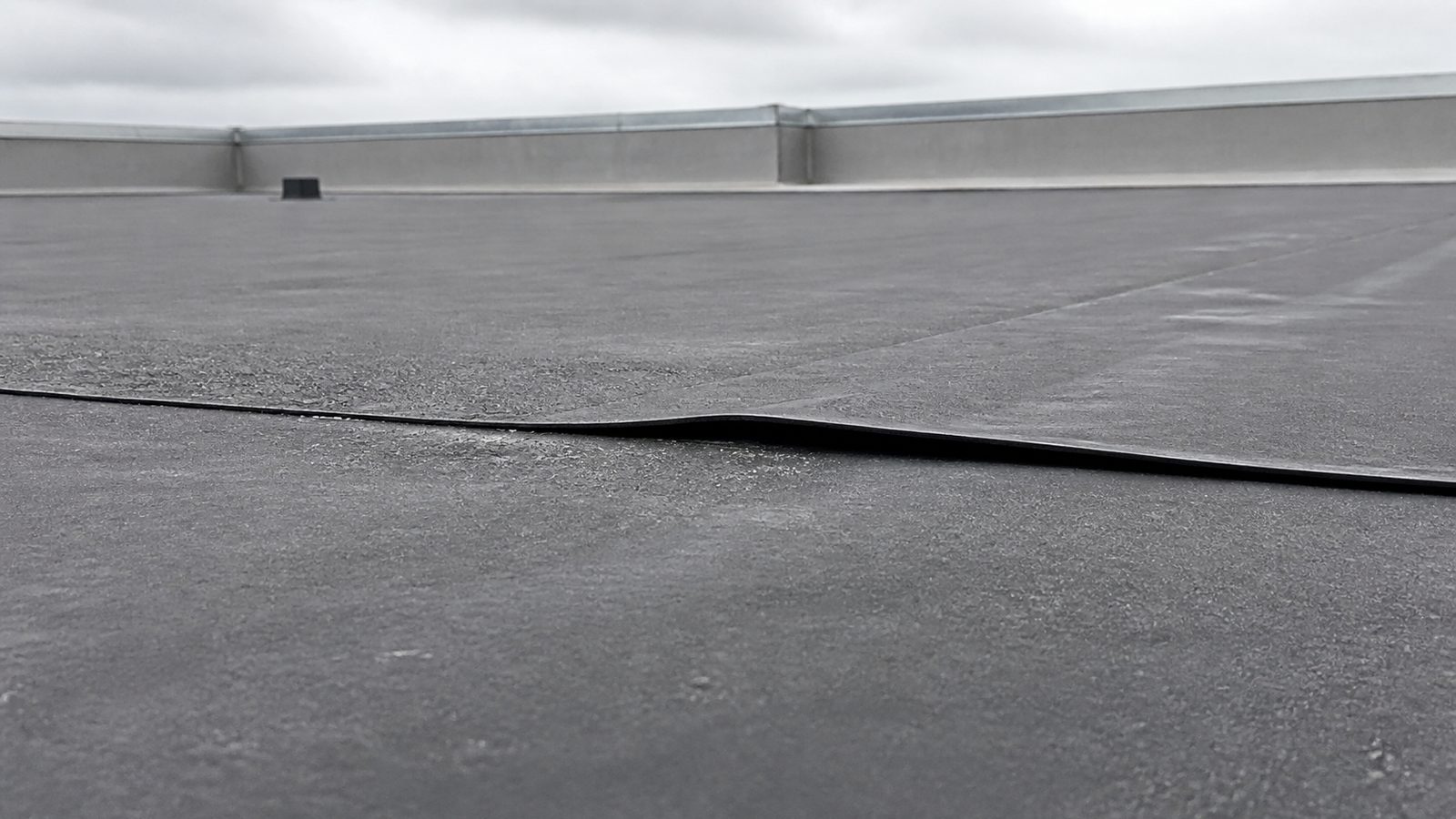
Fasteners and stress plates penetrate the membrane and anchor it to the deck. The membrane overlaps between fastener rows, and the overlap is bonded with seam tape or adhesive. This is the most common installation method for EPDM because it is faster and lower labor cost.
Disadvantages in Florida: Mechanically attached systems can experience membrane billowing — the membrane flexes between fastener points under wind pressure, which stresses seams over time. In Jacksonville's wind environment, mechanically attached EPDM requires tighter fastener spacing and careful seam detailing to meet Florida Building Code requirements.
Ballasted
Ballasted EPDM — membrane loose-laid and weighted down with river rock or pavers — is common in lower-wind markets. It is not appropriate for most Florida applications. Florida's wind design requirements (ASCE 7-22, Risk Categories II and above) require engineered uplift resistance that ballast alone cannot reliably provide. JK does not specify ballasted EPDM for Jacksonville commercial projects.
EPDM Lifespan and Maintenance in Florida
A properly installed EPDM roof on a Jacksonville commercial building has a realistic service life of 20 to 25 years. Several factors determine where in that range a given installation lands.
What Extends EPDM Life
- 60-mil or 90-mil membrane thickness (not 45-mil)
- White or coated membrane to reduce thermal cycling
- Fully adhered attachment (reduces seam stress from billowing)
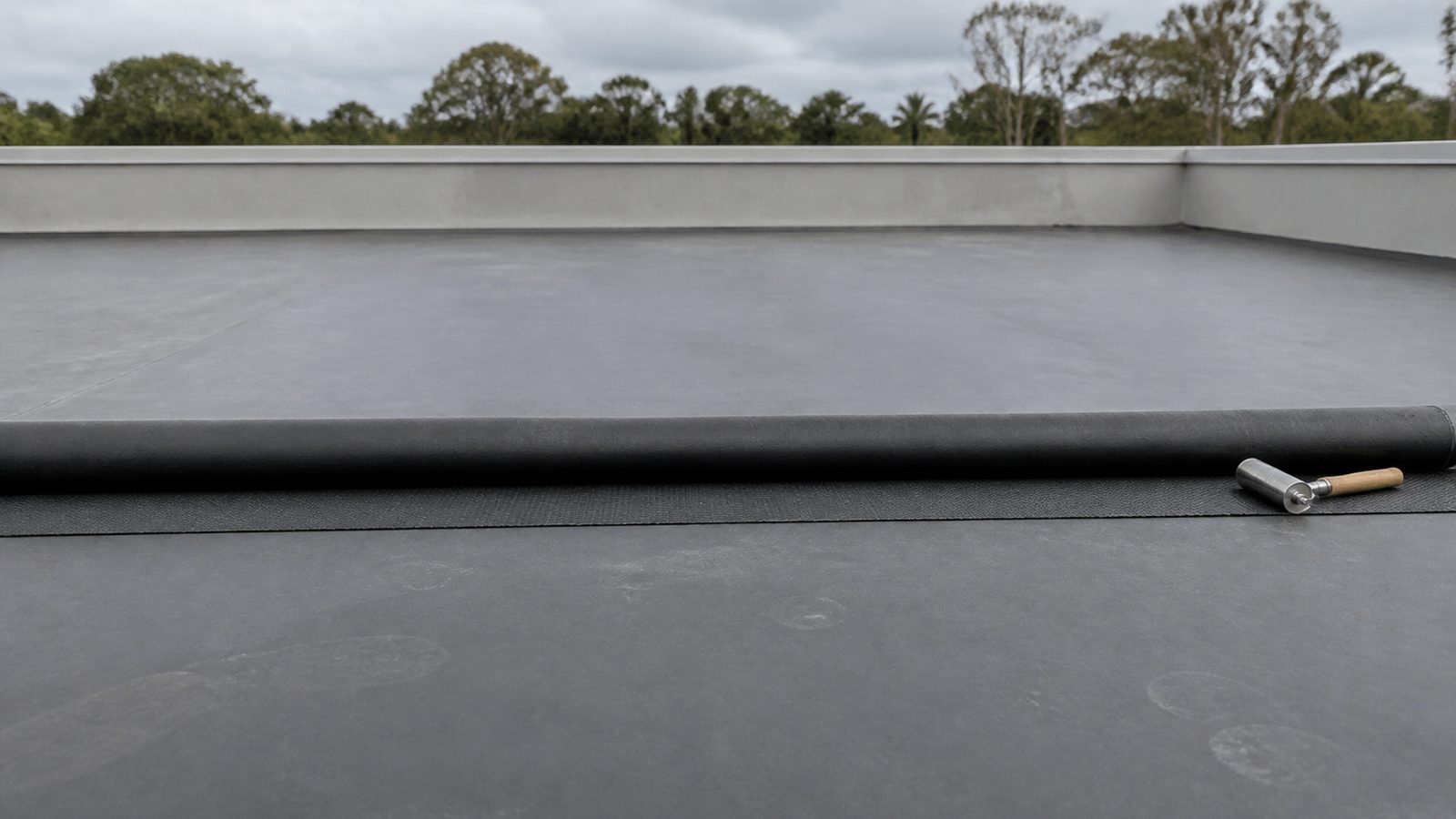
- Quality seam tape (Carlisle SynTec 4-inch or 6-inch tape is the JK standard on EPDM)
- Annual inspection and prompt seam repair
- HVAC units mounted on proper curb flashings, not directly on membrane
Maintenance Requirements
EPDM is lower-maintenance than many alternatives but not maintenance-free. Annual inspections should check:
- Seam integrity across all laps, T-joints, and corners
- Flashings at penetrations (pipe boots, HVAC curbs, drains)
- Perimeter detail at parapet walls and edge metal
- Surface condition (ponding water areas, surface cracking in aged black membrane)
Minor seam lifting can be repaired with lap sealant and seam tape. JK's roofing division handles EPDM maintenance and repair on roofs we installed and those we did not.
EPDM vs. TPO: When to Choose Which
Both EPDM and TPO are widely used on Florida commercial roofs. The choice is not one-size-fits-all.
| Factor | EPDM | TPO |
|---|---|---|
| Seam welding | Adhesive/tape | Heat-welded (stronger) |
| Chemical resistance | Good general resistance | Higher resistance to oils/greases |
| Color options | Black or white | White standard; gray available |
| Installed cost | Slightly lower | Slightly higher (equipment cost) |
| Longevity | 20–25 years (FL climate) | 20–25 years (FL climate) |
| Flexibility in cold | Excellent (rubber) | Can stiffen; less relevant in FL |
| Repair ease | Very easy (tape and adhesive) | Requires heat welder for quality repairs |
Choose EPDM when: The building is in a budget-constrained project, has minimal penetrations (fewer seams), or needs flexible membrane for a substrate with movement. EPDM is also the right call when the owner wants a field-verified material with a multi-decade track record.
Choose TPO when: The building has a food service or chemical component (oil/grease exposure from exhaust), when the owner wants heat-welded seams as a first-line defense, or when project specifications require it.
JK holds Carlisle SynTec and Firestone certifications for commercial membrane roofing. Both manufacturers produce EPDM and TPO lines; the certification means JK installations qualify for manufacturer-backed warranties (10 to 20 years depending on the warranty tier).
What to Ask Any EPDM Contractor Before You Sign
- What mil thickness are you specifying? (60-mil minimum for FL commercial.)
- Fully adhered or mechanically attached — and what is the fastener pattern?
- What seam tape are you using, and what is the lap width?
- What manufacturer warranty does the installation qualify for?
- Does your crew carry Carlisle SynTec or Firestone certification?
- What does the edge detail look like at the parapet?
JK provides written answers to all six in the pre-construction scope document — before any contract is signed. That is how JK Prestige operates on every project: fixed-price, written scope, no surprises at tear-off.
Book a Free Commercial Roof Assessment
If you are evaluating EPDM for a new installation or assessing an existing membrane that is showing seam stress or ponding, start with JK's free 24-point inspection.
A principal answers.
No call center. No coordinator. A JK principal reviews every inquiry and replies with a real number, not a range, not a follow-up form.
Request Free Estimate →