"We can mobilize fast." Every framing sub in Florida says it. GCs hear it in every bid meeting and read it in every scope letter. It's also meaningless unless you can verify what's behind it.
Fast mobilization for a framing subcontractor isn't a mindset. It's a logistics position. Either the sub is set up to move quickly — equipment here, crew available, material supply chain active — or they're not. This post covers what fast mobilization actually requires, and the five questions every GC should ask before the schedule depends on a sub's ability to deliver.
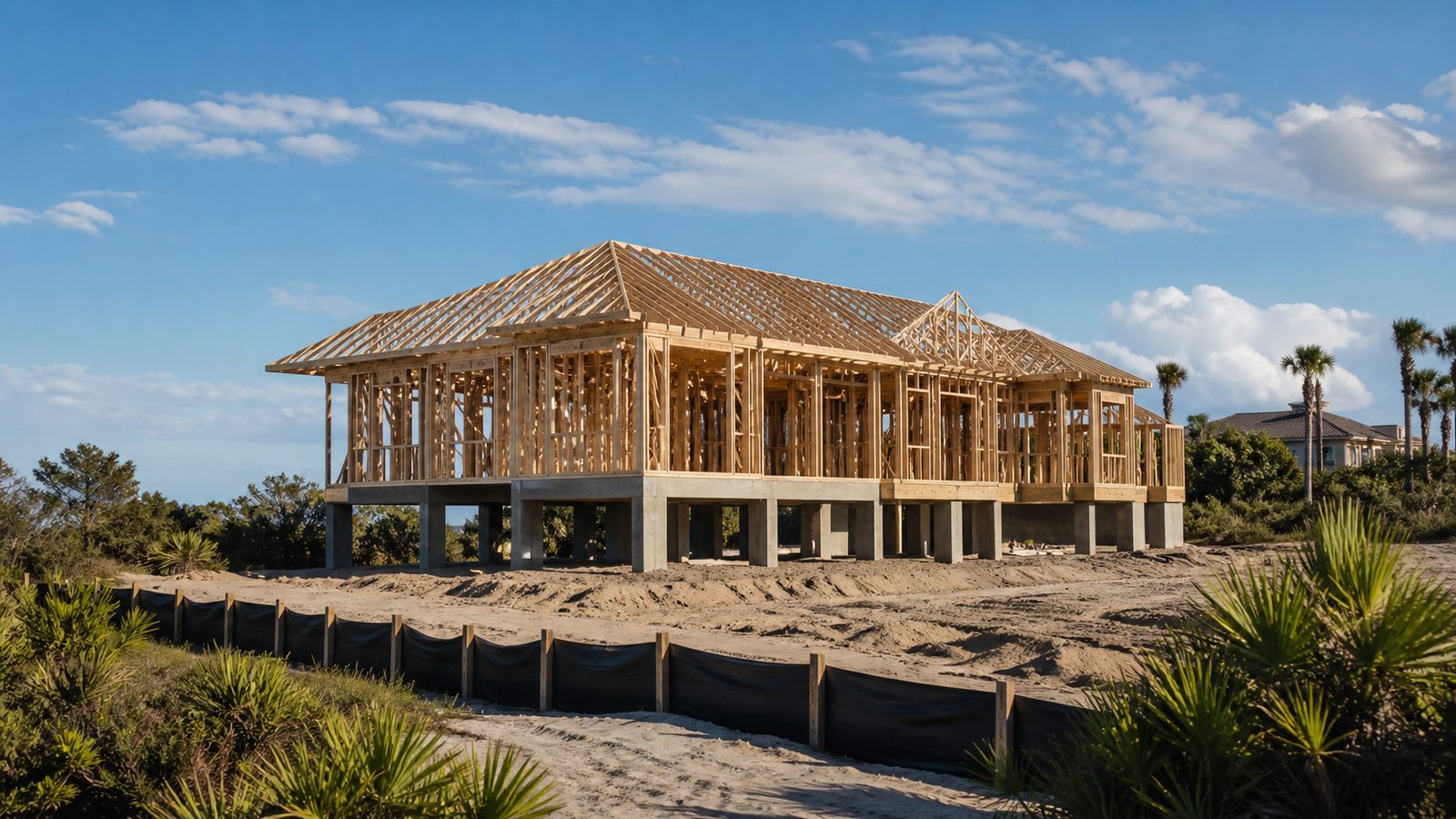
What Fast Mobilization Actually Requires
Equipment already in Florida
A framing crew that has to reposition equipment from another state before they can start your project is not fast. They're 5-7 days behind before the first stud is cut.
Fast mobilization requires that the sub's core equipment — compressors, framing nailers, powder-actuated tools, layout equipment, temporary bracing hardware — is already staged in Florida. Not "in transit from a project in Georgia." Not "being refurbished." Available.
This is a direct question to ask: "Where is your framing equipment right now?" A sub who can answer specifically — named yard, city, ready state — is telling you something real. A sub who hedges is telling you something too.
Crew already on payroll
A framing sub who needs to hire crew after being awarded your scope has a different mobilization timeline than one whose crew is currently employed. Hiring takes time: recruiting, background checks, drug screening, OSHA documentation, onboarding. In Florida's construction labor market, building a crew from zero can take two to three weeks.
The question isn't "can you staff up?" It's "are your crews on your payroll right now?" A self-perform sub with a standing crew can put bodies on your site within days of notice. A sub who staffs projects by calling a labor pool can't guarantee when they'll actually have enough people to maintain production.
For framing specifically — where the schedule for every trade behind you (MEP rough-in, drywall, exterior sheathing) depends on framing being done — the difference between a crew on payroll and a crew to be assembled is a two-week schedule impact. Minimum.
Supervisor cleared of prior commitment
The crew is only as effective as the supervisor running it. A sub can have equipment ready and crew available, but if the named supervisor who would run your project is committed to a previous project until week four, you're not getting fast mobilization.
Before accepting a mobilization commitment, ask for the named supervisor's name and their current project status. When are they available? Is there a contingent date — meaning they're available only if the prior project hits its close date? In construction, "available when that project wraps" means "available when that project wraps plus a few weeks."
Get the supervisor's availability in writing. If the sub can't name the supervisor or can't confirm availability, the mobilization commitment is not real.
Material supplier relationships that can deliver on time
Lumber lead times in Florida fluctuate with regional construction volume and national supply chain conditions. A framing sub who doesn't have an active, established relationship with a lumber yard near your project site is going to chase material instead of frame.
What active supplier relationships look like: the sub has an account, an established credit line, and a sales rep who will take a call at 7am. They know what's in stock. They can get a lumber package delivered within 48-72 hours of written confirmation for standard materials (dimensional lumber, LVL headers, plywood sheathing). Non-standard or long-lead items need to be identified during scope review and ordered before mobilization.
Ask the sub: "Who is your primary lumber supplier for this region? What's your typical lead time from order to delivery for a standard framing package?" A sub who can answer with a specific name, account, and timeline has the relationship. A sub who says "we have good supplier contacts" does not.

Five Questions to Ask Before Accepting a Mobilization Claim
1. How many days from notice to crew on site?
Get a specific number. Not "within a couple weeks." Not "as soon as we can." Ask: "If we execute the subcontract on Monday, when is your crew on our site?" The answer should be a specific day count — and that day count should be backed up by the equipment, crew, and supplier answers above.
For a true fast-mobilize framing sub in Florida, the answer should be 5-7 business days for a project with a written scope and executed subcontract. Longer than that requires justification.
2. What is your current project load?
A sub who is currently at full capacity — every crew committed, every supervisor deployed — cannot mobilize quickly regardless of what they promise in a bid meeting. Ask for their current active project list: project name, location, phase, estimated completion date.
If they have three active projects with no clear completion date in the next 30 days and they're promising to mobilize on your project in two weeks, ask where the crew is coming from. If they can't answer that specifically, the mobilization commitment is not credible.
3. Who is the named supervisor and when are they available?
This is covered above, but it bears repeating as a direct question in the bid meeting. Name the supervisor. State their current project. Confirm their availability date. If the answer is vague, the mobilization is vague.
4. Is your equipment currently available or scheduled for another project?
A concrete answer means they know where their equipment is. Follow up: "Are there any equipment pulls or transfers scheduled in the next 30 days that could affect availability for our project?"
5. What happens if mobilization gets delayed — what's the contingency?
How a sub answers this question tells you how they think about project risk. A sub with real experience managing schedule pressure has a contingency answer: a backup supervisor, a rental equipment plan, a second crew they can activate. A sub who says "we'll figure it out" doesn't have one.
What GCs Should Build Into the Subcontract
The verbal mobilization commitment should become a contractual mobilization commitment. Standard subcontract language should include:
- Start date: specific calendar date for crew on site
- Minimum crew size: minimum number of workers required to be on site during framing operations
- Named supervisor: identified by name in the subcontract; replacement requires GC approval
- Liquidated damages for delay: if the framing sub fails to mobilize by the contracted start date, the delay cost is the sub's liability
A subcontract with named supervisor, specific start date, and defined crew size converts a verbal commitment into an enforceable one. If the sub won't agree to those terms, you know what their mobilization commitment is actually worth.
How JK Prestige Handles Mobilization
JK's framing crews are on our payroll. Our equipment is staged in Florida. Our supervisors carry OSHA 30 certifications and are managed on a project calendar that shows their availability 30 days out. Our lumber supplier relationships in the Jacksonville and North Florida markets allow material delivery within 48 hours for standard framing packages.
When JK commits to a mobilization date as a trade sub for a GC partner, that date goes in the subcontract with a named supervisor and minimum crew size. The commitment is real because the logistics behind it are real.
Request our trade packet to see our current crew capacity, supervisor availability calendar, and references from GC partners on recently completed framing scopes.
See how JK structures trade partnerships from scope sheet to project closeout
No call center. No coordinator. A JK principal reviews every inquiry and replies with a real number, not a range, not a follow-up form.
Request Free Estimate →