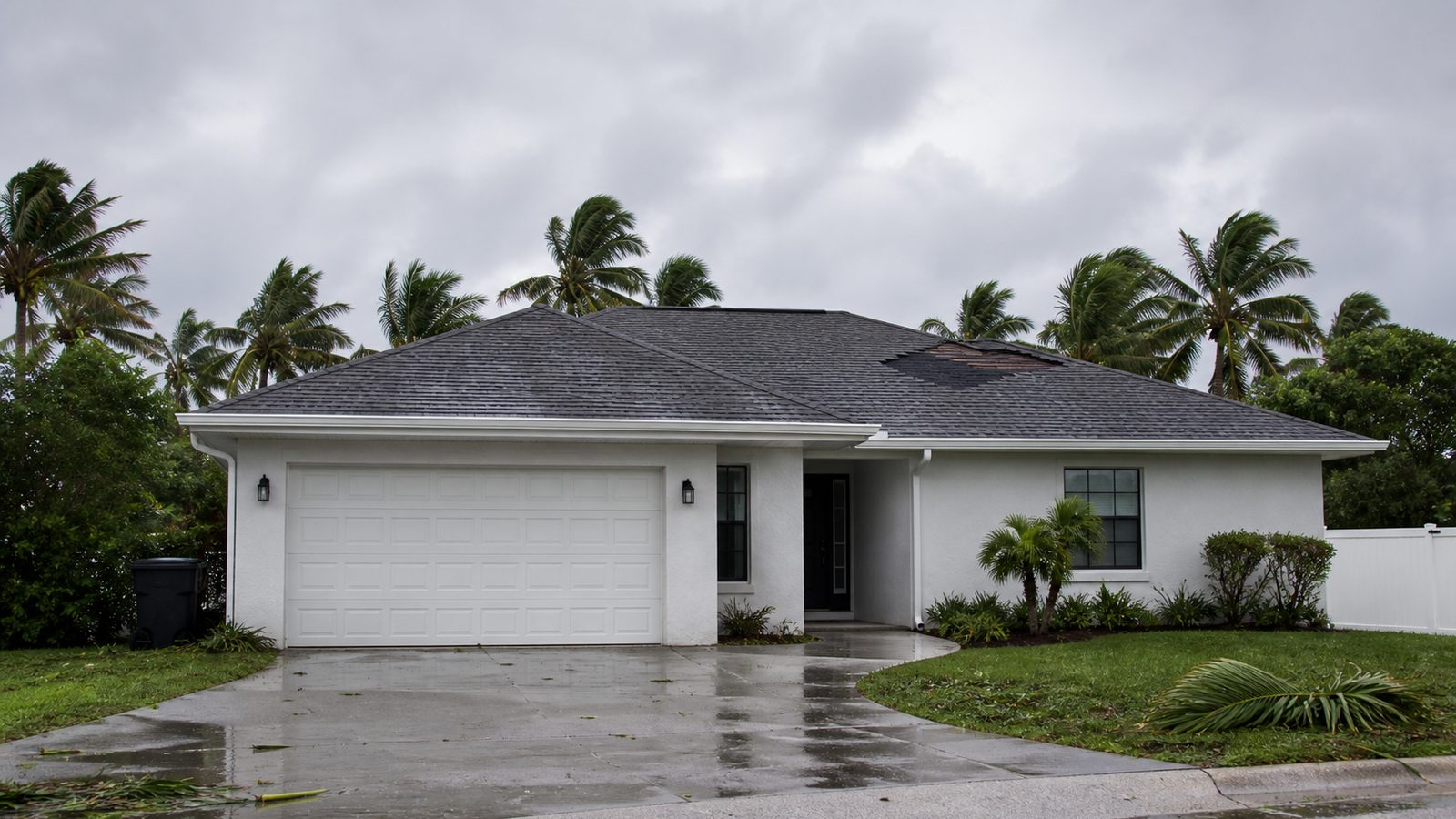
A hurricane has passed Jacksonville. The wind has stopped. It's 6am and you're looking at a section of your roof that wasn't there the night before. The next 24 hours will determine whether your insurance claim pays out cleanly or whether you're fighting over documentation, mold damage, and disputed repair scopes for the next six months.
Here's exactly what to do — and what not to do — in the hours immediately following hurricane roof damage.
The Clock Starts Now: Why 24 Hours Matters
Two timelines are running simultaneously after a storm:
The mold clock: Mold growth begins within 48-72 hours of water intrusion under Florida's conditions — high humidity, warm temperatures, and organic building materials. Once mold is established in a wall cavity, attic, or ceiling, you have a separate remediation claim that complicates the roof claim. Every hour of open exposure accelerates this clock.
The documentation clock: Your insurance carrier requires contemporaneous documentation — photos and records made at the time of damage, not reconstructed later. What was damaged, when, and how much is determined primarily by what you document before any work begins. A restoration contractor who starts work before documentation is complete creates gaps in your claim that adjusters exploit.
Hour 1-2: Document Everything Before Touching Anything
Before you move anything, cover anything, or call anyone, document the damage with photos and video.
What to photograph:
- The exterior of the structure from all four corners
- Every roof plane visible from the ground
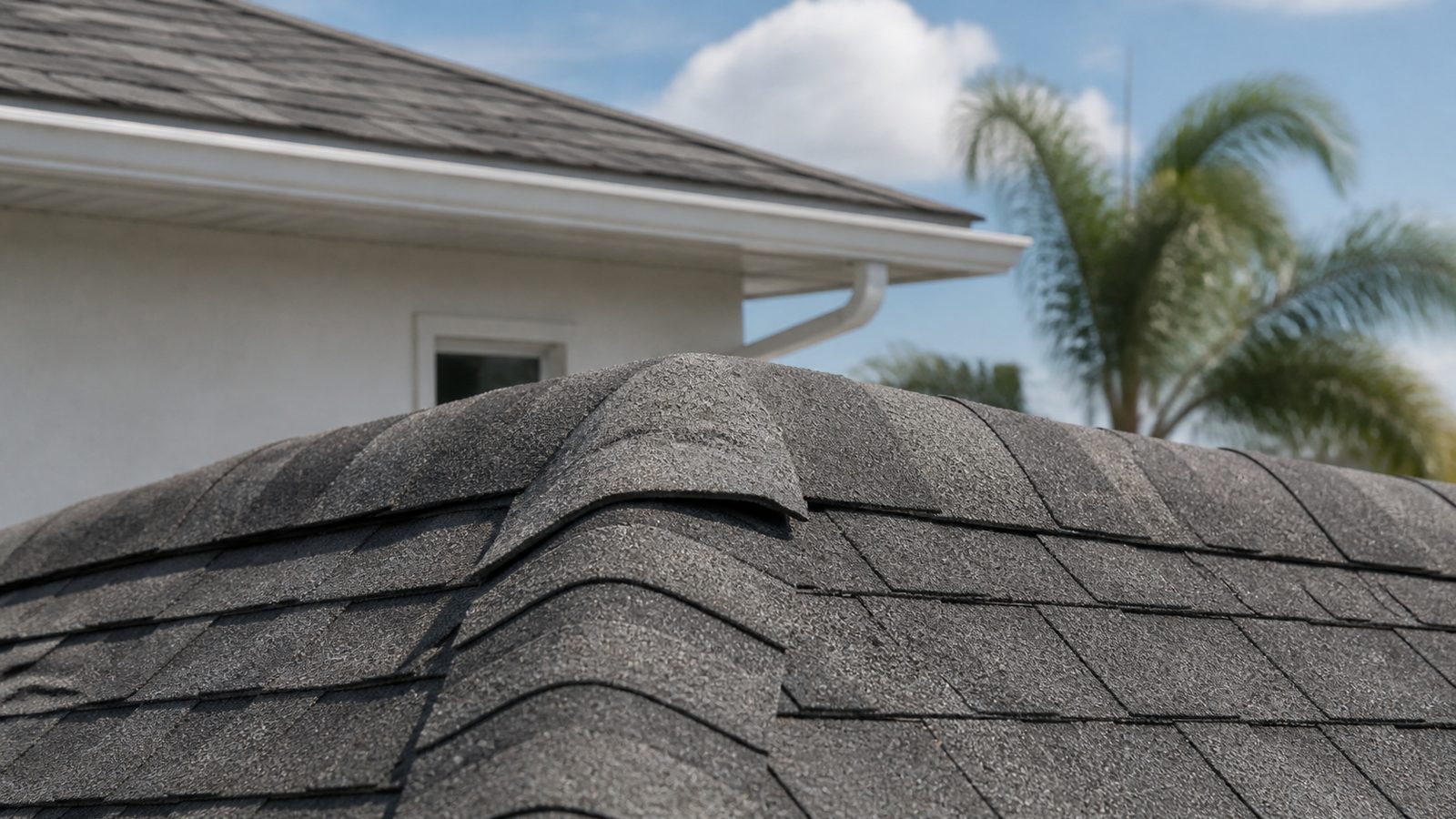
- Every area of visible damage — missing shingles, lifted sections, damaged ridge caps, dented or displaced flashing
- Any standing water or water intrusion visible on the interior ceiling, walls, or floor
- Any personal property damage caused by the intrusion
- The address marker or house number in at least one exterior shot (this establishes location)
What to video:
- A continuous walkthrough of all affected interior spaces while narrating what you see and when (date and time)
- Any active dripping or water movement (this establishes it was an active intrusion at the time of documentation)
What not to do yet:
- Do not get on the roof. Post-storm roofs are wet, potentially structurally compromised, and the leading cause of post-storm injury is homeowners falling from slippery roofs. Leave the roof to the licensed roofer.
- Do not remove debris that is part of the structure
- Do not clean up interior water damage before photographing all affected surfaces
Your phone's native camera timestamps every photo and video. That timestamp is evidence. Do not edit or filter any storm damage photos — metadata changes can be detected and undermine your claim.
Hour 2-3: Call Your Insurer and Open a Claim
Call your homeowner's insurance carrier using the number on your declarations page (not a Google search result) and open a claim. You do not need to know the full extent of damage — you need a claim number.
What to have ready when you call:
- Your policy number (declarations page or insurance app)
- The date of the storm
- A brief description of what you can see: "Appears I've lost shingles on the south slope and have interior water intrusion in two rooms"
- The address
The carrier will assign a claim number and an adjuster. Write down the claim number. Every subsequent communication — with the adjuster, with your contractor, with your attorney if it comes to that — references this number.
Ask the carrier:
- What is the process for emergency temporary repairs?
- Are temporary tarping costs covered? (Most policies cover temporary protective measures as part of the claim)
- When can I expect the adjuster to contact me?
In Florida after a major storm, adjusters are often overwhelmed. Scheduling an adjuster visit may take 2-5 weeks. That is not a reason to wait — emergency tarping is a separate, immediate step.
Hour 3-6: Call a Licensed Roofer for Emergency Tarping
After you have documented the damage and opened a claim, call a licensed Florida roofing contractor for emergency tarp installation. This is not optional — every hour of open exposure during Florida's post-storm humidity creates conditions for mold.
What to look for in an emergency roofer:
- Active Florida roofing contractor license (verify at myfloridalicense.com — this takes 90 seconds)
- Physical Jacksonville address
- Can provide proof of insurance before they access your roof
- Will put the scope of work in writing
What to avoid:
- Anyone who shows up unsolicited after the storm offering immediate repairs for cash. These are storm chasers — frequently unlicensed, often from out of state, and notorious for demanding full payment upfront before disappearing.
- Anyone who asks for full payment before work is complete. A legitimate contractor takes a deposit, not the full contract amount.
- Anyone who "happens to be in the neighborhood" — professional contractors are dispatched by a dispatcher, not by driving neighborhoods after storms.
JK Prestige's roofing division operates 24/7 emergency tarping response in Jacksonville and Duval County. Our crews are our own — not brokered out. When you call (904) 944-0278 after a storm, a principal answers, not a call center.
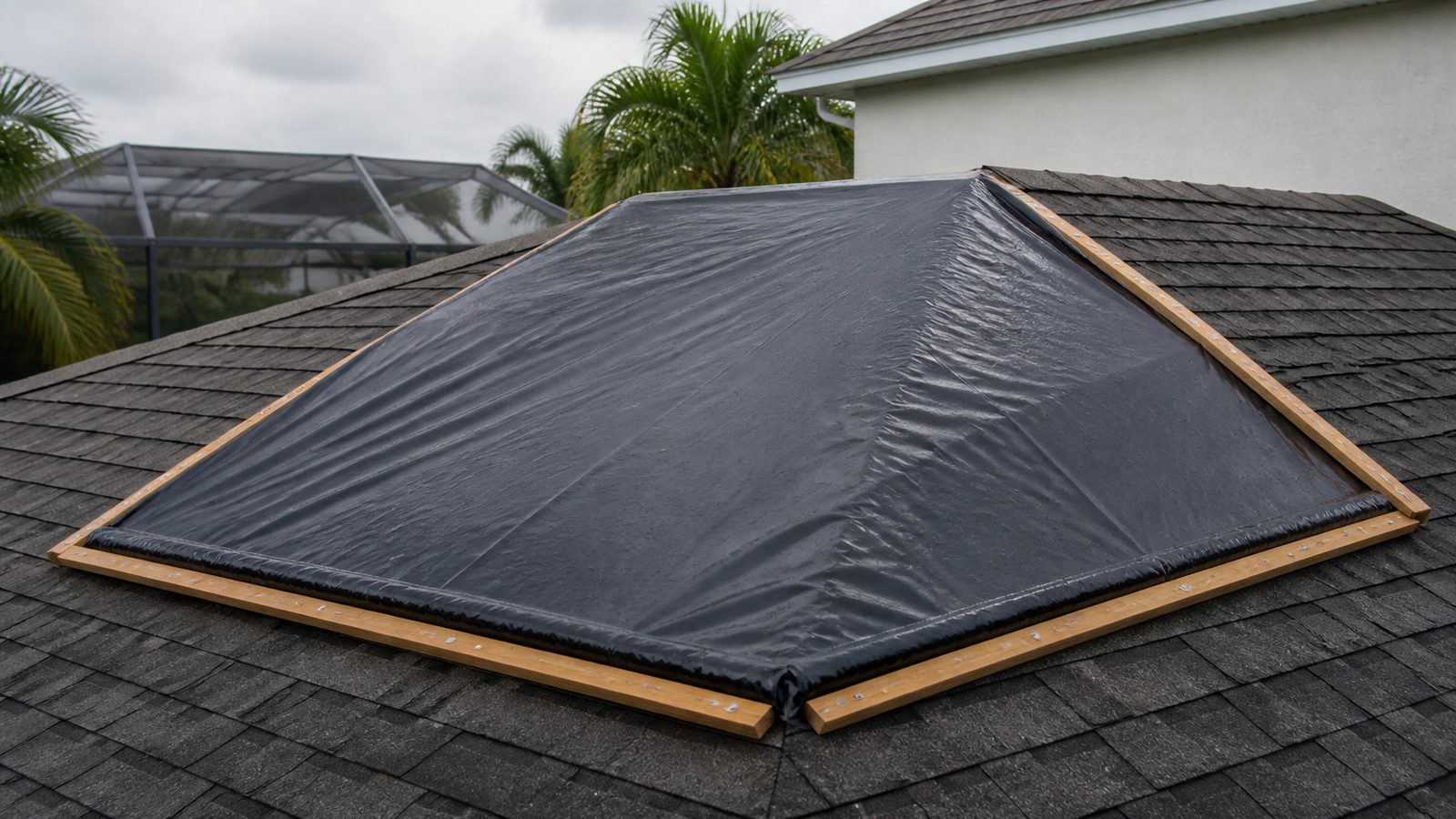
What emergency tarping covers: Professional tarping uses 6-mil or heavier polyethylene tarps secured with battens and fastened to the deck — not just draped over the roof and held by weight. Properly installed tarps can survive a subsequent rain event. A tarp laid loose by an unlicensed crew will be on your neighbor's lawn at the next 20 mph wind gust.
Hour 6-12: Protect Interior from Secondary Water Damage
While you're waiting for the tarp crew, protect your interior from the water that is already inside.
What to do:
- Move furniture, electronics, and valuables away from any active leak or water intrusion
- Place buckets or trash cans under active drips
- Extract standing water on hard floors with a wet vac or towels — do not leave standing water
- Open cabinet doors in water-affected areas to allow air circulation
- Run dehumidifiers if you have them
What not to do:
- Do not remove wet drywall yet — photograph it first, then document it as damaged, then remove it if needed to prevent mold
- Do not discard any damaged materials until the adjuster has seen them or you have documented them photographically
Florida's post-storm humidity means wet building materials do not air-dry on their own — they absorb more moisture from the air. Dehumidification is active, not passive.
Hour 12-24: Do Not Sign with Anyone Before the Adjuster Visit
In Florida's post-storm environment, homeowners are pressured to sign two documents that can undermine their claim:
Assignment of Benefits (AOB) agreements: Florida heavily restricted AOB for property insurance after 2023 legislation, but variations still exist. An AOB transfers your insurance benefits to the contractor, who then negotiates directly with the insurer — often in litigation. You lose control of the claim process. Do not sign an AOB.
Full repair contracts before scope is established: A full repair contract signed before the adjuster visit locks you into a scope and price before you or the adjuster have established what the damage actually is. If the damage is worse than the pre-adjuster scope (which is common on storm damage), you're either renegotiating or paying the difference yourself.
Wait for the adjuster. Temporary tarping and documentation can proceed. Full repair contracts come after the adjuster's scope of damage is established.
What Mold Risk Means for Your Timeline
Mold in a wall cavity or attic starts as surface colonization within 48-72 hours and becomes an established colony within 5-7 days. Once established, mold remediation requires:
- Identification (air and surface sampling)
- Containment of the affected area
- Removal of colonized materials (drywall, insulation, framing in some cases)
- Post-remediation verification testing
A mold remediation claim is handled separately from the roof damage claim in most policies, with its own deductible and coverage limits. Preventing mold starts in the first 24 hours — not after the adjuster visits.
See JK Prestige's full storm damage response capabilities and how we coordinate with insurance adjusters at The JK Way.
Book your emergency tarp or post-storm inspection — contact the JK Prestige roofing team. Call (904) 944-0278 any time. A principal answers.
No call center. No coordinator. A JK principal reviews every inquiry and replies with a real number, not a range, not a follow-up form.
Request Free Estimate →