Building a custom home is the most capital-intensive, time-intensive, and decision-intensive project most families will undertake. Unlike buying an existing home — where the variables are largely fixed at purchase — a custom build requires hundreds of decisions made in sequence, over 12–24 months, with financial consequences attached to each one. Getting it right depends on understanding the process before you commit to it.
Jacksonville and the surrounding Northeast Florida market — Duval, St. Johns, Nassau, and Clay counties — have been among the fastest-growing regions in the country since 2020. Land availability still exists across the region, but desirable corridors have tightened considerably. Construction costs remain elevated compared to pre-pandemic benchmarks. First-time builders entering this market without a clear process road map are at a significant disadvantage.
This guide covers every phase of a custom home build: how to decide if building is right for your situation, how to select and evaluate a lot, how construction financing works, what the pre-construction phase requires, and what a realistic budget looks like in the Jacksonville market in 2025.
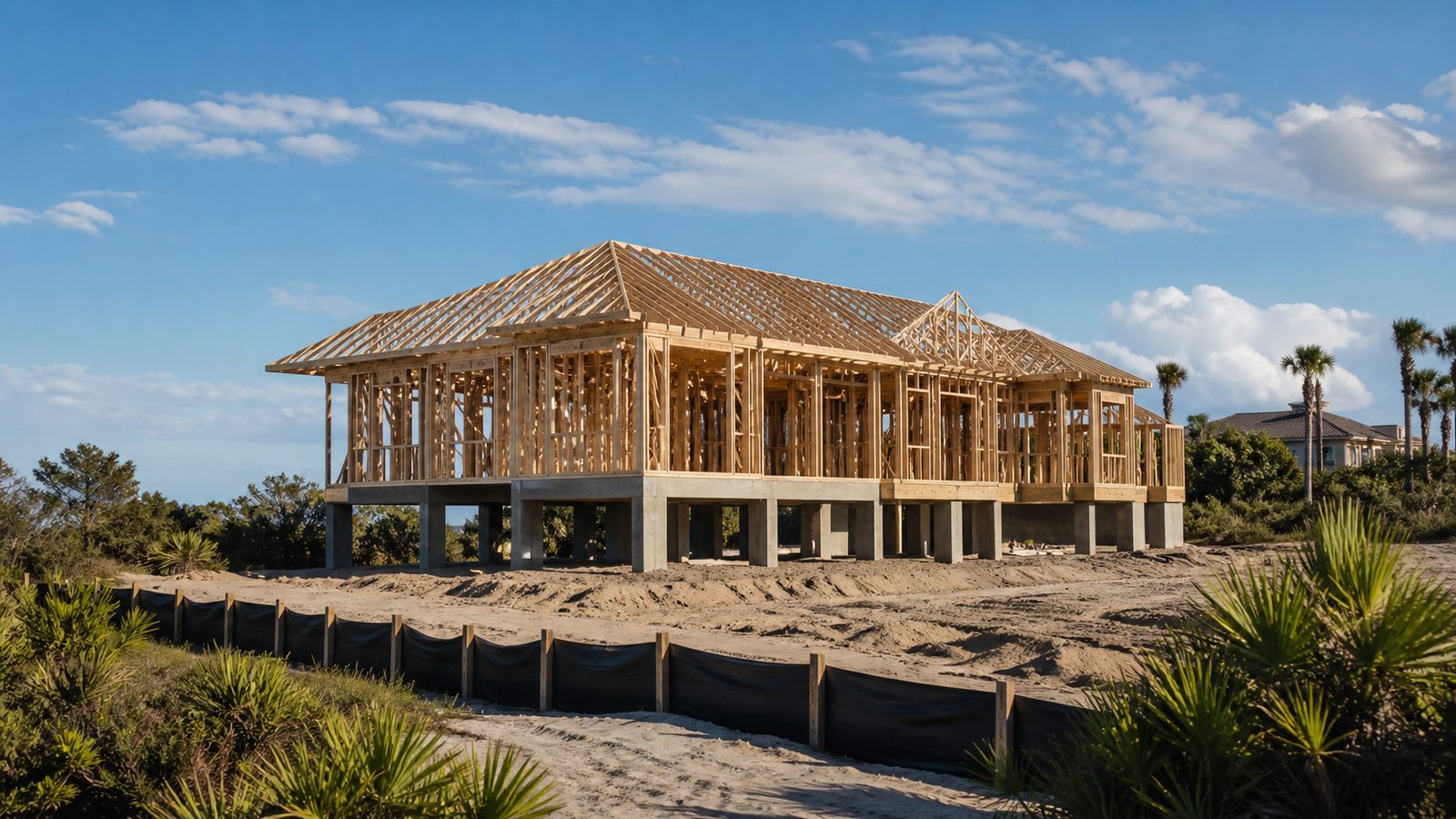
Is a Custom Home Right for You? Comparing Your Options
Before committing to a custom build, it's worth a clear-eyed comparison of your three alternatives.
Buying existing. The fastest path to occupancy. In Jacksonville's current market, move-in ready homes in desirable neighborhoods carry premiums, and inventory in certain price ranges remains tight. The advantage is certainty: you see exactly what you're buying. The disadvantage is compromise — you're accepting someone else's floor plan, finish selections, and deferred maintenance decisions.
Production or tract build. Builders like D.R. Horton, Pulte, and Dream Finders offer semi-custom production homes in planned communities across Northeast Florida. Lower per-square-foot cost and more predictable timelines — but limited floor plan flexibility, standard-grade finish packages, and developer-controlled lot locations. In St. Johns County, master-planned production communities dominate new construction supply.
True custom build. Maximum control over floor plan, specifications, and location, but also maximum complexity. A custom build makes the most financial sense when you have a specific lot, programmatic requirements the production market can't meet, or specifications outside standard packages. Expect 12–24 months of sustained time and decision-making investment.
Building Your Project Team: Why GC Before Architect Saves Money
The conventional assumption is that you hire an architect first, get a design, then find a contractor to build it. This sequence produces unbuildable or overbudget designs more often than it produces successful projects.
The right sequence: engage a general contractor before completing design. A contractor with local market knowledge — material costs, subcontractor rates, lead times, local building department requirements — can provide real-time budget feedback during the design process. This is called design-assist, and it prevents the most common first-time builder failure: falling in love with a design that costs 40% more than your budget allows.
An architect working in isolation will design to the program and the site. They are not responsible for construction cost. A general contractor working alongside the architect from schematic design forward is responsible for cost — and has every incentive to flag budget issues while revisions are still inexpensive.
JK Prestige works in design-assist on most custom home projects, which means our principal engages with the design team during schematic and design development phases, not after drawings are complete. This approach typically keeps budgets within 10–15% of target rather than the 30–50% overruns common when contractor input comes late.
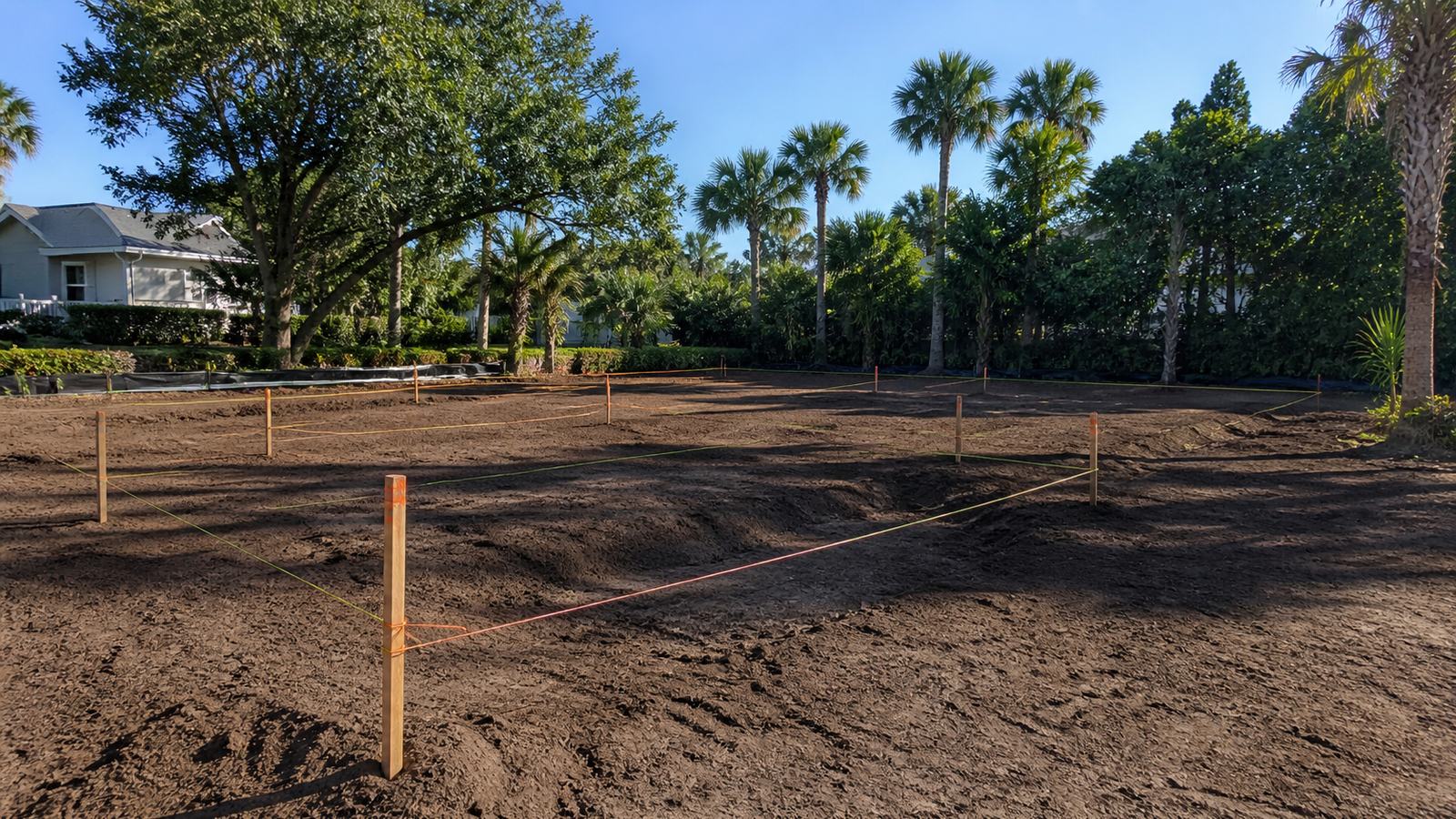
Lot Acquisition in Northeast Florida: What to Check Before Making an Offer
Lot selection in Duval, St. Johns, Nassau, and Clay counties requires due diligence across six areas before making an offer. Many first-time builders skip this step and discover problems after they've committed to the land.
Zoning and setbacks. Confirm the parcel's zoning classification allows your intended use, and verify setback requirements (front, rear, side). In Jacksonville (Duval County), zoning is administered by the City of Jacksonville Planning and Development Department. St. Johns, Nassau, and Clay counties each have their own zoning codes. Setbacks vary by zoning district and can significantly constrain buildable area on narrow or irregular lots.
Wetlands. Florida's wetlands regulations under Chapter 373 F.S. and the U.S. Army Corps of Engineers Section 404 program restrict or prohibit construction in wetland areas. A wetland delineation by a qualified environmental consultant is essential before purchasing any lot with tree coverage, low-lying areas, or proximity to drainage features. Wetland delineations in Northeast Florida typically cost $1,500–$4,000.
Flood zone. Check the FEMA Flood Insurance Rate Map (FIRM) for the parcel. Lots in Zone AE or VE carry flood insurance requirements and may require elevated construction. Even lots in Zone X can have localized drainage issues. The flood zone classification directly affects your foundation type, first-floor elevation, and mortgage insurance requirements.
Utilities. Confirm available utilities: water, sewer, electricity, natural gas (not available in all areas), and internet service. Lots outside the City of Jacksonville water and sewer service area may require a well and septic system, which adds $20,000–$45,000 to the project budget and requires soil percolation testing before lot purchase.
Deed restrictions and HOA. Many lots in Nassau, Clay, and St. Johns counties carry covenants limiting height, exterior materials, and architectural style. Some require HOA architectural committee approval before permit submission.
Subsurface conditions. Sandy soils in Northeast Florida vary in bearing capacity within the same neighborhood. A geotechnical investigation (soil borings) before lot purchase costs $1,500–$3,000 and can prevent $15,000–$50,000 in unexpected foundation costs.
Financing a Custom Build: Construction-to-Permanent Loan Mechanics
Most first-time builders finance through a construction-to-permanent (C2P) loan, also called a one-time close or single-close construction loan. This product combines a construction loan and a permanent mortgage into a single closing, eliminating the second closing (and second set of closing costs) that comes with a two-loan approach.
During construction, you draw funds from the construction loan in stages (called "draws") as work is completed. The lender sends an inspector to verify completion before releasing each draw. You typically pay interest only on the outstanding draw balance during construction, not on the full loan amount.
At construction completion and CO issuance, the loan automatically converts to a permanent mortgage. You begin making principal-and-interest payments on the full loan balance at the rate locked at origination.
What lenders require before approving a C2P loan: completed architectural drawings (at minimum design development or construction documents level), a detailed project budget, a signed fixed-price contract with the general contractor, a licensed general contractor (verified license and insurance), and an appraisal of the completed project based on plans and specifications. The appraisal on plans is the lender's primary underwriting document — the appraised value must support the construction loan amount.
In Northeast Florida, active C2P lenders include EverBank, VyStar Credit Union, Regions, and Truist. Interest rates are typically 0.5–1.0% higher than conventional mortgage rates during the construction phase.
Pre-Construction: The Phase That Determines Whether Your Budget Holds
Pre-construction is the period between design completion and permit issuance. It includes finalizing engineering, submitting permit drawings, identifying long-lead materials, and procuring key subcontractors. This phase is often underestimated by first-time builders, who assume construction starts immediately after design completion.
In Jacksonville, Duval County permit review for new custom residential construction typically takes 4–8 weeks. St. Johns County can run 6–10 weeks in high-demand periods. These timelines are not in your control once you submit — but they can be compressed by submitting a complete, well-organized permit package the first time.
Long-lead materials must be identified and ordered before ground breaks. Cabinet lead times from most manufacturers are 10–16 weeks. Custom windows and doors run 8–12 weeks. Structural steel — if required for long-span openings — is 12–16 weeks. If you don't order these items before your foundation is poured, you'll be waiting on materials when your crew is ready to finish.
The pre-construction phase on a JK Prestige custom home project typically runs 6–8 weeks from contract signing to permit submittal, and includes budget finalization, engineering coordination, long-lead procurement, and subcontractor selection.
The Construction Phase: What Weekly Cadence Looks Like
A custom home build is not a passive experience for the owner. Decisions are required continuously, and delayed decisions cost money. Expect weekly site visits with your project manager, written progress reports covering completed work and upcoming decision windows, and a decision log with due dates for finish selections tied to the construction schedule. Any scope change after contract execution requires a written change order with cost and schedule impact. First-time builders are often surprised by how quickly small changes accumulate. Minimizing changes during construction is one of the most direct ways to control budget.
Budget Reality for First-Time Builders in Jacksonville: 2025
Construction costs for custom homes in Jacksonville in 2025 range from $250 to $600+ per square foot of conditioned area, depending on specification level, neighborhood, and site conditions. Here's how to think about the range:
Entry-level custom ($250–$350/sqft): standard finish packages, production cabinetry, LVP flooring, vinyl windows, builder-grade fixtures. Comparable in finish quality to a high-end production home.
Mid-range custom ($350–$450/sqft): semi-custom cabinetry, quartz countertops, engineered hardwood, aluminum-clad windows, upgraded fixture packages. This is the most common range for first-time custom builders in Jacksonville's established neighborhoods.
High-specification custom ($450–$600+/sqft): full custom cabinetry, natural stone countertops, hardwood or large-format tile throughout, steel or aluminum window systems, commercial-grade appliances, home automation integration.
These ranges cover hard construction costs — materials and labor — but do not include land, design and engineering fees (typically 8–12% of construction cost for architect-designed custom homes), permit fees, site work (clearing, fill, utilities), or landscaping. A complete project budget typically runs 15–25% above the hard construction cost alone.
Common First-Time Builder Mistakes
Designing before budgeting. The most expensive mistake. Design fees and time are sunk costs once a design is complete. If the design exceeds your budget, you either redesign (spending more on design fees) or accept a project you can't afford.
Hiring the architect before the GC. As described above, this produces designs without real cost accountability. Engage your GC in the design process before design development is complete.
Skipping subsurface investigation. A geotechnical investigation before lot purchase costs $1,500–$3,000. Discovering poor soil bearing capacity after you own the lot can add $15,000–$50,000 in foundation costs that weren't in the budget.
Making changes during construction. Every change after contract execution costs more than it would have cost during design. The general rule: changes during design cost 1x, changes during permit review cost 3x, changes during construction cost 5–10x.
Selecting materials based on allowances. Construction contracts often include allowance figures for items not yet selected — flooring, tile, fixtures. Allowances are placeholders. If your allowance for kitchen tile is $3/sqft and your selections cost $12/sqft, you've added $9/sqft times your kitchen area to the budget. Review every allowance figure with your GC before signing.
What to Look for in a Jacksonville Custom Home GC
Principal involvement. On most projects, the principal or founder of a contracting firm is involved at the proposal and contract stage, then hands off to a project manager. Ask specifically who will walk your site weekly and who answers the phone when you call.
Self-perform trades. A GC who self-performs framing, concrete, drywall, and finish carpentry — rather than subcontracting every trade — has more direct control over quality and schedule. Self-perform crews can be redirected, supervised, and held accountable in ways that independent subcontractors cannot.
Fixed-price contract. A fixed-price contract means the price is established at contract execution and doesn't change unless you change the scope. Cost-plus and time-and-materials contracts transfer budget risk to the owner. For first-time builders, a fixed-price contract is the only structure that provides budget certainty.
JK Prestige self-performs framing, concrete, drywall, finish carpentry, and roofing. Every project operates under a fixed-price contract. The founder answers every call. Learn more about our custom home expertise and the JK way.
Ready to start? Get a written estimate in 48 hours. Call (904) 944-0278 or request a free consultation.
No call center. No coordinator. A JK principal reviews every inquiry and replies with a real number, not a range, not a follow-up form.
Request Free Estimate →