If you have already called two or three Jacksonville renovation contractors, you have probably heard some version of the same answer: "It depends on what we find." That response sounds reasonable. It is also the setup for a project that costs 30% more than the number you heard on day one.
A fixed-price contract locks your cost in writing before demolition starts. Price doesn't change if scope doesn't change. The contractor who commits to a fixed price has to know what they're pricing — which means they have to do more work up front than a contractor who is comfortable keeping things vague.
Here is how the fixed-price process actually works, why most contractors avoid it, and what you need to demand before you let anyone swing a hammer.

What a Fixed-Price Renovation Contract Actually Means
A fixed-price contract is not a ballpark. It is not an estimate range. It is a written dollar amount tied to a written scope document. If the scope doesn't change, the price doesn't change. Period.
This is the contract structure JK Prestige delivers on every residential renovation. It is also the contract structure most renovation contractors in Jacksonville avoid — because it requires them to actually know what they're bidding before they bid it.
The alternative is time-and-materials (T&M) billing: you pay for labor hours and materials as they're consumed, plus a markup. T&M contracts shift all cost risk to you. The contractor has no incentive to finish fast or to control material waste. If something unexpected turns up in the walls — and in older Jacksonville homes, something almost always does — the clock keeps running and so does your bill.
There is also a middle ground called allowance-based pricing, where the contractor gives you a fixed price but buries uncertain line items in allowances. "Kitchen fixtures: $8,000 allowance." If the actual fixtures cost $14,000, you pay the difference. Allowances are legitimate for items that genuinely depend on your finish selections — but allowances used to hide contractor uncertainty are a way to quote a low number and collect the difference later as change orders.
A real fixed-price contract identifies the full scope in writing. Allowances, where they appear, are clearly labeled and sized to real market costs, not used to make the headline number look smaller.
Why Most Contractors Quote "It Depends"
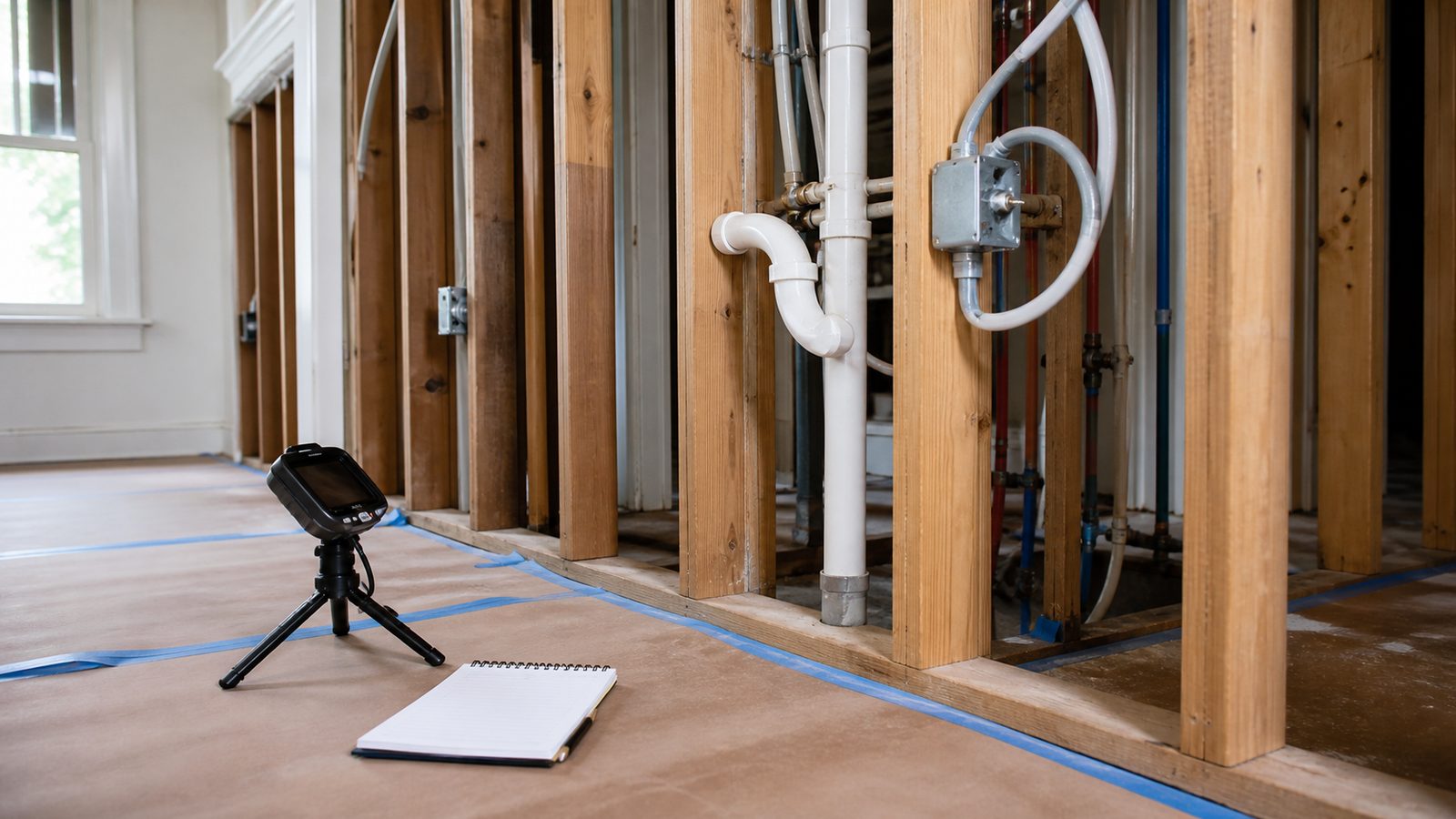
The honest answer: they haven't done the work to know. Walking through a Jacksonville home and eyeballing the kitchen does not tell you what's behind the walls. It does not tell you whether the plumbing supply lines are copper or galvanized steel. It does not tell you the condition of the electrical panel or whether the subfloor has water damage under the refrigerator. It does not tell you whether the framing is sound or whether the exterior wall insulation is missing entirely — which is common in 1960s–1970s Jacksonville construction.
A contractor who quotes from a walkthrough is quoting what they hope to find, not what they will find. The difference between those two numbers is where change orders come from.
The fix is preconstruction work — specifically, subsurface validation in areas of known or suspected concern before a price is locked.
The JK Fixed-Price Process: Step by Step
This is the sequence JK Prestige follows before any fixed-price renovation contract is signed:
Step 1: Site Walk With the Principal
The person who signs your contract walks your home with you — not a salesperson who hands off to a project manager you've never met. This walkthrough covers the full scope of work, existing conditions, and any areas of concern. Questions about the project get answered by the person who owns it.
Step 2: Subsurface Validation
Before pricing structural or MEP work, JK validates conditions that can't be confirmed visually. In a kitchen gut-reno, that might mean opening a cabinet back to look at drain rough-in conditions. In a bathroom, it might mean pulling an access panel to assess plumbing. In older Jacksonville homes with original electrical panels, it means verifying service capacity before specifying any new MEP rough-in.
Subsurface validation is the work that separates a real fixed price from a guess. It takes time and requires skill. It is why JK's preconstruction process includes a pre-construction fee — which is credited against your construction contract at signing.
Step 3: Scope Document
Before any price is delivered, a written scope document is produced. This document covers:
- Demolition scope (what comes out, what stays)
- Structural work (if applicable)
- MEP rough-in replacement or modification
- Insulation and air sealing
- Drywall, framing, finish carpentry
- Windows and doors (if in scope)
- Finishes schedule (with allowances labeled where applicable)
- Exclusions (what is not in the contract)
- Long-lead items and material procurement lead times
- Contingency allocation (if applicable)
The scope document is the foundation of the fixed-price contract. You review it. You ask questions. Changes are negotiated before the contract is signed, not after demolition reveals something nobody priced.
Step 4: Written Fixed Price
With the scope locked and subsurface conditions validated, JK delivers a written fixed price. That number does not change unless the scope changes. Scope changes — owner-directed changes to what's being built — are documented as written change orders with a price agreed before work proceeds. No verbal approvals. No retroactive billing.
Step 5: Week-One Schedule Baseline
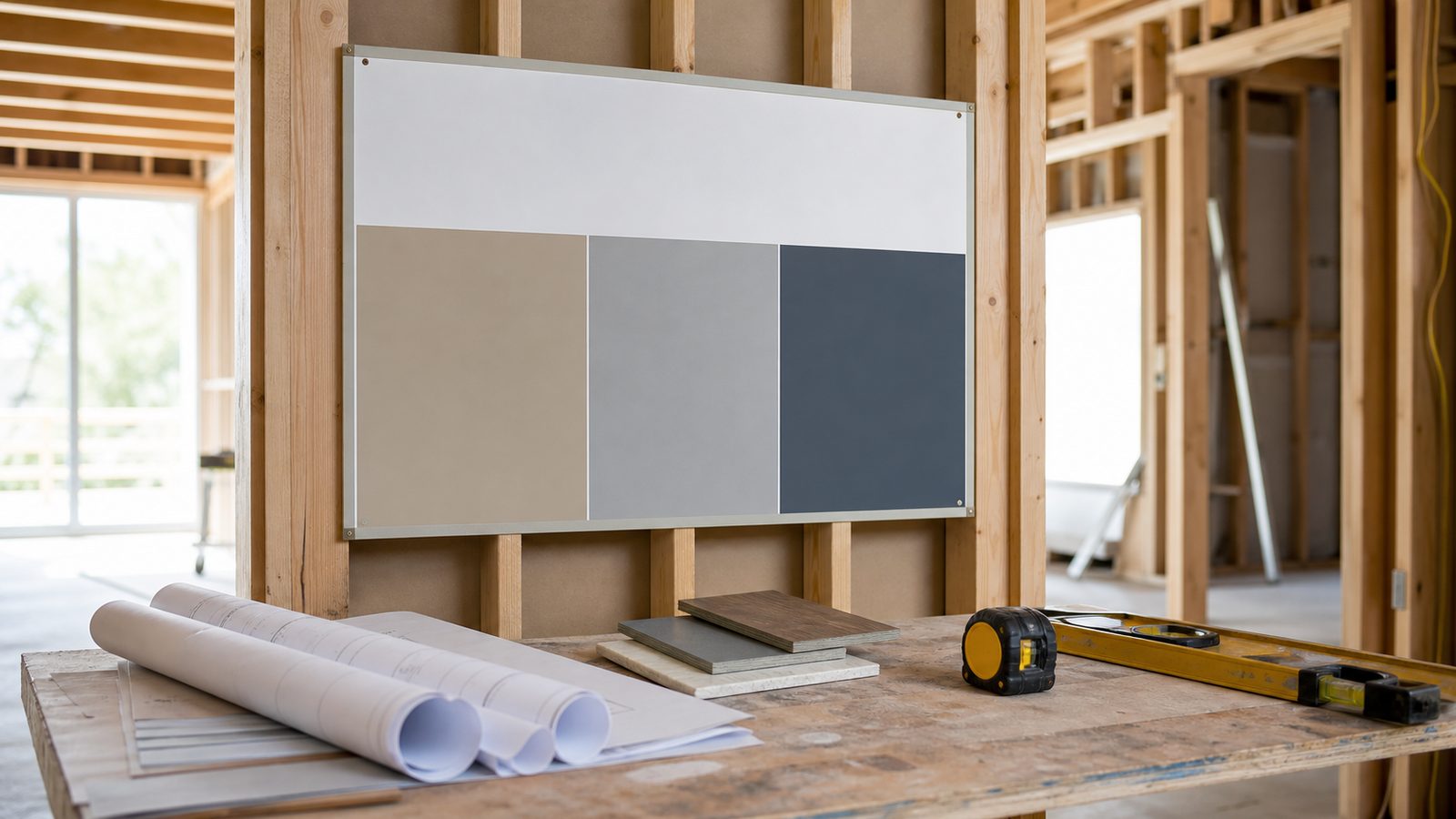
The first week of the project is scope lock and schedule baseline. A written schedule is produced showing the sequence of demolition, rough-in, inspections, and finish installation. Demolition does not begin until this schedule is agreed upon. This is not a formality — it is the mechanism that keeps the project on track and keeps you informed.
You get access to the owner portal from day one: live schedule, photos, RFI log, and budget variance. You do not have to call to find out where your project stands.
What Happens When Something Unexpected Turns Up
In older Jacksonville homes, unexpected conditions are common. That is the reality of renovation in neighborhoods with housing stock from the 1920s through the 1970s. The question is not whether surprises will happen — it is how they are handled.
There are three mechanisms for handling unexpected conditions:
Contingency. A fixed percentage of the contract value set aside specifically for unknown conditions. Contingency is disclosed in the contract, belongs to you, and is used only for conditions genuinely outside the scope of the original agreement. Any unused contingency is returned to you at project close. This is the most transparent structure.
Allowance. A specific line item for work whose cost genuinely depends on conditions or selections not yet determined. Legitimate allowances are clearly labeled in the scope document and sized to realistic market costs. If an allowance item comes in under the allowance number, you see the savings.
Change order. If the scope changes — owner-directed changes or genuinely unforeseeable conditions outside the contingency and allowance structure — a written change order documents the additional scope and the additional cost. You approve it in writing before work proceeds.
What a fixed-price contract eliminates is the non-transparent version of all three: verbal estimates that expand post-demo, surprise invoices, and costs that appear at the end because nobody validated conditions at the beginning.
Questions to Ask Before Signing Any Renovation Contract in Jacksonville
Before you commit to any renovation contractor — fixed-price or otherwise — ask these questions directly:
- Is the price fixed, or is it time and materials?
- What does the scope document include? Can I see the template?
- What validation do you do before locking the price?
- Who will be my point of contact during construction? Is it the person I'm talking to now?
- How are unexpected conditions handled — contingency, allowance, or change orders?
- Do you self-perform drywall and framing, or do you broker those out?
- Who pulls the permits, and who manages inspections?
A contractor who hesitates on any of these questions — or gives a vague answer — is telling you something. JK Prestige's principal-led model means you are always talking to the person who owns the answer.
Get a written gut-reno estimate in 48 hours. contact JK Prestige Constructor. The number you get is the number you pay, as long as the scope doesn't change.
No call center. No coordinator. A JK principal reviews every inquiry and replies with a real number, not a range, not a follow-up form.
Request Free Estimate →