The argument circulates every time material prices move: cost-plus contracts are "safer" in a volatile market because you pay actual costs. It sounds logical. It is backwards. Understanding why requires looking at where the cost risk actually sits under each contract type — and which party carries it.
This post explains both contract structures, shows why fixed-price contracts protect owners when material costs are unpredictable, and covers what makes a fixed-price contract function in practice rather than just on paper.

What Is a Fixed-Price Construction Contract?
A fixed-price contract sets a single total price for a defined scope of work. If the scope doesn't change, the price doesn't change — regardless of what happens to material costs, labor costs, or the GC's internal expenses between contract signing and project completion.
The owner knows their exact financial obligation on day one. Scope changes (owner-initiated changes to the defined scope) are the only mechanism for price adjustment.
This is the contract type JK Prestige uses for all residential and most commercial projects. The price is in writing before ground breaks. The JK Way is built around this model because it's the only contract structure that aligns the GC's incentives with the owner's.
What Is a Cost-Plus Construction Contract?
A cost-plus contract (also called cost-reimbursable) reimburses the GC for actual project costs — materials, labor, equipment — plus a fee that covers overhead and profit. The fee is typically either a fixed dollar amount or a percentage of total costs (usually 10-20%).
The appeal: in a rising market, the GC doesn't have to guess at future material prices. You pay what things actually cost. No one is marking up a guess.
The problem: you pay what things actually cost. If structural steel is 15% more expensive at fabrication than it was when you signed the contract, you absorb that 15%. If a subcontractor's labor costs increased, you absorb it. The GC's total costs becoming your total costs is not a feature — it's a risk transfer.
Why Cost-Plus Transfers Risk to the Owner
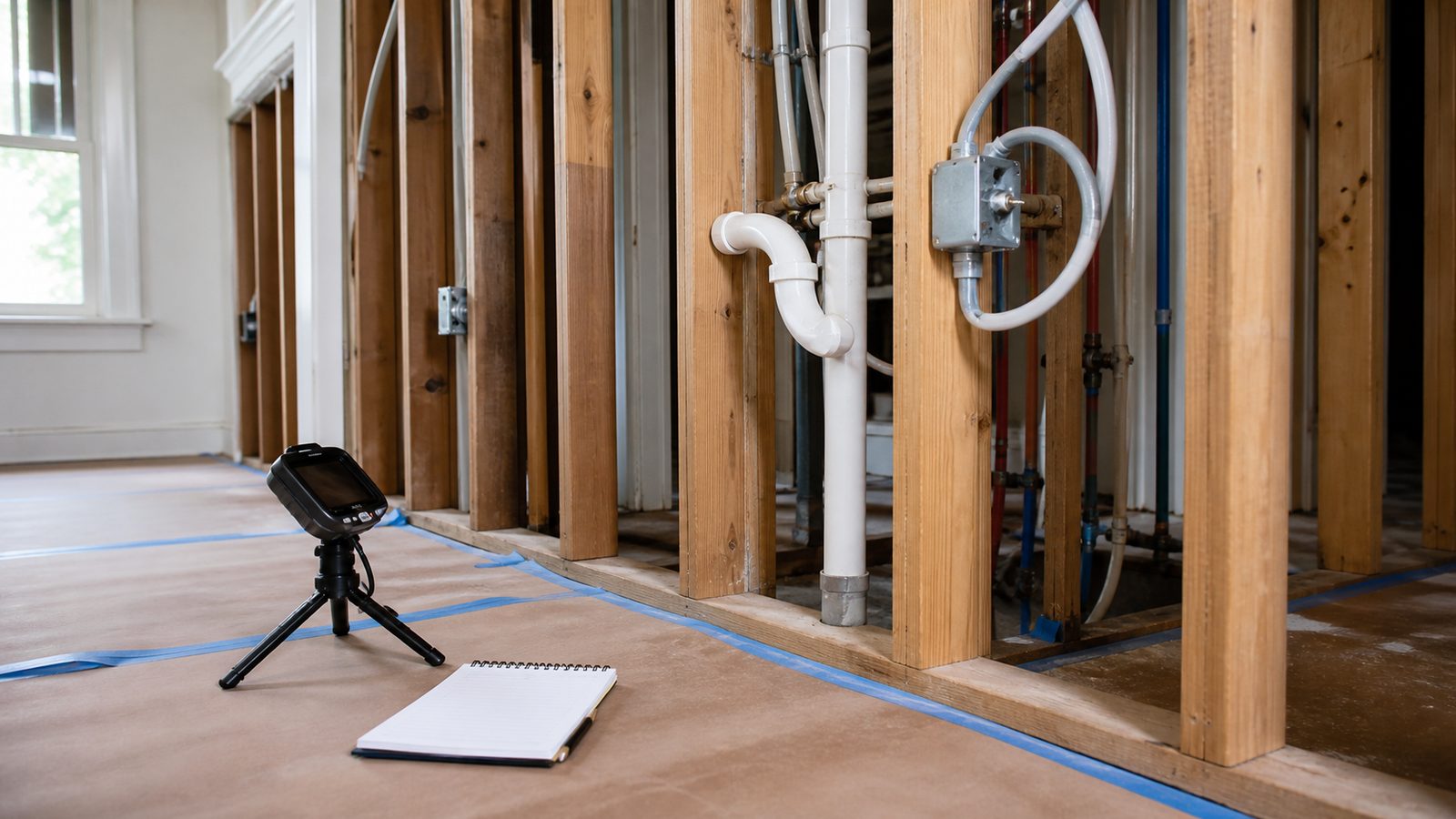
Under cost-plus, all cost risk sits with the owner. This is the structural truth that the "cost-plus is safer" argument glosses over.
Consider a scenario: structural steel is ordered at 16 weeks after contract signing. Material prices increase 12% in that window. Under a fixed-price contract, the GC absorbs that increase. Under cost-plus, the owner pays it — plus the GC's fee on top of the higher cost.
The GC under cost-plus has no financial incentive to minimize costs. If your cost-plus contract pays a percentage fee, a more expensive project means a higher fee. This is not an accusation of bad faith — it's a structural incentive problem. The GC's profit grows with the total project cost. The owner's exposure grows with it.
The GC under a fixed-price contract has the opposite incentive. Every dollar saved on procurement or execution is a dollar of margin improvement. The incentive is to be efficient, buy smart, and manage the schedule — because overruns come out of the GC's pocket, not the owner's.
The Fixed-Price Argument in a Volatile Material Market
When material prices are rising unpredictably, fixed-price contracts transfer that uncertainty from the owner to the GC. That's exactly the protection most owners want.
The counterargument: a GC who signs a fixed-price contract in a volatile market will price that volatility in. They'll add a buffer to cover potential cost increases. The owner ends up paying for insurance.
This is partially true. An honest GC who signs a fixed-price contract has to account for procurement risk in the price. But the alternative — cost-plus — is that you pay the actual cost plus the fee, with no ceiling. You might pay less if markets fall. You will pay more if they rise.
There are two mechanisms that make fixed-price work in volatile markets without requiring the GC to carry excessive risk:
Long-lead procurement before price lock. If the GC orders materials with 12-20 week lead times before the contract is signed — or at contract signing — those costs are known. JK Prestige's pre-construction process includes a long-lead matrix precisely to lock procurement costs before the fixed price is finalized. If the steel is already ordered, the steel price isn't uncertain.
Narrow escalation clauses. A well-written fixed-price contract can include a specific escalation clause for one or two commodities with defined triggers — for example, if steel mill pricing increases more than 15% between contract signing and order date, the contract provides a price adjustment mechanism. This clause should be narrow, specific, and have defined triggers. A broad escalation clause that applies to any material is a cost-plus contract with extra steps.
What Makes a Fixed-Price Contract Actually Work
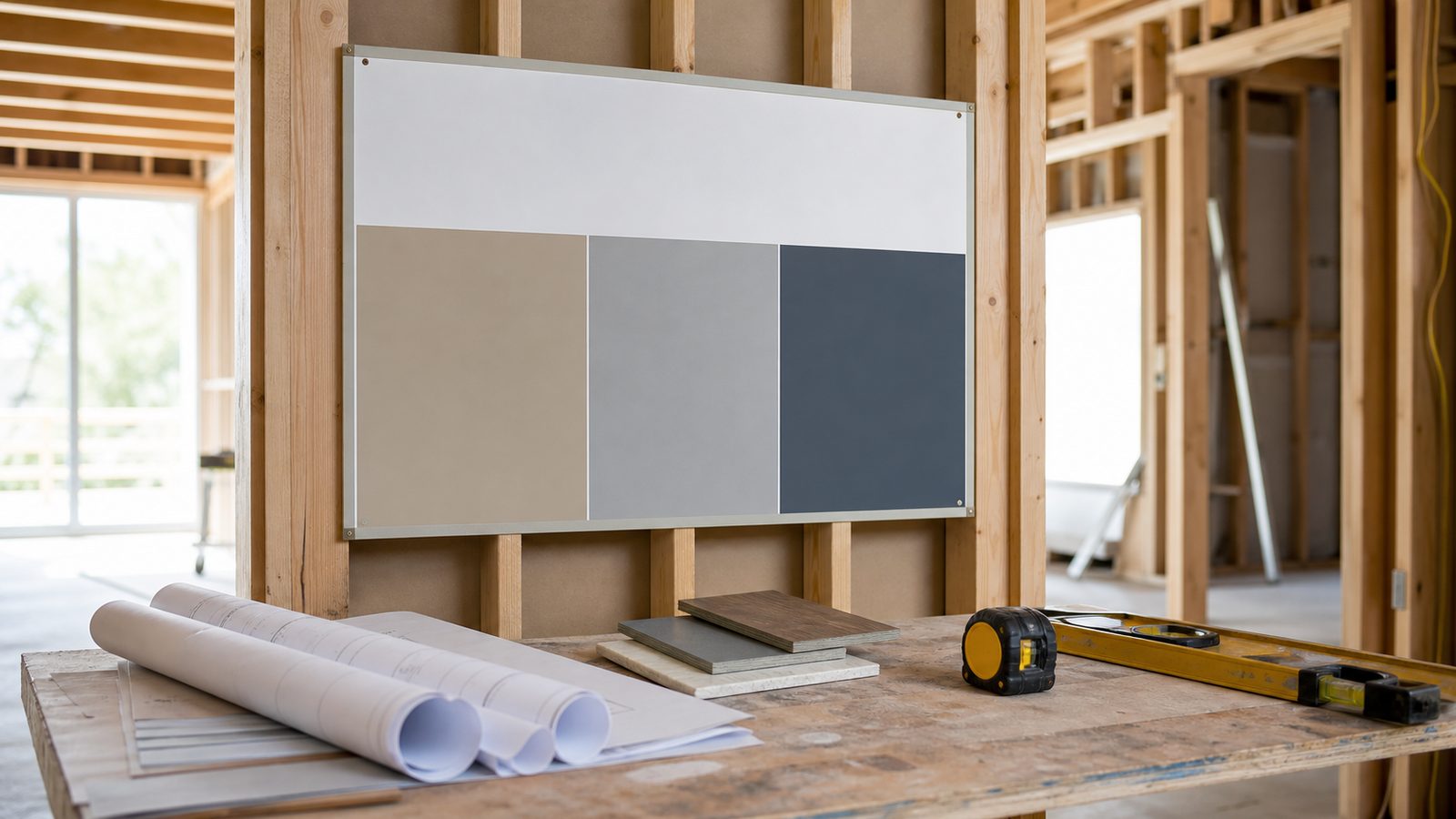
A fixed-price contract is only as good as the scope document behind it. A price set against a vague scope is not fixed — it's an opening bid. Here's what has to be in place:
Complete scope document. Every line item defined: materials specified, quantities confirmed, inclusions and exclusions listed. Ambiguous scope is the source of change orders. If the scope document says "tile in bathrooms" without specifying who furnishes the tile, the tile spec, or the coverage area, the GC will price tile at the low end and charge a change order for the actual tile the owner selects.
Long-lead items procured or priced before lock. As noted above. Material costs that aren't locked aren't fixed.
Defined change order process. A fixed-price contract should define what constitutes a change in scope, how changes are priced (including the GC markup), and how changes are approved in writing. This protects both parties.
Exclusions clearly listed. The fixed price covers what it covers. Permit fees, design fees, owner-furnished materials, utility connection fees — these are typically excluded from the GC's price and should be listed explicitly so the owner can budget for them separately.
When a GMP Is the Right Structure
For complex commercial and healthcare projects, a Guaranteed Maximum Price (GMP) contract is the appropriate middle ground. A GMP is a fixed ceiling on total project cost, with the GC's costs held open-book. If total costs come in under the GMP, savings are shared between owner and GC per a defined formula.
The GMP structure works for projects where the design isn't complete enough at contract signing to support a true fixed price — design-build healthcare, phased hospital renovations, complex tenant improvements where scope is developed in parallel with construction.
JK Prestige uses GMP contracts on hospital and major commercial projects. Learn more about JK Prestige's healthcare construction approach and how GMP with open-book cost tracking works in practice.
A Direct Answer
Which contract protects the owner in a rising material market? Fixed-price, if the scope is defined and long-lead materials are procured before the price is locked. A GC who signs a fixed-price contract absorbs material cost increases. An owner under cost-plus pays them.
The risk in fixed-price is an underdefined scope — which becomes a change-order mechanism. The defense against that is a detailed scope document, not a different contract type.
Explore the JK Prestige approach to fixed-price contracts, or contact us to review your project scope and get a written estimate.
No call center. No coordinator. A JK principal reviews every inquiry and replies with a real number, not a range, not a follow-up form.
Request Free Estimate →