Building a custom home in Duval County means designing to Florida Building Code (FBC) 8th Edition (2023) requirements that are more specific — and more demanding — than most other states. Wind speed design, flood zone elevation, hurricane strapping, and energy code compliance are not optional layers on top of basic construction. They are the baseline.
This post covers each major FBC requirement for custom residential construction in Duval County, explains what local amendments apply, and shows how these requirements affect design decisions before ground breaks.
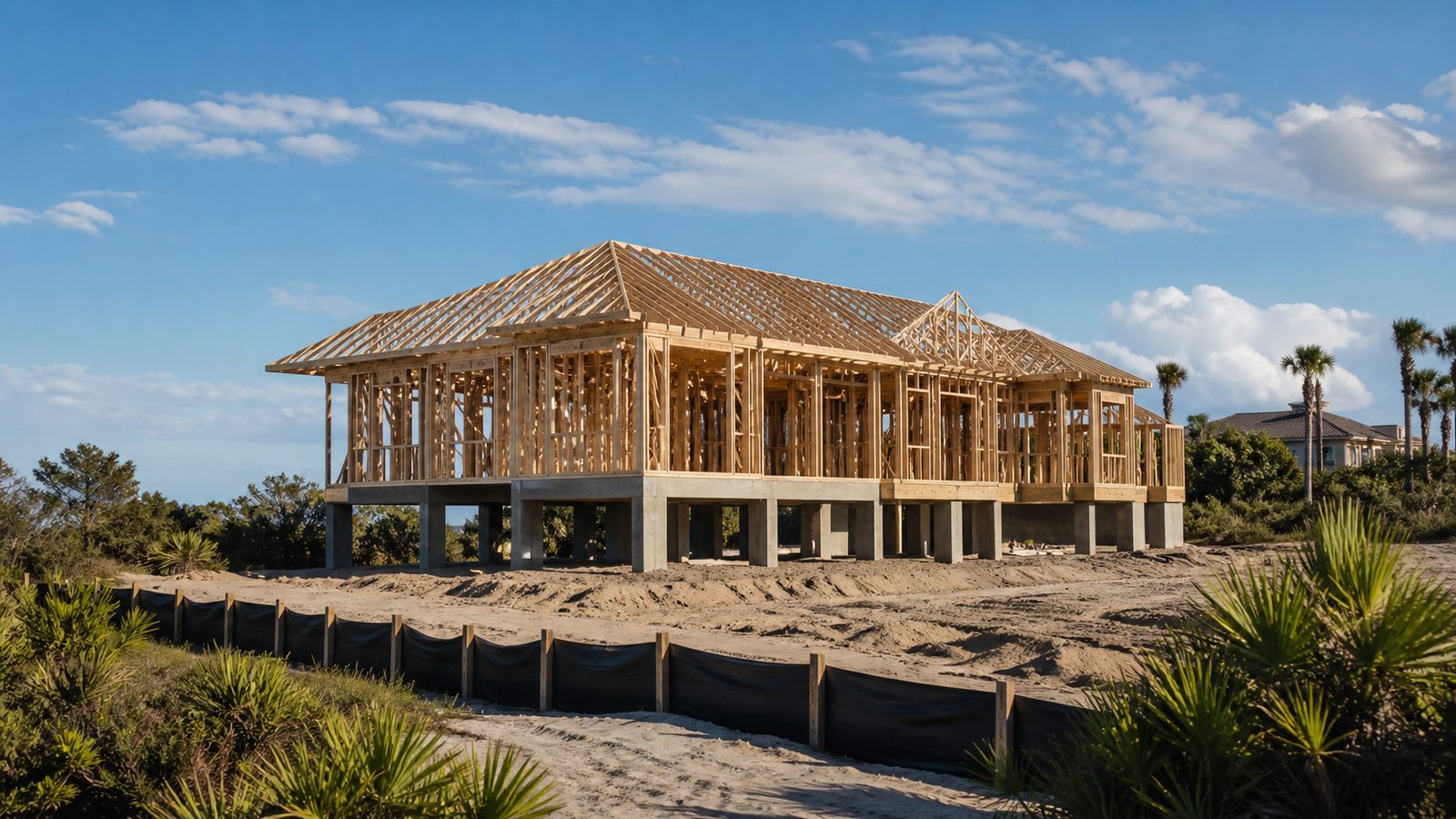
Florida Building Code 8th Edition: What Changed for Residential
The 8th Edition of the Florida Building Code, adopted in 2023, updated several residential requirements over the previous edition. The structural wind load requirements were updated to reference ASCE 7-22 (American Society of Civil Engineers standard) load tables, increasing design wind speeds in some zones. Energy code requirements (Florida Energy Code, Chapter 13) were tightened with higher insulation minimums and improved fenestration performance requirements.
Any custom home permitted after the 8th Edition adoption date must comply with the new standards — not the edition in effect when the project was first conceived. Permits are issued under the code in effect at application, not at design start.
Wind Speed Design in Duval County
Florida is one of the most demanding wind design states in the country. Duval County falls within the general wind speed design zone under ASCE 7-22.
Design wind speed for Duval County: Depending on location within the county, design wind speeds range from 130-140 mph (three-second gust, Risk Category II for standard residential). Coastal locations — oceanfront, barrier island, areas near the Atlantic coast and St. Johns River — carry higher design requirements.
What this means for design: The structural engineer of record must design all lateral force-resisting systems — shear walls, holddowns, roof-to-wall connections — to resist the design wind speed at the building site. This affects:
- Foundation sizing and anchor bolt layout
- Shear panel placement and nailing schedules
- Roof truss engineering (certified truss drawings required)
- Header sizing over openings in load-bearing walls
- Roof-to-wall connection hardware (hurricane straps)
The structural drawings must be stamped by a licensed Florida structural engineer. JK Prestige works with licensed engineers during the pre-construction design phase to ensure structural documents meet the specific requirements of the site — not a generic state standard.
Hurricane Strapping Requirements
Every rafter-to-top-plate connection and every truss-to-top-plate connection in a Florida home must be connected with code-compliant hurricane strapping hardware. This is not discretionary. FBC Section R802.11 requires uplift connectors at each rafter or truss bearing point.
What strapping hardware does: Metal hurricane straps — typically Simpson Strong-Tie or equivalent — are fastened to the rafter or truss and the top plate with specified nails at specified spacing. The hardware is rated for a defined uplift capacity (pounds). The structural engineer specifies the strap model and nailing pattern based on the calculated uplift at each connection.
Inspection significance: Hurricane strapping is inspected during the roof framing inspection, before sheathing is applied. If strapping isn't in place or doesn't match the engineering, the inspection fails. Roofing cannot proceed until framing inspection passes.
JK Prestige's framing crews — who are in-house, not brokered — install hurricane strapping as part of the framing scope. This eliminates the coordination gap that sometimes occurs when framing and strapping are assigned to different contractors.
Impact Windows and Doors (High-Velocity Hurricane Zones)
Florida's High-Velocity Hurricane Zone (HVHZ) — covering Miami-Dade and Broward counties — requires impact-rated windows and doors without exception. Duval County is not in the HVHZ, but FBC Chapter 16 still requires protection for glazed openings in wind-borne debris regions.
Duval County's wind-borne debris requirement: Areas within one mile of the mean high-water line (coastal exposure areas) require either:
- Impact-resistant windows and doors (rated to the design wind speed with impact testing), or
- Structural shutters or storm panels that can be deployed to protect all glazed openings
For homes not in coastal exposure zones, standard windows meeting the thermal and structural performance requirements of the code are permitted, with shutter capability as an option rather than a requirement.
Practical recommendation: For any custom home in Duval County, impact-rated windows and doors are the preferred solution regardless of zone classification. They eliminate the need to install shutters before a storm, they're permanent rather than seasonal, and they carry insurance premium benefits in Florida. JK Prestige's custom home specifications typically include impact-rated glazing as the standard specification.
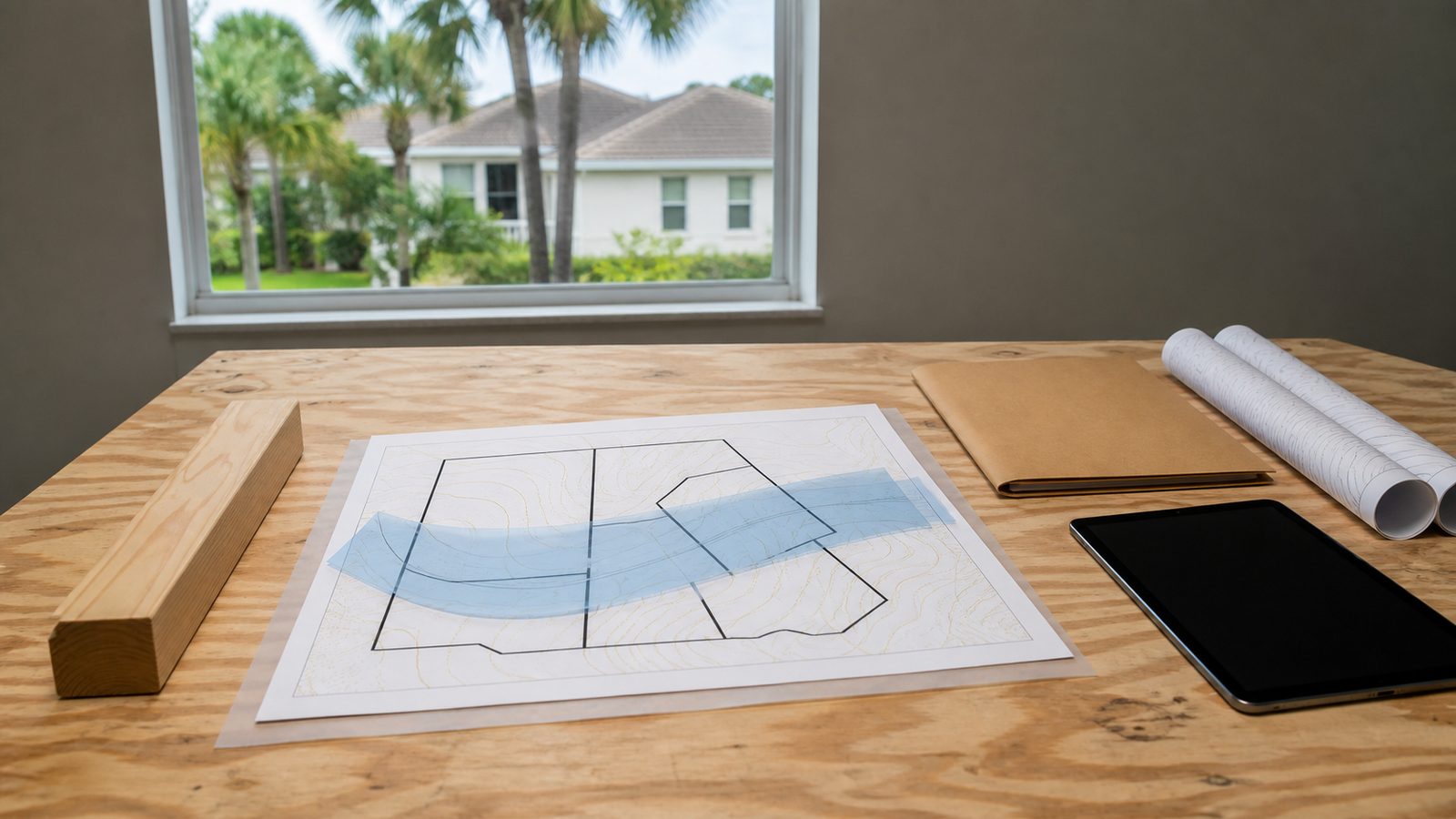
Flood Zone Requirements in Duval County
Duval County has significant flood zone exposure — the St. Johns River, Atlantic coast, and coastal creek systems create a complex FEMA flood map across the county. Before designing any custom home, the owner and GC must verify the flood zone classification of the specific parcel.
FEMA flood zones in Duval County:
- Zone AE: Special Flood Hazard Area with base flood elevation established. Minimum finished floor elevation (FFE) is the base flood elevation (BFE) plus freeboard (typically BFE + 1 foot for residential under the FBC, though local flood ordinances may require more)
- Zone X: Outside the 500-year floodplain. Standard construction with no flood elevation requirement
- Zone VE: Coastal high-hazard area. Stricter requirements including breakaway foundations for coastal homes
What flood zone affects:
- Minimum finished floor elevation of the lowest habitable floor
- Foundation type (in VE zones, structure must be elevated on piles or columns, not slab-on-grade)
- Floodplain permit from the City of Jacksonville or Duval County
- Elevation certificate required from a licensed surveyor after foundation is poured and again at CO
Flood insurance: Homes in Zone AE or Zone VE are required to carry flood insurance if they have a federally backed mortgage. The elevation certificate affects flood insurance premiums — the higher above BFE, the lower the premium.
Florida Energy Code (Chapter 13) Requirements
The Florida Energy Code, embedded as Chapter 13 of the FBC, sets minimum performance requirements for insulation, windows, doors, HVAC equipment, and lighting for all new residential construction.
Key requirements for Duval County (Climate Zone 2):
- Attic insulation: minimum R-38 for ventilated attics; R-19 for unventilated attic assemblies using spray foam
- Exterior wall insulation: minimum R-13 in stud cavities, or continuous insulation to achieve equivalent performance
- Window U-factor: maximum 0.40 for the overall envelope; maximum solar heat gain coefficient (SHGC) of 0.25 for Climate Zone 2
- HVAC equipment: minimum SEER2 14.3 for split system air conditioning (federal minimum as of 2023); duct insulation R-8 in unconditioned spaces
- Whole-house ventilation: mechanical ventilation required per ASHRAE 62.2 to ensure indoor air quality in tight building envelopes
EnergyGauge compliance modeling: Florida requires a performance-path energy compliance report (EnergyGauge or equivalent modeling software) for most new residential construction. The energy model must demonstrate the proposed design meets the code requirements before permit issuance. The design professional or energy rater prepares this documentation.
NFPA 13D Residential Sprinklers
The National Fire Protection Association (NFPA) 13D standard covers residential sprinkler systems. In Jacksonville, residential sprinklers are required in:
- Townhouses
- Certain multi-family configurations
Single-family detached homes are not required to have residential sprinklers under current Florida Building Code or Duval County local amendments. However, some homeowners elect to install them — particularly in larger custom homes where egress distances are long — because they provide meaningful life-safety protection and may affect insurance premiums.
If a custom home design includes a residential sprinkler system, the system must be designed, installed, and tested by a licensed fire protection contractor per NFPA 13D. The sprinkler rough-in is inspected during the MEP rough-in stage before walls are closed.
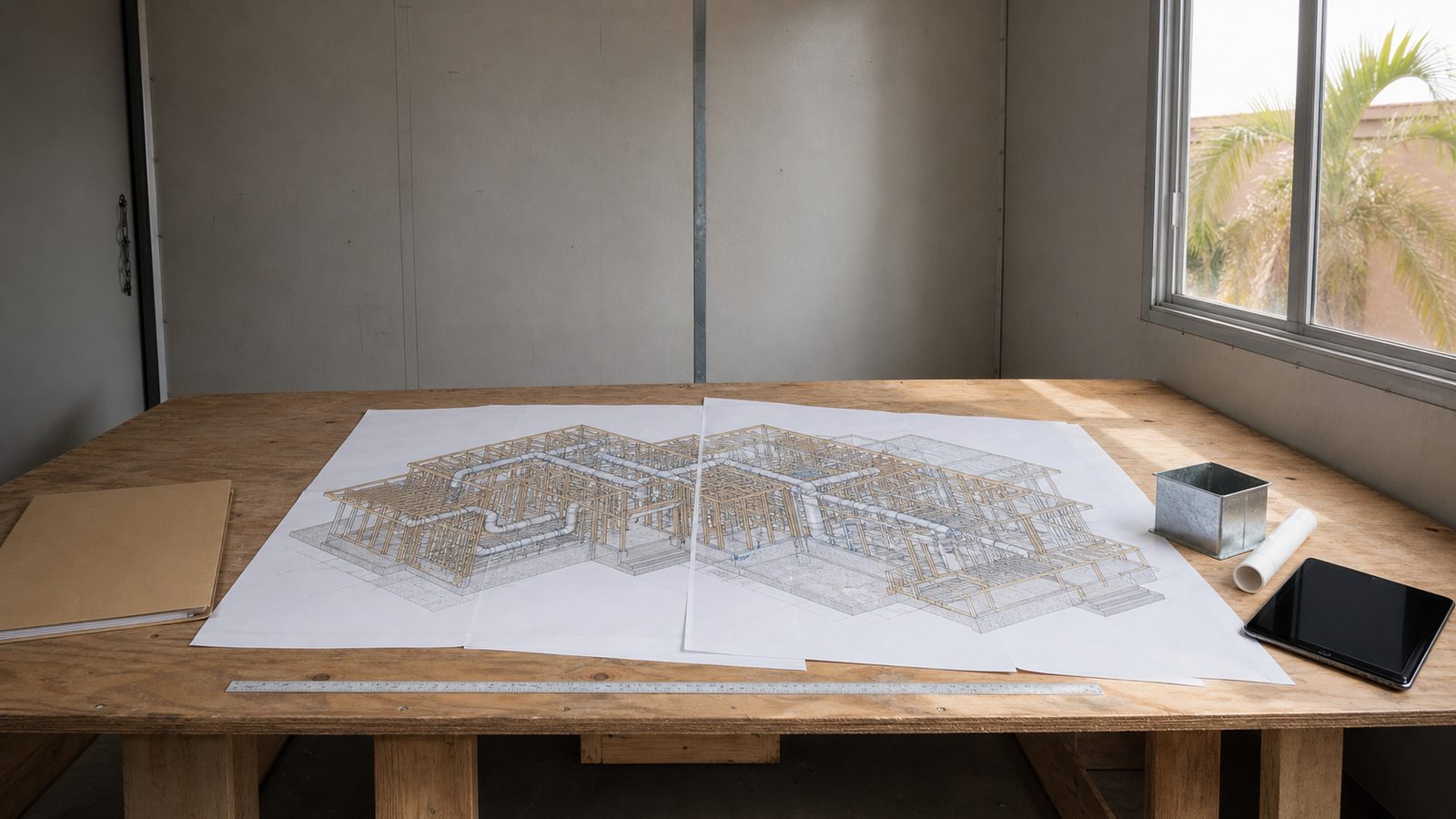
What Duval County Adds to the State Code
Duval County administers building inspections through the City of Jacksonville Building Inspection Division. Local amendments to the FBC are posted in the CityView portal and in the City of Jacksonville's local ordinance code.
Key local considerations:
- Stormwater management: Projects that add impervious surface beyond a defined threshold (typically 500 sqft) must comply with St. Johns River Water Management District (SJRWMD) stormwater requirements. This may require a stormwater management system (swale, detention pond, or underground retention)
- Tree protection: Duval County's urban tree canopy ordinance protects heritage trees. Site plans must identify significant trees; removal requires a separate permit
- Setback requirements: Vary by zoning district. Verify current setbacks for the specific parcel before finalizing site plan
JK Prestige's pre-construction process includes a site regulatory review — flood zone, stormwater thresholds, tree protection — before design development begins. Learn more about JK Prestige's custom home process or contact us for a site review consultation.
No call center. No coordinator. A JK principal reviews every inquiry and replies with a real number, not a range, not a follow-up form.
Request Free Estimate →