Renovating a home or commercial building in one of Jacksonville's historic districts is not the same process as renovating anywhere else in Duval County. There are two regulatory tracks running simultaneously: the standard Florida Building Code (FBC) permit review through the Jacksonville Building Inspection Division, and the historic review through the Jacksonville Historic Preservation Commission (JHPC). Both must be satisfied before you break ground.
Most renovation contractors in Jacksonville either don't know this or don't deal with it often enough to know it well. JK Prestige has navigated both tracks on historic projects in Riverside, Springfield, and San Marco — here's what you need to know before you hire anyone.

Jacksonville's Historic Districts: Which Neighborhoods Have Additional Permit Requirements
The city of Jacksonville designates specific neighborhoods as local historic districts. Properties within these districts are subject to JHPC review for exterior alterations. The primary local historic districts in Jacksonville include:
- Riverside/Avondale Historic District — one of the largest and most active, spanning both sides of the St. Johns River on the west side
- Springfield Historic District — the oldest platted neighborhood in Jacksonville, undergoing significant renovation activity
- San Marco Historic District — Mediterranian Revival and Colonial Revival structures from the 1920s-1940s
- Murray Hill Historic District — bungalow-era residential district on the westside
- Downtown Jacksonville — the historic core, with multiple contributing commercial and civic structures
There are also National Register of Historic Places (NRHP) listings in Jacksonville that carry federal implications (tax credits, Section 106 review) but do not by themselves trigger local JHPC review. Local designation is what creates the local permit requirement.
To confirm whether your property is in a local historic district, check the City of Jacksonville's Historic Preservation Office or contact the Planning and Development Department directly.
What Requires a Certificate of Appropriateness (COA)
The JHPC issues a Certificate of Appropriateness (COA) for exterior work on contributing structures within local historic districts. "Contributing" means the structure was built within the historic period of significance and retains enough of its original character to contribute to the historic district's significance.
Work that requires a COA:
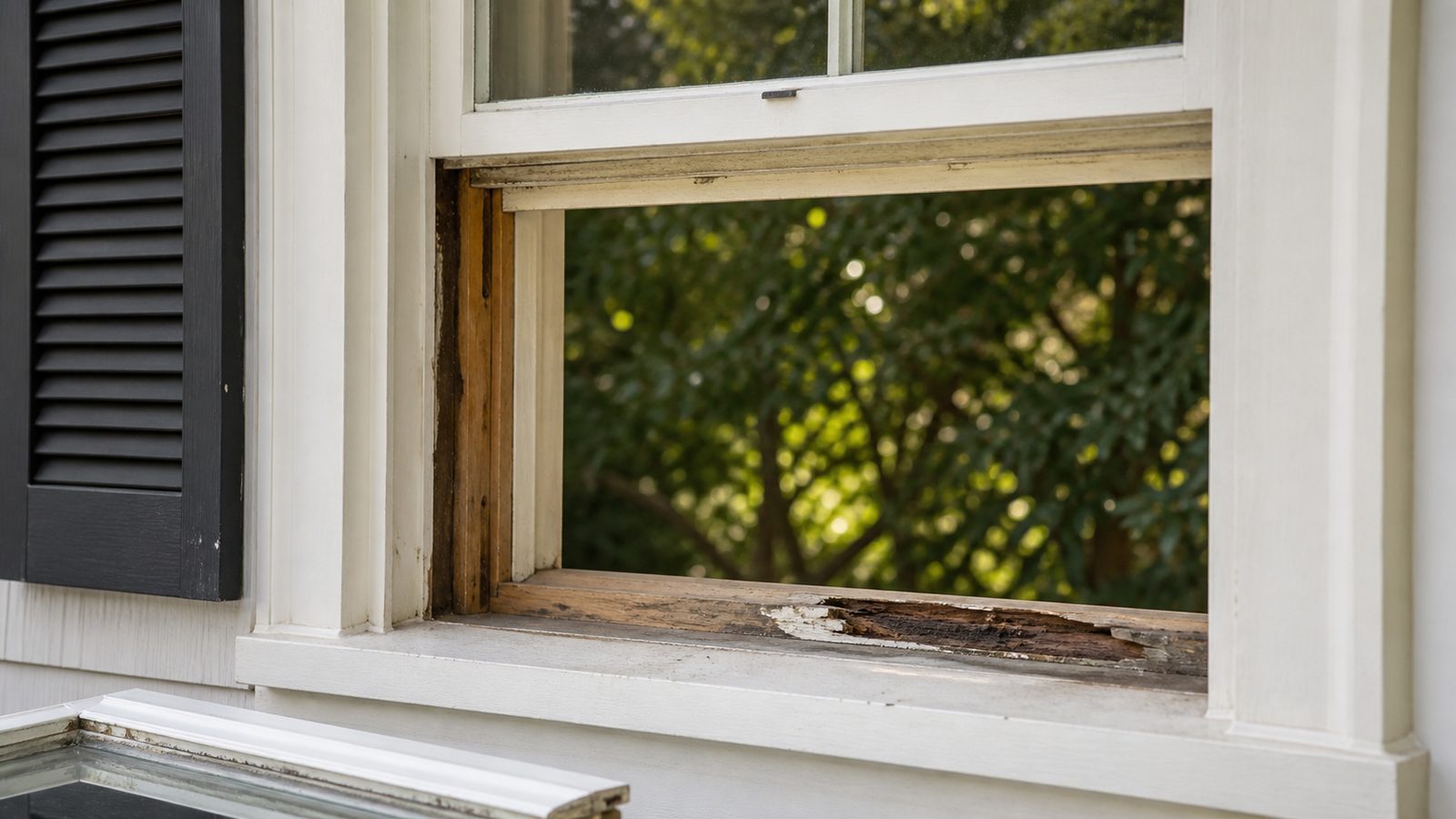
- Window and door replacement — this is the most frequent trigger. Replacing original wood windows with vinyl or aluminum windows typically requires a COA, and JHPC often requires replacement with materials and profiles that match the original (wood or fiberglass with historically appropriate muntin patterns).
- Siding changes — replacing original siding materials (wood clapboard, wood shingle, brick) with vinyl, EIFS, or other non-historic materials requires a COA and is often denied unless reversibility can be demonstrated.
- Additions — any addition to a contributing structure visible from a public way requires a COA. JHPC evaluates massing, setback, roof form, and material compatibility.
- Demolition of any contributing structure — demolition triggers the most rigorous review. JHPC may require a 180-day delay and alternatives analysis before approving demolition of a contributing structure.
- Roof material changes — changing from original-period roofing material (slate, clay tile, wood shake) to asphalt shingle typically requires a COA. In some districts, metal standing seam is approvable as a historically compatible alternative.
- Porch alterations — enclosing, removing, or altering original porches is subject to JHPC review.
Work that generally does NOT require a COA:
- Interior renovations (JHPC jurisdiction is exterior only)
- In-kind repair using the same materials and methods
- Routine maintenance (painting, caulking, minor repairs)
- Work on non-contributing structures within the district
The distinction between "repair" and "replacement" matters. Repairing 60% of an original wood window in place with matching wood does not require a COA. Replacing the entire window unit — even with an identical-looking unit — requires a COA if JHPC tracks material continuity.
How JHPC Reviews Work: Timeline and What to Expect
JHPC meets monthly. The COA application must be submitted before the monthly deadline — typically 3-4 weeks before the meeting — to be placed on the agenda. If your application is complete and the proposed work meets the Secretary of the Interior's Standards for Rehabilitation (the federal standard that guides JHPC review), a COA can be approved at the first hearing.
If the application is incomplete or the proposed work doesn't clearly meet the standards, JHPC may table the application for a revised submission — adding another month to the timeline.
What a complete COA application includes:
- Site plan showing the location of proposed work
- Existing photographs of all affected elevations
- Proposed drawings showing dimensions, materials, and profiles
- Material specifications (manufacturer, product name, finish color)
- Contractor information
The JHPC staff reviews the application before the hearing and may make a recommendation. For straightforward in-kind replacement projects, staff-level approval is sometimes possible without a full JHPC hearing — check with the Historic Preservation Office on the current process.
What Florida Building Code Section 3408 Allows for Historic Structures
The standard Florida Building Code applies to all construction in Duval County. But Chapter 34 of FBC addresses existing buildings, and Section 3408 specifically addresses historic buildings. This section gives building officials discretion to accept alternative compliance methods when full code compliance would damage or destroy historic materials or character-defining features.
What Section 3408 allows:
- Alternative means of achieving fire and life safety equivalent to current code without removing historic fabric
- Acceptance of original construction methods that do not meet current prescriptive code when the historic structure demonstrates adequate performance
- Modifications to accessibility requirements (ADA and FBC Chapter 11) when full compliance would threaten the character of the historic structure — though this modification is limited and case-specific
What Section 3408 does not allow:
- Waiving life safety requirements where genuine hazard exists
- Blanket exemption from all code requirements
- Bypassing structural requirements when a building is being converted to a new use
In practice, Section 3408 creates a conversation between the GC, the building official, and sometimes a code consultant. It requires documentation of the historic significance and the alternative compliance method. It is not a guarantee of approval — it's a mechanism that allows the building official to use judgment.
JK Prestige's preconstruction process on historic projects includes a pre-application meeting with the Building Inspection Division before drawings are submitted. This surfaces Section 3408 alternatives before design fees are spent on solutions the building official won't accept.

Navigating Both JHPC and Building Inspection Division: How JK Prestige Does It
The two review tracks — JHPC and Building Inspection Division — do not communicate with each other automatically. A COA does not substitute for a building permit. A building permit does not satisfy JHPC. Both are required, and their timelines don't always align.
The sequence that works:
- Submit COA application to JHPC. Do not start construction drawings until you have JHPC direction — designing to a window profile JHPC will reject is expensive.
- Once COA is approved (or pre-approval direction is received from staff), complete permit drawings incorporating the JHPC-approved scope.
- Submit permit package to Building Inspection Division. The permit package should reference the COA number.
- After permit issuance, schedule inspections through the standard Jacksonville inspection portal.
Common mistakes:
- Submitting a building permit before COA is approved (permits can be issued but JHPC can still require reversal of non-COA work)
- Proposing window replacements without confirming profile compatibility (JHPC will require resubmission if profiles don't match original)
- Assuming that because a building is in bad condition, JHPC will grant demolition or major alteration easily — JHPC has denied demolition on structurally compromised buildings when rehabilitation alternatives existed
For homeowners in Riverside, Avondale, Springfield, or San Marco, working with a home renovation contractor in Jacksonville who has dealt with JHPC is not optional — it's the difference between a 6-week schedule and a 6-month one. See how JK Prestige manages complex permit processes at The JK Way.
Federal Historic Tax Credits: An Additional Layer for Commercial Projects
For income-producing commercial properties (not personal residences), the federal Historic Tax Credit (HTC) provides a 20% tax credit on Qualified Rehabilitation Expenditures (QREs) for certified historic structures. Florida also offers a state HTC of 20% for state-certified historic structures, which can be combined with the federal credit.
To qualify:
- The property must be a certified historic structure (National Register listed or contributing to a National Register district)
- The rehabilitation must meet the Secretary of the Interior's Standards
- The work must be reviewed and approved by the State Historic Preservation Office (SHPO) and the National Park Service (NPS) before construction begins
The federal tax credit review adds another timeline layer — pre-application, Part 1 (historic certification), Part 2 (proposed work), and Part 3 (completed work). NPS review can take 30-90 days at each stage. For commercial historic renovation projects in Jacksonville, this timeline needs to be built into the project schedule from the outset.
Get a free written estimate in 48 hours. contact the JK Prestige team. A principal answers at (904) 944-0278.
No call center. No coordinator. A JK principal reviews every inquiry and replies with a real number, not a range, not a follow-up form.
Request Free Estimate →