Your roof is the most consequential single element of your home's building envelope. In Jacksonville, it is also the component most directly tested by the environment. Northeast Florida sits in a wind zone that requires 130 mph design-wind-speed compliance. The humidity cycle — wet season from June through September, dry season with high UV exposure October through May — degrades roofing materials in patterns that differ from what national roofing guides describe. The Florida insurance market, reshaped by legislation in 2022 and 2023, now ties your policy availability and premium directly to documented roof condition and age.
This guide is written for Jacksonville homeowners who want to understand their roof — not as a vague structural necessity but as a system with specific components, specific maintenance requirements, and a predictable replacement lifecycle. Whether you are evaluating a roof replacement quote, planning for a near-term project, or deciding between repair and replacement, this guide gives you the information to make that decision based on facts rather than a contractor's sales pitch.
JK Prestige Construction is a Jacksonville-based general contractor. We are a GAF Master Elite certified roofing contractor. We self-perform roofing installation and have completed roofing projects throughout Duval, St. Johns, Clay, and Nassau counties. Our principal walks every site and provides fixed-price contracts with 48-hour estimate turnaround.
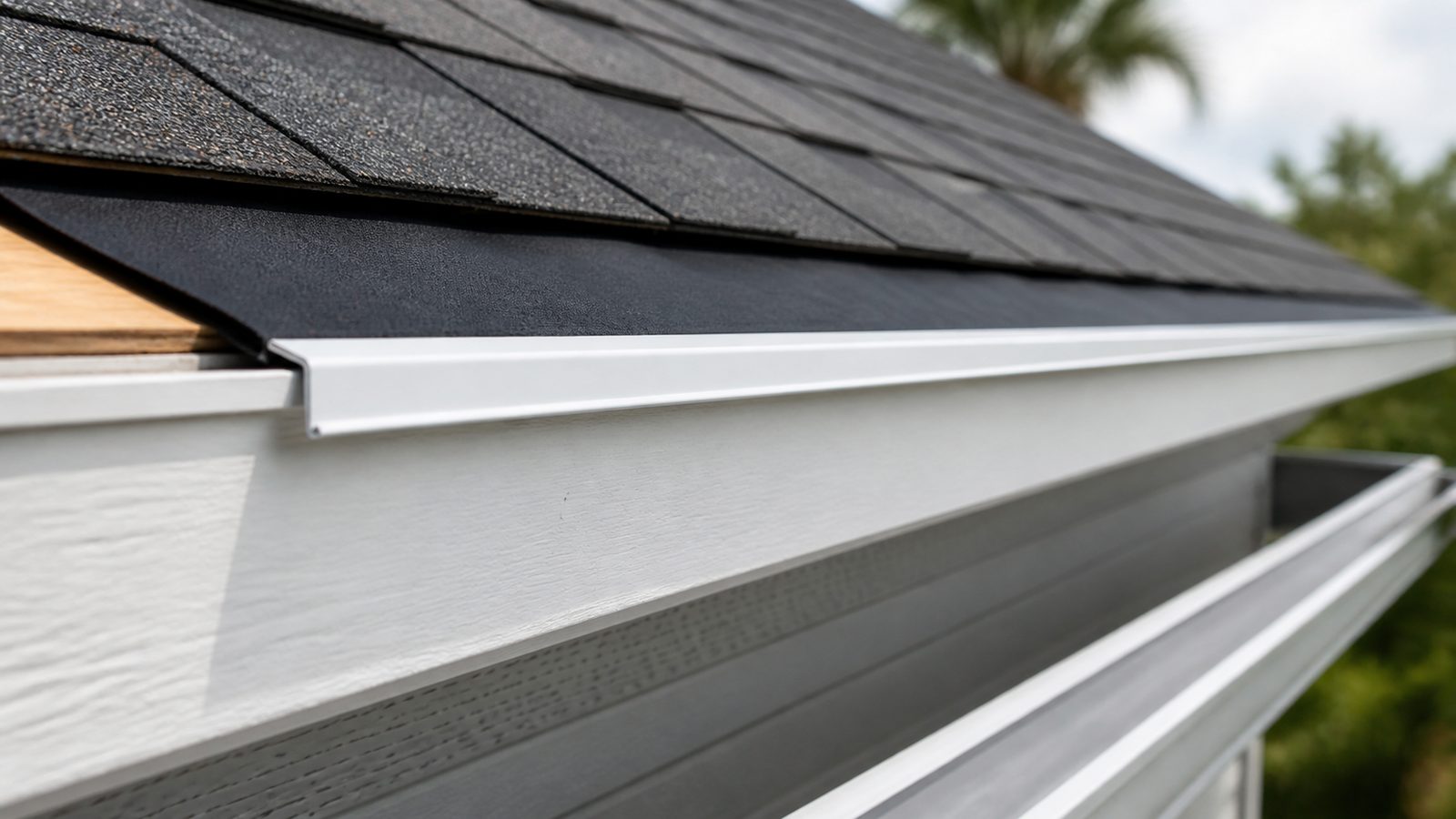
Understanding Your Roof System: What Each Layer Does
A pitched residential roof in Florida is a system of interdependent layers. Replacing one layer without understanding the others is how homeowners pay twice.
The roof deck is typically 7/16" or 5/8" oriented strand board (OSB) or plywood sheathing nailed to the rafters. The deck is the structural base for everything above it. Deck condition is evaluated during any legitimate roof inspection — soft spots, delamination, rot, and prior repairs affect whether the deck can accept new roofing materials without replacement.
The underlayment is installed directly over the deck. In Florida, the Building Code requires a minimum of two layers of ASTM D226 Type I felt or one layer of ASTM D4869 synthetic underlayment on most residential roofs. In high-wind zones and for certain material types, a self-adhering modified bitumen (ice and water shield) underlayment is required over the entire deck surface or at minimum at eaves, rakes, and valleys.
Flashing is sheet metal (typically galvanized steel or aluminum) installed at all roof penetrations, roof-to-wall intersections, valleys, and low-slope transitions. Flashing failure is the most common cause of roof leaks in a roof where the field shingles are still in acceptable condition. Step flashing at dormer walls, counter flashing at chimneys, and kickout flashing at roof-to-wall intersections are the highest-failure locations.
Field shingles are the visible weathering surface — the layer most homeowners identify as "the roof." Field shingles protect the underlayment from UV exposure and direct precipitation but are not the primary waterproofing layer. The underlayment is.
Ridge cap shingles seal the peak of the roof where two slopes meet. Hip-and-ridge cap shingles must meet the wind-resistance requirements of the field shingle system — a roof installed with field shingles rated for 130 mph wind but with ridge cap not rated to match fails the wind compliance of the entire installation.
Explore our roofing services at https://jkprestigeconstruction.com/#/roofing.
Florida Building Code Roofing Requirements: Wind Zones, Nail Patterns, and Underlayment
Duval County, including the City of Jacksonville, falls within the Florida Building Code's High-Velocity Hurricane Zone (HVHZ) adjacent counties and the general High Wind zone requiring 130 mph design wind speed compliance. This is not aspirational — it is the code minimum for all new roofing installations and roof replacements.
The practical implications for your roof installation:
Six-nail fastening pattern. The standard in other states is four nails per shingle. Florida code in the 130 mph wind zone requires six nails per shingle installed in a specific pattern defined by the shingle manufacturer's Florida approval. A four-nail installation in Duval County is a code violation. Ask your contractor which fastening pattern they will use — if they cannot answer immediately, that is information.
Sealed-deck underlayment. Depending on the roof pitch and material type, Florida code requires a self-adhering modified bitumen underlayment installed over the entire deck, or at minimum at eaves (the first 24 inches), rakes (edges), valleys, and all penetrations. Synthetic underlayment alone does not meet this requirement in all configurations.
Product approvals. All roofing materials installed in Florida must carry a Florida Product Approval (FPA) or Miami-Dade Notice of Acceptance (NOA). These approvals define the wind-resistance rating of the product as installed with the specified fastening pattern. A shingle that is rated 130 mph in Texas may not carry the Florida Product Approval for that rating. Verify the FPA number for any material your contractor proposes.
Permit requirement. Any roof replacement on a structure with three or more squares (300 square feet) of roofing requires a building permit in Jacksonville. The permit triggers a building department inspection. A contractor who offers to skip the permit to save money is offering to give you an uninspected roof that will complicate your insurance coverage.
When to Repair vs. Replace: The Five-Factor Decision
The repair-versus-replace decision is the one most homeowners get wrong because they rely on a single data point — visible damage — rather than a multi-factor assessment.
Age is the primary factor. An architectural shingle roof in Florida has a realistic service life of 15–20 years. A roof at 18 years with moderate storm damage should be replaced, not repaired, because the remaining useful life does not justify repair cost and the insurance and resale implications of a 20-year-old roof are significant.
Damage extent. Isolated damage affecting less than 15–20% of the roof area may support repair on a roof with substantial remaining life. Damage affecting more than 20% of the roof area on a roof older than 10 years almost always favors replacement on a lifecycle-cost basis.
Deck condition. If a roof inspection reveals deck damage, repair or replacement of the deck during a field-shingle repair is often cost-prohibitive. Deck issues discovered during inspection are frequently the deciding factor for replacement.
Prior repairs. A roof with multiple repair patches over different sections has typically experienced incremental waterproofing integrity loss at every repair interface. Each repair adds a potential failure point. A roof with three or more patched areas should be assessed for full replacement.
Cost comparison. The cost of a repair that extends the roof's functional life by two to three years versus the annual cost of a roof replacement amortized over its full service life. If the repair costs more than 30% of a new roof and the existing roof is past two-thirds of its expected life, the lifecycle cost of replacement is lower.
Contact JK Prestige for a roof assessment at https://jkprestigeconstruction.com/#/contact.
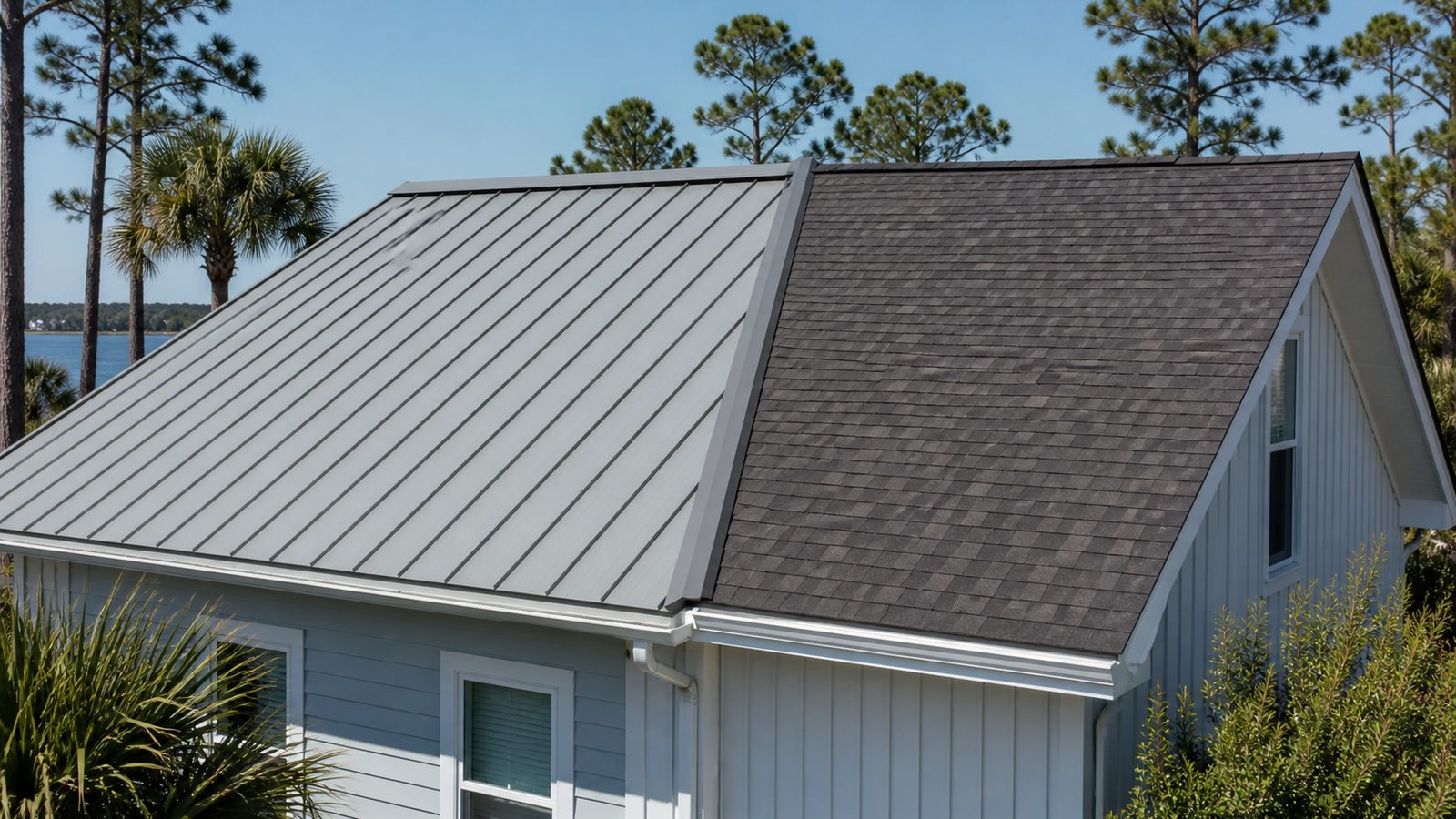
Roofing Materials Compared for Florida: Asphalt, Metal, Tile, and Impact-Resistant Shingles
Florida's climate creates a material selection environment that differs from national norms. Freeze-thaw cycling — a major degradation mechanism for roofing in northern states — is not a factor in Jacksonville. UV exposure and heat aging are the primary material degradation mechanisms here.
Architectural asphalt shingles are the most common residential roofing material in Northeast Florida. Expected service life in Jacksonville: 15–20 years for standard architectural shingles, 20–25 years for premium laminate products. Cost installed: $8,000–$18,000 for a 1,500–2,500 square foot home depending on pitch, complexity, and material specification. Asphalt shingles in Florida must carry Florida Product Approval and, in most cases, must be installed with a self-adhering underlayment system.
Metal roofing — standing seam and exposed-fastener panels — provides a 40–70 year service life in Florida's climate. Metal does not rot, does not support algae growth (a significant maintenance issue with asphalt in Florida's humidity), and provides measurable energy performance benefits through reflective coatings. Cost installed: exposed-fastener metal panels run $12,000–$25,000 for a typical Jacksonville home; standing seam systems run $18,000–$45,000+. Metal roofing qualifies for significant insurance premium discounts under wind mitigation inspection protocols.
Concrete tile provides 50+ year service life and the traditional Florida aesthetic. Concrete tile is heavy — most tile roofs require verified structural capacity for the additional dead load. Cost installed: $22,000–$55,000+ for a typical Jacksonville home. Tile roofs require qualified installation and specific flashing systems; improper tile installation is a major source of leak callbacks in the Florida market.
Class 4 Impact-Resistant (IR) shingles are asphalt shingles that meet UL 2218 Class 4 impact resistance. They do not dramatically extend service life relative to standard architectural shingles, but they qualify for 10–25% insurance premium discounts in Florida and reduce storm damage claims. Cost installed: $10,000–$22,000 for a typical Jacksonville home.
Finding a Qualified Florida Roofing Contractor: License, Insurance, and Certification
Florida requires a specific contractor license for roofing work: the CCC (Certified Roofing Contractor) license. A CGC (general contractor) license alone does not authorize a contractor to perform roofing work as a specialty subcontractor. Verify the CCC license at the Florida Department of Business and Professional Regulation (DBPR) website before signing a contract — the search takes 90 seconds.
Certificate of Insurance (COI) requirements: your roofer must carry general liability insurance and workers' compensation. The workers' compensation COI must list roofing as the classification of work covered (NCCI classification code 5551 for roofing). Many contractors carry workers' compensation that excludes roofing — this leaves the homeowner exposed if a worker is injured on their roof. Request a COI and verify the work classification, not just the coverage limits.
Manufacturer certification: GAF Master Elite, CertainTeed SELECT ShingleMaster, and similar manufacturer certification programs require the contractor to meet training, installation quality, and business standards defined by the manufacturer. These certifications are not self-reported — they are issued and maintained by the manufacturer. A GAF Master Elite contractor can offer the GAF System Plus or Golden Pledge warranty. A non-certified contractor cannot, regardless of what they tell you.
JK Prestige Construction is a GAF Master Elite certified roofing contractor. Learn more about our roofing work at https://jkprestigeconstruction.com/#/roofing and our approach to contracting at https://jkprestigeconstruction.com/#/the-jk-way.
The Roof Replacement Process Step by Step
A residential roof replacement in Jacksonville follows a defined sequence. Understanding the sequence helps you evaluate whether the contractor proposing to replace your roof is following a professional process.
Inspection and scoping. A legitimate inspection includes walking the roof, checking the deck from the attic if accessible, and documenting all areas of damage or concern. The estimate produced from this inspection should line-item materials, labor, permit fees, and any anticipated deck repair allowance.
Contract and permit. The fixed-price contract should specify the material manufacturer, product line, color, wind-resistance rating, underlayment specification, and fastening pattern. The contractor pulls the permit — not the homeowner. Permit issuance takes 3–10 business days in Jacksonville, depending on current volume.
Material delivery and site protection. Shingle bundles are delivered and staged on the driveway or yard. The contractor is responsible for protecting landscaping, gutters, and exterior surfaces from material and equipment damage.
Tear-off. The existing roofing materials are removed and disposed of. Deck condition is assessed after tear-off — this is the only point at which full deck condition can be confirmed. Any deck repair should be documented, photographed, and approved by the homeowner before the new roof goes on.
Underlayment and flashing. Underlayment is installed first, then all flashing — step flashing at walls, counter flashing at chimneys, valley flashing, and kickout flashing at all roof-to-wall intersections. Flashing is installed before field shingles. A contractor who installs shingles before flashing is doing it wrong.
Field shingles and ridge cap. Installed per the manufacturer's Florida Product Approval pattern. The six-nail pattern in Duval County must be used throughout.
Building department inspection. The inspector verifies permit compliance, fastening pattern, underlayment, and flashing. The inspection record should be provided to the homeowner.
Cleanup. All torn-off material, nail debris, and staging waste removed from the property. Magnetic sweeps of yard and driveway areas are standard practice.
Roofing Warranties Explained: Workmanship, Manufacturer, and NDL
Three distinct warranties apply to a Florida residential roof replacement, and they are not interchangeable.
Workmanship warranty is provided by the contractor. It covers installation defects — flashing failures, fastening errors, penetration details — that are the contractor's responsibility rather than the material manufacturer's. Standard workmanship warranty terms in Florida range from 2 to 10 years. A contractor offering a 1-year workmanship warranty is offering below-market coverage. JK Prestige offers workmanship warranties consistent with GAF Master Elite contractor standards.
Manufacturer's material warranty covers defects in the roofing material itself — granule loss beyond normal weathering, premature cracking, material delamination. Standard architectural shingle manufacturer warranties run 25–30 years for the material; premium products carry 50-year or lifetime terms. Read the warranty documents: most manufacturer warranties are prorated after the first 10 years, meaning the manufacturer pays a declining percentage of replacement cost as the roof ages.
No Dollar Limit (NDL) warranty is available only through manufacturer-certified contractors and covers both materials and labor for the full warranty term without proration. GAF's System Plus and Golden Pledge warranties are NDL warranties available exclusively through GAF Master Elite contractors. An NDL warranty is the strongest roofing warranty available in the residential market. If your contractor is not manufacturer-certified, they cannot offer it.
Roofing and Insurance: Wind Mitigation, Hurricane Deductibles, and ACV vs. RCV
The Florida homeowner's insurance market has changed significantly since 2022. Carriers are now scrutinizing roof age and condition at policy application and renewal. A roof over 15 years old may result in a policy non-renewal or a significant premium increase. A documented Class 4 IR roof or a metal roof changes the actuarial risk profile your insurer assigns to your home.
Wind mitigation inspection is a formal inspection performed by a licensed inspector (typically a licensed contractor, engineer, or home inspector with specific wind mitigation training) that documents your roof's construction characteristics: decking attachment, secondary water resistance (sealed deck underlayment), roof covering type and wind resistance, and roof shape. The wind mitigation report is submitted to your insurer and typically produces a premium discount of 10–40%.
Hurricane deductibles in Florida are percentage-based, not flat. If your policy carries a 2% hurricane deductible and your home is insured for $450,000, your hurricane deductible is $9,000 — not a flat $500 or $1,000. Understanding your actual deductible before storm season is critical to planning your financial exposure.
Actual Cash Value (ACV) vs. Replacement Cost Value (RCV) determines how your insurance pays a claim. ACV policies pay the depreciated value of your roof — a 15-year-old roof with a 20-year expected life might be depreciated 75%, meaning a $15,000 replacement cost claim pays out $3,750. RCV policies pay the full replacement cost without depreciation, subject to your deductible. Know which you have before you need to file a claim.
What a Jacksonville Roof Replacement Costs in 2025
Material costs and labor rates in Jacksonville as of 2025, based on JK Prestige's direct field experience:
Architectural asphalt shingles (standard, 1,500–2,500 sqft home): $8,000–$18,000 installed. Includes permit, tear-off, underlayment, flashing, and field shingles. Deck repairs billed at $3–$6 per square foot.
Class 4 IR shingles (same home size): $10,000–$22,000 installed. Premium reflects material cost differential and the insurance discount it qualifies for.
Metal roofing — exposed fastener panels: $12,000–$25,000 installed. Standing seam: $18,000–$45,000+. Price range reflects pitch complexity, valley count, and panel profile.
Concrete or clay tile: $22,000–$55,000+ installed. Structural assessment for load capacity may add cost before roofing begins.
These ranges reflect standard residential pitched roofs in Duval County. Steep pitch (over 7:12), complex geometry (multiple valleys, dormers, skylights), and additional stories add to cost.
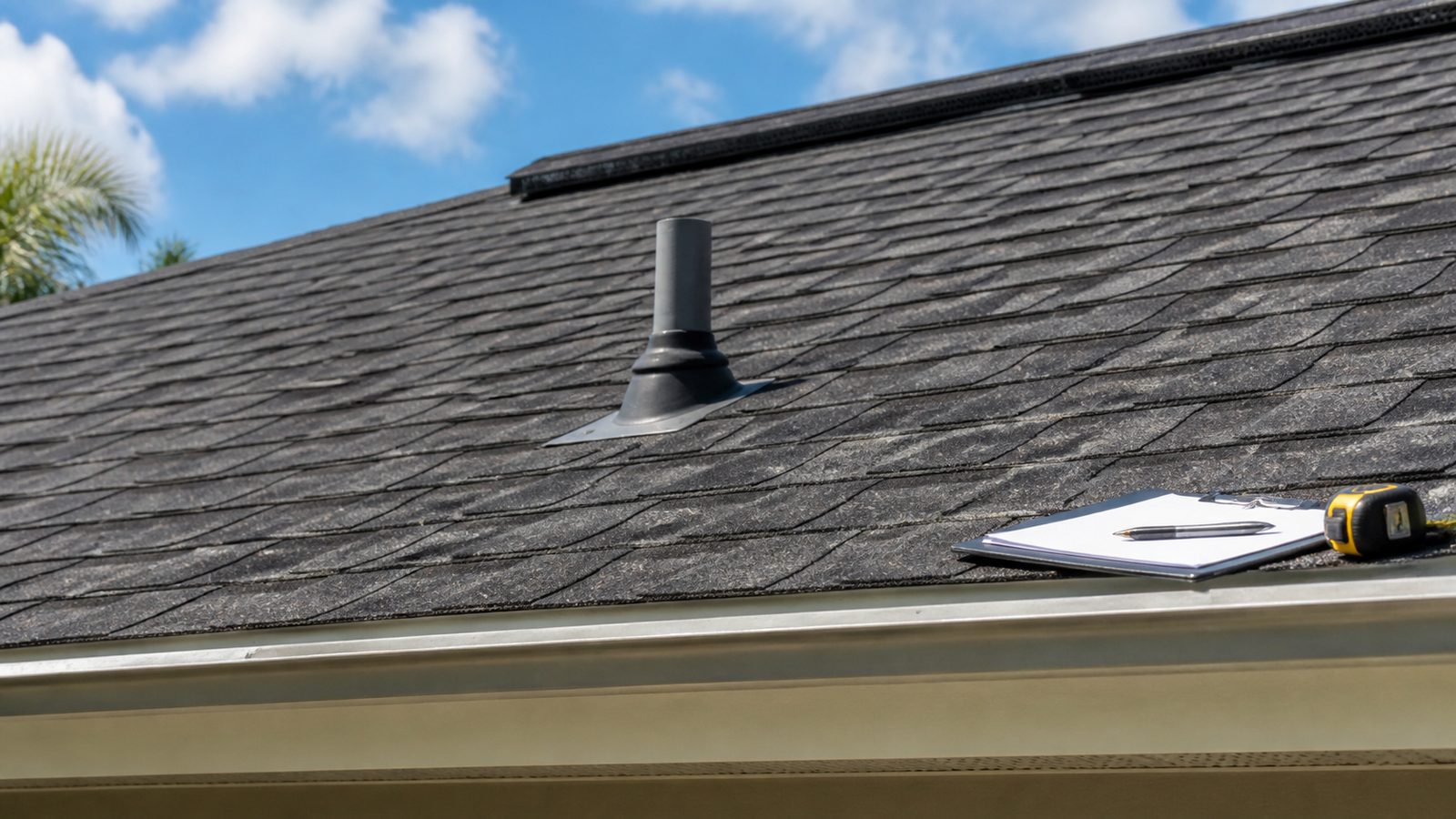
Pre-Hurricane Season Checklist
Before June 1 each year, Jacksonville homeowners should complete the following:
Have a licensed contractor visually inspect the roof for lifted or missing shingles, compromised flashing, and granule loss in downspouts. Review your homeowner's insurance declarations page: confirm your hurricane deductible amount, your coverage type (ACV vs. RCV), and your roof's scheduled value. Confirm you have a current wind mitigation inspection report on file with your insurer — they expire and must be renewed after a roof replacement. Clear gutters and downspouts of debris accumulated over winter. Trim any tree branches within 8 feet of the roof edge. Know your emergency tarp suppliers — if you need to tarp after a storm, knowing in advance saves time.
Ready to start? Get a written estimate in 48 hours. Call (904) 944-0278 or request a free consultation.
No call center. No coordinator. A JK principal reviews every inquiry and replies with a real number, not a range, not a follow-up form.
Request Free Estimate →