Your roof is not a maintenance item — it is a structural system that determines whether everything below it stays dry. In Florida, where hurricane-force winds, tropical storm rain events, and UV degradation are facts of life, the decisions you make about your roof replacement have larger consequences than they do in most of the country. The wrong material selection can affect your insurance premiums. An improperly installed roof can fail a wind mitigation inspection. And a roofing contractor who cuts corners on underlayment and fastener patterns can leave you with a roof that looks fine until a Category 2 storm tests it.
This guide is for homeowners in Jacksonville, Duval County, and surrounding NE Florida counties preparing to replace a roof. It covers when to replace versus repair, what Florida Building Code requires, which materials perform in Florida's climate, how to evaluate contractors, and what a replacement actually costs in 2025.
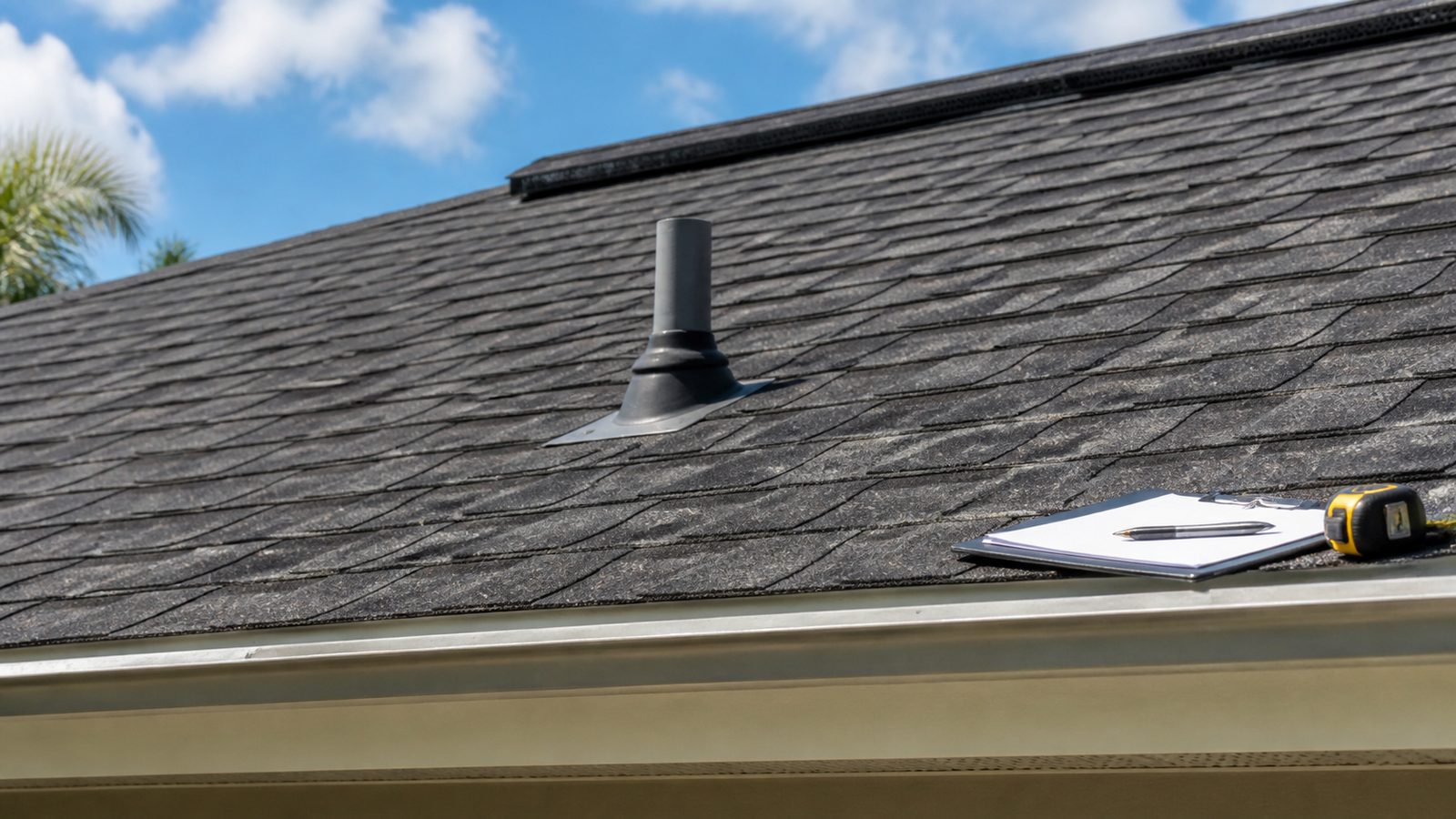
When to Replace vs. Repair: The 5-Factor Decision
Not every roof problem requires full replacement. Use these five factors to decide.
1. Age relative to expected lifespan. 3-tab asphalt shingles last 15–20 years in Florida's UV and heat environment. Architectural shingles last 20–30 years. If your roof is within 5 years of end-of-life, repair costs you money twice — once now and once soon.
2. Extent of damage. A single damaged area — storm debris impact, a flashing failure, or isolated shingle blow-off — is repair territory if the surrounding roof is in good condition. Damage that exceeds 25–30% of total roof area, or that involves the decking beneath the shingles, typically justifies replacement.
3. Shingle condition across the field. Walk the perimeter and inspect from the ground (or from a drone photo). Signs of systemic failure: granule loss exposing mat, cracking and curling across multiple planes, shingles that are brittle and crumbling at edges. These indicate end-of-life system degradation, not isolated damage.
4. Decking integrity. If the roof deck (typically 7/16" OSB or 15/32" plywood in Florida) has soft spots, rot, or delamination under the existing shingles, replacement is the correct answer. Decking is visible only at the eaves, rake edges, and any open deck areas — a thorough inspection includes probing these areas.
5. Insurance and resale implications. Some Florida insurance carriers will not write or renew homeowners policies on roofs older than 15 years. If you're selling, buyers' insurers may require documentation of roof age and condition. A new roof with a manufacturer warranty and a current wind mitigation report is a selling asset; an aging roof is a negotiation liability.
Understanding Florida Building Code Requirements for Roof Replacement
Florida operates under the Florida Building Code (FBC), which is among the most stringent residential building codes in the country — a direct result of the destruction from Hurricane Andrew (1992) and subsequent storms.
Key requirements for roof replacement in Florida:
Permit required: A roofing permit is required for full roof replacement in Florida. Any contractor who suggests you can skip the permit is not compliant with state law. The permit triggers inspections that verify installation to code.
Re-roofing over existing shingles: Florida allows one layer of shingles over existing in limited circumstances, but most roofing inspectors and insurance carriers prefer or require full tear-off to expose and inspect the deck. Full tear-off is almost always the correct choice.
Secondary water barrier: Florida law requires a self-adhering polymer-modified bitumen underlayment (peel-and-stick ice-and-water shield) as a secondary water barrier on roofs replaced or newly installed. This layer protects the structure if the primary roofing material fails in a storm.
Fastener requirements: Roofing nails must penetrate through the deck or at least 3/4" into the deck. Staples are not permitted in Florida for shingle attachment. Ring-shank nails are required in some wind zones.
Wind zone compliance: In Duval County, roofing systems must be designed for a 130 mph design wind speed. This affects both the roofing product selection (product approval number required) and the installation pattern (fastener count and placement per panel or shingle).
JK Prestige is a GAF Master Elite certified roofing contractor. Master Elite is a designation held by fewer than 3% of roofing contractors nationally, requiring demonstrated installation quality, a strong warranty record, and ongoing training.
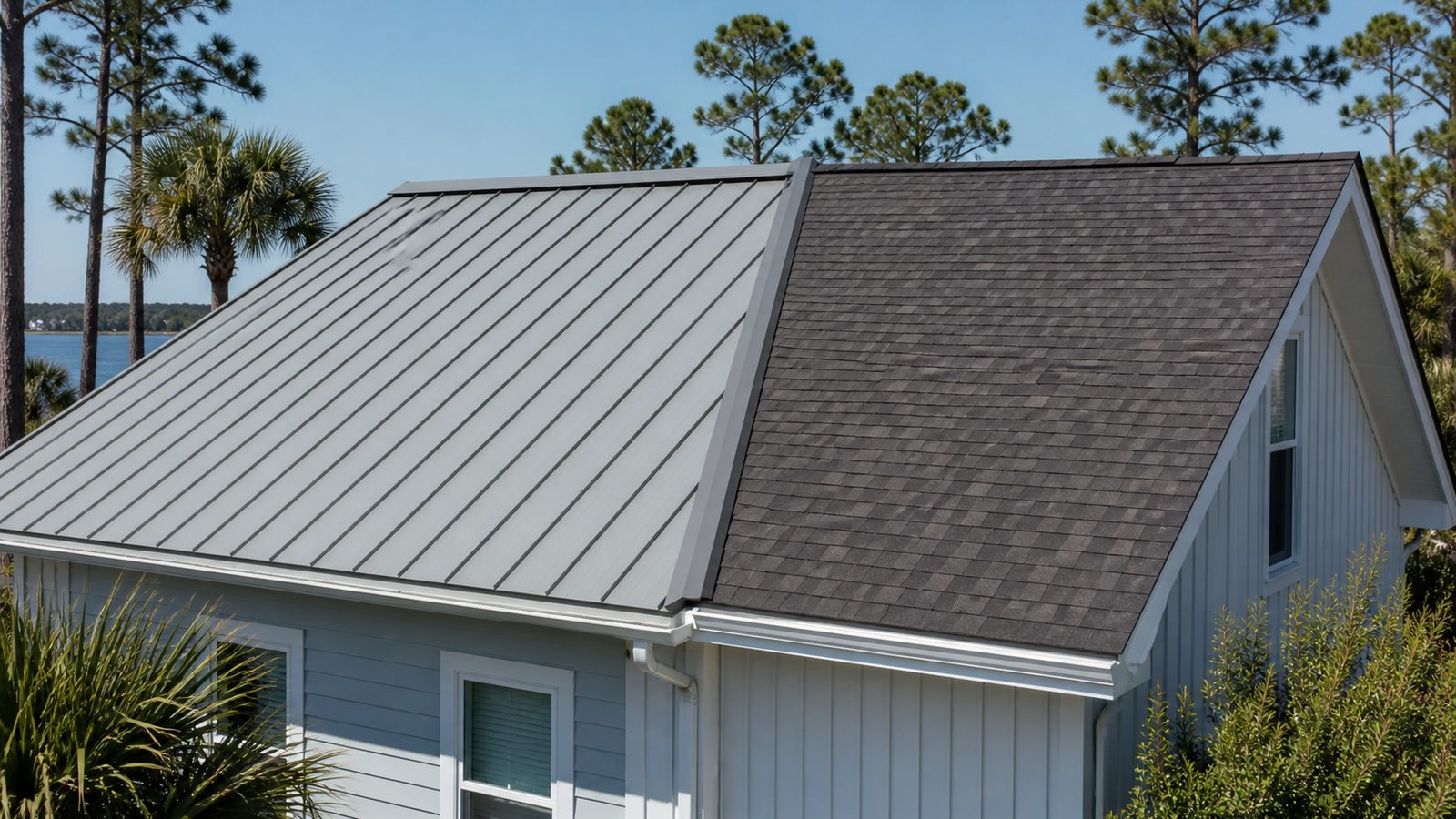
Roofing Material Comparison for Florida's Climate
Material selection is a function of your budget, the structural capacity of your roof, your insurance situation, and your aesthetic preferences.
Asphalt Architectural Shingles
The most common roofing material in Florida. Modern architectural (dimensional) shingles carry 30-year warranties and are available in impact-resistant (IR) versions. IR shingles may qualify for insurance discounts of 10–25% with some carriers. Cost installed: $350–$550 per square (100 sqft) in Jacksonville.
Metal Roofing (Standing Seam and Exposed Fastener Panel)
Standing seam metal performs exceptionally in Florida's environment: 40–70-year lifespan, superior wind resistance when properly attached, heat reflectivity that reduces cooling loads. Standing seam systems have concealed fasteners, eliminating the primary leak point of exposed-fastener panels. Cost installed: $700–$1,100 per square for standing seam. Exposed-fastener metal panels: $400–$650 per square.
Concrete and Clay Tile
Common in Spanish Mediterranean and Tuscan-style homes throughout Jacksonville's Mandarin, San Jose, and Southside neighborhoods. Long lifespan (40–50 years for concrete, 50+ for clay). Heavy — requires verification that the roof structure can support the weight (typically 900–1,200 lbs per square vs. 250–400 lbs for asphalt). Wind attachment for tile requires specific engineered fastening patterns per FBC. Cost installed: $550–$900 per square for concrete tile; $900–$1,400 for clay tile.
Impact-Resistant Shingles (Class 4)
A subcategory of asphalt shingles tested to UL 2218 Class 4 impact standards. In Florida, some insurers offer premium discounts for Class 4 impact-resistant shingles. JK Prestige installs CertainTeed impact-resistant products alongside GAF lines. Cost installed: $400–$600 per square.
How to Find a Qualified Roofing Contractor in Florida
Florida's roofing industry attracts storm chasers — contractors who arrive after storm events with out-of-state plates, high-pressure tactics, and no local license or insurance. Protecting yourself starts with verification.
Verify the Certified Roofing Contractor (CRC) license through the Florida DBPR at myfloridalicense.com. The license should be active, state-certified (not just registered to one county), and in the contractor's current business name.
Verify workers' compensation insurance. In Florida, roofing is classified as a high-risk occupation. Any roofing contractor without active workers' comp is exposing you to liability if a worker is injured on your property. Call the carrier to confirm active coverage — do not rely on a certificate alone.
Check for manufacturer certifications. GAF Master Elite and CertainTeed SELECT ShingleMaster are the two most widely recognized manufacturer credential programs. These require contractors to demonstrate installation quality and maintain training. They also unlock longer manufacturer warranties for homeowners.
Check for local references. Ask for three references from completed projects in Jacksonville within the past 12 months. Drive by and look at the work. Call the references.
Confirm they pull permits. Ask directly: will you pull a roofing permit for this project? Any hesitation is a disqualifying red flag.
Getting and Comparing Estimates
Request written estimates from at least three contractors. Valid comparison requires that all three are bidding the same scope.
An estimate should specify:
- Total squares (roof area) being replaced
- Material specified by manufacturer, product line, and color
- Underlayment specification (required secondary water barrier product)
- Fastener type and pattern
- Deck replacement allowance (# of sheets included; additional cost per sheet)
- Permit included or excluded
- Warranty: workmanship and manufacturer term
- Debris removal and cleanup included
Do not compare estimates that differ in scope. If one contractor excludes the permit and another includes it, adjust before comparing prices. A permit-excluded estimate looks cheaper and is not a legitimate comparison.
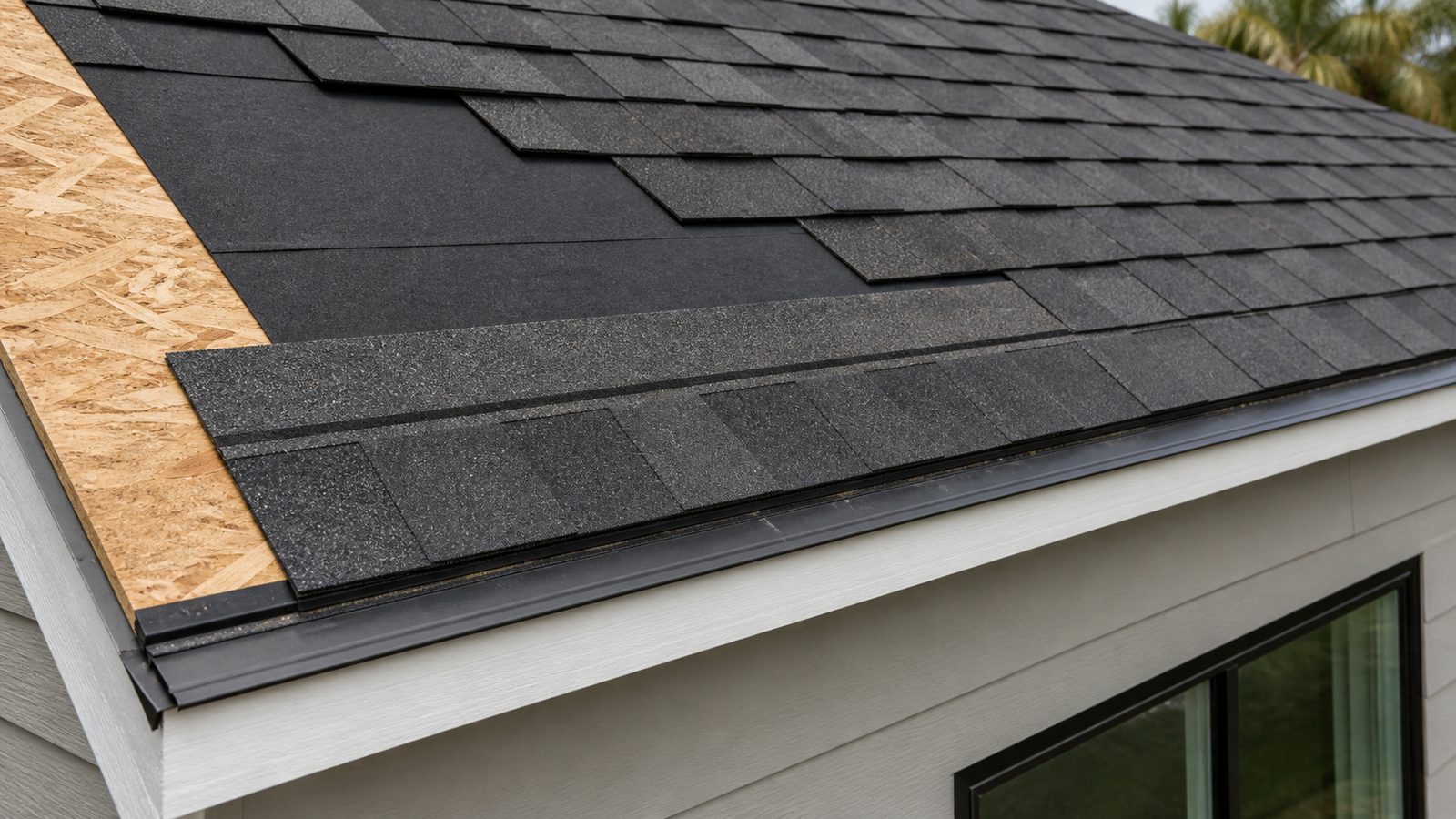
The Roof Replacement Process Step by Step
- Permit application and approval: Your contractor applies for the roofing permit. In Duval County, residential roofing permits typically issue within 5–10 business days.
- Material delivery: Shingles, underlayment, and accessories are delivered to the site 1–2 days before the start date. Confirm delivery before the crew arrives.
- Tear-off: Existing roofing material is stripped to the deck. Deck condition is assessed and any damaged or deteriorated sections are replaced (typically 7/16" OSB; billed by the sheet at $80–$140/sheet in 2025).
- Secondary water barrier installation: Self-adhering peel-and-stick underlayment applied to the full deck before any primary roofing material.
- Primary roofing installation: Starter strip along eaves and rakes, then field shingles installed per manufacturer pattern and FBC fastener requirements.
- Flashing: Step flashing at walls, chimney flashing, pipe boot replacements, and ridge cap installed.
- Inspection: Roofing inspector from the building department verifies installation to code. This is required before the permit closes.
- Cleanup: Magnetic sweep of the property for nails, debris removal, and final site clean.
Timeline and What to Expect During Installation
A full roof replacement on a typical Jacksonville home (2,000–2,500 sqft, 20–28 squares of roofing) takes 1–3 days of active installation. Add 1–2 days for permitting after application in most cases, and 1–2 days for inspection scheduling.
Total calendar time from signed contract to completed inspection: 10–21 days in normal conditions. During post-storm surge periods (after major hurricane events), contractor availability and material supply can extend this to 6–12 weeks.
Weather: roofing cannot proceed on a wet deck or in rain. Schedule flexibility during Florida's wet season (June through September) is normal. A reputable contractor will not install over wet decking even if it delays completion.
Insurance and Roofing: Understanding Your Policy
Florida's homeowners insurance market has undergone significant changes since 2022. Key things to understand:
Actual Cash Value (ACV) vs. Replacement Cost Value (RCV): ACV policies pay the depreciated value of your existing roof — on a 20-year-old shingle roof, this could be 10–20% of replacement cost. RCV policies pay the full replacement cost after the deductible. When you file a claim, ACV policies result in a large out-of-pocket gap.
Hurricane deductible: Florida homeowners policies have separate hurricane deductibles, typically 2–5% of insured value. On a $500,000 home with a 2% hurricane deductible, you absorb the first $10,000 of any hurricane-related claim.
Roof age restrictions: Many Florida carriers will not write new coverage on homes with roofs older than 15 years, or apply ACV coverage to any roof older than 10 years. A new roof resets this clock.
Wind mitigation discount: A wind mitigation inspection verifies your roof's construction details — opening protection, roof deck attachment, roof-to-wall connections, and roof covering type. Strong wind mitigation scores result in insurance premium reductions of 10–45% with most Florida carriers. The inspection costs $75–$150 and pays for itself immediately.
Warranty Types: Workmanship vs. Manufacturer
Workmanship warranty: The roofing contractor's warranty on their installation quality. Standard is 1–5 years. GAF Master Elite contractors can offer enhanced workmanship warranties up to 25 years through manufacturer-backed programs.
Manufacturer warranty: Covers the roofing product itself — shingles, underlayment, accessories. Duration ranges from 25 years (basic) to "lifetime" (typically 50 years prorated). Manufacturer warranties are transferable to new owners in most cases, which is a selling point at resale.
System warranty: Available through some manufacturer programs (GAF Golden Pledge, CertainTeed SureStart PLUS) when certified contractors install complete manufacturer systems. These cover both product and labor. They require all components — underlayment, starter strip, ridge cap, ventilation — to be from the same manufacturer.
What a Jacksonville Roof Replacement Costs in 2025
Costs in 2025 for a typical Jacksonville home (20–28 squares):
| Material | Installed Cost Per Square | Total (24 squares) |
|---|---|---|
| Architectural asphalt, standard | $350–$450 | $8,400–$10,800 |
| Impact-resistant asphalt (Class 4) | $400–$600 | $9,600–$14,400 |
| Exposed-fastener metal panel | $400–$650 | $9,600–$15,600 |
| Standing seam metal | $700–$1,100 | $16,800–$26,400 |
| Concrete tile | $550–$900 | $13,200–$21,600 |
Add:
- Deck replacement: $80–$140 per 4x8 sheet
- Permit: $200–$500
- Dumpster/tear-off disposal: typically included by contractor
A mid-grade architectural shingle replacement on a 2,400 sqft home runs $10,000–$13,000 all-in with permit and cleanup. Metal or tile adds significantly to the total.
Ready to start? Get a written estimate in 48 hours. Call (904) 944-0278 or request a free consultation.
No call center. No coordinator. A JK principal reviews every inquiry and replies with a real number, not a range, not a follow-up form.
Request Free Estimate →