Hurricane Andrew made landfall in South Florida on August 24, 1992, with wind speeds exceeding 165 mph. The destruction was catastrophic — and a significant portion of it was caused by roof failures that should not have happened. The materials were available; the codes were not enforced, and in many cases were not written to handle what Andrew produced.
Florida's response was the most comprehensive overhaul of building and roofing codes in U.S. history. What emerged over the following three decades — with major revisions after every major storm event — is a code framework that applies to every roofing project in Duval County today, including yours.
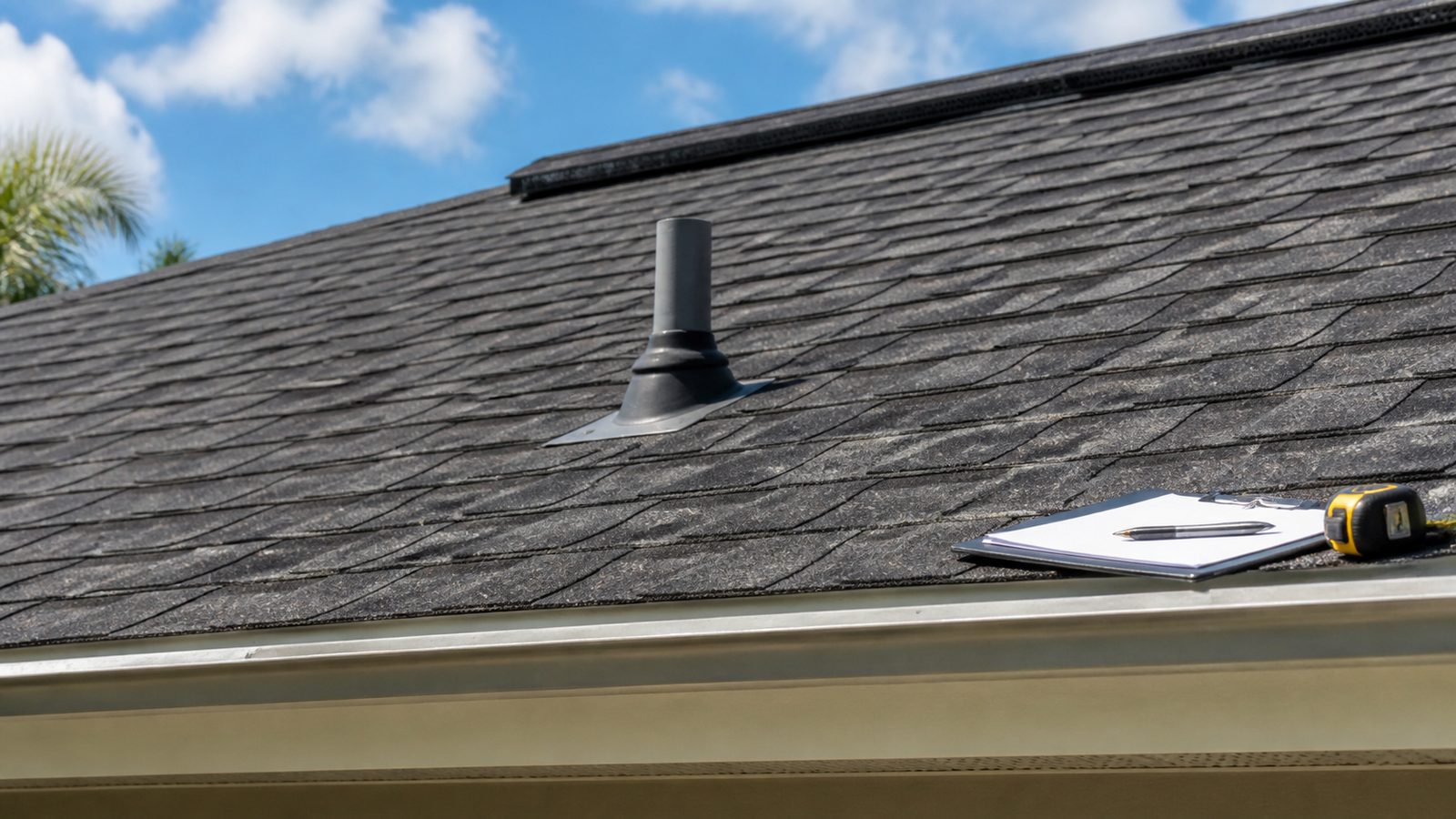
The Post-Andrew Foundation: Miami-Dade Standards Go Statewide
After Andrew, Florida did not merely patch the existing code. The state adopted Miami-Dade County's product approval standards statewide. Miami-Dade had developed the most rigorous wind-testing protocols in the nation following years of hurricane exposure — testing roofing products in a large-scale chamber that simulates actual hurricane conditions.
The key requirement: every roofing product installed in Florida must carry a Florida Product Approval (FPA) number issued by the Florida Department of Business and Professional Regulation (DBPR). The FPA certifies that the product has been tested to withstand the wind loads applicable to the installation site, including wind-driven rain infiltration tests.
An asphalt shingle without an FPA cannot be legally installed in Florida. A roofing contractor who installs non-approved products is subject to license discipline and the property owner is left with a non-code-compliant roof. Verifying FPA numbers on specified products is part of JK Prestige's standard preconstruction process on every roofing project.
High-Wind Nailing Requirements in Duval County
One of the most direct post-Andrew code changes involves how shingles are attached to the deck. Standard industry practice before the code changes used 4 nails per shingle. High-wind zones now require 6 nails per shingle in many configurations.
Florida Building Code (FBC) requires that shingle installation follow the manufacturer's installation specifications for the applicable wind zone. In Duval County, the basic wind speed for residential construction under ASCE 7-22 is 130 mph (3-second gust).
What 130 mph zone installation requires for asphalt shingles:
- 6 nails per shingle (minimum) for most manufacturer wind warranties at 130 mph
- Nails must be roofing nails (not staples) — corrosion-resistant, 11 or 12 gauge, with a 3/8-inch head
- Nail must penetrate into the deck a minimum of 3/4 inch or through the deck
- Nails must be placed in the manufacturer's specified nailing zone — not above or below it
- The starter course must be nailed per manufacturer specification, typically with fasteners at 6-8 inches on center
Incorrectly nailed shingles — too few nails, nails outside the nailing zone, nails that don't penetrate adequately — will fail at wind speeds well below 130 mph. This is not a minor code technicality. It is the difference between a roof that survives a Category 1 hurricane and one that comes apart at 75 mph sustained winds.
JK Prestige's roofing crews self-perform all nail-down shingle installation. There are no brokered-out nail crews on our projects — which means our foreman controls the nail count and placement on every course.
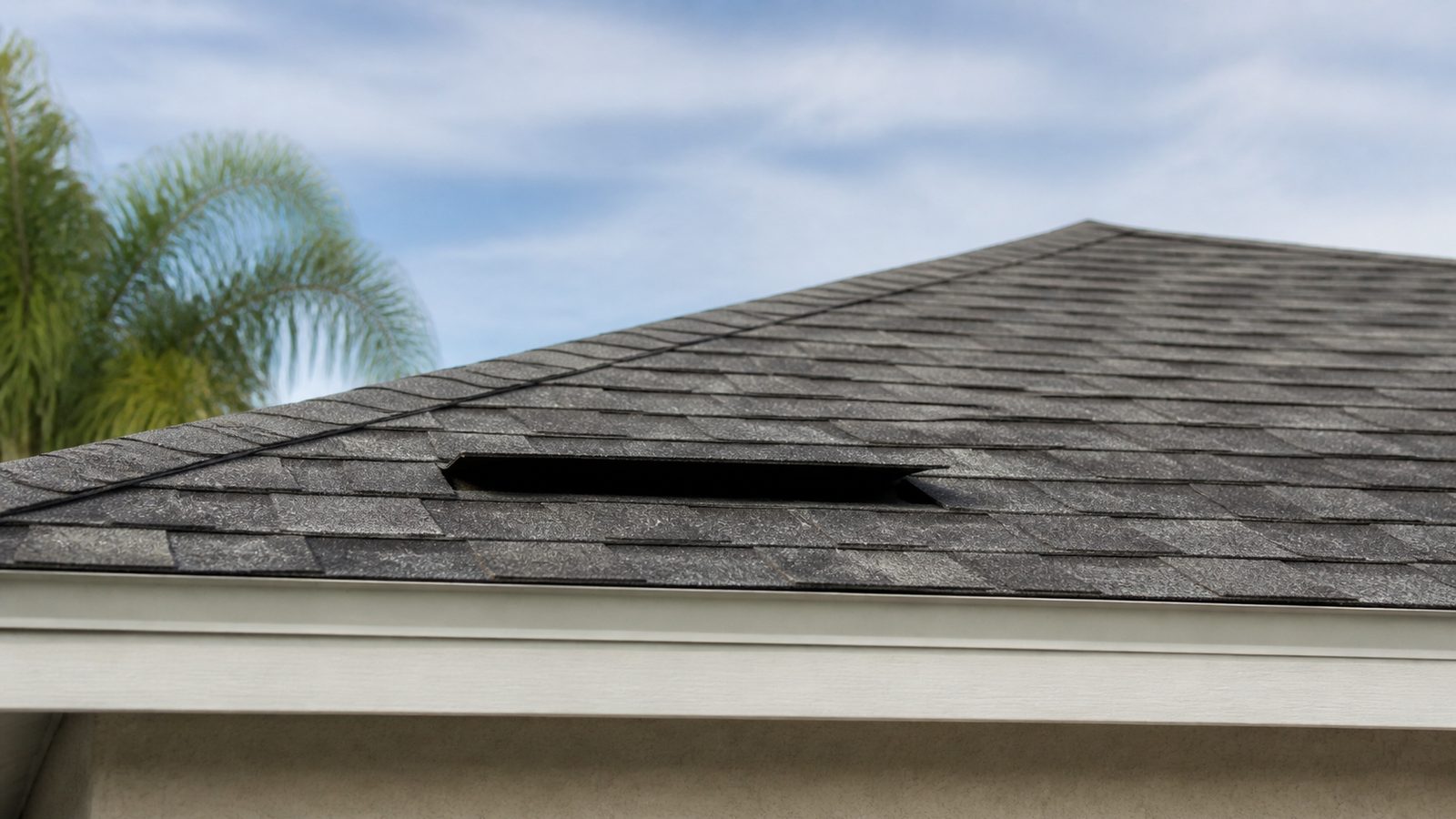
Ice and Water Shield: Why Florida Requires It Despite No Ice
Ice and water shield is a self-adhering waterproofing membrane applied directly to the roof deck before shingles are installed. The name is misleading for Florida contractors — the primary function in Duval County is not ice protection. It's wind-driven rain protection.
FBC requires ice and water shield at:
- All eaves (minimum 24 inches from the exterior wall line, or to a point 24 inches past the interior wall plane — whichever is further)
- All penetrations (pipe boots, HVAC curbs, skylights)
- All valleys
- All hips and ridges on steep-slope applications
What ice and water shield does in a hurricane: when wind-driven rain is forced horizontally under shingles (which happens at sustained speeds above 60 mph), the self-adhering membrane prevents water from reaching the deck and entering the structure. Without ice and water shield at eaves, wind-driven rain infiltration under lifted shingles goes directly onto the unprotected deck.
The self-adhering membrane also seals around roofing fasteners — when a nail penetrates the membrane, the membrane closes around the nail shaft, preventing water from tracking down the nail into the deck.
Drip Edge: Mechanically Fastened, Not Just Placed
Florida Building Code requires drip edge on all new roofing and requires it to be mechanically fastened — nailed at maximum 12-inch spacing at the eave and maximum 12-inch spacing at the rake. Drip edge is also required to be installed under the ice and water shield at the eave (so water running behind drip edge runs over the membrane and not behind it).
The reason: at 100+ mph wind, anything that is not fastened becomes a projectile or a failure point. Drip edge that is simply placed without fastening will lift within minutes of sustained high-wind conditions, creating an open edge that allows wind to get under the shingles immediately behind it. Eave failure often propagates — one lifting section creates uplift pressure on the next section.
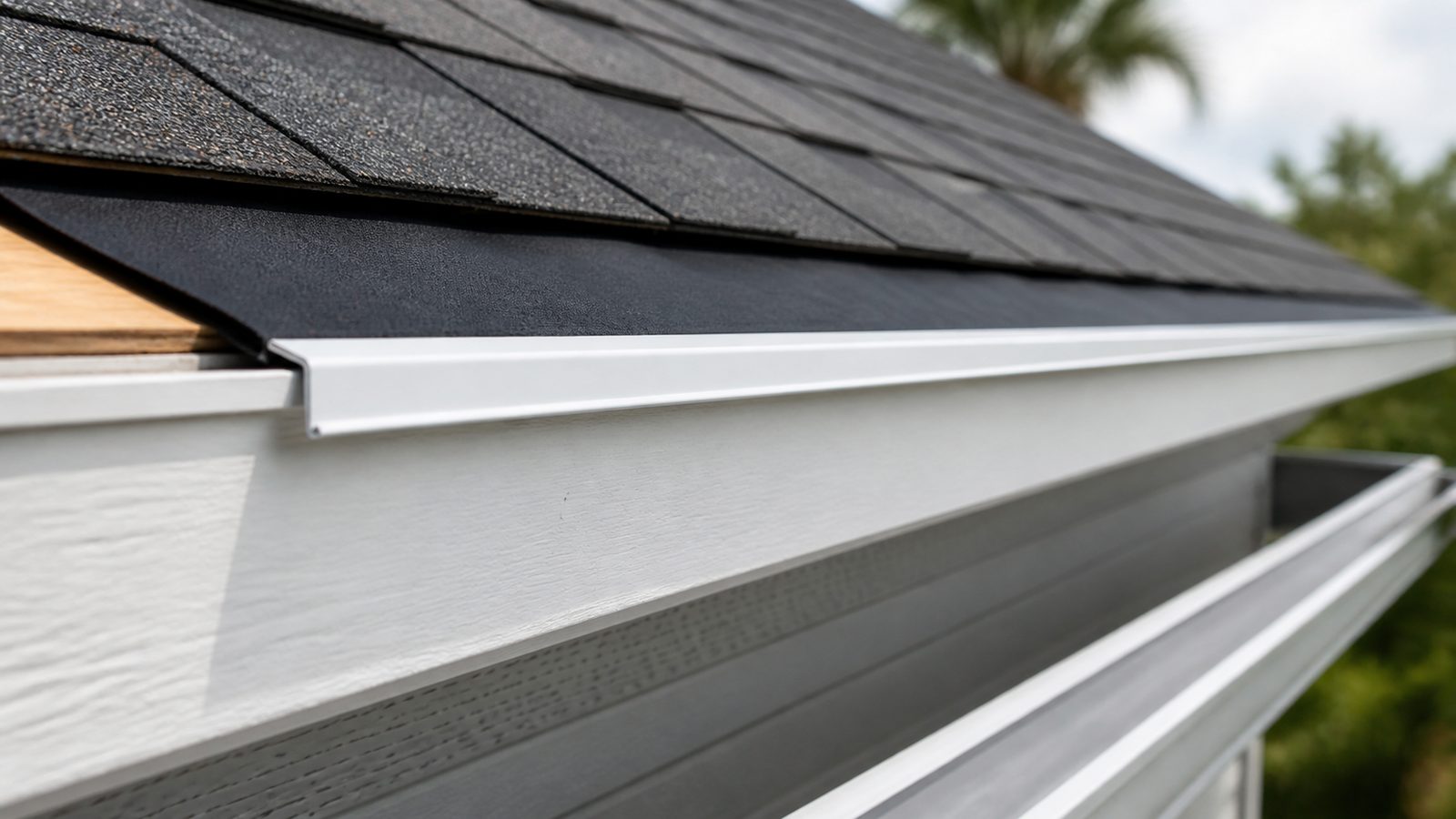
Underlayment Requirements: Self-Adhering in High-Wind Zones
FBC requires specific underlayment types based on wind speed zone. In Duval County at 130 mph:
Acceptable primary underlayment options:
- Self-adhering modified bitumen membrane (minimum) under low-slope applications
- ASTM D226 Type II felt (30-pound felt) with additional fastening requirements
- Synthetic underlayment with wind-resistant installation (each manufacturer specifies nail pattern)
For ASCE 7-22 130+ mph zones, the minimum for shingle applications under most manufacturer specifications is a self-adhering or synthetic underlayment with specific fastening that limits water infiltration if shingles are lifted. Standard 15-pound felt is not acceptable as a primary underlayment for high-wind zones in Florida.
What Changed with the 2023 FBC 8th Edition for Duval County
Florida adopted the 8th Edition Florida Building Code effective January 1, 2024. Key changes affecting roofing in Duval County:
Updated ASCE 7-22 wind maps: The 8th Edition adopts the ASCE 7-22 risk-targeted maximum considered event (MCER) wind maps, which recalculated design wind speeds for many Florida counties. Some Duval County locations saw modest increases in design wind speed, particularly in coastal areas. Contractors using older ASCE 7-16 wind speed tables from prior editions may be specifying to outdated values.
Hurricane-resistant fastening provisions: The 8th Edition tightened the requirements for continuous load path connections — the chain of structural connections from the roof sheathing, through the roof framing, through the wall framing, to the foundation. For roofing specifically, this affects the requirements for roof-to-wall connections and sheathing attachment schedules.
Roof deck fastening: FBC 8th Edition retains the requirement that roof sheathing (plywood or OSB) be nailed with 8d common nails at 6 inches on center at the edges and 12 inches on center in the field — minimum. This is verified at rough framing inspection.
Manufacturer certification requirements: The 8th Edition clarifies that product approval (FPA) must be current as of the installation date — an FPA that has expired since the project was designed cannot be substituted for the specified product.
Choosing a Roofing Contractor Who Understands the Code
Florida's roofing code is not simplified, and it changes with every code edition. A roofing contractor in Jacksonville who is still installing to pre-8th-Edition requirements — wrong nail count, missing ice and water shield at penetrations, drip edge not fastened — is building a roof that may not perform when it matters.
JK Prestige holds GAF Master Elite and CertainTeed Select contractor certifications. Our installation specifications are built to the current FBC 8th Edition as a minimum — not the previous edition, not manufacturer minimums without code cross-reference. Every JK roof replacement includes documentation of product approvals in the permit package.
See our full roofing division capabilities including storm repair, replacement, and commercial roofing. See how JK Prestige manages quality control at The JK Way.
Book your free 24-point roof inspection. contact the JK Prestige roofing team. Call (904) 944-0278. A principal answers.
No call center. No coordinator. A JK principal reviews every inquiry and replies with a real number, not a range, not a follow-up form.
Request Free Estimate →