Most homeowners have no idea what condition their roof is in until it leaks. By that point, the damage is no longer limited to shingles — it extends to decking, insulation, drywall, and potentially structural framing. A roof inspection is not a precursor to buying something. It is maintenance intelligence.
JK Prestige Constructor Corp offers a free 24-point roof inspection to Jacksonville and NE Florida homeowners. The inspection takes 45 to 60 minutes, is conducted by a trained crew member from JK's own roofing division, and produces a written report you keep regardless of whether you engage JK for any work. This article walks through all 24 checkpoints — what we look at, what we look for, and what the findings mean.
Why 24 Points?
Most "free roof inspections" are drive-bys or 10-minute visual surveys conducted to identify replacement sales opportunities. JK's 24-point inspection is structured around the actual failure modes and maintenance concerns that affect Jacksonville roofs: UV degradation, hurricane-season wind stress, humidity-driven moisture intrusion, and the slow deterioration of flashing, sealants, and penetration boots that causes most residential roof leaks.
The 24 points divide into six categories: the ridge and high-slope areas, field shingle condition, valleys and drainage pathways, flashing and penetrations, gutters and drainage termination, and decking condition observable without destructive investigation. Each category produces a condition rating (good, monitor, or action required) with supporting photographs.
The 24 Inspection Points
Category 1: Ridge and High-Slope Areas (Points 1–5)
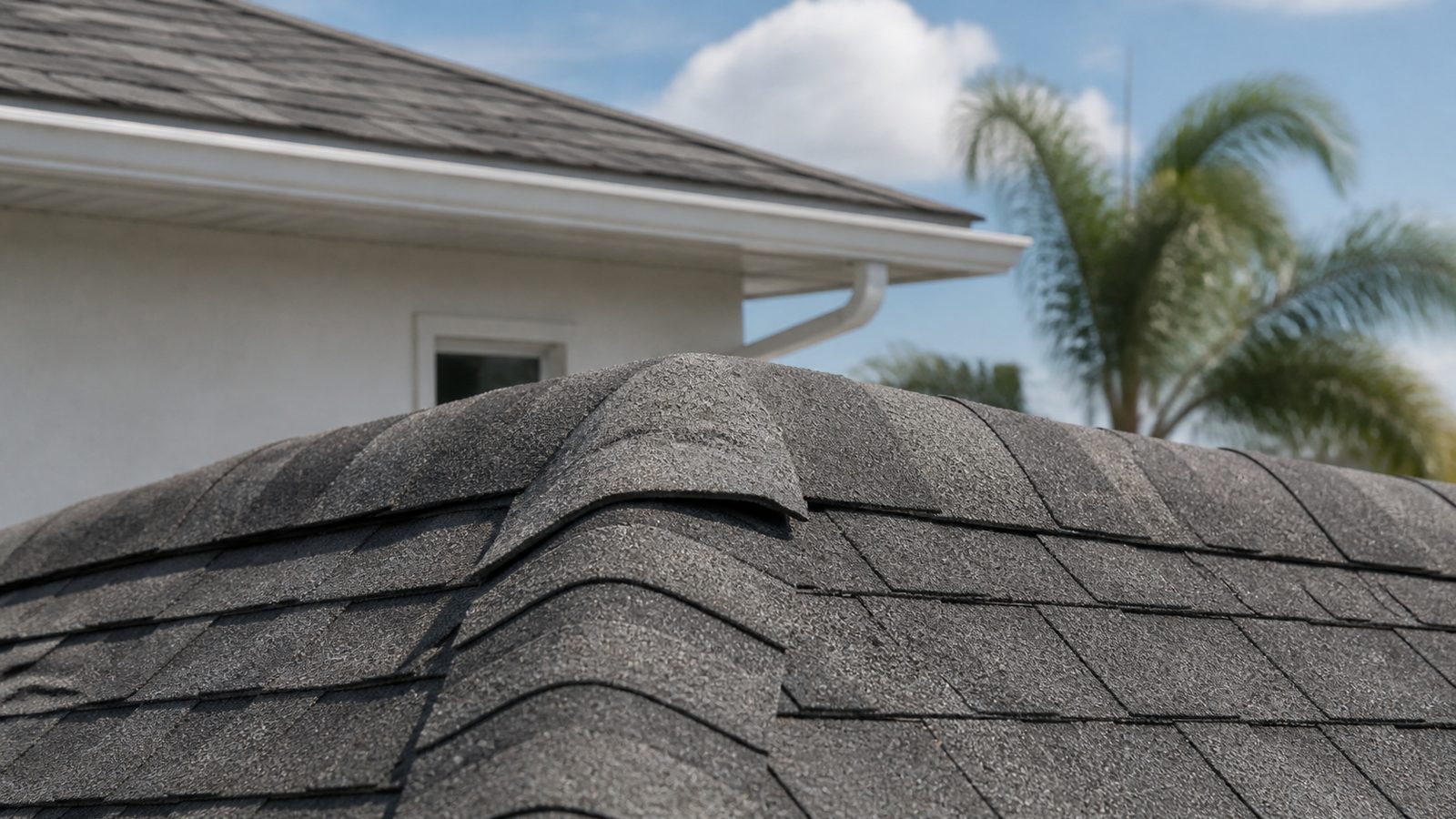
1. Ridge cap condition. The ridge cap takes the highest wind load on any residential roof. JK inspects for cracking, lifting, nail pops, and loss of sealant at the overlaps. Ridge cap failure allows water infiltration at the highest point of the structure — it runs straight down the underlayment seam toward the attic.
2. Ridge ventilation. Ridge vents must be clear and functional. Blocked ridge vents cause attic heat and moisture buildup, which accelerates shingle degradation from the underside. JK checks for debris blockage, damaged vent material, and proper installation over the ridge board gap.
3. Hip ridge cap condition (on hip roofs). Hip ridges receive the same wind exposure as the peak ridge and deteriorate at similar rates. Each hip is inspected independently.
4. High-slope shingle adhesion at upper courses. The uppermost courses of field shingles are most exposed to wind uplift. JK checks for broken sealant strips on the top four to six courses, which is the first area to lift in a wind event even when the rest of the field is intact.
5. Upper-course nail pops. Nails that back out of the decking over time create raised points that lift the shingle above it. Nail pops are common on roofs with thermal cycling and indicate either improper nail penetration at installation or decking that has shifted. Left unaddressed, they become leak points.
Category 2: Field Shingle Condition (Points 6–11)
6. Granule coverage and uniformity. Granule loss is the most visible indicator of shingle age and UV degradation. JK assesses granule coverage across the full field, noting pattern (random uniform loss indicates normal aging; concentrated loss in a specific area may indicate impact damage or a manufacturing defect).
7. Tab edge condition. Shingle tabs should lie flat and uniform. Curling upward (cupping) indicates moisture absorption and adhesive failure. Curling downward (clawing) indicates adhesive that has dried and contracted. Either mode exposes the shingle to wind lift.
8. Shingle cracking and brittleness. Asphalt shingles become brittle as they age. JK checks for surface cracking across the field — typically hairline fractures perpendicular to the granule surface. Brittle shingles fracture in foot traffic and high-wind events; they cannot be repaired, only replaced.
9. Algae and moss presence. Black algae streaking (Gloeocapsa magma) is common in Jacksonville's humid climate. It is primarily aesthetic at early stages but holds moisture against the shingle surface and accelerates granule detachment over time. Moss growth is a more serious finding — moss roots penetrate the granule layer and lift the shingle edges.
10. Impact damage pattern. JK inspects for circular or irregular impact marks that may indicate hail damage. On dark shingles this requires close inspection with a probe — visible granule displacement at impact points. This checkpoint identifies damage that supports an insurance claim.
11. Shingle replacement patches. Previous repairs are inspected for material match, proper underlapping, and sealant integrity. Mismatched patches or improperly lapped replacement shingles are common sources of leaks.
Category 3: Valleys and Drainage Pathways (Points 12–14)
12. Valley flashing type and condition. Valleys are the highest water-volume areas on any roof. JK identifies the valley type (open metal, closed-cut, or woven) and inspects for rust, cracks, debris accumulation, and proper overlap at the eave edge.
13. Valley shingle condition. Closed-cut and woven valleys concentrate water flow along shingle edges that are not designed to be submerged. JK inspects for granule loss, cracking, and adhesive failure in the valley run — these often show deterioration ahead of the field because of higher water exposure.
14. Water diversion effectiveness. JK checks that valley geometry correctly directs water toward the eaves and that no features (dormers, skylights, chimney) create ponding or diversion toward penetrations.
Category 4: Flashing and Penetrations (Points 15–19)
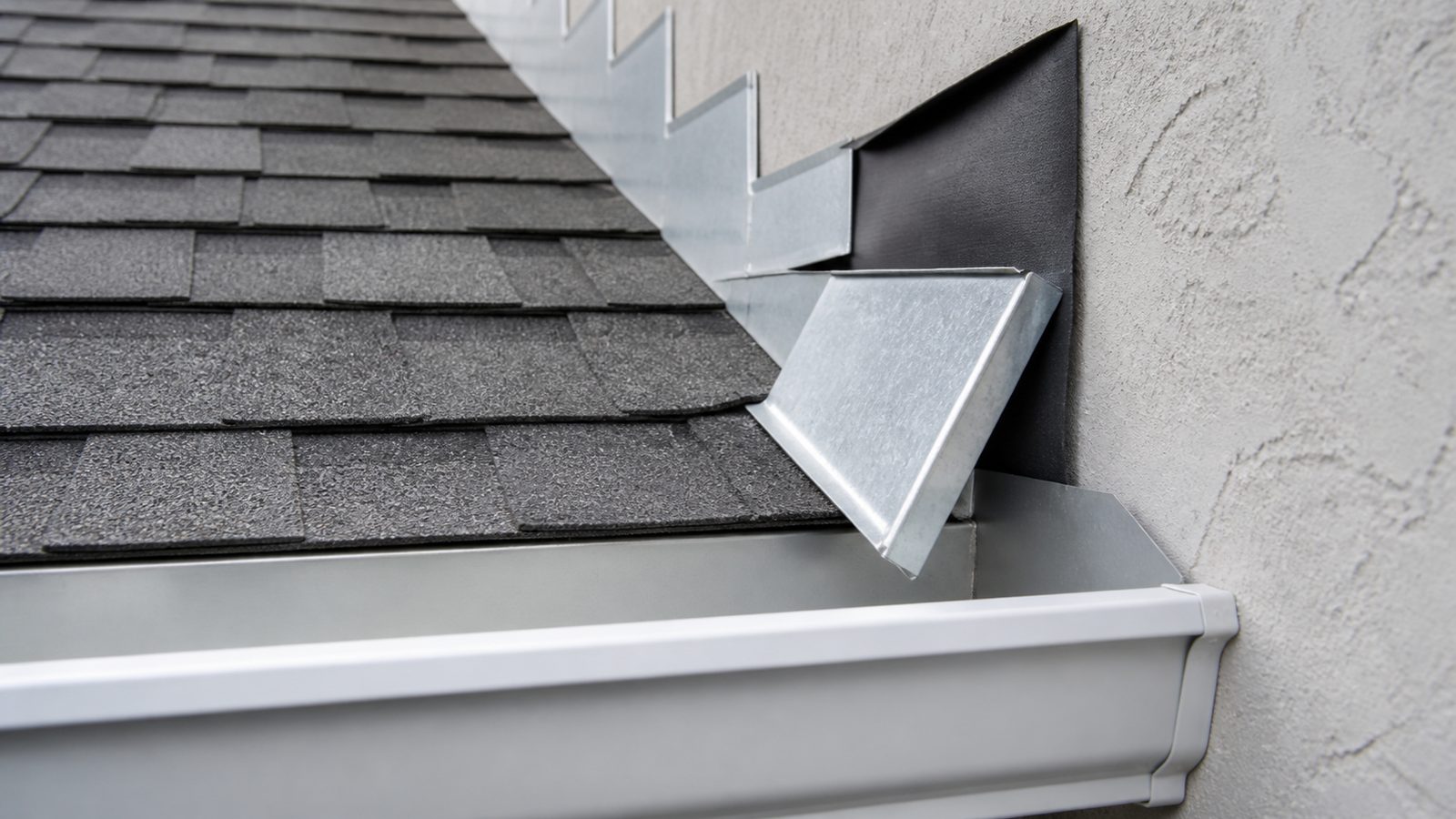
15. Step flashing at walls and dormers. Step flashing is the most commonly defective detail on residential roofs in Jacksonville. Each step flash must be properly interleaved with shingles and sealed at the wall. JK lifts visible edges to check for rust, separation, and missing pieces.
16. Counter flashing and kickout flashing. Counter flashing at walls should terminate into a reglet cut in the wall material or be properly sealed. Kickout flashing at the base of wall-to-roof transitions diverts water away from the wall cladding. Missing kickout flashing is one of the most common causes of wall cavity water intrusion in Florida homes.
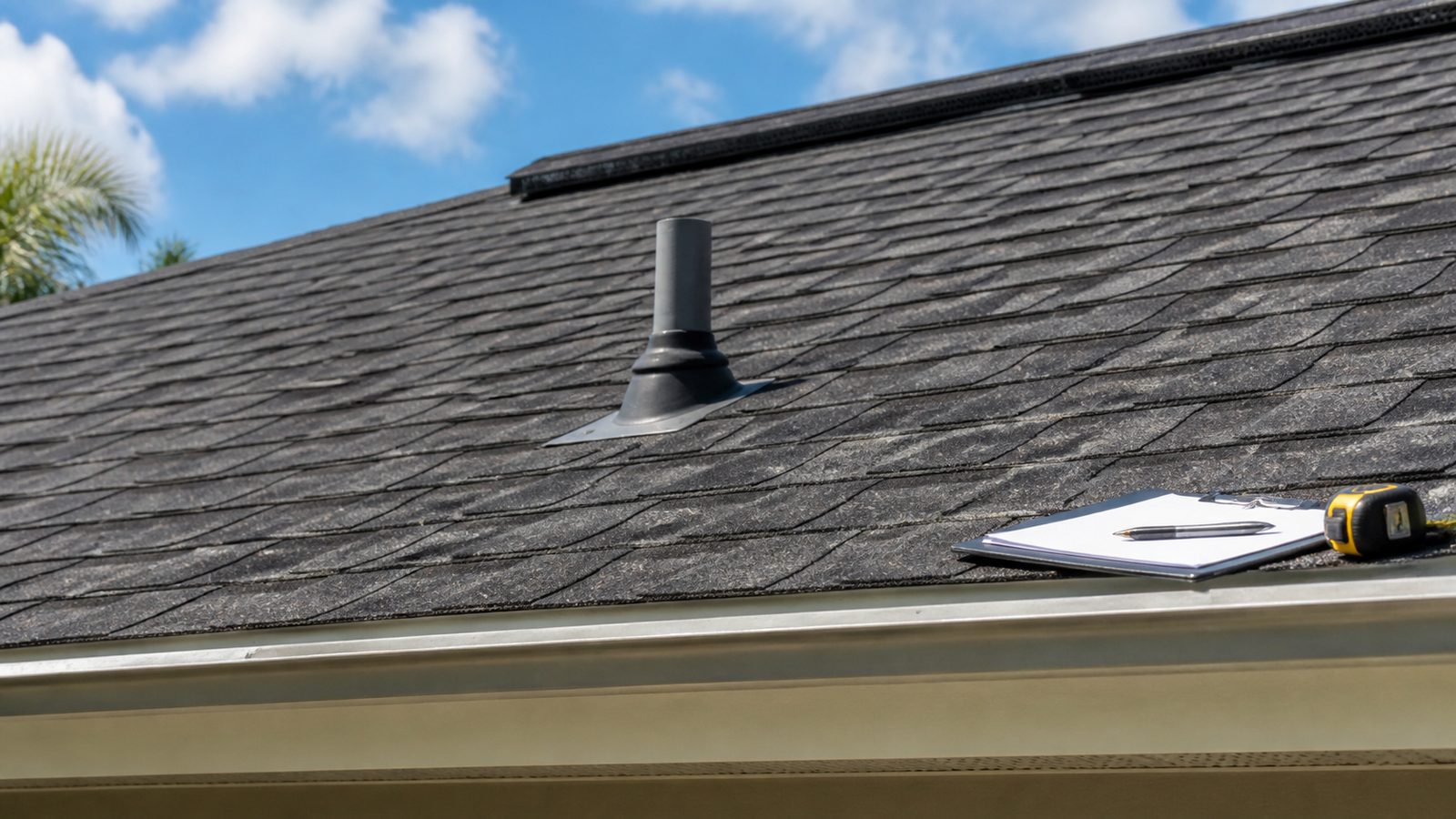
17. Pipe boot condition. Every plumbing vent, exhaust pipe, and HVAC penetration through the roof has a boot flashing. EPDM rubber boots degrade in UV exposure, typically cracking at the pipe collar after 10 to 15 years. Cracked or separated pipe boots are a direct leak path. JK inspects every boot on the roof.
18. Skylight flashing (if present). Skylight perimeter flashing, step flashing, and sealant condition. Skylights are a common leak source in older Jacksonville homes because the flashing and skylight frame age at different rates.
19. Chimney flashing (if present). Base flashing, step flashing, counter flashing, and crown sealant on masonry or prefab chimneys. Chimney flashing failure is one of the most expensive interior damage scenarios — a failed chimney flashing can shed water into a wall cavity for months before it appears as a ceiling stain.
Category 5: Gutters and Drainage Termination (Points 20–22)
20. Gutter attachment and slope. Gutters that have pulled away from the fascia or lost slope toward the downspout create standing water at the roof edge — water that wicks back under the starter course or freezes (rare in Jacksonville, but relevant during cold snaps). JK checks fastener condition and slope.
21. Gutter debris accumulation. Gutters packed with debris create backwater at the eave edge. In Jacksonville's active oak and pine tree canopy, semi-annual gutter cleaning is often necessary. Heavy debris also indicates whether the homeowner is performing routine maintenance.
22. Downspout termination and drainage. Downspouts that discharge against the foundation — common in older Jacksonville neighborhoods — direct storm water toward the slab perimeter. JK notes downspout termination location and recommends extensions or underground drainage if foundation exposure is identified.
Category 6: Decking Condition at Visible Access Points (Points 23–24)
23. Decking visible at eaves and rafter tails. Without removing shingles, JK can observe decking condition at the eave edge where it extends to the fascia board, and at any rafter tails exposed beneath the roof overhang. Soft, discolored, or delaminated decking at these access points indicates moisture intrusion that typically extends further up the slope.
24. Attic inspection (if accessible). Where the attic is accessible through a pull-down stair or hatch, JK's crew inspects from the inside: decking staining from prior leaks, current moisture at the underside of the deck, insulation condition, and ventilation adequacy. Attic moisture in Jacksonville's climate is as often a ventilation failure as it is a leak failure — and the two have different repair solutions.
What You Get: The Written Report
After the inspection, JK Prestige provides a written report organized by the six categories above. Each of the 24 points receives a condition rating:
- Good: No action required. Estimated remaining service life noted where relevant.
- Monitor: No immediate failure, but deterioration is progressing. Recommended re-inspection interval noted.
- Action required: Active leak risk or condition requiring repair to prevent damage.
The report includes photographs of every finding and a plain-language explanation of each item. It is not a sales proposal. It is a condition document.
If the inspection identifies items that require repair or indicate end-of-life conditions, JK can provide a written, fixed-price estimate for the relevant scope within 48 hours of the inspection. That estimate is also free. You are under no obligation to engage JK for any work.
No-Pressure Next Steps
JK Prestige does not use roof inspections as sales funnels. The inspection is a service. What happens after the report depends entirely on what the report finds.
If your roof is in good condition: you have documentation of that condition, which is useful for insurance renewals and future claim disputes. Call us again in two to three years.
If your roof has specific repair needs: JK can scope and price only the work that needs to be done — not a full replacement sold on the basis of a few worn pipe boots.
If your roof is approaching end of life: JK will tell you that directly, explain the timeline, and give you a replacement estimate you can use to plan your budget. You can also get three competing quotes and use our inspection report as your baseline.
Learn more about the JK Prestige roofing division and how JK manages work from estimate through year-one warranty.
Book Your Free 24-Point Roof Inspection
Book your free 24-point roof inspection — written report included, no obligation. Or call (904) 944-0278. A principal answers.
No call center. No coordinator. A JK principal reviews every inquiry and replies with a real number, not a range, not a follow-up form.
Request Free Estimate →