A standalone roofing contractor does one thing: the roof. That scope definition works fine on a simple residential shingle replacement or a single-membrane commercial re-cover with no complications. It fails the moment the job touches anything else — structural decking that needs replacement, Mechanical, Electrical, and Plumbing (MEP) penetrations that require coordination, interior water damage from a failed membrane, or concurrent facade repairs happening on the same building. A general contractor (GC)-backed roofing division handles the full scope under one contract, one warranty, and one responsible party.
JK Prestige's commercial roofing division is part of a full general contracting operation that self-performs the critical trades. One contract covers the roof, the deck, the penetrations, and the interior.
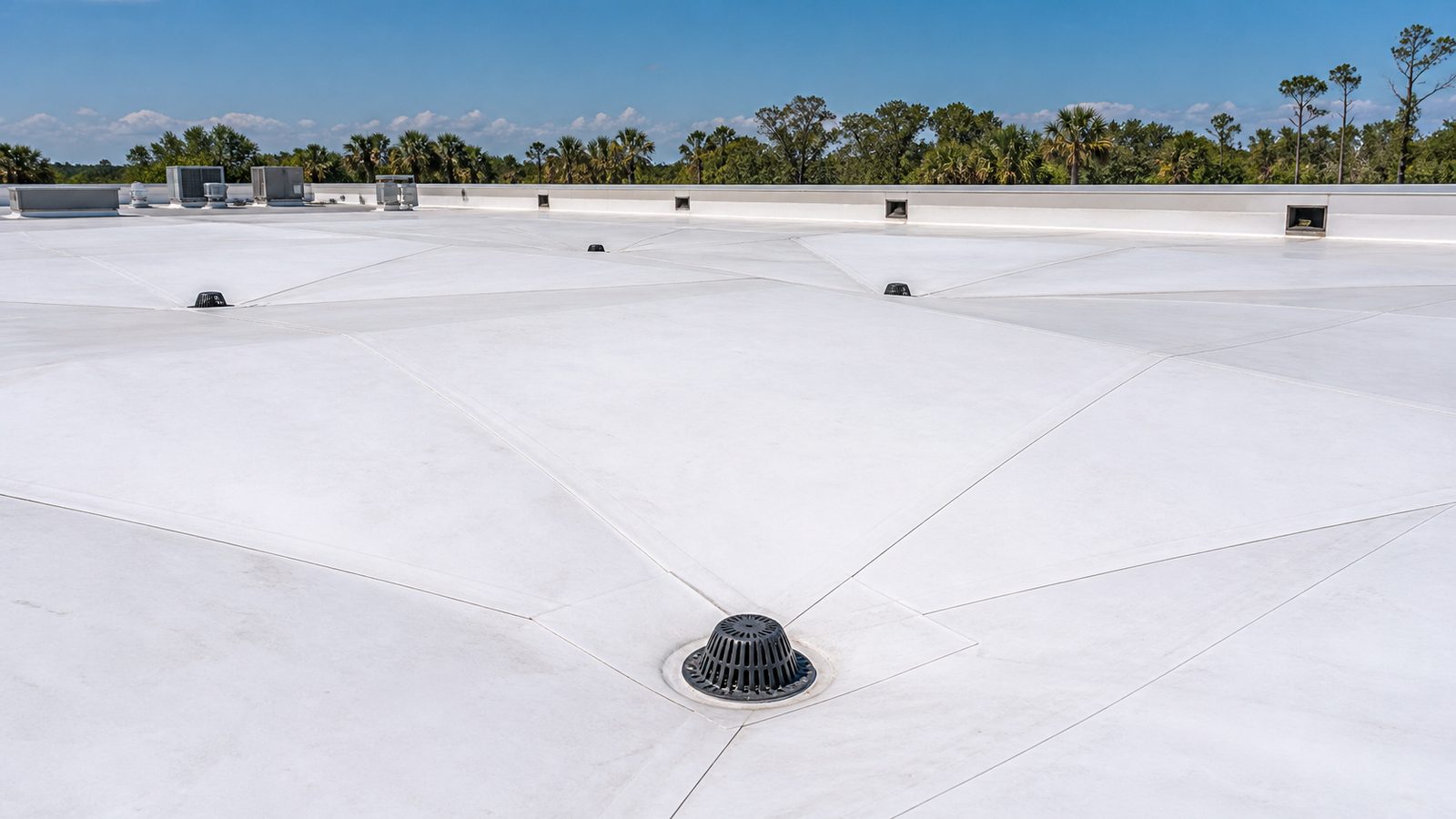
Commercial Roofing Jacksonville FL: Where Standalone Roofers Hit Their Limits
Every commercial roofing project starts as a membrane question: TPO, EPDM, modified bitumen, PVC, or standing seam. A standalone roofer is prepared for that question. What they are not prepared for is what the membrane teardown reveals — and what the building's full scope demands.
Structural Deck Damage
Commercial roofs sit on steel decking or concrete decks. When a flat roof fails — especially in Jacksonville, where hurricane-season moisture intrusion is a multi-month event — the structural deck beneath the membrane often takes the damage too. On a steel deck, this means rust, section loss, or fastener pullout failure. On a concrete deck, it means spalling, delamination, or compromised slope.
A standalone roofer can remove the failed membrane. They cannot repair a steel deck section, pour a concrete topping slab, or replace structural framing. At that point they stop work, call a GC, and you are now managing two contracts, two schedules, and two parties with no single accountability owner.
JK Prestige self-performs structural framing and concrete work. When the teardown on a Jacksonville warehouse exposes damaged steel deck, the roofing crew and the structural crew are from the same operation. The scope does not split. The schedule does not stop.
HVAC Penetration Coordination
Commercial roofing on any occupied building involves active MEP penetrations — HVAC equipment curbs, exhaust fans, electrical conduit, plumbing vents, and rooftop units. On a re-roofing project, each penetration requires:
- Temporary isolation or shutdown coordination with the building's mechanical systems
- Curb flashing or prefabricated curb adapter installation
- Sealing that meets both roofing membrane manufacturer requirements and HVAC service access requirements
A standalone roofer installs the membrane and flashes around the curbs. They do not coordinate HVAC system shutdowns, modify ductwork that runs to a curb, or troubleshoot a condensate drain that has been redirected by a previous roofer. When those issues arise — and on commercial projects, they routinely do — the standalone roofer contacts the building owner, who contacts an HVAC contractor, who schedules a separate site visit.
JK Prestige manages MEP coordination in-house as part of every commercial project. The principal who owns the roofing contract also owns the penetration coordination schedule. One call. One schedule.
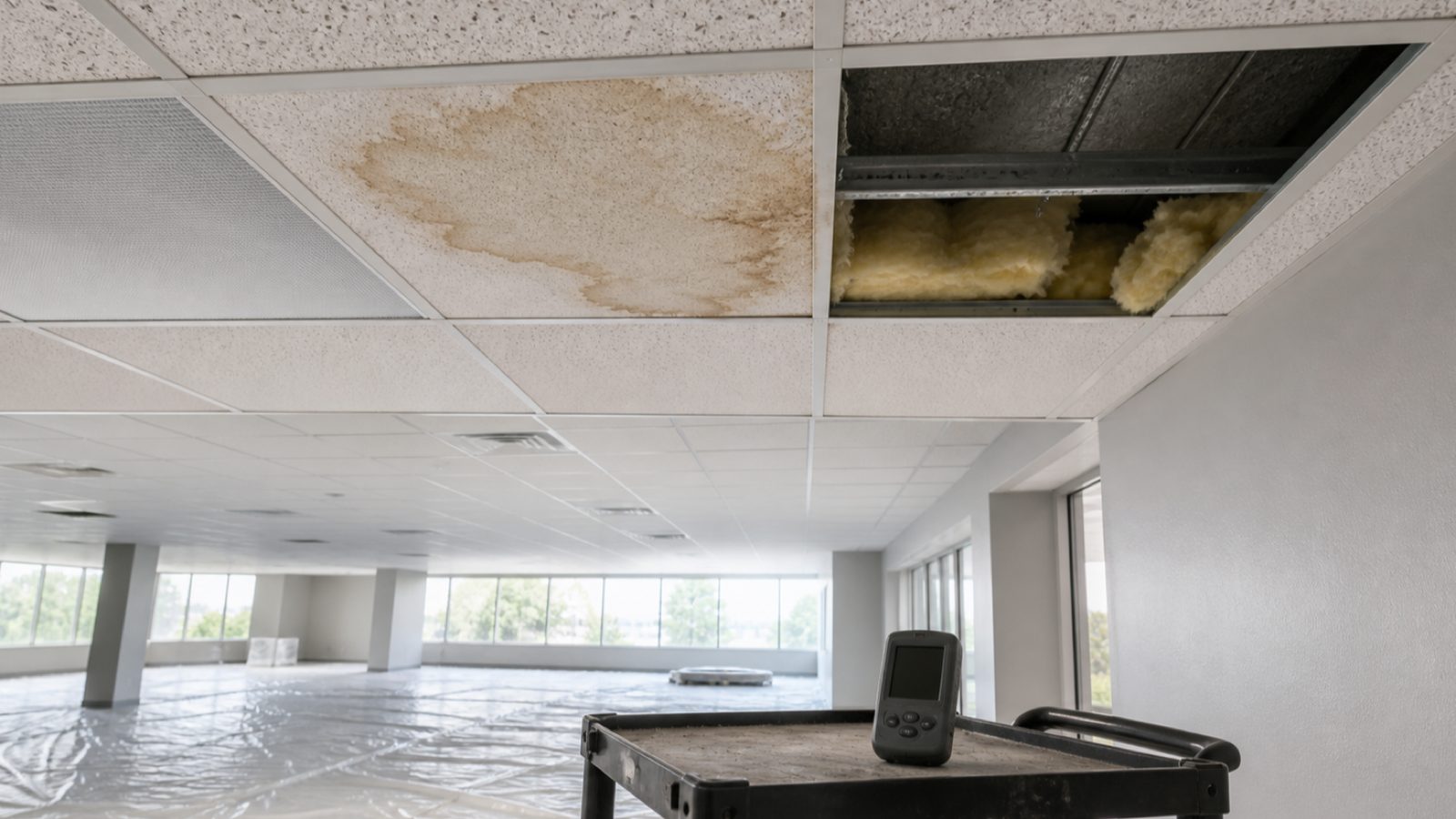
Interior Water Damage Remediation
A failed commercial roof rarely stops at the membrane. By the time a property manager identifies the leak — often weeks after the initial breach — water has tracked along the deck, saturated roof insulation, and infiltrated interior ceiling assemblies. In a Jacksonville warehouse or office building, that typically means:
- Wet polyisocyanurate (polyiso) or expanded polystyrene (EPS) insulation that must be removed
- Damaged interior ceiling grid and acoustic tile
- Potentially compromised drywall or gypsum board if the leak penetrated to occupied space
- Mold remediation if moisture has been present long enough
A standalone roofer's scope ends at the membrane. They will replace the roof system and address the immediate leak source. The damaged insulation, ceiling grid, drywall, and any mold remediation are outside their trade — and outside their contract.
JK Prestige handles the full interior scope. The same contract that covers the new TPO membrane covers the removal of wet insulation, the ceiling grid replacement, and the drywall repair. When the project closes, one warranty covers all of it.
Review completed commercial projects to see the breadth of scope JK Prestige delivers on a single contract.
Concurrent Facade and Envelope Work
Commercial buildings don't fail one system at a time. A Jacksonville property that has a degraded TPO membrane often also has failing caulk at storefront glazing, compromised expansion joints at the parapet, and rusted through-wall flashing at the masonry. These are separate trades on paper:
- Roofing membrane: roofer
- Caulk and sealant: specialty contractor
- Parapet cap flashing and through-wall flashing: could be either
- Masonry repair: masonry contractor
Coordinating three separate specialty contractors on the same building envelope at the same time — with sequencing dependencies between them — requires a GC. The parapet cannot be capped until the through-wall flashing is set. The through-wall flashing cannot be set until the masonry repair is done. The caulk joints at the storefront cannot be sealed until the facade substrate is addressed.
A standalone roofer doing the membrane cannot own that sequencing. JK Prestige can — and does, under a single fixed-price contract.
The Single-Contract, Single-Warranty Advantage
The accountability structure matters as much as the scope. When a standalone roofer hands off to a GC for deck repairs, and a separate interior contractor does the remediation, the project now has three responsible parties and three warranty holders. If a leak appears six months post-completion, every party's first response is to show it originated in the other party's scope.
JK Prestige's model eliminates that dynamic. One contract covers the membrane, the deck, the penetrations, and the interior. One principal's name is on the warranty. If a post-completion issue surfaces, there is one call and one party responsible for resolution.
This is described in detail in The JK Way — the operating model that governs fixed-price delivery, principal accountability, and year-one warranty coverage.
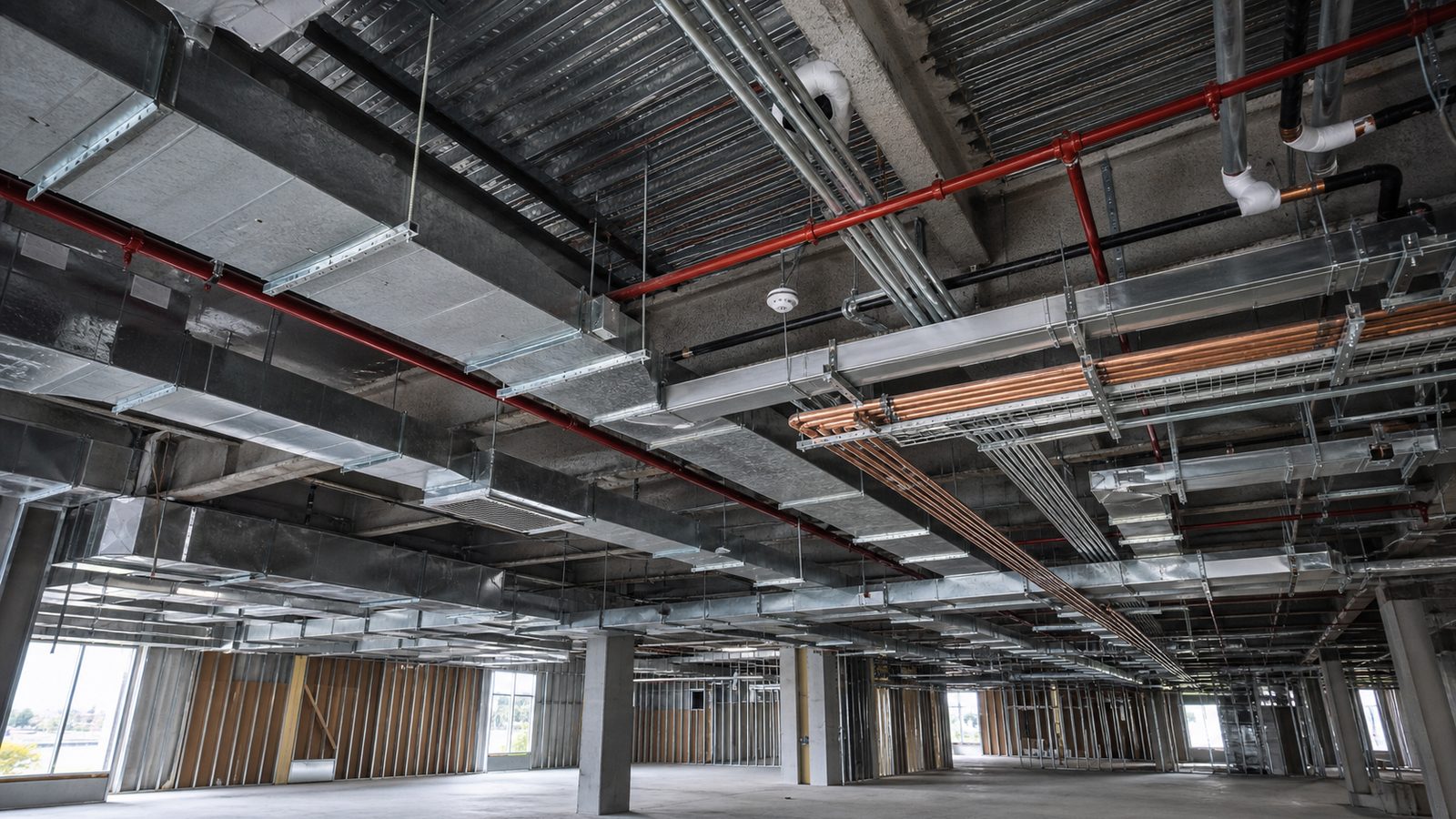
What JK Prestige Covers Under One Commercial Roofing Contract
On a commercial roofing project, JK Prestige's scope can include:
- Full membrane removal and replacement (TPO, EPDM, modified bitumen, PVC, or standing seam)
- Structural deck inspection, repair, or replacement
- Insulation removal, replacement, and slope correction
- All penetration flashing and HVAC curb coordination
- Parapet cap flashing and through-wall flashing
- Interior ceiling, grid, and drywall remediation from water damage
- Concurrent facade caulk and sealant work
- Permit procurement (Duval County and surrounding municipalities)
- Insurance adjuster liaison for storm damage claims
JK holds Carlisle SynTec and Firestone commercial membrane certifications, alongside GAF Master Elite, CertainTeed Select ShingleMaster, and Owens Corning Preferred for residential. All certifications are maintained current.
Book a Free 24-Point Commercial Roof Inspection
JK Prestige provides a free 24-point roof inspection with a written report covering membrane condition, deck integrity at access points, penetration flashing condition, drain function, and parapet condition. Written estimate delivered in 48 hours. Fixed-price contract before any work begins.
Book your free commercial roof inspection — or call (904) 944-0278. A principal answers.
No call center. No coordinator. A JK principal reviews every inquiry and replies with a real number, not a range, not a follow-up form.
Request Free Estimate →