If you're planning a home improvement project in Jacksonville, a building permit is not optional paperwork — it is the legal authorization that lets work begin. Skip it, and you risk voiding your homeowner's insurance, losing your certificate of occupancy, and inheriting a lien when you sell. Get it right, and you have a documented record that every trade performed its work to code.
This guide covers the full permit process in Duval County: what triggers a permit, how the Duval County CityView portal works, realistic review timelines, common rejection reasons, fee structures, and what happens at each inspection. If you're working with a general contractor, understanding this process still matters — the permit is pulled in your name on your property, and the consequences of unpermitted work follow the parcel, not the contractor.
JK Prestige Construction self-performs the work it permits and manages every permit submission in-house. The founder walks every site. When an inspector flags an issue, there is no sub to track down and no scheduling gap. That matters when permit timelines are already tight.
Why Permits Matter: Resale, Insurance, and the Inspection Safety Net
A building permit is not just a bureaucratic hurdle. It creates three concrete protections for you as a homeowner.
Resale. When you sell your home, the buyer's real estate attorney will pull a permit history for the parcel through Duval County records. Unpermitted additions, finished square footage, electrical panels, or HVAC systems show up as red flags. Buyers request credits, lenders refuse to finance, and title companies require proof of proper permitting before closing. In Jacksonville's current market, buyers have leverage, and unpermitted work gives them a tool to use it.
Insurance. Most homeowner's insurance policies contain a clause excluding coverage for damage caused by or related to unpermitted work. If an unpermitted electrical circuit starts a fire, your carrier has grounds to deny the claim. The same applies to roof work performed without a permit — if a storm hits and your adjuster discovers the last roof installation was unpermitted, your claim is at risk.
The inspection safety net. The permit process requires third-party inspections at defined milestones. These inspections exist to catch errors before they are buried in walls or covered by finishes. A framing inspection catches structural problems before drywall. A rough electrical inspection catches wiring faults before insulation. These inspections are not adversarial — they are a check on the contractor's work, performed by a county employee with no financial relationship with the builder.
What Work Requires a Permit in Jacksonville
Duval County follows the Florida Building Code (FBC), 8th Edition, and requires permits for most work that affects structure, egress, fire protection, or mechanical/electrical/plumbing systems. The permit requirement is broader than most homeowners expect.
Structural work. Any alteration to load-bearing walls, beams, or columns requires a permit. This includes removing a wall to create an open floor plan, adding a room, or reinforcing a floor system.
Mechanical, Electrical, and Plumbing (MEP) relocation or new installation. Installing a new electrical panel, adding circuits, relocating plumbing drains, adding a bathroom, installing a new HVAC system, or adding ductwork all require permits. A simple receptacle replacement typically does not, but a new circuit run to a garage workshop does.
New additions. Any addition to the footprint of the home — attached room, sunroom, carport conversion, or enclosed porch — requires a permit, architectural plans, and in most cases a site plan showing setbacks.
Roofing. In Florida, re-roofing always requires a permit. This is one of the most frequently violated permit requirements in Jacksonville because some contractors offer lower prices by skipping the permit. The FBC requires a roofing permit for any replacement of more than 25 percent of the roof area, and most re-roofs replace the full surface.
Window and door replacement. If the replacement unit is a different size than the existing opening, a permit is required. In some cases, even same-size replacements require a permit if the home is in a wind-borne debris region, which includes most of coastal Duval County. Impact-rated products require permit documentation confirming the product approval number.
What typically does not require a permit. Cosmetic work — painting, flooring replacement, cabinet replacement (without moving plumbing), and like-for-like fixture replacements — generally does not require a permit. When in doubt, call the Duval County Building Inspection Division at (904) 255-8500 before starting.

Residential vs. Commercial Permit Processes in Duval County
The permit process for residential and commercial projects runs through the same Duval County portal but follows different review tracks.
Residential. Single-family and duplex projects are reviewed under the FBC Residential volume. Review times are generally shorter, and many simple projects qualify for express or over-the-counter review. Structural plans are required for additions and structural alterations but are simpler than commercial engineered drawings.
Commercial. Any project in a commercial building, multi-family building of three units or more, or mixed-use structure follows the FBC Commercial volume. Commercial projects require engineered drawings stamped by a licensed Florida engineer or architect, fire protection review, zoning compliance review, and in some cases concurrency review. The review process involves multiple county departments operating in sequence rather than parallel, which extends timelines significantly.
If you are a homeowner doing work on a single-family home, you are in the residential track. If you are a developer or investor doing work on a rental complex or commercial property, you are in the commercial track, and the timelines and documentation requirements are substantially different. JK Prestige works in both tracks — see our commercial and industrial expertise for how we manage commercial permit submissions.
The Duval County CityView Portal: How to Use It
Duval County uses a web-based permitting platform called CityView (accessed at cityview.coj.net). This portal is where permits are applied for, plans are uploaded, fees are paid, and inspection results are posted.
To use CityView, you create a free account using your email address. Once logged in, you can apply for a permit by selecting the permit type, entering the property address, providing a project description, and uploading required documents as PDFs. Required documents typically include a site plan (showing property lines, existing structures, and the proposed work), floor plans, and for structural work, engineered drawings.
After submission, CityView assigns the application a permit number and routes it to the relevant review departments. You can track status in real time. When a reviewer adds comments or a correction request, CityView sends an email notification and the comments appear in the portal. You respond by uploading revised documents and submitting a response letter.
Once all departments approve, the permit is issued and fees are paid through the portal. The permit placard is then available to print and must be posted on the job site.
Inspections are also scheduled through CityView. You select the inspection type, the address, and a preferred date. Inspectors post results — pass, fail with comments, or partial — to the portal, visible to the permit holder within 24 hours.
Plan Review Timeline: Residential 4–6 Weeks, Commercial 6–10 Weeks
As of 2025, Duval County's plan review timelines for new applications are:
Residential (single-family): 4–6 weeks for initial review. Simple projects with complete documentation can be approved in as few as 3 weeks. Projects requiring multiple round trips of revisions will take longer. Express review (same-day or next-day) is available for select permit types including roofing, window/door replacement, and HVAC equipment replacement.
Commercial: 6–10 weeks for initial review. Complex projects — healthcare facilities, multi-story construction, projects requiring fire marshal and zoning review — routinely take 10–14 weeks for initial approval when multiple departments are involved.
These timelines assume a complete, approvable submission on the first attempt. Incomplete submissions or projects with code deficiencies start the clock over after each revision cycle. The most common way homeowners extend their permit timeline is by submitting incomplete drawings or omitting required documentation.
The JK Prestige pre-construction process is built around this reality. We prepare permit packages in-house before signing construction contracts so that permit submission happens on day one, not after construction starts. Learn more about the JK way of managing projects from day one.
Common Reasons Permits Get Rejected
Plan reviewers in Duval County flag issues consistently. The most common rejection causes on residential permits:
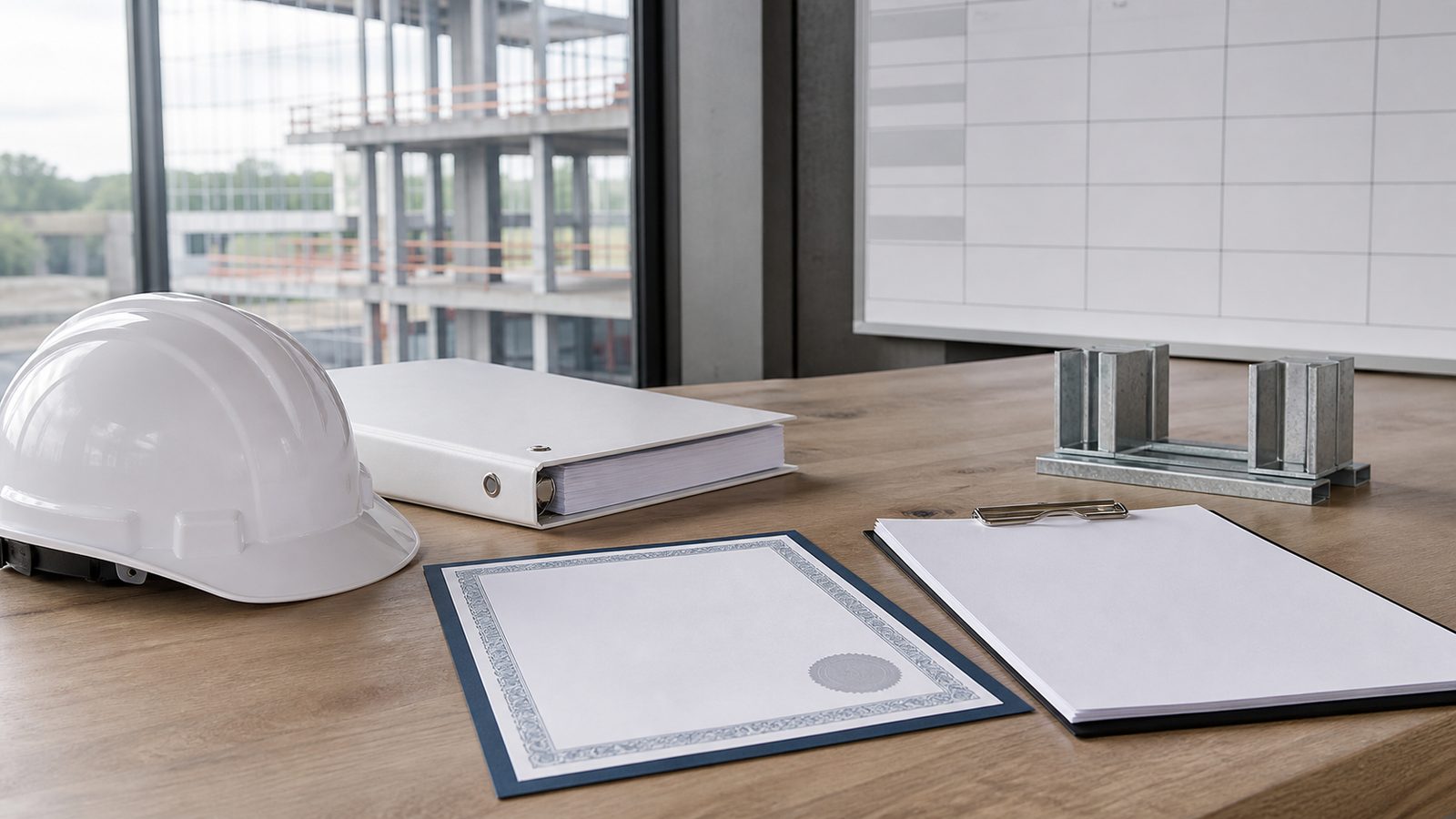
Missing or incomplete site plan. Setback dimensions from property lines must be shown. If the project involves an addition, the site plan must show the addition footprint and all existing structures.
Structural drawings not engineer-stamped. Any structural work requires drawings prepared or reviewed by a Florida-licensed engineer. An architect's stamp is accepted for most residential structural work; an engineer's stamp is always accepted.
Energy compliance missing. Florida's energy code (IECC with Florida amendments) requires compliance documentation for any project involving the building envelope or HVAC. A Manual J calculation is required for HVAC equipment replacement or addition.
Product approval numbers not provided. Windows, doors, roofing, and impact-rated products require Florida Product Approval (FPA) numbers documented in the permit package. If you submit drawings referencing "impact windows" without the FPA number, the reviewer will comment and the application stalls.
Incomplete contractor licensing information. In Florida, permits must be pulled by the licensed contractor performing the work (or by the homeowner under the owner-builder exemption). If the contractor's license number, insurance certificate, or workers' compensation coverage is not current in the county system, the permit will not issue.
Permit Fees in Jacksonville
Duval County permit fees are calculated based on the declared value of the work. As of 2025, the base fee structure for residential work is:
- Valuation up to $1,000: $50 minimum fee
- $1,001–$50,000: $50 base plus $7.50 per $1,000 of value over $1,000
- $50,001–$100,000: $422.50 plus $6.00 per $1,000 of value over $50,000
- Over $100,000: $722.50 plus $5.00 per $1,000 of value over $100,000
Additional fees apply for plan review (typically 65–75 percent of the permit fee), state surcharges (4 percent of the permit fee), and fire review (for applicable projects). A 2,500 square foot addition valued at $400,000 will carry total permit fees in the range of $4,000–$5,500 depending on project type.
These fees are separate from any engineering or architectural fees required to produce the permit documents.
What Happens During Inspections
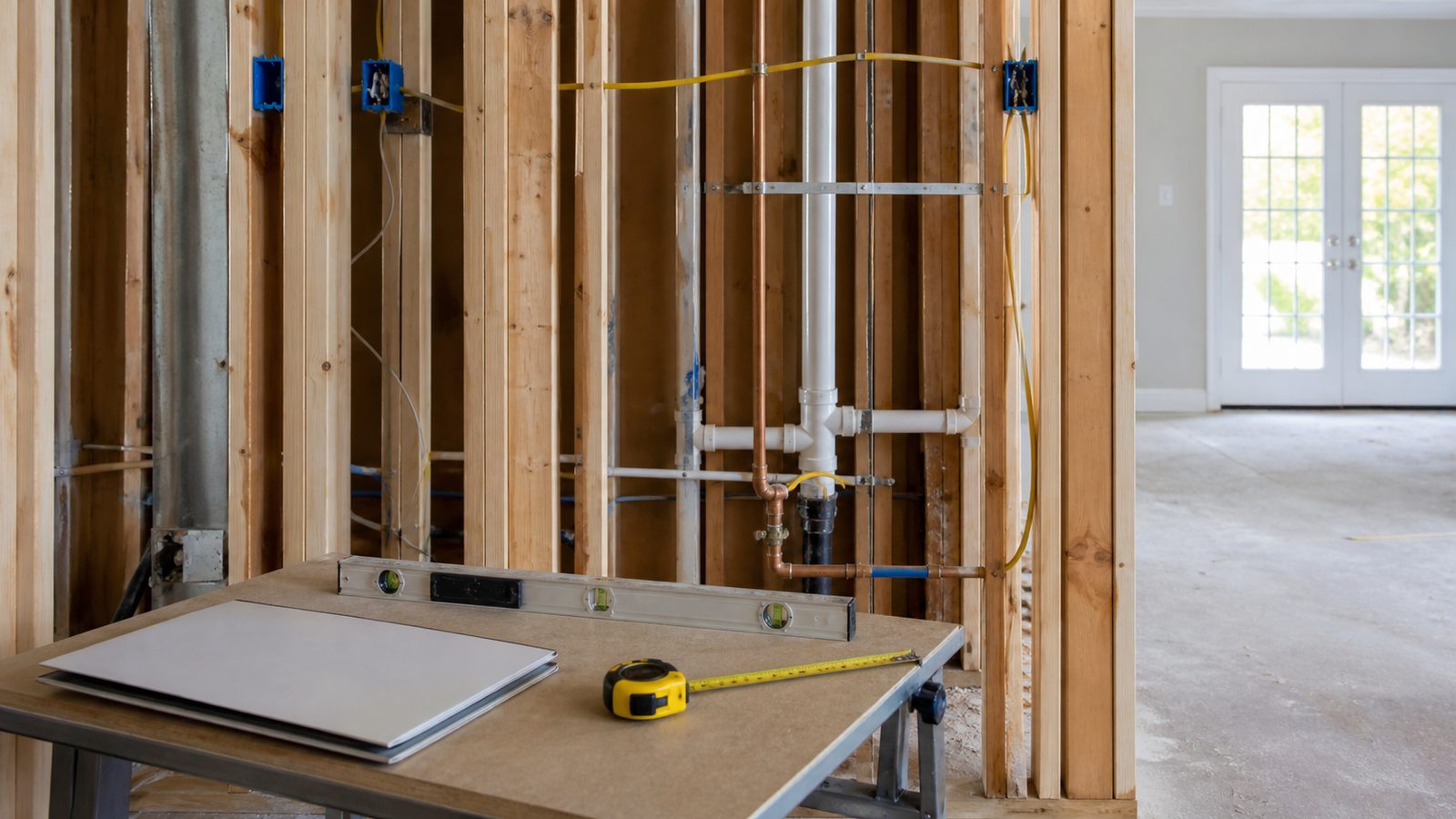
Duval County inspectors visit the job site to verify that the work matches the permitted plans and complies with the applicable building code. Inspections are typically scheduled for a half-day window (morning or afternoon) and the inspector arrives during that window without a specific appointment time.
Key inspection milestones for a typical residential addition include:
Foundation/slab inspection. Inspects footings and slab before concrete is poured. Verifies reinforcing steel placement, depth, and bearing on undisturbed soil.
Framing inspection. Performed after framing is complete but before insulation or drywall. Inspects stud spacing, header sizing, anchor bolts, hurricane straps, and nailing patterns. This is the most consequential residential inspection — framing defects found here are addressable; framing defects found after drywall require demolition.
Rough MEP inspections. Electrical, plumbing, and HVAC rough-in are each inspected before insulation or wall closure. Inspectors verify that penetrations through fire-rated assemblies are properly sealed, that electrical boxes are properly anchored, and that plumbing slope and venting meet code.
Insulation inspection. Verifies that insulation R-values meet the energy code.
Final inspection. Covers everything visible: electrical cover, plumbing trim, HVAC equipment, finish carpentry, and overall code compliance. A passing final inspection is required before the certificate of occupancy (CO) is issued.
Unpermitted Work: The Risks and How to Address It
Unpermitted work is more common in Jacksonville than most homeowners realize. It often occurs when a previous owner hired an unlicensed contractor or a contractor who skipped the permit to cut costs. The problem transfers with the property.
Risks of unpermitted work. Beyond the resale and insurance issues described earlier, unpermitted work can trigger a stop-work order if discovered during a subsequent permitted project. The county can require demolition and reconstruction of unpermitted work, or require a permit after-the-fact, which often involves exposing concealed elements for inspection.
After-the-fact permits. Duval County allows after-the-fact permits for some types of unpermitted work. The process requires the same documentation as a new permit and a doubled permit fee. An inspector must be able to verify code compliance, which may require opening walls or ceilings.
Disclosure obligations. Florida Statute 689.261 requires sellers to disclose known unpermitted work. Failure to disclose is grounds for rescission of contract and potential fraud liability.
If you've purchased a home with suspected unpermitted work, the best path is a licensed contractor assessment before you pull any subsequent permits, because new permit applications trigger a full parcel history review. JK Prestige regularly assists homeowners in identifying and addressing unpermitted work as part of our home renovation services.
How JK Prestige Manages the Permit Process
JK Prestige Construction prepares and submits permit packages in-house for every project we build. We do not subcontract permit preparation, and we do not start construction before a permit is issued.
Our permit process:
- Pre-application coordination. Before signing a contract, we conduct a pre-application review of the project scope against applicable code requirements. We identify which permit types are needed (building, electrical, plumbing, HVAC), which engineering documents are required, and what the realistic review timeline will be. This prevents surprises after you've signed and funded.
- Document preparation. We coordinate with the project architect or engineer to ensure the permit package is complete before submission. We do not submit incomplete packages and re-submit — we front-load the documentation work.
- Submission and tracking. We submit through CityView, monitor reviewer comments within 24 hours of posting, and prepare revision responses promptly. Most first-round comment cycles are resolved within 5–7 business days.
- Inspection scheduling. We schedule inspections as each milestone is reached and ensure the work is genuinely ready before requesting an inspection. Re-inspection fees in Duval County are $50 per re-inspection for residential projects — failing inspections costs money and time.
- Permit close-out. We request the final inspection, confirm the CO is issued, and provide you with a copy of the permit and inspection record for your files.
CTA
Ready to start? Get a written estimate in 48 hours. Call (904) 944-0278 or request a free consultation.
No call center. No coordinator. A JK principal reviews every inquiry and replies with a real number, not a range, not a follow-up form.
Request Free Estimate →