A hurricane moves through Northeast Florida in hours. The claims process that follows lasts months. Homeowners who know what to do in the immediate aftermath — and what to do at each stage of the claim — collect more than homeowners who rely on their insurer to guide the process. The insurer's process is designed to settle claims efficiently. Efficient settlement and maximum claim payment are not the same thing.
This guide covers the complete hurricane roof damage claim process for Jacksonville homeowners: what to do in the first 24 hours, how your policy actually works, what adjusters look for and what they miss, how to dispute underpayment, and how to select a contractor after the storm without being taken by a storm chaser.
JK Prestige Construction is a Jacksonville-based general contractor and GAF Master Elite certified roofing contractor. We have been in operation since 2017 and have worked with Jacksonville homeowners through hurricane seasons. Our principal walks every site and provides fixed-price written estimates within 48 hours. Contact us at https://jkprestigeconstruction.com/#/contact.
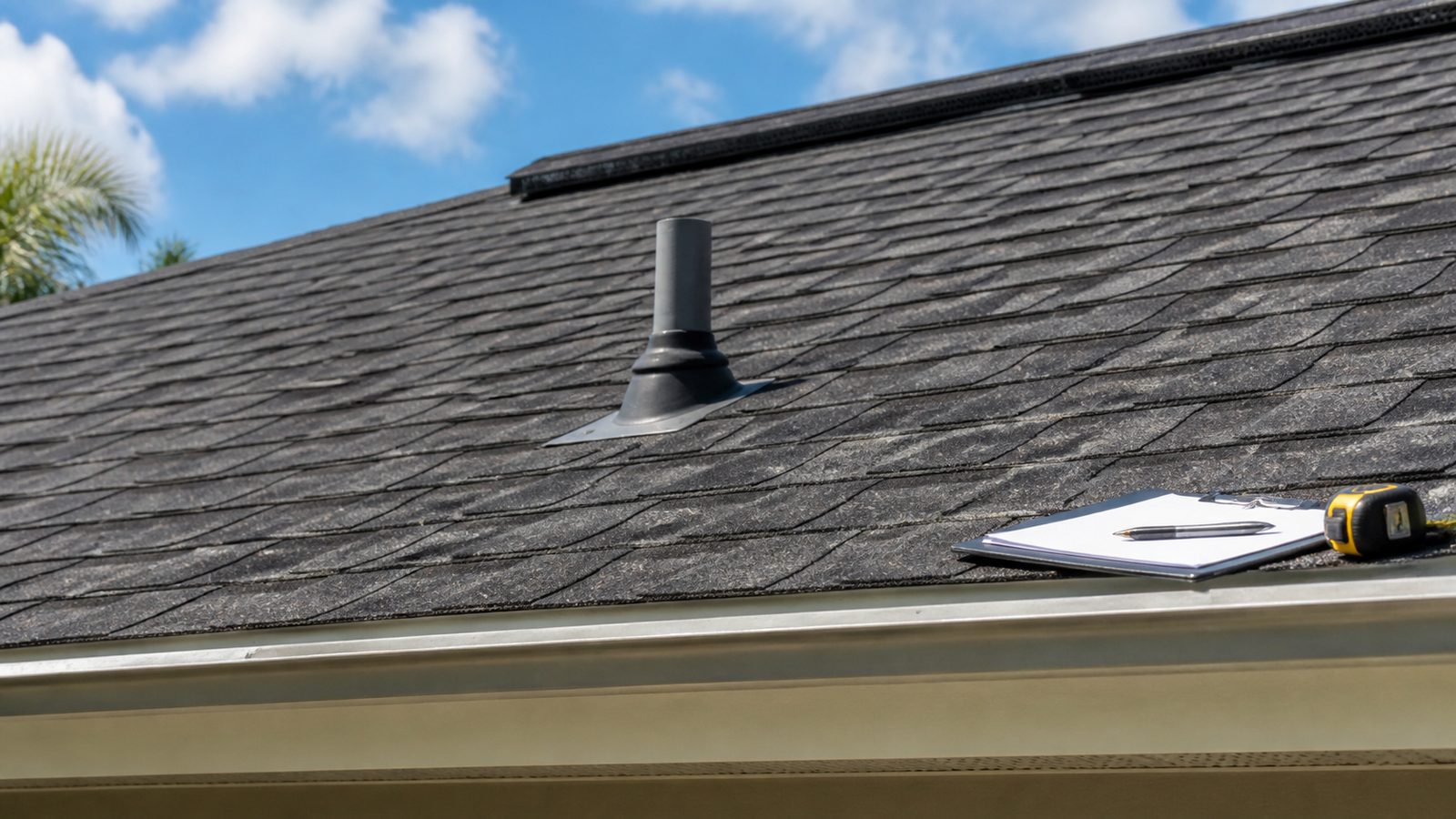
The 24-Hour Timeline After a Hurricane: Hour by Hour
The actions you take in the first 24 hours after hurricane impact directly affect your safety, your insurance claim, and the condition of your home.
Hours 0–2: Safety first. Do not go on your roof during or immediately after a storm. Assess from the ground and through interior inspection only. Look for structural damage — leaning walls, compromised ridge lines, debris penetration. If you see structural compromise, vacate and call 911. Document the time you begin your assessment.
Hours 2–4: Interior assessment. Walk every room and document water intrusion: ceiling stains, wet drywall, wet insulation visible through access points, water on floors. Time-stamp and photograph everything. Place buckets or towels to limit spread of water intrusion — this is interior protection, not permanent repair.
Hours 4–8: Exterior documentation from the ground. Photograph the full perimeter of the house. Document missing shingles, debris on the roof, visible damage to gutters, fascia, and soffits. Photograph neighboring properties — neighbor damage from the same storm event establishes storm causation for your claim.
Hours 8–12: File your claim. Contact your insurer by phone and open the claim. You do not need a contractor estimate before filing. Provide your claim number and the name of your assigned adjuster. Request a timeline for the adjuster inspection.
Hours 12–18: Emergency tarping if needed. If you have confirmed roof penetration and continuing water intrusion, arrange emergency tarping. Contact a licensed contractor — not a door-to-door solicitor. A properly installed tarp is an emergency repair covered by most policies. A poorly installed tarp that blows off and causes additional damage is a complication you do not need.
Hours 18–24: Contractor pre-adjuster estimate. Contact a licensed roofing contractor to schedule a roof inspection and written estimate before the adjuster's visit. This single step is the most important action you can take for your claim. See https://jkprestigeconstruction.com/#/roofing for JK Prestige's emergency response capabilities.
Understanding Hurricane Deductibles: Percentage-Based, Not Flat
Florida homeowner's insurance policies contain a separate hurricane deductible that is calculated as a percentage of your home's insured value — not as a flat dollar amount.
The most common hurricane deductible in Florida policies is 2% of the insured dwelling value. If your home is insured for $400,000, your hurricane deductible is $8,000. If your home is insured for $600,000, your hurricane deductible is $12,000.
Some policies offer a 5% hurricane deductible in exchange for a lower annual premium. A homeowner who selected 5% hurricane deductible on a $400,000 home faces a $20,000 hurricane deductible — more than most roof replacements cost.
The hurricane deductible applies only to damage caused by a named hurricane during the period of its designation. A tropical storm that does not meet hurricane classification triggers your standard all-peril deductible, which is typically a flat $1,000–$2,500. Check your policy declarations page for both deductible amounts and confirm which event designation triggers each.
A hurricane deductible trigger event is declared by the Florida governor and linked to the National Hurricane Center's designation of the storm. Your insurer will apply the hurricane deductible if the loss date falls within the NHC's designated hurricane period. This is not negotiable — it is defined by statute.
Implication for claim strategy: if your hurricane deductible is $8,000 and your roof replacement costs $14,000, your net insurance payment before any additional damage is $6,000. If the same replacement costs $14,000 but there is also $10,000 in interior damage, the additional damage applies against the same hurricane deductible, not a separate one — meaning your net payment on the combined $24,000 loss is $16,000 after the $8,000 hurricane deductible.
ACV vs. RCV for Hurricane Damage: Why the Distinction Matters More in a Major Loss
The ACV vs. RCV distinction matters in any roofing claim, but it matters more in a major hurricane loss because the total loss amount is larger and the depreciation calculation is applied across more components.
In a hurricane loss with roof damage plus interior damage plus personal property loss, depreciation is applied separately to each category. A 15-year-old roof depreciated 70% plus 10-year-old drywall depreciated 50% plus personal property at varying depreciation rates creates a total ACV payment that may be a fraction of the actual replacement cost.
For a homeowner with an ACV policy on a home insured for $400,000 in the Jacksonville market, a major hurricane loss that would cost $80,000 to repair at replacement cost might generate an ACV payment of $30,000–$45,000 after depreciation — before the hurricane deductible. After a $8,000 hurricane deductible, the net payment on a $30,000 ACV settlement is $22,000 against an $80,000 repair.
This is not a hypothetical. This is the financial exposure a Jacksonville homeowner with an ACV policy and a 2% hurricane deductible faces in a significant storm event. Before the next hurricane season, confirm your policy type and calculate your maximum out-of-pocket exposure at your current insured value and deductible. If the number is unacceptable, contact your insurer about upgrading to an RCV policy.
Getting a GC or Roofer Estimate Before the Adjuster Visits
This is the most important action item in this guide, and it is the one most homeowners skip.
Most homeowners wait for the adjuster to visit, receive the adjuster's estimate, and then compare it to a contractor's estimate. At that point, the adjuster's estimate is already the baseline. Disputing it requires escalation — the supplement process, a public adjuster, or arbitration. All of these take time and energy.
If you have a contractor's written estimate before the adjuster visits, you enter the adjuster's inspection with a documented scope from a licensed professional. You can provide it to the adjuster and ask them to address every item in it. Any item the adjuster omits is immediately identifiable. You have a professional opinion from someone who walked your roof — the same as the adjuster — and their scope is part of the claim record from day one.
The estimate should be detailed: line items for tear-off, underlayment, flashing by type and location, field shingles by material, ridge cap, permit fee, and any deck repair allowance. The contractor should note the fastening pattern required under Duval County's wind zone (six-nail) and the underlayment specification under Florida Building Code.
JK Prestige provides written estimates within 48 hours. Our principal walks every roof. We do not charge for hurricane damage assessments. Contact us at https://jkprestigeconstruction.com/#/contact.
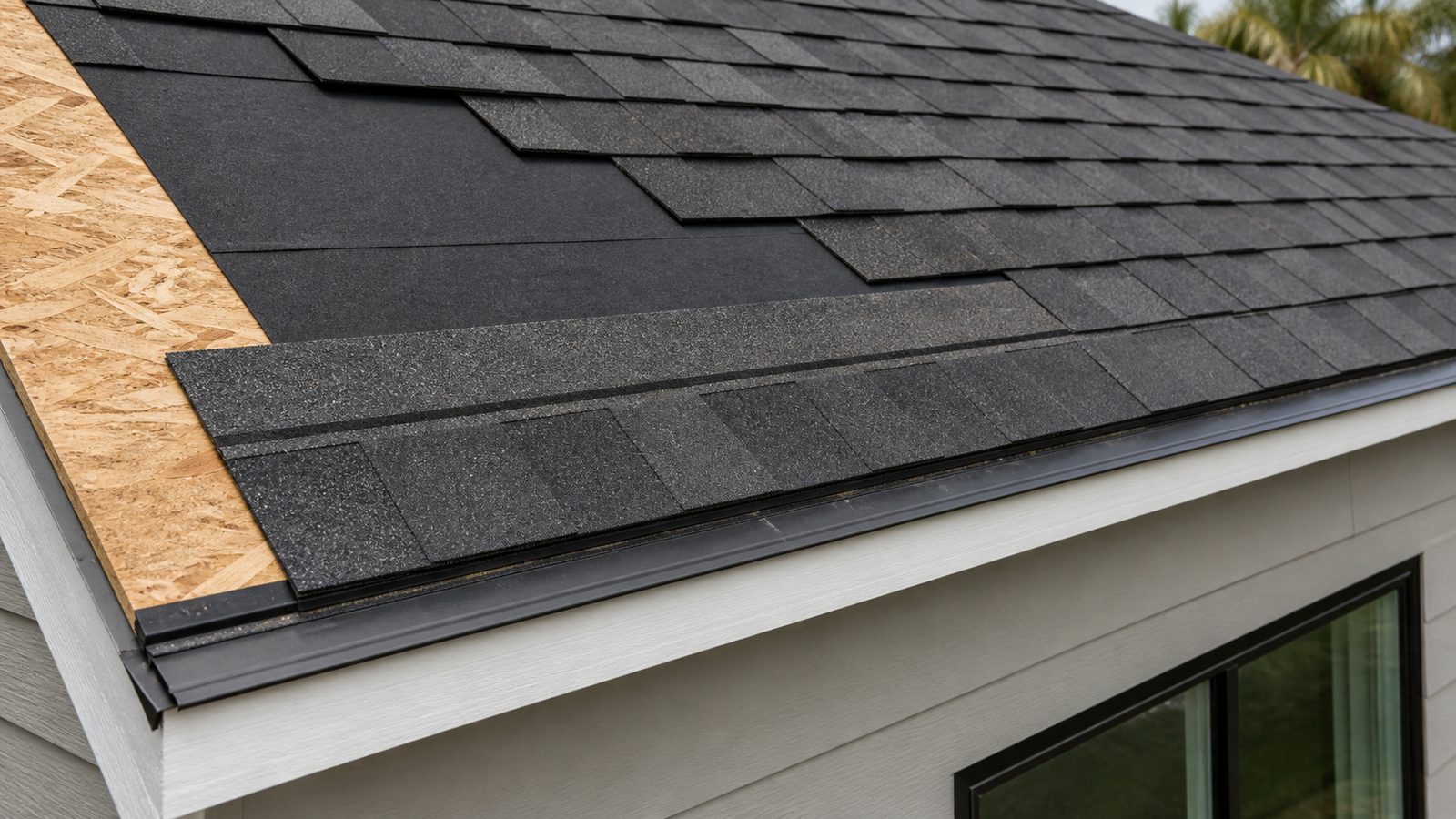
The Adjuster Visit: What They Look For and What They Commonly Miss in Wind Claims
Insurance adjusters are trained professionals, but they are working through large claim volumes after a major storm event. In the days following a named hurricane landfall near Jacksonville, an adjuster may be managing 50–100 active claims simultaneously. Inspections are compressed.
What adjusters look for: missing or displaced shingles, obvious flashing failure, confirmed interior water intrusion with a traceable path to roof damage, and structural damage visible from the roof surface.
What adjusters commonly miss in wind claims:
Flashing damage. Step flashing at dormers, counter flashing at chimneys, and kickout flashing at roof-to-wall intersections are frequently damaged in wind events — the wind gets under the flashing and lifts it — but may appear intact from a surface-level inspection. Request that the adjuster specifically address flashing at every roof-to-wall intersection.
Underlayment damage. Wind-driven rain can penetrate intact-looking shingles through the fastener pattern and damage the underlayment without producing obvious surficial damage. Core sampling or infrared scanning can reveal this; a visual-only adjuster inspection will miss it.
Soffit and fascia damage. Wind-driven rain impacting soffits and fascia produces damage that is related to the roofing loss but may be categorized as a separate claim item or omitted. Photograph every soffit and fascia section and include it in your documented damage scope.
Gutter damage. Gutter sections pulled by debris or collapsed by impact are often omitted from wind claims because adjusters categorize them separately from roofing. They are part of the complete roof system replacement scope.
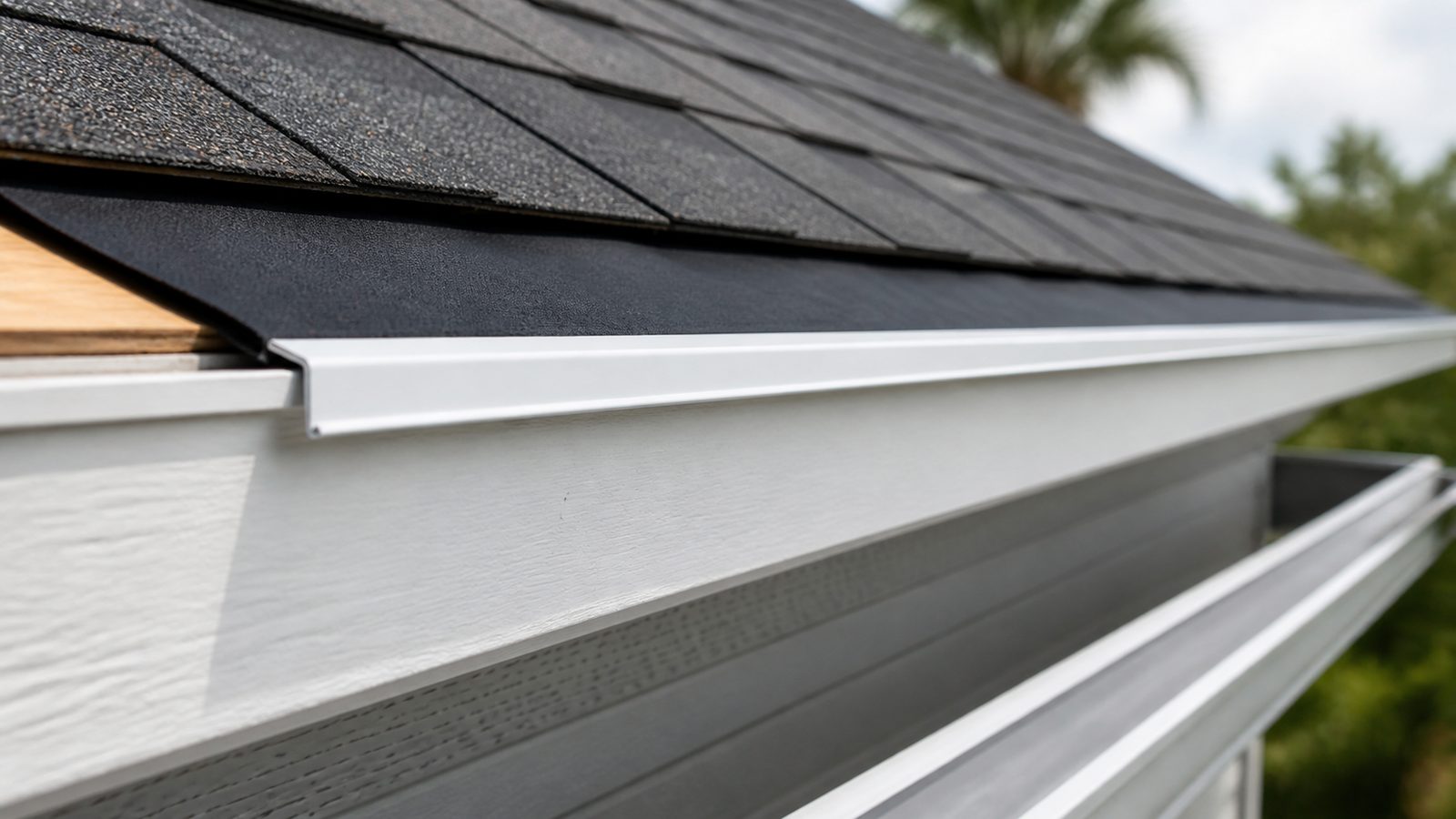
How to Supplement a Hurricane Claim: Process and Timeline
If your insurer's adjuster estimate is lower than your contractor's estimate, the supplement process is your first response.
Step one: obtain the adjuster's estimate in writing. Every line item should be listed. Request the estimate via email within 5 business days of the adjuster's inspection if it has not been provided.
Step two: compare line by line against your contractor's estimate. Identify every item in the contractor's estimate that is absent from or under-valued in the adjuster's estimate. Common omissions: flashing replacement, underlayment upgrade required by current building code (code upgrade provisions in most RCV policies cover this), deck repair, gutter and soffit damage, and permit fees.
Step three: submit a written supplement request. Send the supplement request to your assigned adjuster by email — not by phone. Include: your contractor's estimate, photographs of each disputed damage area, and a written explanation of each scope addition you are requesting. Reference your policy's "code upgrade" provision if you are requesting materials or methods required by current Florida Building Code that differ from the original construction.
Step four: follow up in writing. If the adjuster does not respond within 14 days, escalate in writing to their supervisor. Keep a record of every communication.
Timeline: most legitimate supplements are resolved within 30–60 days of filing. Disputed supplements that reach the public adjuster or appraisal stage can take 90–180 days.
Florida's Citizens Insurance: Specific Claims Rules for Hurricane Damage
Citizens Property Insurance is Florida's state-backed insurer of last resort. As of 2025, Citizens insures approximately 1.1 million Florida policyholders, many of them in Southeast and Northeast Florida.
Citizens has specific claims handling rules that differ from private carriers:
Citizens applies a strict 24-month policy renewal requirement tied to roof age in many areas of the state. For Duval County, Citizens generally covers homes with roofs under 20 years old; homes with older roofs may be required to provide a roof certification or be declined for coverage.
Post-hurricane, Citizens' claims timeline is governed by Florida statute: they must acknowledge a claim within 14 days and either pay, deny, or issue a partial payment within 90 days of receiving proof of loss. These timelines are longer than many private carriers.
Citizens does not write NDL warranties for roofing — they are an insurer, not a roofing warranty provider. But their adjuster instructions and internal valuation guides differ from private carriers, which affects supplement strategy. If you have a Citizens policy, your public adjuster or contractor should have experience specifically with Citizens claims handling.
Post-2023 Florida Insurance Reforms: How SB 2-D Changed Hurricane Claims
Senate Bill 2-D (2022) and Senate Bill 2-A (2023) changed the hurricane claims landscape for Florida homeowners in three significant ways.
Assignment of benefits (AOB) ban: You can no longer assign your hurricane roof claim to a contractor or restoration company. You remain the claimant. Any post-storm contractor who asks you to sign an AOB or equivalent document for a claim filed after January 1, 2023, is presenting an illegal agreement.
One-way attorney fees eliminated: Pre-2023, if you won a claim dispute in court, your insurer paid your legal fees. That fee-shifting mechanism no longer applies in most property insurance disputes. The practical effect is that litigation is now less financially viable for policyholders on smaller claim disputes, making the supplement and appraisal process more important.
Claim deadline reduced: For wind damage occurring after January 1, 2023, the filing deadline is two years from the date of loss. Miss this deadline and your claim is denied regardless of the merits.
Emergency Repairs Coverage: What Is Reimbursed and What Risks Permanent Repair Before Adjuster
Emergency repairs to prevent further damage are covered under most Florida homeowners policies as part of the claim. This includes emergency tarping, boarding of windows and doors, and placement of temporary barriers against water intrusion.
The rules: emergency repairs must be reasonable and necessary to prevent further damage. They must be documented with receipts, photographs before and after installation, and a written description of the damage they were installed to address. They must not constitute permanent repairs.
Permanent repairs — installing new roofing, replacing drywall, or other final repairs — before the insurance adjuster inspects the damage creates claim risk. Your insurer may argue that they cannot verify the original damage condition and may use the prior-to-inspection permanent repair as a basis for partial denial. Do not make permanent repairs before the adjuster's visit without written authorization from your insurer.
The exception: if the structural damage is so severe that emergency permanent repairs are required to prevent imminent collapse or continuing danger — consult your insurer and get written authorization, even if it is obtained via email within 24 hours of starting work. Document your call, what you were told, and by whom.
Contractor Selection Post-Hurricane: Door-to-Door Red Flags and DBPR Verification
The days after a hurricane in Jacksonville bring legitimate local contractors to neighborhoods with storm damage — and out-of-state storm chasers seeking quick deposits. Distinguishing them takes 90 seconds.
Verification in 90 seconds: Go to the Florida DBPR Contractor License Search (my.floridalicensed.com). Enter the contractor's name or license number. Confirm the license status is "Active," the license type includes "Roofing" (CCC license), and there are no disciplinary actions. If a contractor cannot provide their Florida CCC license number immediately, the conversation ends there.
Red flags specific to post-storm Jacksonville:
Door-to-door solicitation within 48 hours of storm event. Offer to "handle the insurance" or "work directly with your adjuster." No local physical office address (P.O. box or out-of-state address only). Pressure to sign a contract before a written, line-itemmed estimate is provided. Vehicle registrations from Georgia, Texas, or other out-of-state plates. No Jacksonville-area references with verifiable addresses.
JK Prestige Construction has operated in Jacksonville since 2017. We do not solicit door-to-door. Our principal personally walks every site and answers every call. We provide written, fixed-price estimates within 48 hours. Learn more about how we operate at https://jkprestigeconstruction.com/#/the-jk-way.
Ready to start? Get a written estimate in 48 hours. Call (904) 944-0278 or request a free consultation.
No call center. No coordinator. A JK principal reviews every inquiry and replies with a real number, not a range, not a follow-up form.
Request Free Estimate →