If you called a Jacksonville GC in January 2025 expecting to start construction in March, you probably heard some version of: "We're booked through Q2." That answer reflects the state of the market, not the contractor's interest in your project. The reality in 2025 is that quality general contractors, framing crews, and drywall teams in Jacksonville are operating at or near capacity, permit review at Duval County is running 5–8 weeks even for routine residential projects, and the gap between homeowners who understand this market and those who do not is measured in months of project delay and, often, in tens of thousands of dollars in avoidable costs.
This guide explains the specific forces shaping Jacksonville's construction market in 2025, what they mean for custom home and renovation project timelines, how to protect yourself against the storm chaser influx that follows any major weather event, and how to get to the front of a quality GC's queue. The information is specific to the Jacksonville metro — Duval, St. Johns, Nassau, and Clay counties — because market conditions in Northeast Florida differ from Miami, Tampa, and Orlando in ways that affect everything from permit timelines to subcontractor availability.
Jacksonville's 2025 Construction Market: What's Driving It
Jacksonville's construction market is under sustained demand pressure from four converging forces.
Population growth: Duval County's population has grown by approximately 60,000 residents since 2020. St. Johns County has been among the fastest-growing counties in Florida for five consecutive years. Population growth drives residential construction, which competes with commercial and institutional projects for the same pool of skilled tradespeople.
Migration patterns: Jacksonville is absorbing significant in-migration from higher-cost markets — South Florida, California, New York — bringing buyers with capital who are purchasing lots and commissioning custom homes in the Ponte Vedra, Nocatee, Fleming Island, and Fernandina Beach corridors. These buyers expect quality and are competing for the same custom home GCs and framing crews.
Healthcare expansion: Baptist Health's expansion at Wolfson Children's Hospital, UF Health's Jacksonville campus growth, and Mayo Clinic's continued investment in their Jacksonville campus have all generated significant commercial and healthcare construction activity. Healthcare construction draws on the same framing, concrete, and drywall labor pool as residential — when a 200,000-square-foot hospital addition is under construction, those crews are not available for custom homes.
JAXPORT and industrial development: port-driven industrial construction along the Westside and Northside corridors of Jacksonville has added additional commercial construction demand, further tightening the labor market.
JK Prestige has served Jacksonville homeowners and commercial clients since 2017, navigating every market cycle the Jacksonville construction economy has produced.
Permit Timeline Reality in 2025
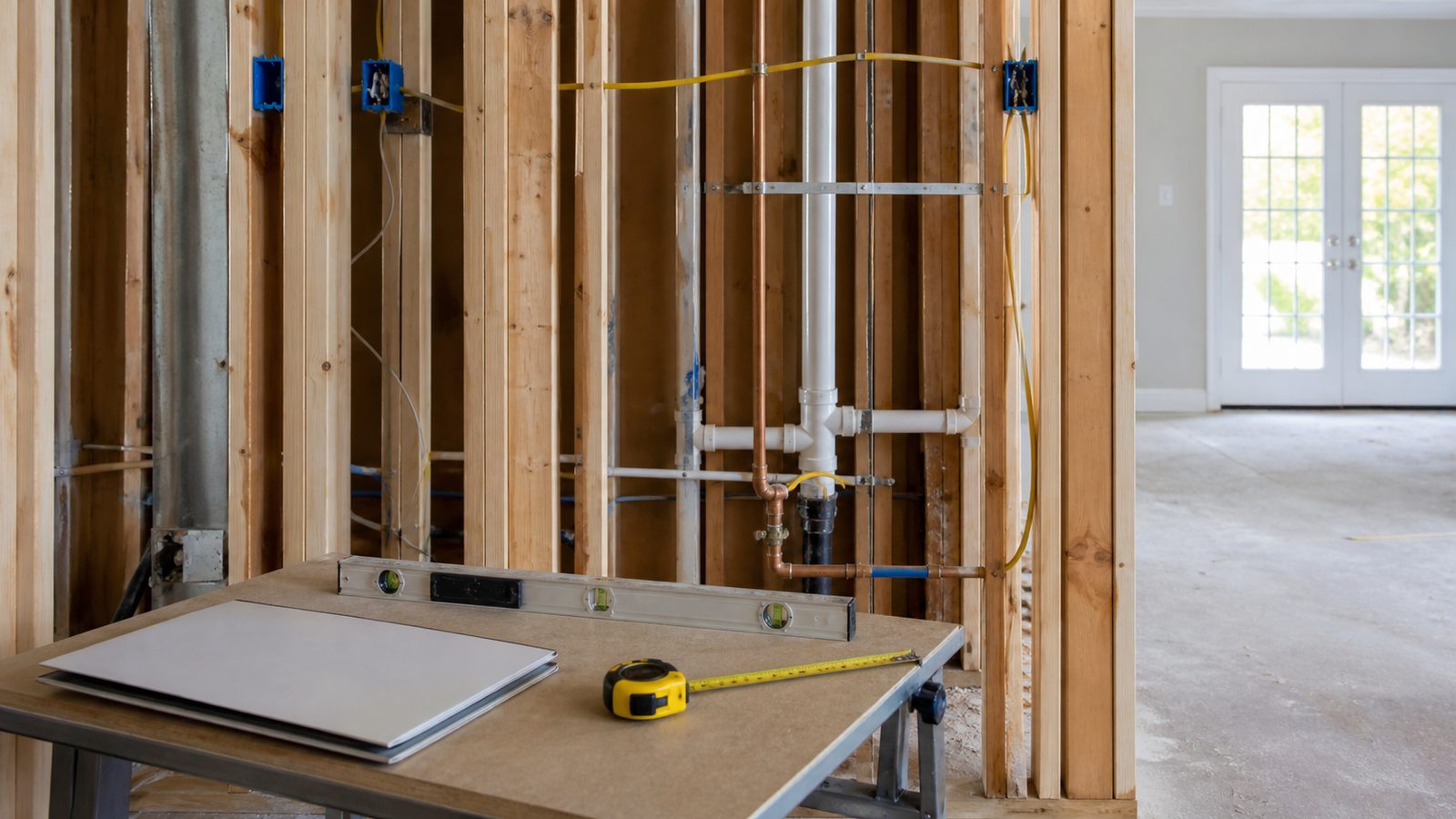
Permit timelines are the most frequently underestimated constraint for homeowners planning a project.
Residential permits in Duval County: standard residential permit review (single-family addition, renovation, re-roof, replacement HVAC) runs 5–8 weeks from submission to permit issuance. Resubmittals after plan review corrections add 3–5 weeks per cycle. A project that requires two correction cycles can take 3–4 months to permit.
Custom home permits in Duval County: new single-family construction requires a more extensive review, including energy code compliance (Florida Energy Code), structural drawings stamped by a licensed Florida engineer, and site plan review. Budget 6–10 weeks for a straightforward custom home permit; 10–14 weeks if there are corrections or special conditions.
Commercial permits in Duval County: commercial renovation and new construction runs 8–12 weeks for permit review, longer if the project triggers DRC (Development Review Committee) review.
St. Johns County has historically processed residential permits faster than Duval — 3–6 weeks is achievable for standard residential projects. However, the county's development volume has increased substantially, and review times have extended from 2022 baselines.
Nassau County residential permits run 4–8 weeks and are generally manageable for straightforward projects. Clay County is similar.
The practical implication for homeowners: when your GC quotes a construction timeline, the permit period is not included. A 5-month construction project with a 10-week permit cycle is a 7-month project from the day you submit the permit application.
Labor Market: Quality Crews Are Booked 8–12 Weeks Out
The Jacksonville construction labor market is tight at the qualified end. This statement has two components worth unpacking.
Quantity of workers: there is no shortage of people willing to work construction in Jacksonville. Walk any Home Depot parking lot at 5:30 a.m. and you will find laborers looking for day work.
Quality of workers: skilled framing carpenters who can produce plumb, level, square framing to CertainTeed or GAF Master Elite standards; experienced drywall finishers who can hold a Level 5 finish on smooth-wall residential; concrete crews who produce flatwork that holds a 3/16-inch floor flatness tolerance — these are not abundant in the Jacksonville market.
Quality GCs who employ skilled trades are running backlogs of 8–12 weeks for new project starts. A GC who can start your project next week, without qualification, is a GC who either has no backlog because no one is hiring them, or is overextended and will be dividing their attention across too many projects simultaneously.
The backlog is a signal. A GC worth hiring has a backlog. Ask specifically when they can start your project and when their principal will be on site to review the work personally.
Material Cost Trends in 2025
The material cost volatility of 2020–2022 has partially resolved, but specific categories remain elevated or supply-constrained.
Structural steel: stable. The extreme volatility of 2021–2022 has moderated. Structural steel for residential and light commercial applications is available at prices that have partially normalized.
Lumber: partially recovered. Framing lumber prices are down significantly from the 2021 peaks ($400+ per thousand board feet) but remain above 2018 baselines. Engineered lumber products (LVL beams, I-joists) are more stable than dimensional lumber.
Roofing materials: elevated. Asphalt shingles and roofing underlayment have seen sustained price increases due to petroleum-based ingredient costs and demand from the ongoing Florida hurricane damage repair cycle. GAF and CertainTeed shingle pricing is 15–25% higher than pre-2020 baselines.
Specialty MEP equipment: the most constrained category. Electrical switchgear and panelboards run 24–36 weeks lead time for some product lines. Air handling units (AHUs), chillers, and heat pumps for residential applications run 10–20 weeks. Generator sets run 20–30 weeks. For any project with significant MEP scope, the GC should identify and order long-lead equipment within the first 30 days of the project — waiting until permit is issued is too late.
Windows and doors: lead times for custom and non-stock sizes run 10–18 weeks. Standard sizes from domestic manufacturers are largely available within 4–6 weeks.
What This Market Means for Your Project: How to Get to the Front of the Queue
In a tight market, the homeowners who execute their projects on schedule are the ones who manage the intake process proactively. Specific actions:
Hire early, not urgently. A homeowner who begins conversations with GCs in January for a March construction start is too late for most quality contractors' Q1 availability. Begin GC conversations 4–6 months before your target construction start, and expect that a quality GC's first available slot may be 10–16 weeks out.
Lock selections early. Material and finish selection delays are one of the most common causes of schedule extension on custom home and renovation projects. Every week your GC waits for your tile selection is a week the tile supplier's lead time is consuming your project schedule without a board being laid. Make all finish selections — tile, cabinetry, plumbing fixtures, hardware, flooring, appliances, windows, doors — before construction begins, not during.
Don't change your mind after construction starts. A change order during construction costs 2–3 times what the same decision would have cost before construction began. Framing changes require field labor to remove and rebuild what was installed. Changes to electrical or plumbing after rough-in require the trade to return, demolish, and reinstall. The fixed-price contract protects you on scope that was included; it cannot protect you from decisions you make after the contract is signed.
Pre-order long-lead materials at contract signing. Work with your GC to identify any item with a lead time over 8 weeks and order it immediately — before permit, before construction starts, even before your loan closes if the purchase is feasible. A 16-week lead time on your imported tile will not pause construction until week 12; it will pause it at the finish stage when the tile was supposed to be installed.
JK Prestige offers 48-hour written estimates and fixed-price contracts, so homeowners know their number before committing to a construction loan.
Jacksonville's Storm Chaser Problem
Jacksonville sits in the path of Atlantic hurricane activity, and every significant storm event that affects Northeast Florida produces an influx of out-of-state roofing and construction contractors. These contractors — commonly called storm chasers — operate on a short window: appear after a storm, collect insurance money for roof replacements and storm damage repairs, and move to the next storm market before warranty claims arise.
The pattern is consistent. After Hurricane Irma (2017), Hurricane Dorian (2019), and the series of tropical events affecting Jacksonville in subsequent years, contractors appeared in Jacksonville neighborhoods with out-of-state plates, direct-mail solicitations, and door-to-door sales visits offering rapid storm damage repair.
How to protect yourself:
Verify the CGC license at the Florida DBPR before signing any contract. Visit myfloridalicense.com, search the contractor's name or license number, and confirm the license is active and in good standing. A valid Florida Certified General Contractor (CGC) or Certified Roofing Contractor (CCC) license is not issued to out-of-state contractors without a qualifying agent who is a Florida resident.
Verify insurance. Request a certificate of insurance before work begins. The certificate should show general liability insurance (minimum $1M per occurrence), workers' compensation insurance covering all employees on the project, and auto liability. Call the insurance company directly to verify the certificate is current.
Check references from completed Jacksonville projects, not testimonials from other storm markets. Ask specifically for projects completed in Jacksonville or Northeast Florida within the past 24 months, and call the owners.
Do not pay a large deposit upfront. A legitimate contractor should not require more than 10–20% down on a standard roofing or repair project. Full payment before work begins, or large deposits before material delivery, is a warning sign.
JK Prestige holds GAF Master Elite and CertainTeed certifications and has served Jacksonville homeowners continuously since 2017 — not just after storm events.
Realistic Custom Home and Renovation Timelines in 2025
The following timelines are Jacksonville-specific estimates based on current market conditions. They assume a project without significant unexpected site conditions, no major owner-directed changes after construction starts, and a GC who begins permit submission promptly after contract execution.
Custom home (land already owned, plans not yet designed): 24–30 months from architect engagement to CO. Breakdown: architectural design 3–5 months, GC selection and contract 1–2 months, permit submission and review 6–10 weeks (with potential corrections adding 4–6 weeks), construction 12–16 months, punch-list and final inspection 4–8 weeks.
Custom home (plans complete, land already owned): 16–22 months to CO. Construction starts after permit issues; the design phase is complete.
Major renovation (gut renovation, addition): 8–14 months from GC contract to CO. Permit timeline: 6–10 weeks. Construction: 5–9 months. This assumes the project scope is defined and all structural, MEP, and finish selections are made at contract.
Kitchen or bath renovation (no structural changes): 3–6 months from GC contract to project completion. Permit: 4–6 weeks. Construction: 6–12 weeks.
Roof replacement: 2–6 weeks from contract to completion, assuming materials are in stock. Storm-driven demand can extend material availability and crew scheduling.
Neighborhood-Specific Market Conditions
St. Johns County: Highest Activity
Ponte Vedra Beach, Nocatee, World Golf Village, and the Route Nine B corridor are among the highest-activity residential construction areas in NE Florida. Custom home activity is concentrated in gated golf communities and master-planned communities. GC backlogs here are among the longest in the market; start your GC search 6 months ahead.
Riverside and Avondale: Historic Renovation Boom
The historic neighborhoods of Riverside and Avondale on Jacksonville's Westside are experiencing a sustained renovation cycle driven by buyers from out-of-market who want walkable urban neighborhoods. Renovation work in these neighborhoods requires attention to historic district guidelines, compatibility with existing materials (wood frame construction, historic window proportions), and coordination with the City of Jacksonville's Planning and Development Department for any work affecting historically designated properties.
Northside and Nassau County: New Construction Growth
The US-1 corridor through Yulee and Callahan, and Jacksonville's Northside communities along Lem Turner Road and New Kings Road, are seeing new construction growth driven by lower land costs and improving school access. This market is attractive for buyers priced out of St. Johns County who want new construction.
How to Protect Yourself in a Tight Market
A tight market creates pressure on homeowners to move quickly, which benefits contractors who use urgency to their advantage. Protect yourself with three contract requirements.
Fixed-price contract: a contract with a defined price for a defined scope. Any work added to the scope requires a written change order with an itemized cost before the work begins. If a GC is not willing to provide a fixed-price contract with a written scope, find one who will.
Reference verification: call three references for projects of similar type and size completed within the past 24 months. Ask specifically: was the project completed within the original budget and timeline? Were change orders reasonable and well-documented? Would you hire this GC again?
DBPR license check: verify the GC's license at myfloridalicense.com. The license should be active, in good standing, and the expiration date should be at least 12 months away. Confirm the license is in the correct category for your project type (CGC for general construction, CCC for roofing).
JK Prestige's Availability and Intake Process
JK Prestige Construction has maintained continuous operation in Jacksonville since 2017 through every market cycle — the 2020 labor disruption, the material volatility of 2021–2022, and the current tight market. The company is founder-led: the principal answers every call, walks every site, and signs every estimate.
Current intake: JK Prestige accepts new project inquiries for custom homes, major renovations, roofing, and commercial projects year-round. The 48-hour estimate turnaround is a fixed commitment, not a target. All estimates are written, fixed-price, and include a full scope description.
Request a free consultation or call (904) 944-0278 directly to discuss your project. The founder answers.
Ready to start? Get a written estimate in 48 hours. Call (904) 944-0278 or request a free consultation.
No call center. No coordinator. A JK principal reviews every inquiry and replies with a real number, not a range, not a follow-up form.
Request Free Estimate →