A hospital GC's safety record is not a reputational signal — it is operational data. A high Total Recordable Incident Rate (TRIR) or Experience Modification Rate (EMR) above 1.0 tells you that the firm's safety culture produces preventable injuries at a rate above industry average. In an occupied hospital environment, where a fall near a patient corridor or an ICRA (Infection Control Risk Assessment) breach caused by rushed work can harm patients as well as workers, that data point is not academic. This post explains what to request, what the numbers mean, how to read them, and what specific questions to ask the superintendent before you sign. JK Prestige's TRIR is below one-third of the commercial GC industry average.
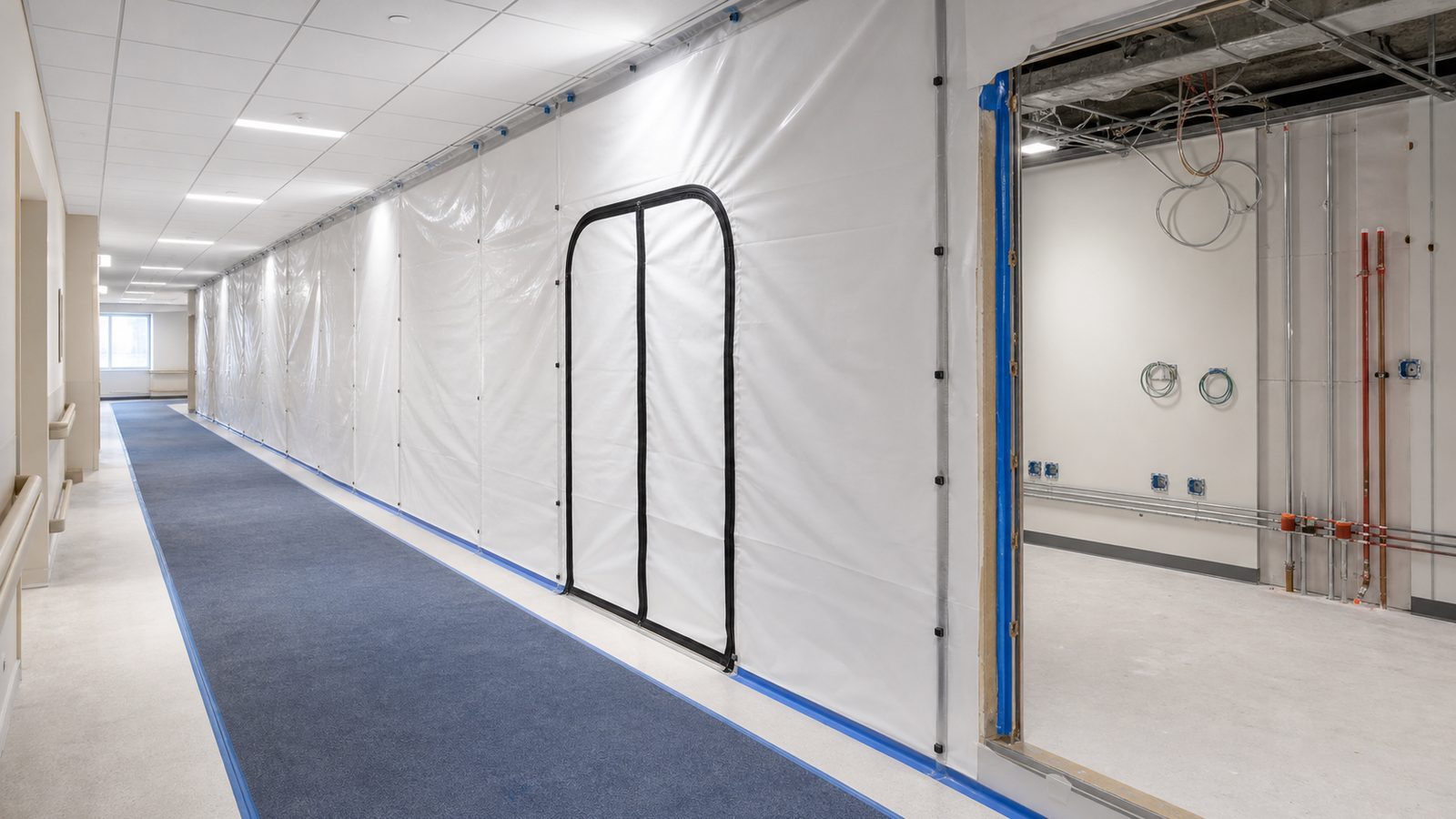
What Safety Metrics to Request Before Awarding a Hospital Contract
TRIR: Total Recordable Incident Rate
TRIR measures the number of recordable workplace injuries and illnesses per 100 full-time equivalent workers per year. It is calculated as:
(Number of recordable incidents × 200,000) ÷ Total hours worked
The multiplier of 200,000 represents 100 workers × 50 weeks × 40 hours, normalizing the rate across firms of different sizes.
Industry benchmarks for construction (Bureau of Labor Statistics, most recent available):
- Commercial construction average TRIR: approximately 2.0-2.5
- Heavy/civil construction average TRIR: approximately 2.5-3.0
- Best-performing construction firms (top quartile): below 1.0
- Elite safety performers: below 0.5
A TRIR below 1.0 indicates a safety culture that is substantially above industry average. A TRIR above 3.0 on a hospital project is disqualifying — that rate of injury in a live patient care environment is not manageable.
JK Prestige's TRIR is below one-third of the commercial GC industry average. For a firm averaging 2.0, that reference point means below 0.67.
What to request: TRIR for each of the last three calendar years, calculated from the OSHA 300 log totals and hours worked. Do not accept a self-reported narrative — request the OSHA 300 log summary (OSHA Form 300A) for each year, which the firm is required to post publicly.
EMR: Experience Modification Rate
EMR (also called the Experience Modifier or MOD) is an insurance rating factor calculated by the workers' compensation insurer. It compares the firm's actual workers' compensation claims experience to what is expected for a firm of that size in that industry classification. An EMR of:
- 1.0: The firm's claims experience is exactly average for its industry and size
- Below 1.0: The firm's claims experience is better than average (lower workers' comp premiums)
- Above 1.0: The firm's claims experience is worse than average (higher premiums)
For bonding purposes, most hospital project sureties require a GC to carry an EMR below 1.0. An EMR of 1.15 or higher will disqualify most GCs from bonding large hospital projects.
Why EMR matters beyond bonding: EMR reflects three years of rolling claims experience. A GC can have a low TRIR in the current year by under-recording injuries while still carrying a high EMR from prior years. Looking at both together gives a more accurate picture than either alone.
What to request: The current EMR letter from the firm's workers' compensation carrier, dated within the last 90 days. EMR letters are issued annually after the insurer completes its audit. If the GC cannot produce a current EMR letter, ask why.
OSHA Citation History
The Occupational Safety and Health Administration (OSHA) maintains a public database of inspection results and citations at osha.gov. Before awarding a hospital contract, search the prospective GC's legal name and common doing-business-as names.
What to look for:
- Willful violations: The GC knew a hazard existed and made no effort to eliminate it. A willful citation — especially for fall protection, electrical safety, or excavation — is a serious indicator of safety culture. Penalties for willful violations range from $15,625 to $156,259 per violation (2024 figures).
- Repeat violations: The same hazard cited in two or more OSHA inspections within five years. This means the corrective action from the first citation was not effective — or was not implemented.
- Citation pattern by hazard type: A GC with multiple fall protection citations has a structural problem with fall prevention, not a one-time lapse.
How to search: Go to osha.gov, navigate to the Establishment Search under the Enforcement tab. Search by establishment name and state. Review inspections from the last five years.
A citation history is not automatically disqualifying — active construction firms get inspected frequently, and citations happen. What matters is the type (willful/repeat vs. serious/other), the hazard category, and whether the abatement was completed promptly.
Incident Reports From Healthcare Projects
Beyond aggregate TRIR and EMR, ask for incident reports from the GC's two most recent hospital or healthcare construction projects. An incident report should include:
- Date, time, and location of the incident
- Description of what occurred
- Root cause analysis (not just the immediate cause — what management failure or condition allowed the injury to occur)
- Corrective actions taken at the project level and across the firm
A GC whose incident reports are one-paragraph narratives with no root cause analysis has a safety culture that records events but does not learn from them. A GC whose incident reports include five-why analysis, corrective action timelines, and follow-up verification has a functioning safety management system.
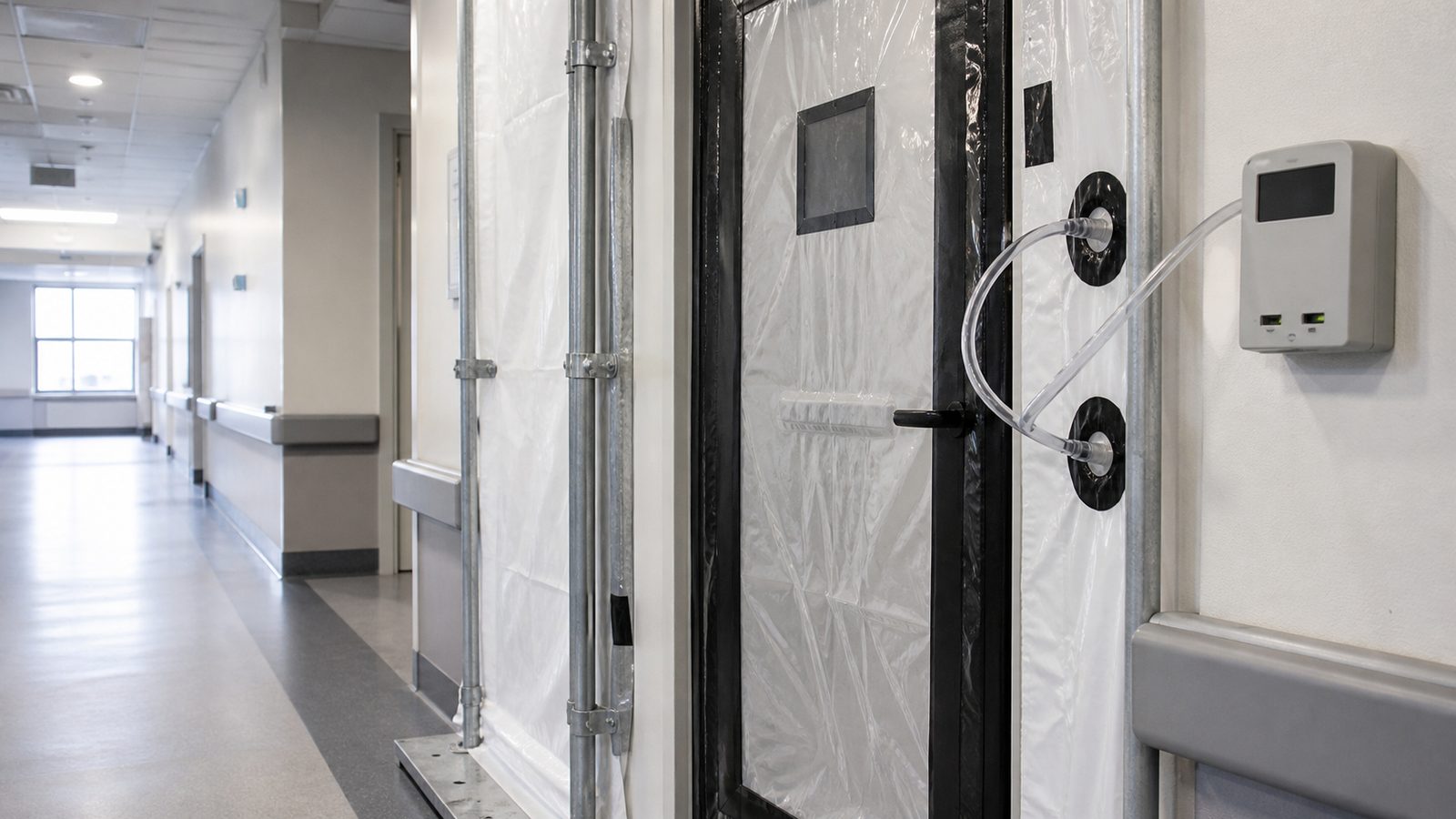
How Safety Is Staffed on a Hospital Project
Asking for metrics is necessary. Asking how safety is operationally run is equally important.
Who runs daily safety meetings?
On a well-run hospital project, daily crew-led toolbox talks happen every morning before work begins. The topic is documented, the crew signs attendance, and the superintendent reviews the log weekly. Ask: who runs the morning toolbox talk on a hospital project — the superintendent, a dedicated safety officer, or is it crew-led? A GC who does not have a clear answer does not have a standardized morning safety process.
JK Prestige requires documented daily toolbox talks on all healthcare projects. The topic is scheduled in advance, aligned to the work scope for the week, and reviewed by the superintendent.
Is a dedicated safety officer on site?
On projects over $20M in construction value, a dedicated safety officer — full-time on site, not shared across multiple projects — is best practice. The superintendent cannot manage ICRA barriers, schedule coordination, RFIs, and a full safety program simultaneously. Ask whether the proposed superintendent will carry safety as an additional duty or whether a dedicated safety officer is in the staffing plan.
What is the fall protection plan near occupied patient areas?
In a live hospital renovation, falls are the leading cause of construction fatalities — and in a hospital setting, falling materials or workers near patient areas pose a dual risk. The fall protection plan should include:
- 100% fall protection at heights over 6 feet (OSHA 1926 Subpart M requirement)
- Specific protocols for working above occupied patient areas (debris containment, tool tethering, work scheduling during low-patient-census periods)
- Designated load paths for materials entering the building that do not cross patient care areas
- Daily inspection of fall protection systems by the superintendent
Ask to see the fall protection plan from a prior hospital project. A plan that exists only as a general statement ("all workers will use fall protection when required") is not a plan — it is a sentence.
Is a written Job Safety Analysis (JSA) required for non-routine tasks?
A JSA breaks down a non-routine task — cutting a penetration through a patient corridor ceiling, removing a section of existing medical gas piping, working in an elevated plenum space — into steps, identifies the hazard at each step, and specifies the control. JK requires a written JSA before any non-routine task begins on a hospital project.
A GC who cannot describe their JSA process — or who describes it as "we do a safety brief" without documentation — is operating safety verbally, not systematically.
What OSHA 30 Certification Means for Hospital Projects
OSHA 30-hour training covers the major OSHA 1926 construction standards in a structured 30-hour curriculum. It is not a certification for any specific hazard — it is a baseline education in construction safety regulations.
At JK Prestige, every supervisory employee holds OSHA 30 certification. The significance: a superintendent on a live hospital project who encounters a regulatory question — whether a specific infection control procedure affects a required safety control, whether a powered industrial truck is permitted on a patient corridor during specific hours — has the regulatory background to assess the situation against OSHA standards rather than guessing.
OSHA 30 is the minimum. On hospital projects, look for superintendents who supplement it with healthcare-specific safety training — ICRA-trained supers understand that infection control and construction safety are not separate programs, they are integrated.

Before You Sign: The Safety Verification Checklist
- [ ] OSHA 300A summaries for each of the last three years — calculate TRIR yourself from the totals
- [ ] Current EMR letter from workers' comp carrier (dated within 90 days)
- [ ] OSHA citation history search at osha.gov for the firm's legal name
- [ ] Incident reports with root cause analysis from two recent healthcare projects
- [ ] Fall protection plan from a prior hospital project
- [ ] Superintendent OSHA 30 certificate with date (not older than four years — OSHA 30 has no expiration, but ask when refresher training was last completed)
- [ ] Description of daily toolbox talk process and documentation method
- [ ] Staffing plan: is a dedicated safety officer in the budget for this project?
Review JK Prestige's delivery model and safety culture, then see the healthcare project portfolio for a record of completed hospital work.
Get a free written estimate in 48 hours. contact JK Prestige Constructor or call (904) 944-0278. A principal answers.
No call center. No coordinator. A JK principal reviews every inquiry and replies with a real number, not a range, not a follow-up form.
Request Free Estimate →