Submittals are one of the least-understood administrative processes in construction — misunderstood by owners who wonder why they take so long, and sometimes undermanaged by GCs who treat them as paperwork rather than quality control.
This guide explains what submittals are, why they exist, how the process runs on a commercial project, and what happens when they're done wrong.

What a Submittal Is
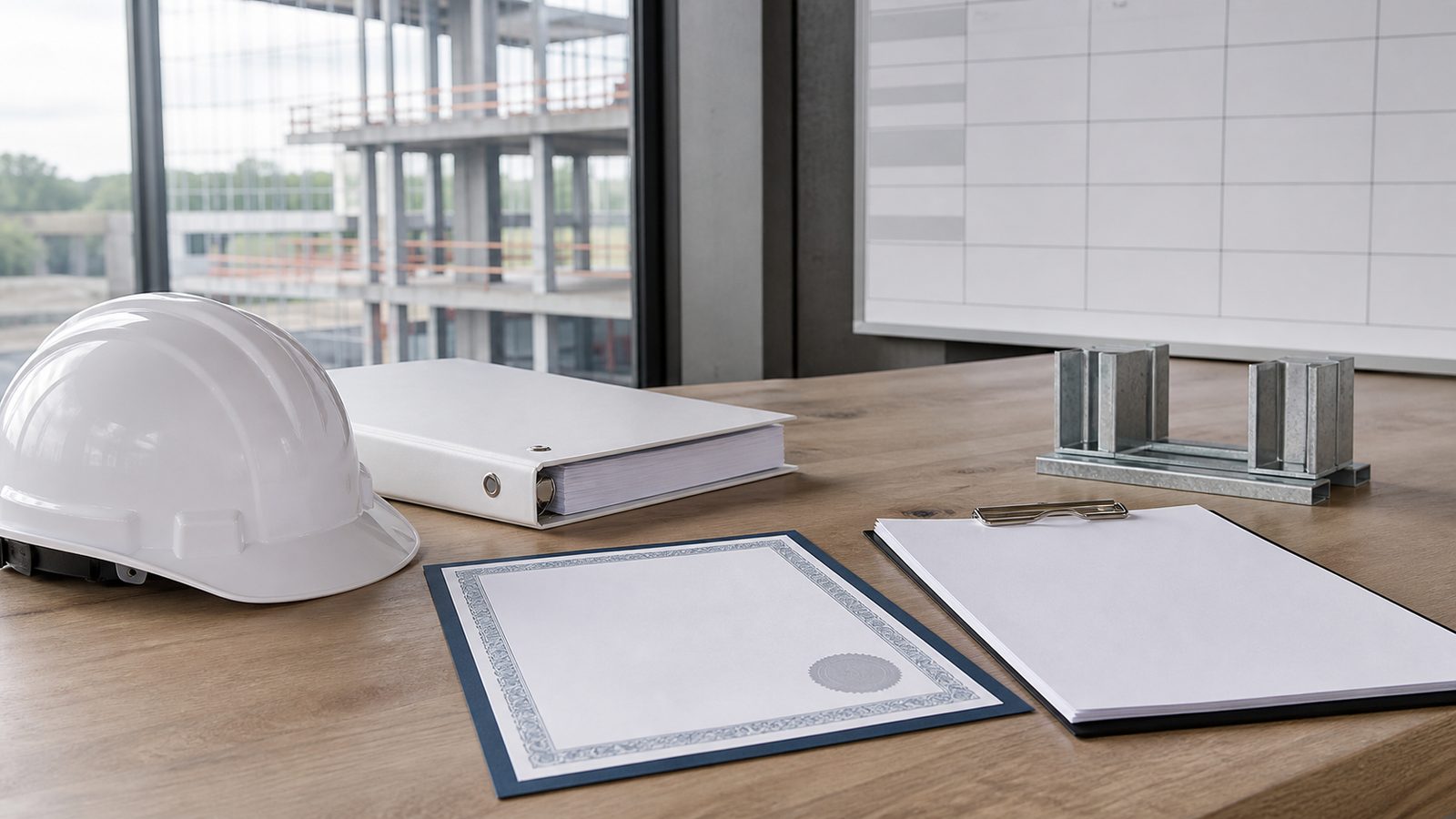
A submittal is documentation from the contractor (or subcontractor) submitted to the design team (architect and engineers) for review and approval before work is installed. Submittals confirm that what is actually being installed matches what the design documents specify.
Submittals come in several forms:
Shop Drawings — Fabrication-level drawings prepared by a manufacturer or subcontractor showing the specific dimensions, connections, and details of what will be installed. Examples: structural steel shop drawings, precast panel details, curtain wall system drawings, millwork drawings.
Product Data / Cut Sheets — Manufacturer's technical data showing product specifications, performance ratings, and installation instructions. Examples: HVAC equipment submittals, window system cut sheets, lighting fixture specs.
Samples — Physical material samples submitted for approval before bulk ordering. Examples: tile sample, paint chip, flooring sample, brick sample.
Certificates and Test Reports — Documentation confirming a product meets specified standards. Examples: concrete mix design, welding certifications, waterproofing test reports.
Operation and Maintenance Manuals — Final submittals at project closeout documenting installed systems for the owner's operations team.
Why Submittals Exist
Submittals exist because construction drawings specify the intent, not the exact product. A specification might require "1/2-inch type X gypsum wallboard meeting ASTM C1396/C1396M." The GC's drywall sub submits the manufacturer's cut sheet showing that their actual product (Georgia-Pacific DensArmor Plus or similar) meets that standard.
Without submittals, the architect has no verification that the specified material was actually used. The owner has no record of what was installed. The GC has no documented approval that their substitution is accepted.
Submittals also serve as the shop drawing review that catches coordination errors before installation. A structural steel shop drawing reviewed by the structural engineer often catches dimensional conflicts with the architectural drawings before steel is fabricated.
The Submittal Workflow
On a commercial project, the submittal workflow runs through the GC's project manager:
1. Contract Requirement Identification
The specifications define what submittals are required. Division 01 (General Requirements) of the spec typically lists submittal requirements and the review timeline. Each trade division (03 Concrete, 05 Steel, 07 Roofing, etc.) specifies what submittals that trade must provide.
JK Prestige creates a submittal log at the start of every commercial project: a list of every required submittal, who is responsible for preparing it (GC, sub, vendor), and when it's required to maintain the project schedule.
2. Preparation by Contractor or Sub
The subcontractor or vendor prepares the submittal. A structural steel fabricator prepares shop drawings. The window manufacturer prepares cut sheets. The concrete sub submits mix designs.
The preparation time varies significantly:
- Product cut sheets: 1 to 5 days
- Engineered shop drawings: 2 to 6 weeks
- Custom millwork shop drawings: 3 to 8 weeks
This is why submittal scheduling starts at the beginning of the project, not when the trade mobilizes.
3. GC Review
Before the submittal goes to the design team, the GC's project manager reviews it:
- Confirm the submittal is for the right product
- Confirm dimensions match the plans
- Check for obvious conflicts
- Stamp the submittal with the GC's review stamp indicating the review level
GC review stamps:
- "Approved — No Exceptions" — submittal reviewed, complies with contract documents
- "Approved as Noted" — approved subject to corrections noted on the submittal
- "Revise and Resubmit" — corrections required; resubmission needed
- "Rejected" — does not meet contract requirements
4. Design Team Review
The GC transmits the submittal to the architect (and to the relevant engineer — structural drawings go to the structural engineer). Review time is defined in the specifications — typically 10 to 14 business days for standard submittals, longer for complex shop drawings.
Design team review answers the question: does this submittal comply with the design intent?
Design team stamp categories are similar to the GC's: approved, approved as noted, revise and resubmit, rejected.
A critical point: The design team's review is for general conformance with the design intent. It does not relieve the contractor of responsibility for dimensions, quantities, and fabrication accuracy. A structural steel shop drawing "approved as noted" by the structural engineer still requires the fabricator to build it correctly.
5. Action on the Approved Submittal
After approval, the submittal becomes a contract document for that scope. The sub or vendor fabricates or procures based on the approved submittal. Field installation must match the approved submittal.
If field conditions require deviation from the approved submittal, a revised submittal is required before the deviation is installed.
6. Submittals at Closeout
At project closeout, the GC assembles an O&M (Operations and Maintenance) manual package containing:
- All approved submittals for installed systems
- Equipment warranties
- Manufacturer's operating instructions
- Maintenance schedules
- Attic stock (leftover tile, paint, flooring for future repairs)
This package is delivered to the owner at substantial completion as part of the closeout deliverables.
Common Submittal Problems and Their Consequences
Submitting too late: The most common problem. A GC who doesn't start the submittal process until after construction starts will have subs mobilizing without approved materials. This leads to holds (installing without approvals), then rejections, then rework.
JK Prestige starts the submittal log and issues the first submittals during pre-construction — before ground breaks.
Submitting the wrong product: A submittal for a product that doesn't meet spec doesn't get approved. The sub has to find a compliant product and resubmit. If they've already ordered the non-compliant product, that's a cost and schedule problem for the sub.
Not tracking design team response time: If the design team takes 6 weeks to review a structural steel submittal and the GC didn't track the contractual response time, the delay may fall on the GC's account. The spec defines review time — if the design team exceeds it, the GC has a documented basis for a schedule extension.
Substitution submittals: When a contractor proposes a substitution for a specified product (a different manufacturer or model), the substitution requires a formal review against all specified requirements. Substitution requests have their own form and approval process — they're not the same as a standard product data submittal.
What Submittals Look Like on a JK Prestige Project
Every JK Prestige commercial project has a submittal log in the project management system. The log tracks:
- Required submittal
- Responsible party
- Required submission date (based on project schedule lead times)
- Actual submission date
- Design team review deadline
- Review status
- Resubmission requirements
The PM reviews the submittal log at every weekly OAC (Owner-Architect-Contractor) meeting. Overdue submittals are identified and escalated before they become schedule problems.
No call center. No coordinator. A JK principal reviews every inquiry and replies with a real number, not a range, not a follow-up form.
Request Free Estimate →