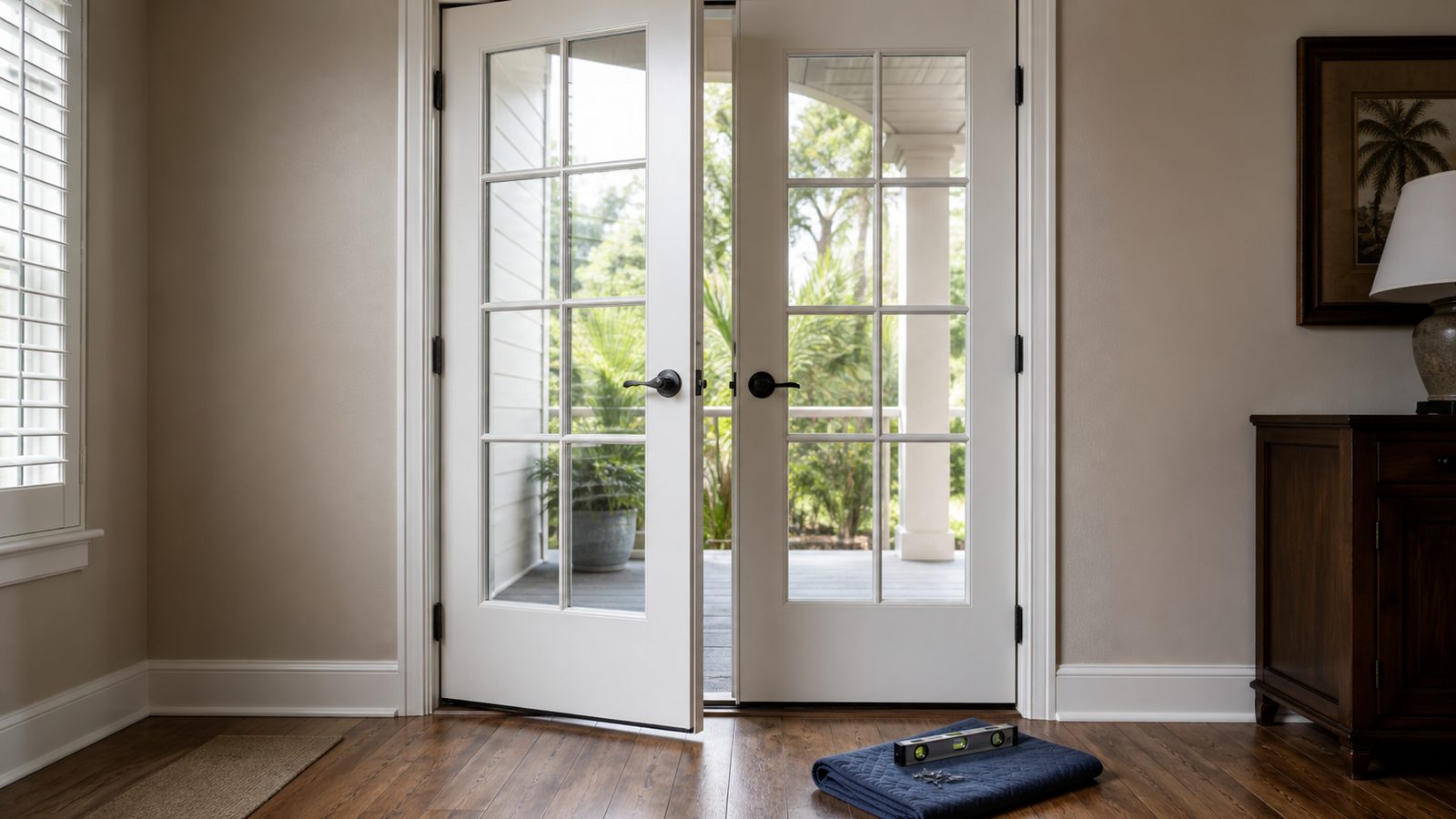
French door pairs move. In a Jacksonville home that swings between soggy summer humidity and dry winter air, a pair that latched cleanly on installation day can drift out of alignment within a year or two. The usual complaints: the active door catches on the frame before closing, the strike plate and latch no longer line up, or a wedge-shaped gap shows in the reveal instead of an even line. Most of the time this is a simple mechanical adjustment you can do in an afternoon. Sometimes it signals the house has settled or the header has started to sag, and no amount of hinge shimming will fix that. This guide covers both the fix and how to tell the difference.
When You Need a Permit in Jacksonville
Adjusting the hardware on an existing French door, re-shimming hinges, driving a long screw into the trimmer stud, or resetting an astragal and flush bolts, is maintenance. The City of Jacksonville Building Inspection Division does not require a permit for that repair, since you are not changing the size of the opening, the door unit, or anything related to wind load.
That changes the moment you replace the door unit, resize the opening, or swap in a different assembly. Duval County sits in a high wind zone, and replacement exterior doors need a current Florida product approval and must meet the wind-load design pressure for your location, which requires a permit and inspection.
There is also a reason to slow down before reaching for shims. If the uneven reveal traces back to a settled foundation or a sagging header, that is a structural problem, not a hardware one, and shimming will not correct a frame that is racking because the structure above it is moving. Cracking in the drywall above the door, a reveal that keeps worsening instead of holding steady, or the same symptom in nearby windows all mean stop and call a structural engineer before touching the hardware. Confirm permit requirements and any structural concerns with the City of Jacksonville Building Inspection Division before starting work.
Tools and Materials
- Phillips and flat-blade screwdrivers, plus a cordless drill
- 3-inch or 3.5-inch exterior wood screws, to replace short hinge screws
- Cedar or composite shims
- A 2-foot carpenter's level and a tape measure
- Paraffin wax or dry silicone lubricant for bolts and strike plates
- A block plane, only if an edge needs light relief
- Painter's tape to protect the finish
Step-by-Step
- Diagnose before you adjust. Close both doors and check the reveal all the way around. Wider at top and tighter at bottom on the hinge side means the door has dropped. Tight at the top of the latch side means it has racked toward the frame. Then tighten every hinge screw; loose screws are the most common cause of a dropped door, and a screw that spins without biting means the hole has stripped out.
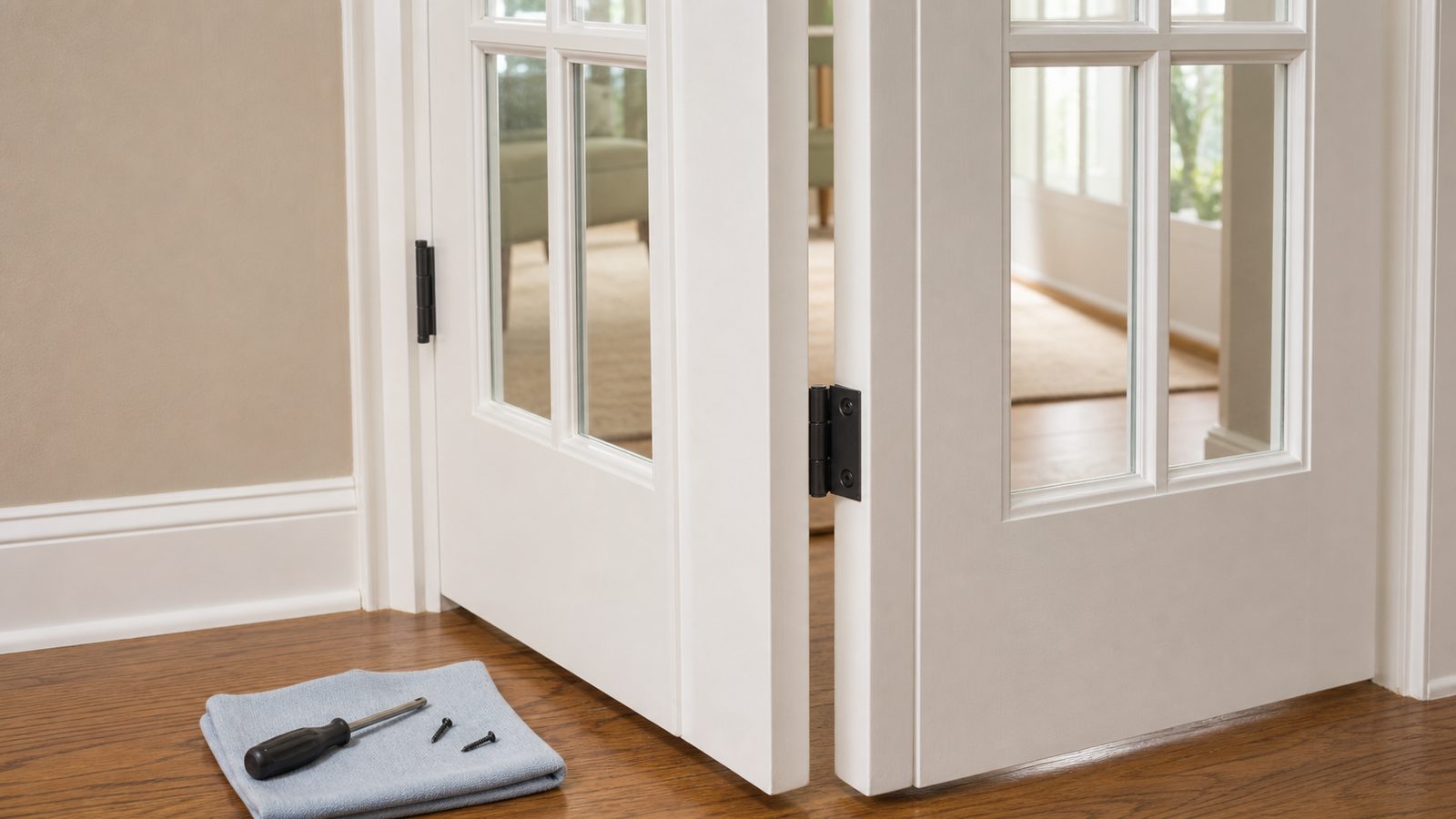
- Drive a long screw into the trimmer stud. This corrects a sagging door rather than just tightening a symptom. Remove the top screw in the top hinge and replace it with a 3-inch or 3.5-inch screw. The extra length bites into the trimmer stud behind the jamb, pulling the jamb tight to the framing and lifting the door back into position. Check the reveal before deciding if the middle hinge needs the same treatment.
- Shim a hinge to move the door outward. If the door binds against the frame rather than dropping, pull the hinge leaf, slip a thin shim behind it, and reset the screws. A shim behind the top hinge pushes the top away from the frame; a shim behind the bottom hinge pushes the bottom.
- Adjust the strike plate if the latch won't catch. Loosen the screws, shift the plate slightly, and file the opening if the latch bolt catches on the edge.
- Work the astragal and flush bolts on the inactive door. That leaf is held by flush bolts, one into the head jamb and one into the threshold. If the active door won't latch against the astragal, loosen its mounting screws and adjust it in or out until the latch seats fully, then confirm both bolts throw completely into their strike holes.
- Test in every position. Open and close both doors several times and check the latch pushed and pulled, since wind load does both to a French door in real use.
Jacksonville Climate Considerations
Wood and wood-composite French doors move with the seasons here more than most homeowners expect. Northeast Florida's humidity swings hard between the wet season and the drier winter, and a door that swells slightly in July and August can bind at the latch, then shrink back and latch easily again by January. If a door only sticks part of the year, recheck the fit after the weather turns before assuming an adjustment failed.
Soil matters too. Parts of Duval County sit on sandy soil that moves little, but other pockets have more expansive, clay-influenced soil, and slab foundations can settle slightly over time, especially near a slab edge or where drainage is poor. A door that goes out of square gradually over a year or more, rather than with the seasons, is worth a second look at the slab and foundation nearby.
Salt air near the coast corrodes and stiffens hinges, strike plates, and flush bolts faster than inland hardware, adding friction that throws off the reveal even when the door itself is sound. A west-facing door in full afternoon sun also expands on the exterior face while the interior stays cooler, which can bind the top corner until the sun moves off it. That is why a door latching perfectly in January can bind again by August.
What It Costs in Jacksonville (DIY vs. Hiring a Pro)
These are rough planning estimates, not official or surveyed figures.
| Approach | Estimated Cost | What It Covers |
|---|---|---|
| DIY, basic tools | $10 to $40 | Shims, screws, lubricant, maybe a strike plate |
| DIY, new hardware | $50 to $150 | New hinges, astragal, or flush bolts |
| Handyman visit | $125 to $250 | An hour or two to diagnose and adjust |
| Contractor visit (JK Prestige) | $200 to $450 | Diagnosis plus a check for settlement |
| Door unit replacement | $1,200 to $4,500+ | Wind-rated door, permit, and install |
When to Call JK Prestige
Call a contractor if the hinge and trimmer-stud fixes are done and the door still won't latch, if the reveal keeps worsening, if you see cracking in the wall above the opening, or if the real fix is replacing the door unit. JK Prestige Constructor Corp works on Jacksonville homes regularly and can tell within a short visit whether the problem is hardware, installation, or structural.
No call center. No coordinator. A JK principal reviews every inquiry and replies with a real number, not a range, not a follow-up form.
Request Free Estimate →