Most homeowners arrive at this question after one of three triggers: a storm inspection that came back worse than expected, a layout that stopped working when the family grew, or a renovation bid that landed close to what a new house would cost. The math is rarely obvious, and the wrong choice adds months and six figures to a project that already feels expensive.
This guide walks you through eight steps a general contractor uses before recommending a path. Work through them in order. By step eight you will have enough information to make the decision with confidence.
1. Define What You Are Actually Unhappy With
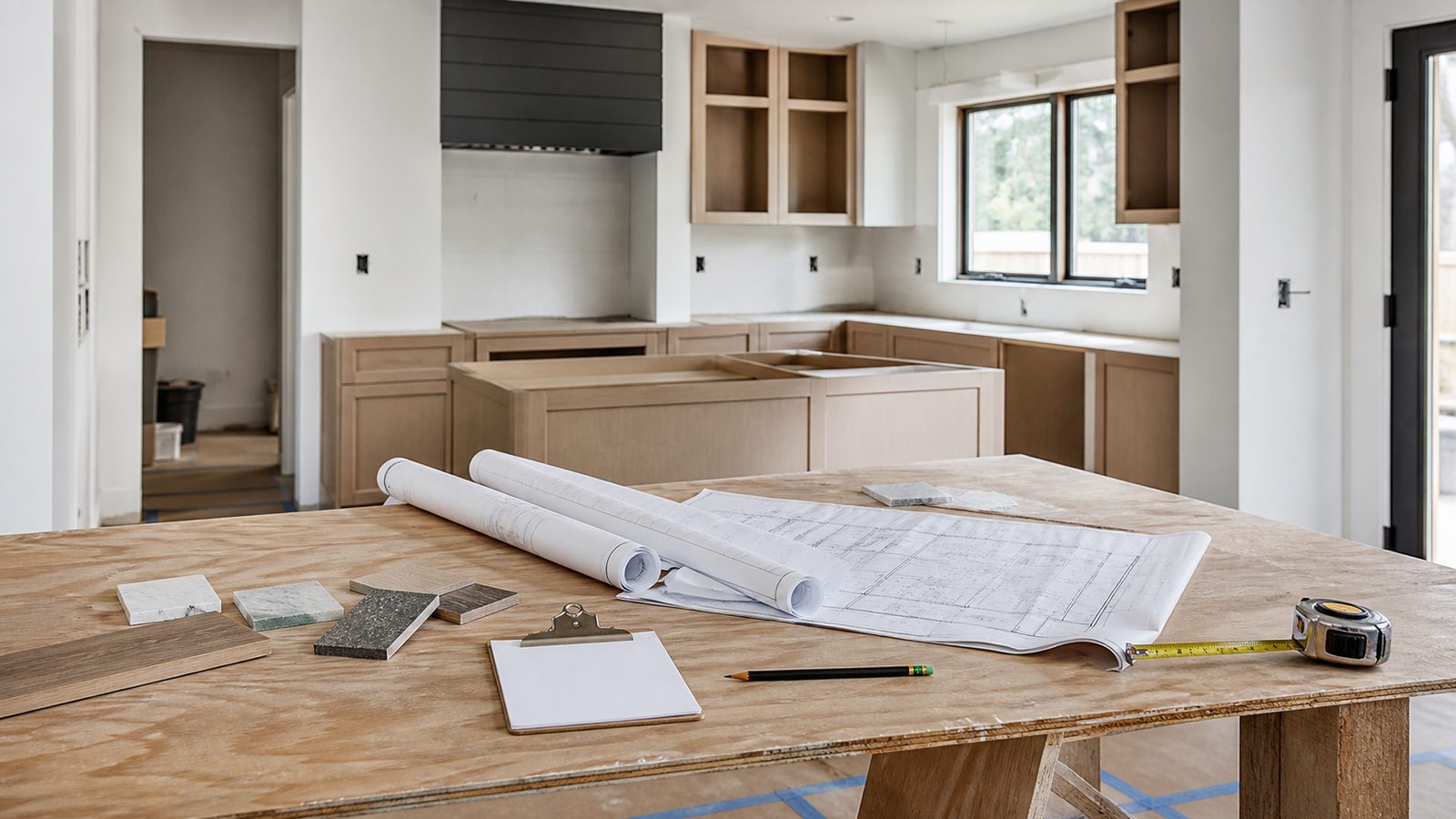
Start here because the answer changes everything downstream. Dissatisfaction usually falls into three categories: layout, condition, or size. Some problems are fixable with a targeted renovation. Others require so much structural demolition that a rebuild is cheaper.
Layout problems — a kitchen that dead-ends into a hallway, a primary suite separated from the other bedrooms by a living room — often require moving load-bearing walls or relocating plumbing stacks. That work is expensive and disruptive but containable. If you are unhappy with one or two things, renovation almost always wins.
Condition problems — water intrusion behind stucco, rot in the floor system, HVAC ducts that have never been right — are different. Deferred maintenance compounds. One rotted rim joist frequently reveals three more once walls are open. If the house has multiple systems at end of life simultaneously, the renovation budget inflates fast.
Size problems are the most complex. Adding square footage to a one-story house in a Jacksonville neighborhood with setback restrictions may not be legally possible. A second-story addition on a slab foundation requires an engineer to confirm the slab can carry the load. Know what you want before pricing the options.
2. Run the Numbers
Use current Jacksonville market ranges, not national averages. As of 2025, full gut renovation in Duval County runs $150 to $250 per square foot for a complete interior renovation with mechanical, electrical, and plumbing (MEP) updates. New construction in Jacksonville runs $250 to $450 per square foot depending on specification level, lot conditions, and site work.
A 2,000-square-foot gut renovation could cost $300,000 to $500,000. A 2,000-square-foot new build on the same lot — after demolition — could cost $500,000 to $900,000. The renovation appears cheaper, but that calculation does not yet include two variables: scope growth once walls open, and the value of the existing structure.
If your house has good bones — a solid slab, a roof under ten years old, a sound framing system — the structure itself has financial value. That value disappears the moment you tear it down.
Ask your general contractor (GC) to price both options with the same finish specification. That apples-to-apples comparison is the only honest number.
3. Check Your Flood Zone
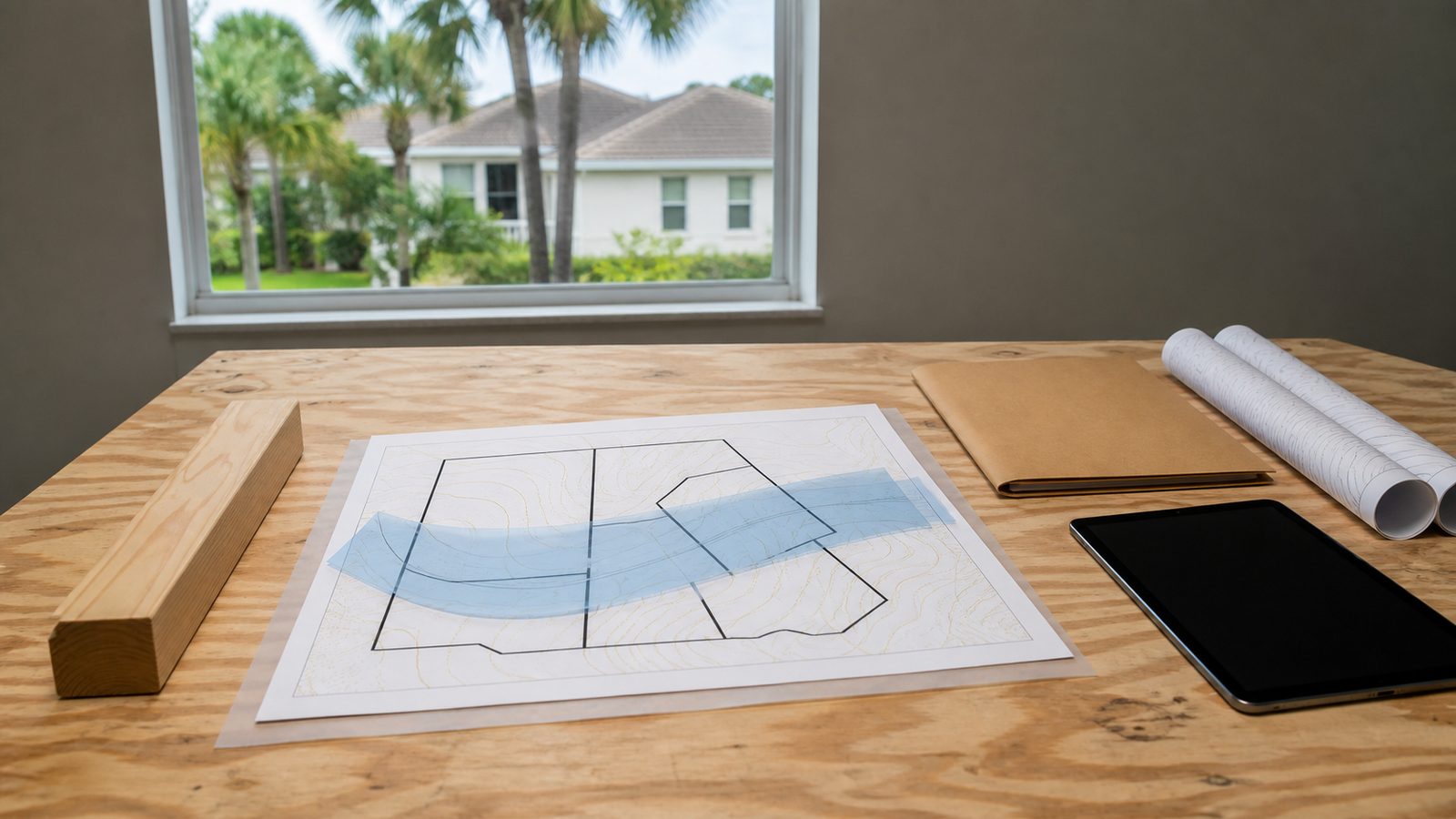
This step is non-negotiable for Jacksonville homeowners. Duval County has significant Federal Emergency Management Agency (FEMA) Zone AE exposure along the St. Johns River, its tributaries, and coastal areas. Zone AE designates a 1% annual chance flood area with a base flood elevation (BFE) established.
The rule that changes the renovation-vs-rebuild math is the 50% rule, formally called the Substantial Improvement rule. If the cost of renovation exceeds 50% of the pre-improvement market value of the structure — not the land — the project triggers a full code upgrade requirement. That means the structure must be brought into compliance with current flood zone building requirements: elevated to or above BFE, updated mechanical systems above flood level, and compliant foundation.
In Zone AE, that code upgrade can add $40,000 to $120,000 to a renovation project, depending on the current elevation of the structure. In some cases, it makes the renovation more expensive than a new build that is designed to code from the start.
Pull your flood zone determination before you finalize a budget. The Jacksonville Duval County Property Appraiser's office and FEMA's Flood Map Service Center both maintain searchable records. Your GC should be doing this automatically before estimating.
4. Assess the Foundation Honestly
Slab foundations in Northeast Florida move. The clay soils common in Duval County expand and contract with moisture, and that movement shows up in cracks. Not all cracks are structural. The pattern matters.
Hairline cracks running parallel to footings are typically shrinkage cracks from the original pour — cosmetic, not structural. Diagonal cracks at door and window corners indicate differential settlement, meaning one part of the slab moved more than another. Wide cracks with vertical displacement — one side higher than the other — are the ones that change the rebuild calculation.
Active settlement under a slab that has not stabilized cannot be fixed with a renovation. You can install helical piers or pressed piles to arrest movement, but if the structure has already racked, doors and windows will need reframing, tile will crack again, and drywall will continue to show movement. A house with serious active settlement is often a rebuild candidate regardless of condition on every other metric.
Hire a licensed structural engineer — not a foundation repair company — to assess slab conditions before you commit to a path. The engineer's fee is $500 to $1,500. It is the cheapest line item on a project of this size.
5. Evaluate What the Layout Can Absorb
Some layout problems are architectural. Others are structural. The distinction determines how expensive a fix will be.
An open floor plan requires removing walls. If those walls are non-load-bearing, the cost is low. If they are load-bearing — which is common in older Jacksonville homes built before open-plan design became standard — removing them requires engineered beams, updated posts, and footing checks. That work is routinely done in renovations and is rarely a reason to rebuild. Get a structural engineer's opinion if you are uncertain.
The layout problems that make renovation impractical are usually related to plumbing location. Moving a bathroom requires moving drain lines in a concrete slab, which means saw-cutting, re-routing, and patching. Moving a kitchen requires the same. If your ideal layout relocates both a kitchen and two bathrooms, you are looking at a scope that erases most of the cost advantage of renovation over new construction.
Draw your ideal floor plan before pricing anything. Then ask your GC to tell you what moving from the existing layout to that plan requires structurally. That conversation will either confirm renovation is viable or reveal the hidden cost that makes rebuild more logical.
6. Consider Your Timeline Tolerance
Renovation and new construction have fundamentally different schedules, and both matter if you are living in a hotel or paying rent during construction.
A full gut renovation of a 2,000-square-foot Jacksonville home typically runs 4 to 8 months from permit issuance to certificate of occupancy (CO). That range assumes no major scope changes mid-project and no permit delays. Duval County residential renovation permits currently run 4 to 6 weeks for review. Add pre-construction time — design, permitting, pre-ordering long-lead items — and a renovation that starts planning in January may not reach CO until October.
New construction runs longer. A ground-up build in Jacksonville, from permit submission to CO, typically runs 10 to 16 months. Demolition of the existing structure adds time before that clock even starts.
If you are relocating from out of state and need to be in the house by a specific date, new construction is a harder timeline to hit. If you have flexibility and a clear scope, renovation can be faster. Factor the carrying cost of alternative housing — rent, hotel, extended stays — into the financial comparison between the two paths.
7. Check HOA and Historic Designation Constraints
Homeowner associations (HOAs) in many Jacksonville neighborhoods impose design standards that affect both renovation and rebuild options. Some HOAs require architectural review board (ARB) approval before any exterior change. Some prohibit certain roof materials, exterior colors, or addition styles entirely.
Historic designation is a separate and more restrictive layer. The Riverside-Avondale Historic District and parts of Springfield, San Marco, and Ortega have local historic designation enforced by the Jacksonville Historic Preservation Commission. Contributing structures in those districts face strict review for any exterior alteration. Demolition of a contributing structure often requires demonstrating economic hardship — a high bar — before the city will approve it.
If your property sits in a historic district, check with the Historic Preservation Commission before assuming a rebuild is an option. Many owners in those districts renovate because demolition is not permitted, regardless of what the numbers say.
Pull your HOA documents and check the Duval County Property Appraiser's records for any historic overlay before finalizing your plan.
8. Talk to a GC Before an Architect
This is the step most homeowners skip, and it is the most expensive mistake in the renovation-vs-rebuild decision.
Architects price possibility. A talented architect can design a renovation that transforms a 1970s Mandarin ranch into a modern open-plan home. The design is real. The cost estimate on the cover sheet is often not. Architects are not trained to price field conditions, subcontractor availability, or current material costs in your specific market.
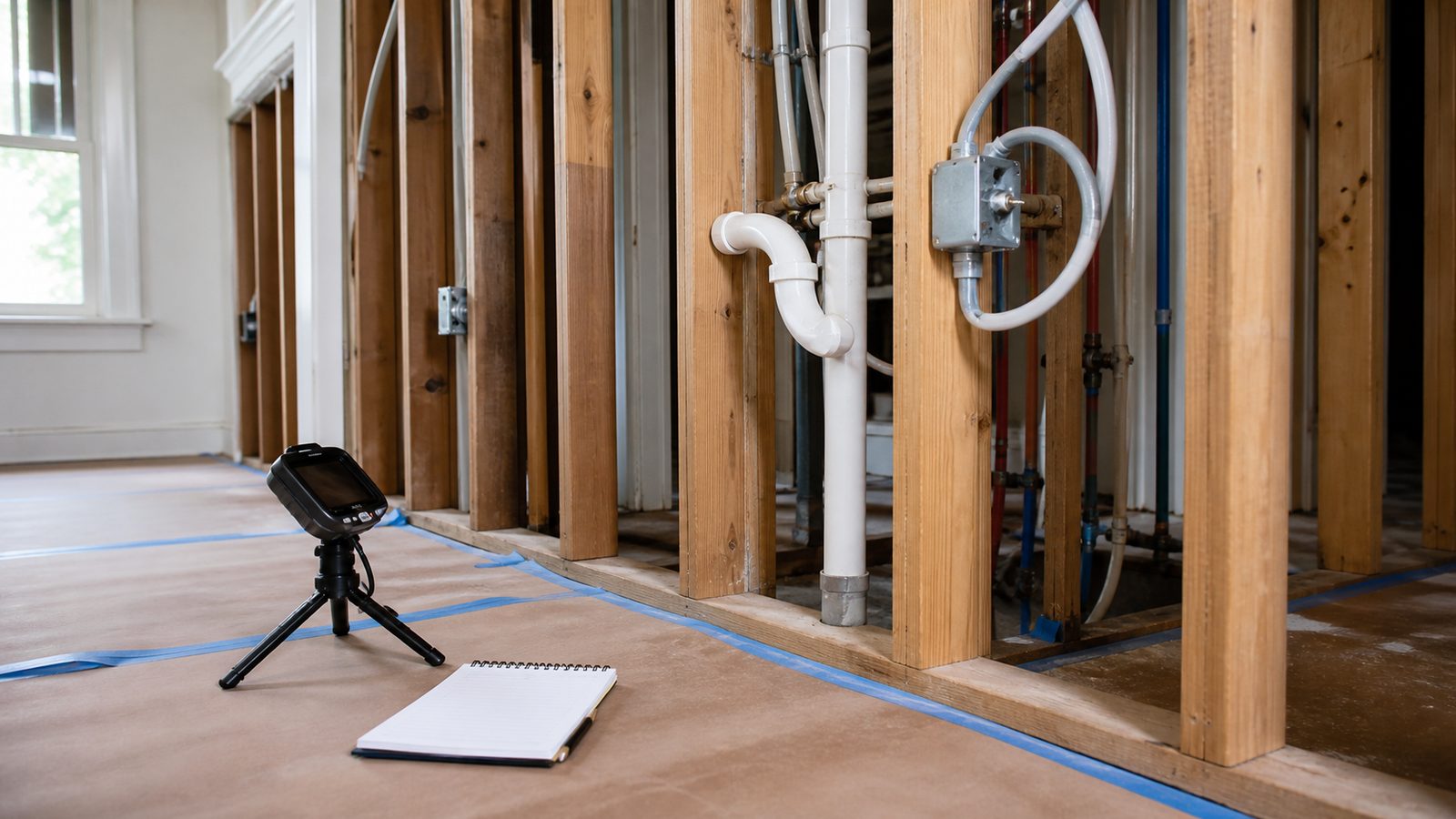
GCs price reality. A GC who has built and renovated in Jacksonville knows what permit review timelines look like right now, what framing lumber costs this month, and what it costs to move a drain line in a poured concrete slab in Northeast Florida's soil conditions.
Before you spend $8,000 to $20,000 on architectural drawings for a renovation or new build, spend one hour with a GC. Ask for a rough-order-of-magnitude cost range for both paths. A GC who has done both will tell you which option makes sense given the condition of your house, your flood zone exposure, and your program. That conversation is free. It will save you from designing a project you cannot afford to build.
At JK Prestige Construction, the principal walks every site and delivers written estimates within 48 hours. Read more about how JK approaches every project and home renovation services in Jacksonville.
No call center. No coordinator. A JK principal reviews every inquiry and replies with a real number, not a range, not a follow-up form.
Request Free Estimate →