The roofing decision for a Florida home is not the same calculation as it is in Ohio or Colorado. Florida Building Code wind speed maps, insurance premium discounts for certain materials, humidity-driven maintenance issues, and specific product approval requirements make this a technical decision, not a style preference. The wrong material for your roof pitch or wind zone can mean early failure, code violations, or insurance complications.
Step 1: Understand Florida Building Code Wind Requirements for Your Zone
The Florida Building Code assigns wind speed design requirements based on geographic location. Jacksonville and Duval County fall in the 130 mph wind speed design zone (ASCE 7 map, Risk Category II). That number determines the minimum fastening schedule, uplift resistance, and Florida Product Approval (FPA) requirements for any roofing system installed in the area. Every roofing product used in Florida must carry a Florida Product Approval number, which confirms it has been tested to meet state wind and impact requirements. Before comparing materials, confirm that the specific product being quoted carries an FPA number valid for your wind zone. Your contractor should provide this documentation without being asked.
Step 2: Assess Your Roof Pitch — It Eliminates Some Options
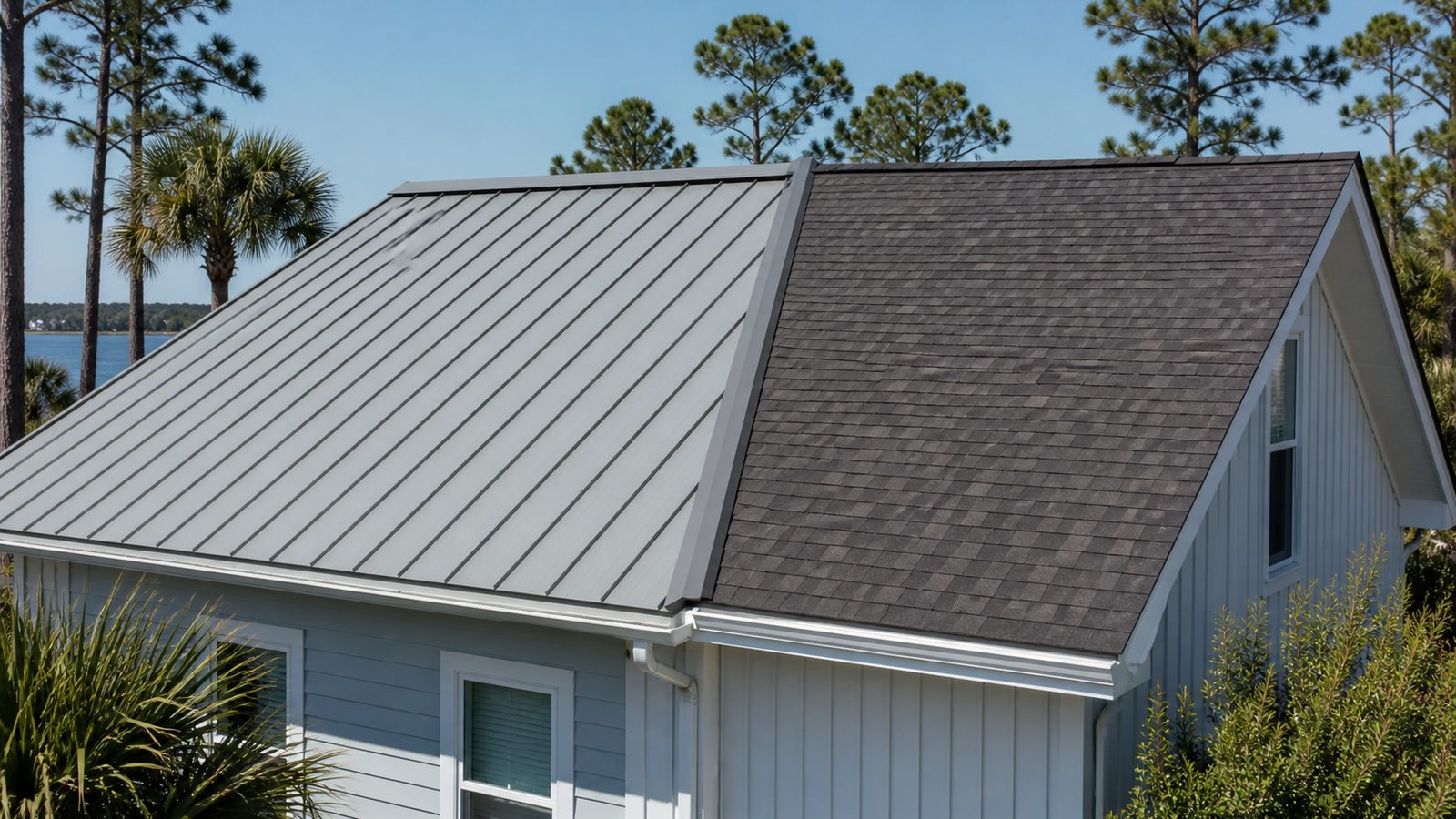
Roof pitch (the ratio of rise to run) determines which materials are physically viable. Asphalt shingles require a minimum 2:12 pitch and perform best on 4:12 and above. Metal standing-seam systems can be installed on pitches as low as 1:4:12 with proper seaming techniques. Concrete and clay tile require a minimum 2.5:12 and typically perform best at 3:12 and above. Thermoplastic Polyolefin (TPO) and Ethylene Propylene Diene Monomer (EPDM) membrane systems are designed for low-slope roofs (under 2:12) and are the standard for commercial flat roofs and low-slope residential additions. Have your roof pitch measured by a contractor before narrowing your material options.
Step 3: Compare Material Lifespans Under Florida Conditions
Material lifespans vary significantly, and Florida's heat, humidity, UV exposure, and wind load accelerate degradation relative to national averages. Working ranges for Florida:
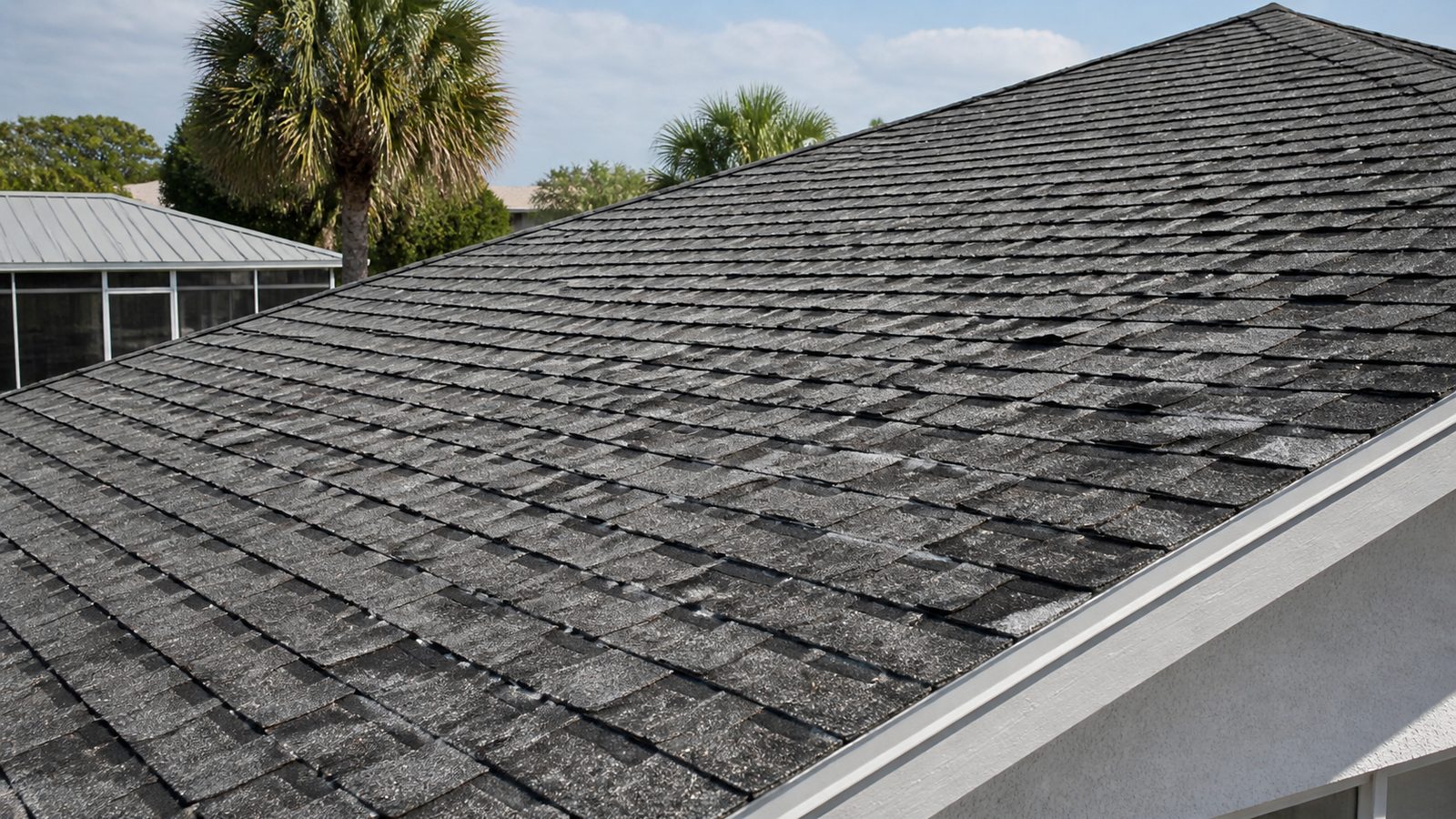
- Architectural asphalt shingles: 15 to 20 years in North Florida. Heat and UV exposure degrades the asphalt binder faster here than in northern climates. Quality products (GAF Timberline HDZ, CertainTeed Landmark Pro) perform better than economy 3-tab shingles.
- Metal (standing seam or exposed-fastener panel): 40 to 70 years. Aluminum and Galvalume steel are both strong performers in coastal and near-coastal environments. Painted finishes should carry a 30-year fade warranty.
- Concrete tile: 40 to 50 years. Heavy (9 to 12 pounds per square foot), which requires verified roof framing capacity. Does not corrode. Grout and mortar joints require periodic inspection.
- Clay tile: 50-plus years. Lighter than concrete tile. Higher material cost, but longer service life. Common in St. Johns County and Ponte Vedra developments.
- TPO/EPDM membrane: 15 to 25 years depending on thickness and installation quality.
Step 4: Compare Installed Costs in Jacksonville
Material and installed costs per square (100 square feet) in Jacksonville as of 2024, for reference:
- Architectural asphalt shingles (tear-off and replace): $350 to $550 per square
- Metal standing seam: $750 to $1,100 per square
- Concrete tile: $600 to $900 per square
- Clay tile: $900 to $1,400 per square
- TPO membrane (commercial/low-slope): $400 to $650 per square
A 2,000 square foot footprint on an average-pitch residential roof runs roughly 22 to 28 squares of roofing material depending on pitch and complexity. A full architectural shingle replacement runs $8,000 to $15,000 installed. Metal runs $17,000 to $30,000. Factor lifespan into the cost comparison — an asphalt roof at $12,000 replaced twice over 40 years costs $24,000. A metal roof at $22,000 over the same period costs $22,000 with no replacement.
Step 5: Check Insurance Discount Eligibility
Florida's Citizens Property Insurance Corporation and most private carriers offer premium discounts for specific roofing attributes. A new roof of any material typically reduces the wind mitigation surcharge. Impact-resistant shingles (Class 4) and metal roofs often qualify for larger discounts because they perform better under Florida Building Code's wind and impact testing standards. Request a wind mitigation inspection after any new roof installation — the inspection report documents the roof's attributes (deck attachment, roof covering type, opening protection) and is submitted to your insurer for premium adjustment. The discount on a metal or impact-resistant shingle roof can be $500 to $1,500 per year, which factors meaningfully into the total cost of ownership calculation.

Step 6: Verify the Contractor's Manufacturer Certification Before Signing
Not all contractors are certified to install every roofing system. Manufacturer warranties — which can run 25 to 50 years on premium products — require installation by a certified contractor. GAF Master Elite contractors (JK Prestige Construction holds this certification) can offer the Golden Pledge warranty, which covers both materials and workmanship for up to 25 years. CertainTeed's SELECT ShingleMaster and Owens Corning's Preferred programs have similar requirements. An uncertified contractor installing a warranted product voids the manufacturer warranty. Verify certification before signing — ask for the contractor's certification number and confirm it on the manufacturer's website.
Get a written estimate in 48 hours. Call (904) 944-0278 or request a free inspection.
JK Prestige Construction is GAF Master Elite certified and CertainTeed credentialed, and self-performs all roofing installations in Jacksonville and NE Florida. We install asphalt shingles, metal systems, and tile, and we provide itemized estimates with Florida Product Approval numbers for every specified product. See our roofing page for system details.
No call center. No coordinator. A JK principal reviews every inquiry and replies with a real number, not a range, not a follow-up form.
Request Free Estimate →