Jacksonville has a flood problem that its geography makes unavoidable. The St. Johns River runs through the city's core, the coastline is extensive, and much of the developed land in Riverside, Springfield, the Northside, and Westside neighborhoods sits in Federal Emergency Management Agency (FEMA) Zone AE -- high-risk flood territory with a specific Base Flood Elevation (BFE).
If you are planning a construction project in Duval County, your flood zone designation affects three things: what the Florida Building Code (FBC) requires your foundation to look like, how much your flood insurance costs, and whether your bank will even lend on the project without specific documentation.
This guide walks you through finding your flood zone, understanding what the designation means, and knowing how it changes your construction requirements.
Step 1: Go to FEMA's Flood Map Service Center (msc.fema.gov)
The primary federal source for flood zone information is the FEMA Flood Map Service Center, available at msc.fema.gov. This is a free public tool.
To find your property's flood zone:
- Go to msc.fema.gov
- Enter your property address in the search bar
- The map will open centered on your property location
- Zoom in to see the flood zone designation overlaid on your parcel
The Flood Insurance Rate Map (FIRM) that FEMA produces shows:
- Flood zone designations for each parcel
- Special Flood Hazard Areas (SFHAs) -- zones with a 1% annual chance of flooding (the "100-year flood")
- Base Flood Elevations for Zone AE and Zone VE areas
Pro tip: FIRM maps are periodically updated. Jacksonville has had multiple FIRM revisions in recent years, and some parcels have changed zone designations. Always use the current effective FIRM panel for your property address, not an older map or a neighbor's assessment of their zone.
Step 2: Enter Your Address and Identify the FIRM Panel
After you enter your address, the FEMA map viewer will show the relevant FIRM panel number. Each FIRM panel covers a geographic area and shows detailed flood zone information for that section of the county.
Note the FIRM panel number and the effective date of the map. For Duval County, the current FIRM panels are part of the Jacksonville, Florida community flood maps. You can download the specific panel in PDF format from the FIRM viewer for a permanent record.
If your parcel spans a zone boundary -- part Zone X and part Zone AE, for example -- the most restrictive zone typically governs your building requirements if any part of the building footprint falls within the higher-risk zone. Confirm this with your civil engineer or with the Duval County Building Inspection Division.
Warning: Google Maps, Zillow, and property appraiser websites often show flood zone information that is outdated or derived from older FIRM panels. Use FEMA's MSC directly to confirm current flood zone status, particularly if you are making a purchase or lending decision based on flood zone.
Step 3: Understand the Flood Zone Designations
FEMA uses letter designations for flood zones. The three designations most relevant to Duval County property owners:
Zone X (unshaded): Minimal flood hazard. This is the lowest-risk designation. Flood insurance is not federally required for mortgaged properties in Zone X. Construction in Zone X is not subject to FEMA flood zone elevation requirements, though local stormwater ordinances still apply.
Zone X (shaded, sometimes called Zone X500): Moderate flood hazard -- between a 0.2% and 1% annual chance of flooding. Flood insurance is not required but advisable. The Florida Building Code may not impose specific elevation requirements, but local ordinances in Duval County may.
Zone AE: High flood hazard. This is the primary concern in Duval County. Zone AE indicates a 1% annual chance of flooding (the "100-year flood") and has a specific Base Flood Elevation (BFE) shown on the FIRM. Federal law requires flood insurance for federally mortgaged properties in Zone AE. The FBC and Duval County floodplain ordinance impose specific elevation and construction requirements for new construction and substantial improvements in Zone AE.
Zone VE: Coastal high-hazard area with wave action. This designation applies to coastal areas where wave heights exceed 3 feet during the base flood event. Zone VE has the most stringent construction requirements. It appears in portions of Jacksonville Beach and other barrier island areas within the Duval County boundary.
Zone AO: Shallow flooding with average depths of 1 to 3 feet. Less common in Duval County than Zone AE, but present in some areas.
Pro tip: Riverside and Springfield in Jacksonville have significant Zone AE coverage, particularly near tributary creeks of the St. Johns River. If you are buying or renovating in either neighborhood, confirm the flood zone before finalizing the project budget.
Step 4: Obtain Your Base Flood Elevation (BFE) from the FIRM Panel
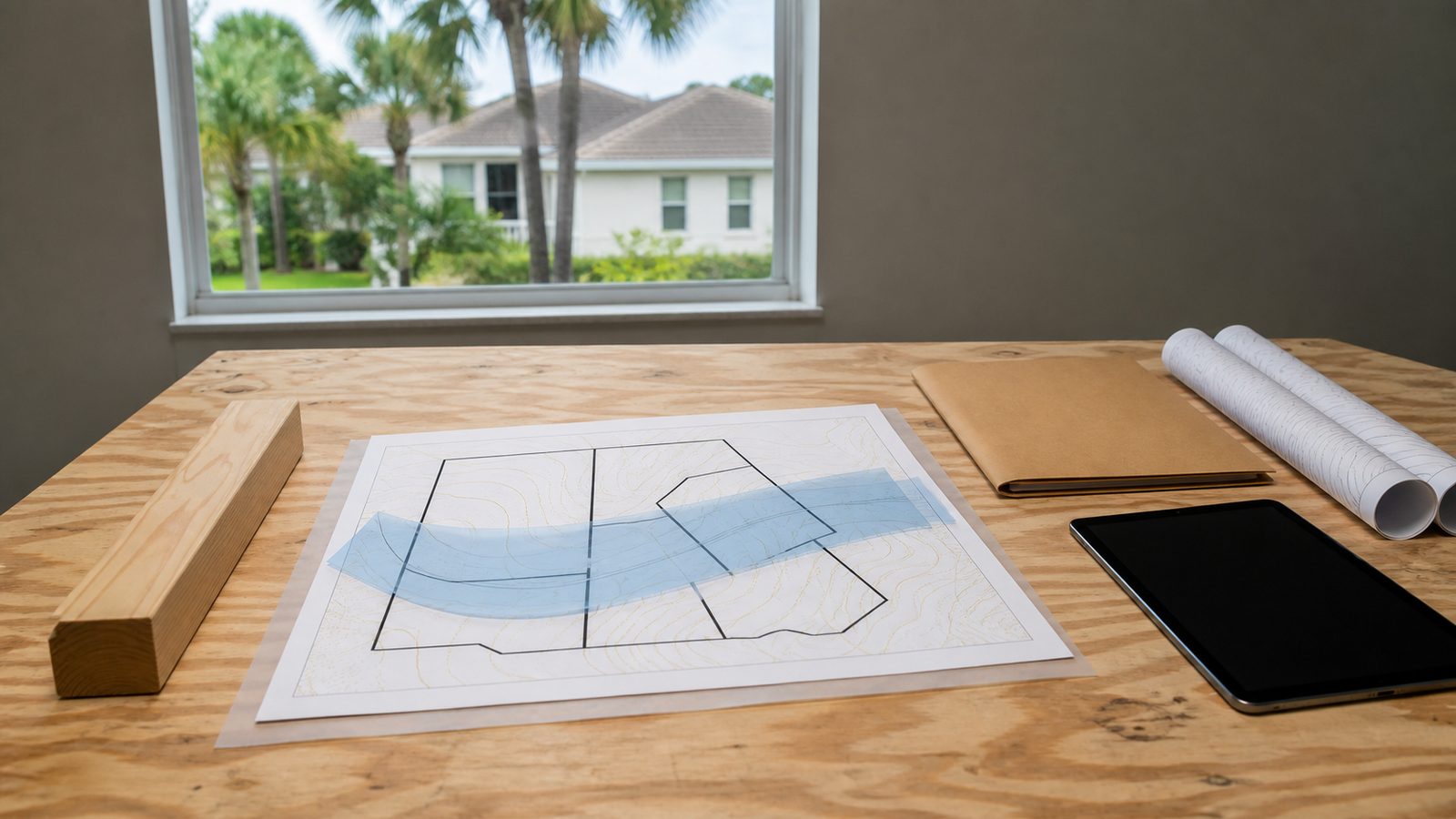
In Zone AE areas, the FIRM panel shows the Base Flood Elevation -- the water surface elevation that the base flood (1% annual chance) is expected to reach, measured in feet above the North American Vertical Datum of 1988 (NAVD 88).
The BFE is the key number for construction. The FBC requires that the lowest floor of any new structure or substantially improved structure in Zone AE be elevated to or above the BFE (or the BFE plus freeboard, depending on local ordinance).
How to find the BFE for your specific location:
- On the FEMA FIRM map viewer, look for the BFE label near your property (shown as a number with a contour line)
- Download the FIRM panel for your property and read the BFE from the map
- If your parcel is between BFE contour lines, interpolate between the labeled values or consult a licensed surveyor
Warning: BFE values on the FIRM are point-in-time estimates derived from hydraulic modeling. They do not account for sea level rise, subsidence, or changes in watershed development that have occurred since the map was produced. Many Jacksonville area professionals recommend building to BFE plus 1 to 2 feet of freeboard as a buffer against these uncertainties.
Step 5: Understand the Implications for Construction in Zone AE
If your project is in Zone AE, you face specific requirements that affect design, cost, and project timeline:
Elevation certificate required: An Elevation Certificate (EC) is a FEMA-standardized form that documents the elevation of your structure relative to the BFE. For new construction or substantial improvement in Zone AE in Duval County, an EC must be completed by a licensed Florida surveyor or engineer. This is required for the building permit and often for flood insurance rating.
Lowest floor elevation: The FBC requires the lowest floor of habitable space to be at or above the BFE. Duval County's local floodplain ordinance may require freeboard above the BFE -- confirm with the Duval County Floodplain Administrator.
"Substantial improvement" rule: If you are renovating an existing structure in Zone AE and the cost of the renovation exceeds 50% of the structure's pre-improvement market value, FEMA considers it a "substantial improvement." A substantial improvement triggers the same requirements as new construction -- the entire structure must be brought into compliance with current flood zone standards, including elevation. This is a significant cost driver for renovation projects in older Jacksonville neighborhoods.
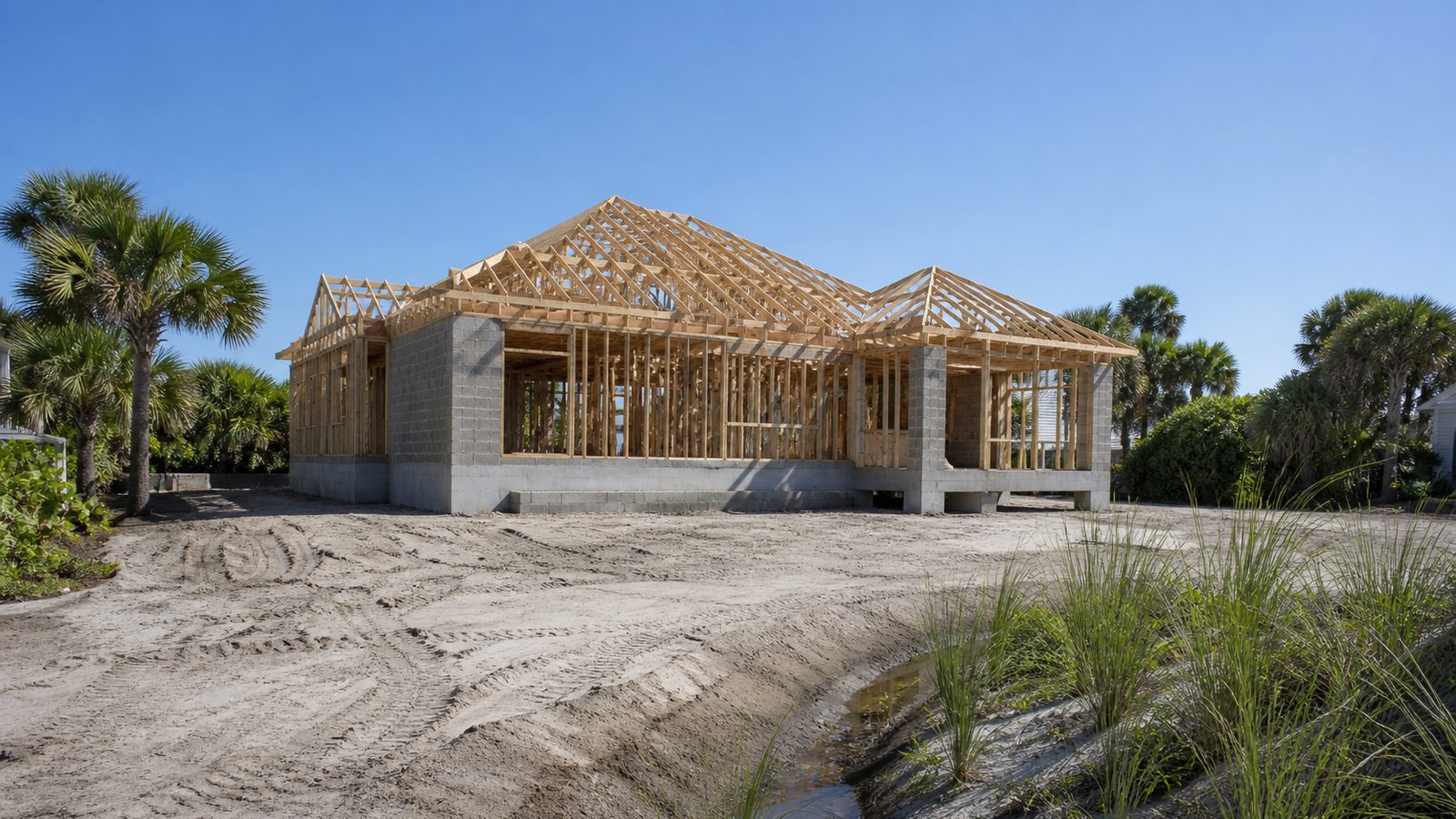
Foundation requirements: Structures in Zone AE must be elevated on fill, piers, columns, or a stem wall with flood openings. Enclosed areas below BFE must be used only for parking, building access, or storage (not habitable space) and must have flood openings (vents) that allow water to equalize during a flood event.
Flood insurance cost: For a structure in Zone AE, National Flood Insurance Program (NFIP) or private flood insurance is required for federally backed mortgages. Annual premiums vary significantly based on the structure's lowest floor elevation relative to BFE, construction type, and coverage amount. A structure elevated 2 feet above BFE pays dramatically lower premiums than one elevated at BFE.
Pro tip: For new construction in Zone AE, the additional cost to build 1 to 2 feet above the minimum BFE requirement is typically $3,000 to $10,000 in foundation cost, depending on the approach. That investment reduces flood insurance premiums by hundreds of dollars per year and significantly reduces flood damage risk.
Step 6: Check Duval County's GIS Portal for Local Stormwater Maps
Beyond FEMA's FIRM, Duval County maintains its own GIS resources with local stormwater and drainage information. Access the Duval County Property Appraiser's GIS portal and the City of Jacksonville's COJ GIS portal.
The COJ GIS layers include:
- Floodplain boundaries (corresponding to FIRM but sometimes with local additions)
- Stormwater basin boundaries
- Drainage infrastructure locations
These local maps are useful when the FIRM shows a property near a zone boundary, or when you want to understand how local stormwater drainage interacts with your parcel's flood risk.
Warning: Local stormwater improvements -- detention ponds, drainage channel improvements, pump stations -- may have reduced actual flood risk on your parcel since the current FIRM was produced. A Letter of Map Revision (LOMR) or Letter of Map Amendment (LOMA) from FEMA can formally change the FIRM to reflect improved conditions and potentially remove a property from a high-risk flood zone. A civil engineer familiar with Duval County drainage can advise on whether a LOMA application is feasible for your site.
Step 7: What Changes When You Build in a Flood Zone
The full list of changes for construction in Zone AE in Duval County:
Foundation design: Must be elevated on fill, piers, or engineered stem wall. Basements are not permitted in Zone AE. Crawl space foundations require flood openings sized per FEMA guidelines.
Utility placement: Mechanical, electrical, and HVAC equipment must be elevated above BFE. This means no ground-level HVAC pads, no electrical panels in below-grade mechanical rooms, and no water heater installation below BFE.
Building permit requirements: The permit application for Zone AE projects must include an elevation certificate, documentation of the proposed lowest floor elevation, and a site plan showing the relationship between the proposed finish floor elevation and the BFE.
Insurance: Flood insurance must be in place before a federally backed mortgage closes on a Zone AE property. Get flood insurance quotes early in the purchase or refinance process.
Post-construction survey: After construction is complete, a final elevation certificate documenting as-built lowest floor elevation is typically required by the lender and the building department before CO is issued.
For home construction, renovation projects, and commercial builds in Duval County, JK Prestige Construction coordinates flood zone documentation with the project team from permit submittal through CO.
Get a written estimate in 48 hours -- call (904) 944-0278 or request a consultation.
No call center. No coordinator. A JK principal reviews every inquiry and replies with a real number, not a range, not a follow-up form.
Request Free Estimate →