If a door in your home has started scraping the floor, sticking in the frame, or swinging open on its own, the cause is almost always a loose or worn hinge, a stripped screw in soft jamb wood, or the frame settling out of square. Most of the time it is a simple fix you can do in an afternoon. In older Jacksonville neighborhoods like Riverside, Avondale, San Marco, and Murray Hill, where original wood-framed doors are common, humidity and decades of use make hinge wear routine. This guide covers diagnosing the cause, the repair steps, and when the problem is bigger than the hinge.
When You Need a Permit in Jacksonville
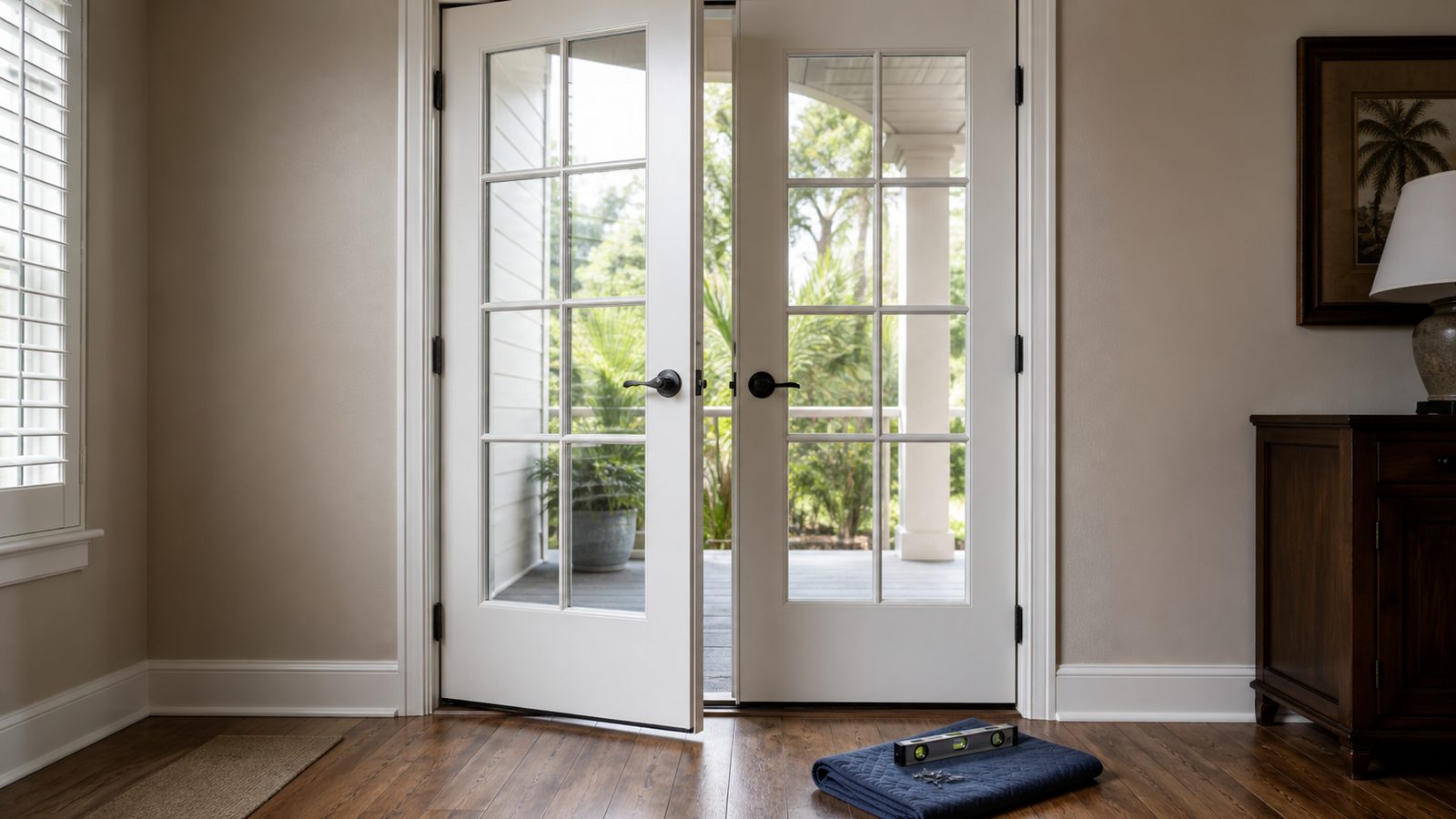
Tightening, repairing, or replacing hinges on an existing door, and rehanging a sagging door in its existing frame, is routine maintenance under the Florida Building Code and does not require a permit from the City of Jacksonville Building Inspection Division. You are not altering the structure or the building envelope, so this is work homeowners can do themselves or hire a handyman for.
That changes once the work goes beyond hardware. Replacing an entire exterior door, including the slab, frame, and threshold, does require a permit in Duval County, because exterior doors are part of the building envelope and are regulated for wind resistance under the Florida Building Code. Jacksonville sits in a wind-borne debris region, so replacement exterior doors generally need a Florida Product Approval or Miami-Dade NOA documenting the assembly meets the required wind load and, depending on location, impact resistance. Enlarging a rough opening, or work touching the header or load-bearing framing, also triggers a permit and inspection. If unsure, or you want current permit fees, contact the City of Jacksonville Building Inspection Division before starting work.
Tools and Materials
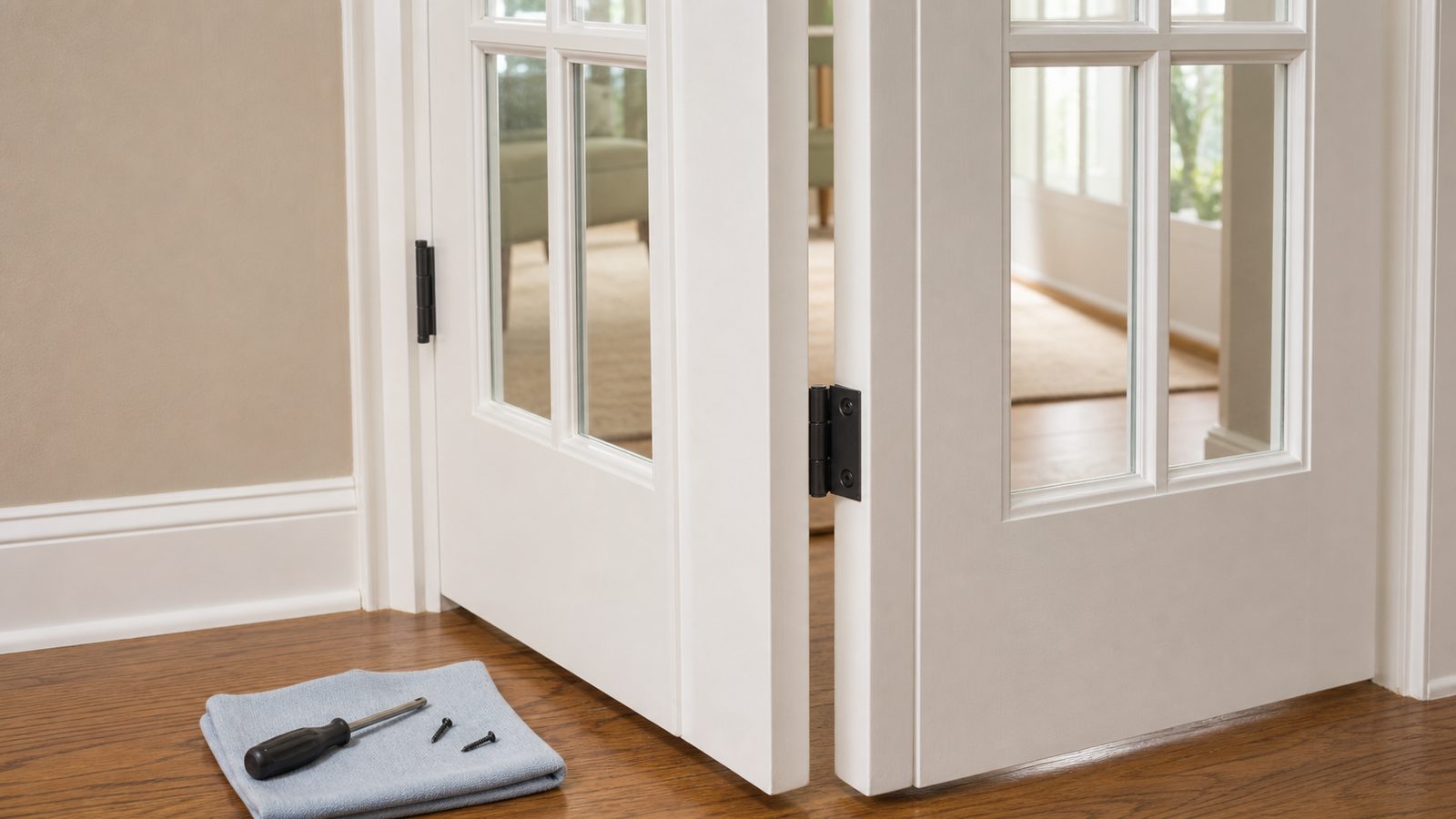
- Phillips and flathead screwdrivers, or a cordless drill with bits
- Replacement hinges, matched in size and gauge to the existing ones
- Wood screws, including one longer 3 inch screw per hinge for jamb reinforcement
- Wood glue and golf tees or matchsticks, for stripped screw holes
- A hand plane or belt sander, only if the door needs trimming
- A level and a tape measure
- A chisel, if hinge mortises need adjusting
- A block of wood and a hammer, for repositioning a frame
- Dry silicone spray or light oil, for squeaky hinges near the coast where salt air accelerates corrosion
Step-by-Step
- Diagnose before touching a screwdriver. Open and close the door slowly and watch where it binds. Check the gap on all four sides. A gap tight at the top and wide at the bottom usually means the door has dropped on its hinges. Even rubbing across the top or side, with otherwise square gaps, means the frame has shifted.
- Check for loose hinge screws first. This is the most common cause and easiest fix. With the door supported, tighten every screw in both hinge leaves. A screw that spins without tightening has a stripped hole.
- Repair stripped screw holes. Remove the screw, fill the hole with wood glue and two or three golf tees or matchsticks, let dry, then trim flush and redrill for fresh wood to bite into.
- Upgrade to a long screw for the top hinge. Replacing the middle screw with a 3 inch screw lets it reach past the jamb into the framing stud behind it, tying the hinge to structural framing. This is the single most effective fix for hinge-side sag.
- Replace hinges that are worn, bent, or rusted. If the pin is loose in its barrel or the knuckles are visibly worn, swap the hinge. Match size and hole pattern to the existing mortise.
- Check the door for warping or swelling. Lay a straightedge across the face. If it has bowed, hinge adjustments alone will not solve the binding, and it may need light planing on the binding edge.
- Check the frame for square. Use a level on both jambs and the header. An out-of-plumb frame points to house settling rather than hinge wear.
- Test through a full swing cycle. Open and close the door several times, checking that it latches cleanly and the gap is even.
Jacksonville Climate Considerations
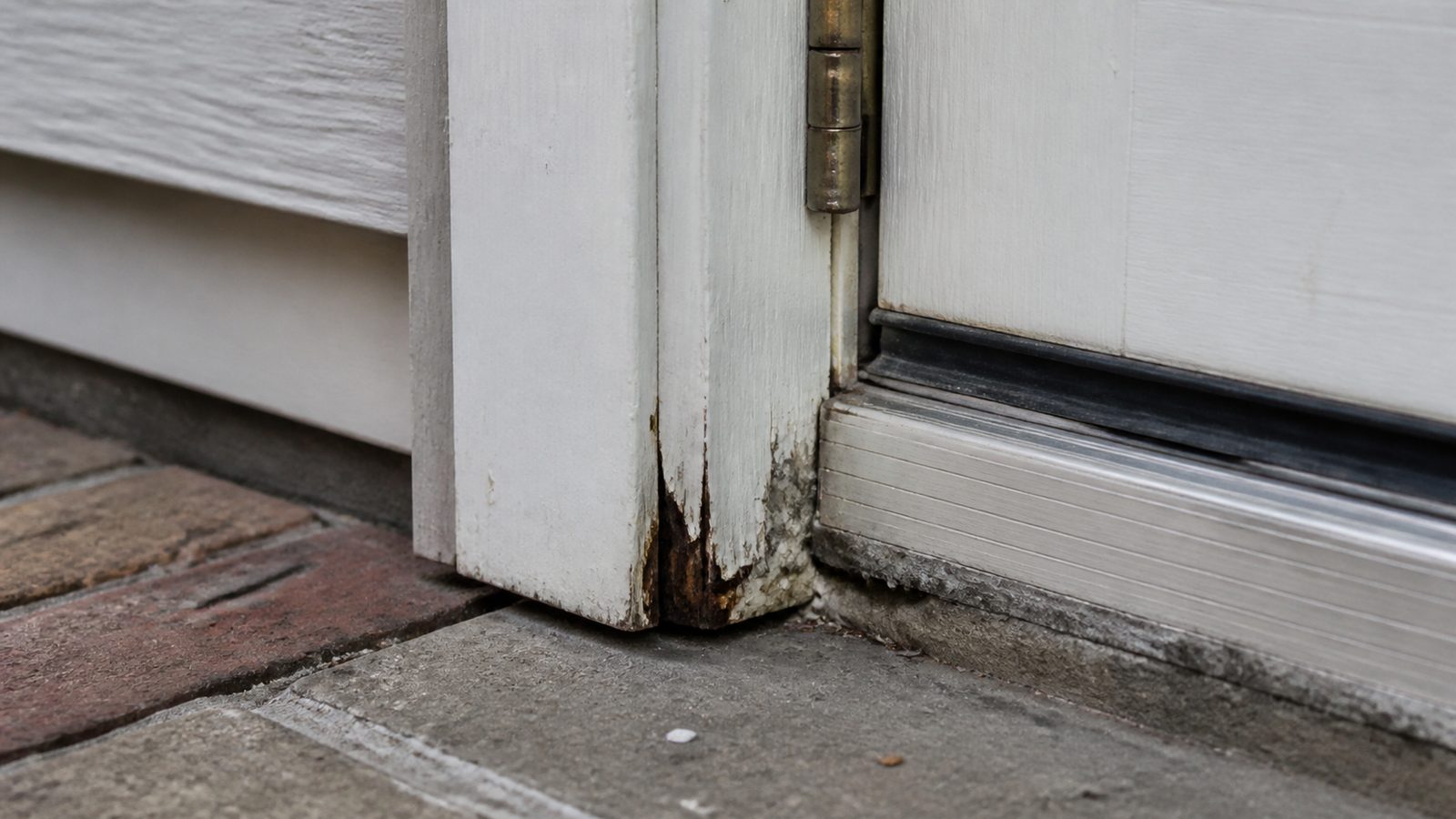
Jacksonville's humidity swings hard between wet summers and drier winters, and wood doors and jambs expand and contract with that cycle. A door that sticks only in July and August is often reacting to seasonal swelling, not a hinge problem, and a fix made during peak humidity can leave it too loose once the air dries out. For homes near the beaches or the St. Johns River, salt-laden air corrodes standard steel hinges faster than inland, showing up as rust, stiff pins, and squeaking lubricant only fixes temporarily. Stainless steel or heavy brass hinges hold up better there. In neighborhoods built on sandy, poorly compacted fill, common across Northeast Florida, gradual settling can throw door frames out of square over years. If several doors bind the same way at once, look at the foundation, not just the hardware.
What It Costs in Jacksonville (DIY vs. Hiring a Pro)
| Scope of Work | DIY Cost (materials only) | Professional Cost (Jacksonville market) |
|---|---|---|
| Tightening hinges, screw hole repair | $5 to $15 | $75 to $150 service call |
| Replacing a set of hinges (per door) | $15 to $40 | $100 to $200 |
| Planing or trimming a swollen door | $0 to $20 (tools you may already own) | $150 to $300 |
| Rehanging with frame adjustment | $20 to $50 | $200 to $400 |
| Full exterior door replacement with permit | Not typically DIY | $1,200 to $3,500+ depending on door type and impact rating |
These are general estimate ranges, not fixed quotes. Actual pricing depends on door type, hardware quality, and access.
When to Call JK Prestige
If tightened hinges and long screws do not fix the sag, or several doors are sagging at once, that points to framing or foundation movement beyond a hardware fix. It is also worth calling a licensed contractor once the project shifts to full exterior door replacement, since that involves permitting, product approval documentation, and proper flashing. JK Prestige handles both the diagnosis and the permitted work when a door problem is bigger than it looked.
No call center. No coordinator. A JK principal reviews every inquiry and replies with a real number, not a range, not a follow-up form.
Request Free Estimate →